

This article was originally released in The Interline’s AI Report 2026.
Including profiles and exclusive interviews with 17 AI companies, stories and opinions from 12 different industry perspectives, and real survey feedback from around 100 voices from every level of fashion, bottled and analysed, The AI Report 2026 is essential reading for anyone interested in AI for fashion.
The way fashion’s biggest campaigns are conceived, built and brought to life is continuously evolving – not just in scale, but also structure. That evolution is happening in a compressed way today: almost every global fashion brand we work with, from luxury houses like Dior and Louis Vuitton, to sportswear giants like Nike and Adidas, is rethinking its approach to promotion and presentation from the ground up, with the results then making their way as far back as product design.
Today, the channel mix and the volume and variety of formats expected — stills, films, social edits, billboard assets, retail executions, all delivered back-to-back rather than staggered — has fundamentally changed what a campaign actually is, because it definitely is not a single message for a single channel any longer. The result? The production workflows for fashion campaigns are also going through a moment of peak transformation, and post-production has taken on a heightened role.
What people have often thought of as the final stage of technical execution, or as a step where a bit of polish is applied to a fully-baked idea, is now where creative decisions are taking place. And that shift is viable because the technology used in post-production is more mature and more powerful than it’s ever been.
Today, our work as VFX artists, designers, editors, colourists, art directors and technologists is embedded throughout the process, and not just at the end of it. Our remit goes far beyond adding a final sheen to an idea, and we are now shaping how ideas are first conceptualised, then also working on developing and, finally, producing them.
Everyone in fashion – and in media in general – is familiar with the idea of “fixing it in post,” but far fewer people talk about the value of pulling post forwards, right to the start of creative discussions. And that value is measured in cost reductions, new insights and directions, and far fewer instances of needing to radically change a campaign on the last mile.
Expertise in post production, as a consequence, is now more valuable than ever outside of where it’s traditionally lived. But the progress of technology and creative tooling – especially, now, AI – has been the lever that’s allowed the benefits of post-production to migrate upstream.
Before we map out how those two strands work together, though, let’s look at why and where the demand for fashion campaign content has shifted.

Bigger Briefs: What Brands Are Asking For In 2026
In fashion, one of the most significant changes we’ve seen over the last few years is the sheer volume and types of formats brands ask for. A campaign, now, rarely means a single film or a defined set of stills. Today, when we work on a campaign, it mostly refers to one hero asset that then needs to be adapted and optimised to a range of platforms and markets.
In addition, budgets have not grown; brands these days expect more, generally for similar costs and with tighter deadlines.
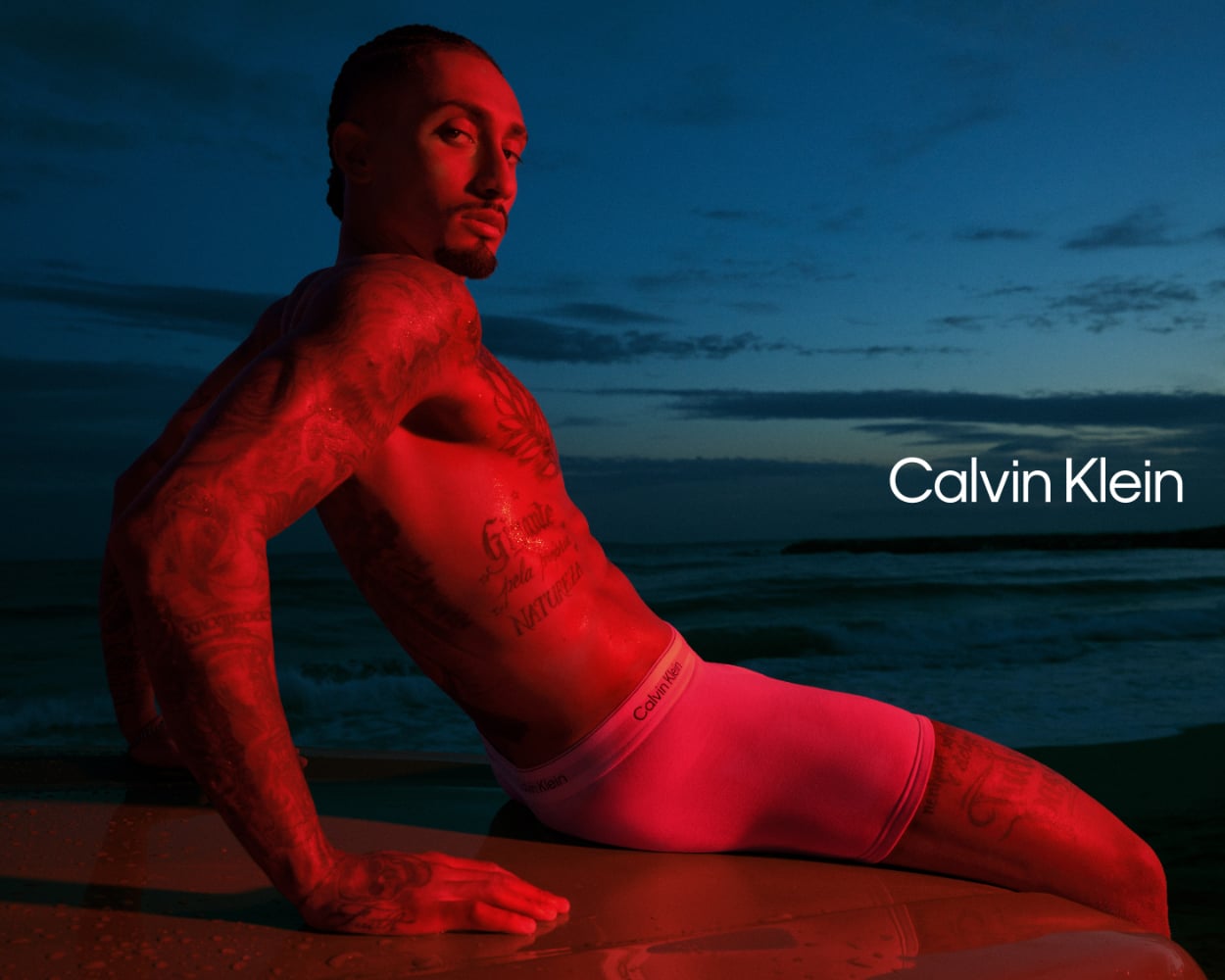
The multi-channel deliverables are now more widely used and, in many cases, more important to the client than the main film itself. Our ongoing work with COS is a good example of this shift.
For that client, we now typically create a hero film that is then versioned into categories based on region, menswear and womenswear, as well as different target usages such as out-of-home and various social media platforms. As a result, a single campaign usually consists of around 30–35 16:9 (widescreen) assets, not including the different formats and aspect ratios required alongside them.
In many cases, the shorter cuts are utilised far more online than the longer hero film itself. Shorter-form assets, for example, tend to perform better, meaning more variations are being produced from a single campaign. At the same time, vertical formats have also become dominant as content needs to fit more naturally to the portrait phone screen.
With the increase in these platforms comes a demand for different formats, durations, and forms of storytelling, rather than just quick edits and clips made from a common source file. Brands are also now looking to build visual universes that can evolve across print, motion, digital, and immersive formats — all at the same time.
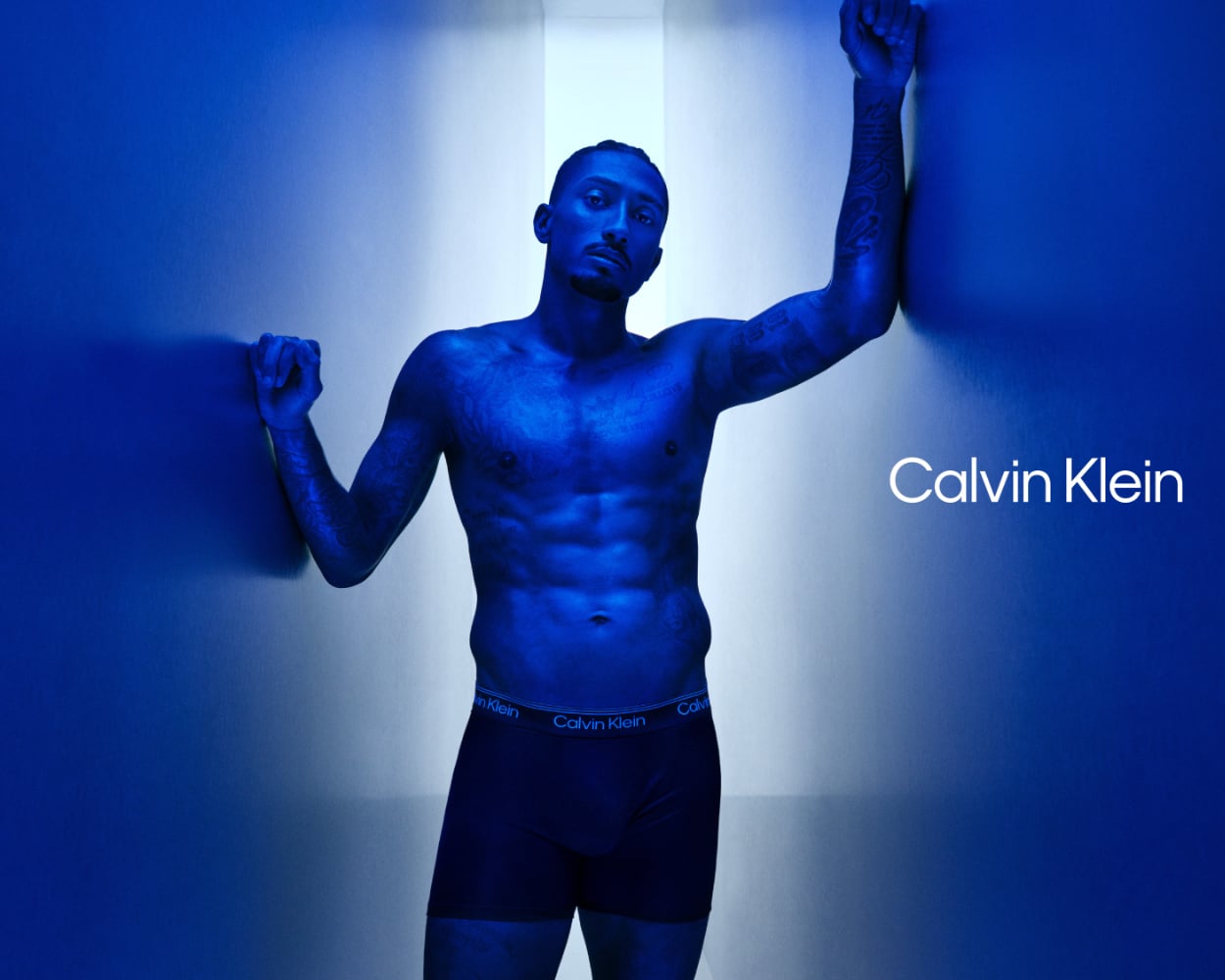
This requires a more expansive approach to art direction, where the campaign exists as a flexible set of references, textures, and narratives rather than one fixed outcome to be chopped up for social channels after the fact.
In our experience, AI is changing the way those references are gathered. It can reveal unexpected visual connections and suggest combinations that may not have been immediately obvious. In that sense, it can function almost like a research assistant, helping uncover new juxtapositions between historical and contemporary imagery. However, what remains essential is the human ability to edit, contextualise, and shape those references into something meaningful. That application of taste is where humans create value from the foundations that AI can help to create.
But the divvying-up of labour isn’t the question that’s keeping brands up at night, so much as a fast-developing concern over how much influence AI exerts over the final campaign. It’s clear, from the vantage point of creative technologists like us, and our counterparts who work for other agencies, that AI (and technology in general) will be critical to keeping pace with brands’ demands, but any mention of the acronym creates panic. People fear losing the human touch, and brands, specifically, are afraid of consumer backlash.
The realistic way forward, in our direct experience, is for AI, CGI, and hybrid post-production workflows to be fully integrated as invisible tools that support human-led craft, without compromising on the identity, heritage, and overall legacy a brand has built up over years.
That’s a theoretical direction that almost everyone would agree with, of course. The real art lies in how to put those hybrid workflows into practice – and that’s where post-production teams’ knowledge and hands-on experience can support the other stages of the storytelling lifecycle.
Behind the Campaigns: How Hybrid Workflows Actually Work
To be as clear as possible: the point of integrating technology into a fashion campaign is not to replace creativity, but rather to amplify content without compromising on quality.
We are not pointing AI-native and hybrid workflows at generating new content. They are being used to provide the essential speed, versioning capability and iteration control needed to meet today’s briefs.
Working this way does not mean leaning on an easy crutch, which is a criticism we have seen thrown at high-profile campaigns that over-relied on AI. It means not having to patch things up at the end, at high cost and with the risk of delay.

Rather than using AI as a tool to effectively do our job for us, by integrating it into our post-production pipelines, we are using it to streamline the brand experience, support the specialised disciplines we trained in — all while protecting authenticity and creativity for everyone.
Crucially, the decision to use AI is not a matter of whether to pick up completely new, generative tools. As anyone working in a creative field will know, AI is already deeply integrated into many of the tools that have been across post-production for years, through machine learning. Within VFX workflows, for example, AI helps slow down footage that wasn’t shot at the correct frame rate. It can upscale lower-resolution clips, or even assist with more repetitive post-production tasks. Used in this way, it enhances flexibility and efficiency without interfering with the creative process, or automating away any expert decision-making. We’ve always been interested in experimenting with new tools and workflows in this way, but only if they reinforce the brand’s creative vision.
This kind of hybrid workflow becomes particularly valuable when dealing with more experimental visual approaches, for which there is growing demand from the kind of luxury clients and brand leaders who won’t accept compromise.
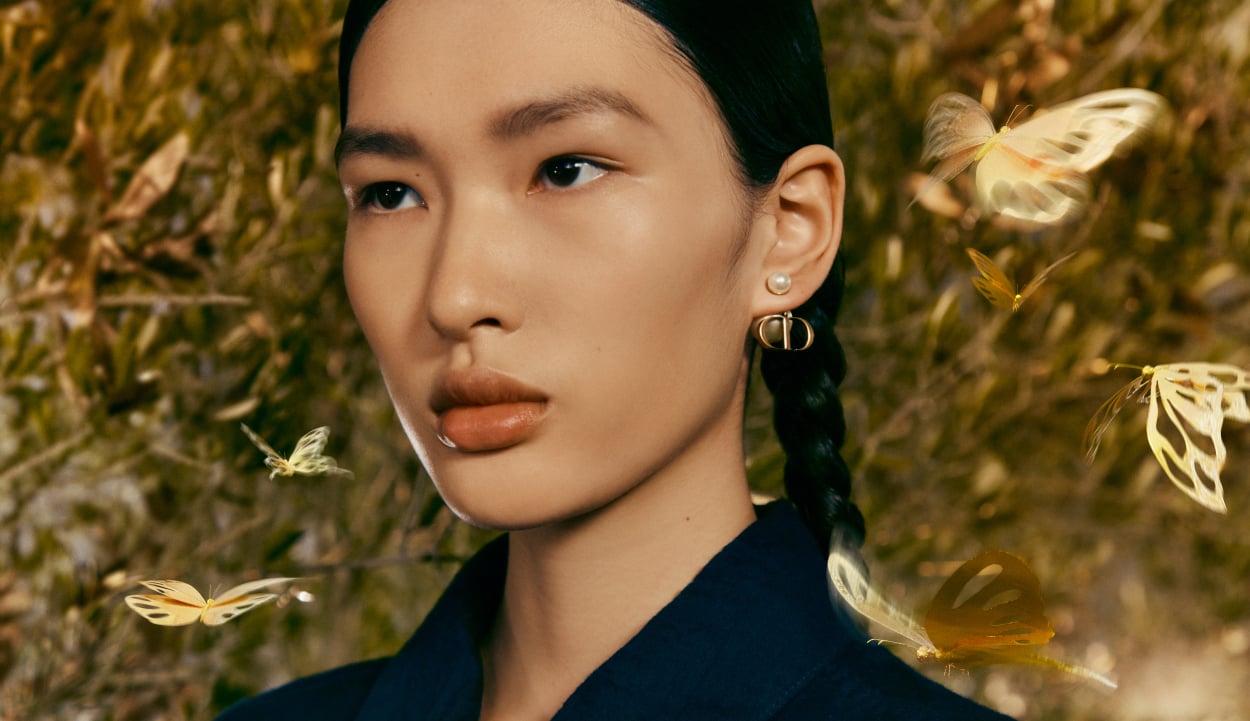
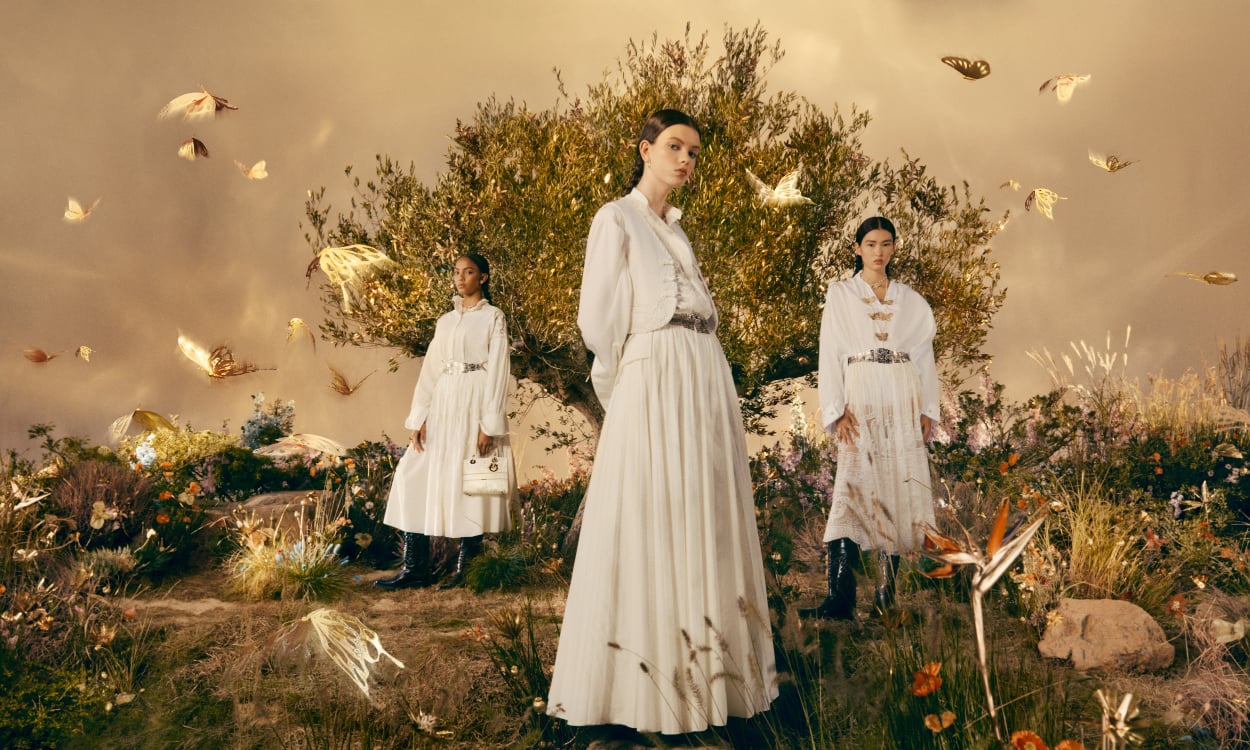
For the Dior Cruise campaign, we worked very closely with the brand team to clearly define the look and feel of the CGI butterflies, ensuring they blended seamlessly with the brand’s elegant visual identity.

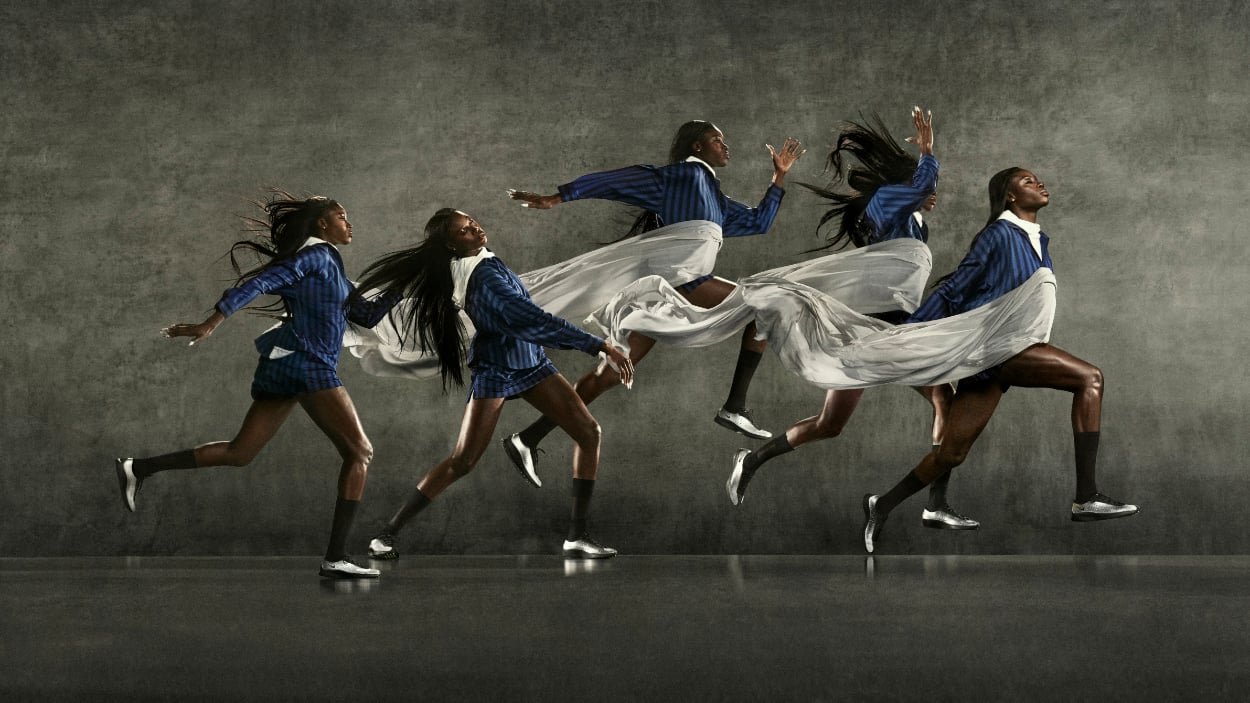
Equally, when working closely with photographer and director Daniel Sannwald on the Nike FA25 Future Runway campaign, which we shot on a very low-resolution infrared camera, our team utilised a tool called Topaz AI to integrate it with the higher-resolution footage.This technology fully allowed us to upscale the material so it was visually consistent with the rest of the edit, whilst also slowing down certain shots to enhance their impact.
As both of these case studies – one 3D, one AI – evidence, technology should always serve the idea rather than overpower it. One of the most significant advantages of using a multi-faceted pipeline is that you can iterate much faster whilst locking down elements. Having the ability to iterate on audio early, for example, allows edits in a project to align on tone – creating more time on the tail end of production for the final details. Or, through a successful hybrid workflow we can manually dial in as well as procedurally create materials that can feel classic, considered and analogue.
Additionally, bouncing back and forth from VFX, edit and CGI quickly, means being able to demo ideas faster. Using a mix of traditional CG, AI and other blended technologies to create a campaign that fully meets the demands of a brand, allows us to create bespoke assets both stylised and photorealistic with product focused accuracy. Through AI we can then use that manually generated content to iterate fast to try ideas, lighting, composition and movement. In some cases this can reduce rendering times and compositing timelines, which in turn can bring down costs.
The reality is that a campaign is no longer the end result of a collection where the story is already set in stone. In many cases, the campaign is where that collection actually begins to take shape – literally and in a figurative, cultural sense. When we work with a brand from the beginning of a campaign, we provide insight into how something will be captured, composited or rendered, and this can directly influence design decisions.

Technology’s Influence on the Future of Fashion Media
Just as channels fashion uses to communicate with its audience aren’t reverting to analogue, the goal of presenting and promoting products and collections shouldn’t be to shy away from digital. It should be to find ways to ground the necessary steps of post-production (whether they actually occur in post, or much earlier) in the physical world.
We’re now seeing a growing interest in bringing more physicality back into the digital image process. Recently, for example, we were experimenting with ‘Film On’, an analogue process that transforms digital footage by printing it onto celluloid, processing it, and scanning it back into digital. The result is an authentic film texture with the DNA, depth, and grain that only comes from light hitting actual film stock.
Traditional grading runs alongside that print-and-scan process, giving consistency, while preserving the visual language of celluloid. The process extends beyond film into other analogue mediums, each with its own texture and character, and all bridged by having the precision and flexibility of digital underneath. This kind of workflow can work across digitally shot footage as well as full-CG images that have never been observed by a real lens or touched a camera sensor.
This kind of reinterpretation, from our perspective, is representative of the fact that both photography and CGI are constructed representations of reality, simply emerging from different moments in time. Outside of photojournalism, the point of a picture has never been to capture objective reality, but instead to bring to life the photographer or the team’s visual conception of it.

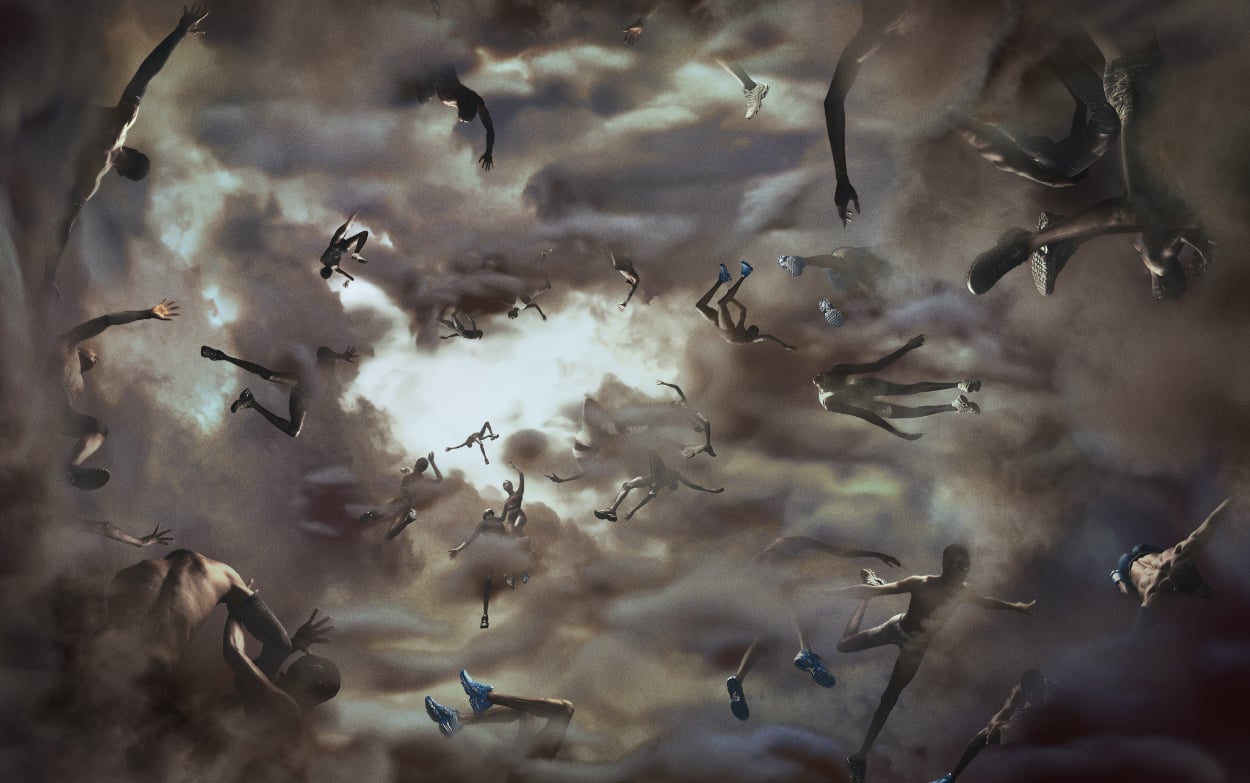
Introducing generative AI to the mix certainly changes things, but the trajectory of storytelling is still consistent: the boundaries between mediums are becoming far less fixed, and a strong visual identity is defined less by any single technique and more by consistency of mood, tone and world-building across formats.
Looking ahead, the future of fashion media feels incredibly malleable, provided the team doing the molding has the right combination of technical skills and creative judgment. By continuing to experiment with new technology, our aim is not just to challenge pre-established ways of working, but to use workflows that transcend CGI, AI, VFX, colour grading, music, still photography and more into a campaign creation process that can stretch into new creative spaces.
It’s clear that AI is here to stay, but very soon we expect most of these tools to feel less like separate layers and more like part of the accepted workings of campaign creation, the same way previous additions to the technology toolkit did. The pace and the scope of disruption might be bigger, but the underlying force is the same.
As that happens, the role of post-production will also likely continue to expand, with teams like ours having a say not just in how campaigns are made, but what gets made.