
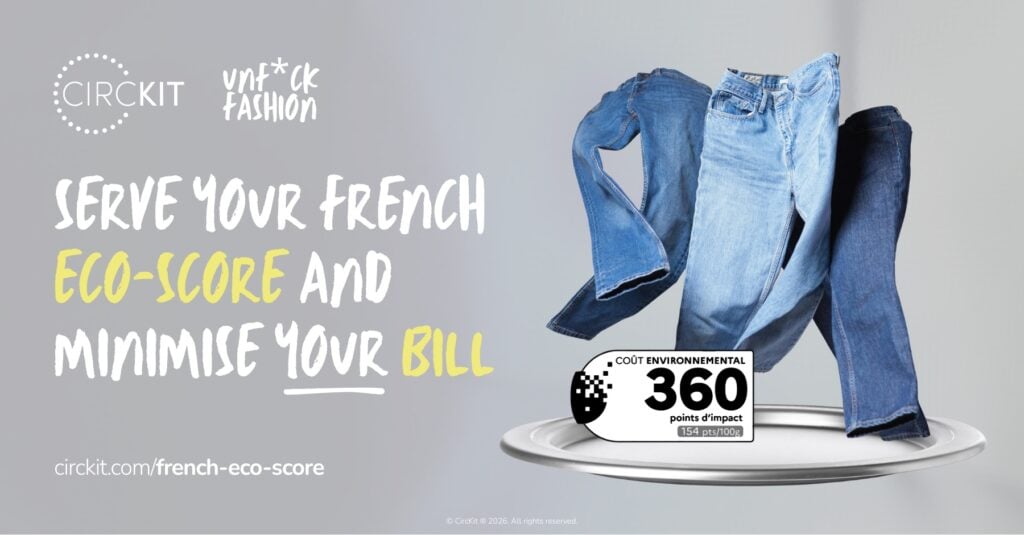
CircKit has launched a tool for calculating and publishing France’s Environmental Cost scores for clothing. The company says its software can reuse product data from its wider platform, show which stages of a garment’s life contribute to the score, and flag gaps in evidence prior to publication.
France’s environmental labelling framework took effect in October 2025, with publication generally being perceived as voluntary at the time. Since 1 October 2026, third parties have also been able to calculate and publish scores using available data and estimates based on it, without first obtaining a producer’s permission, or waiting for it to publish. If the producer subsequently supplies its own score, a third party already displaying a score must switch to the producer’s within a month, with the aim of elevating the standard of available data, and creating incentives for disclosure.
The official score expresses a garment’s lifecycle impacts in points, based on inputs that include the garment’s weight, fibre composition, and the countries where different processing and manufacturing stages take place. If a brand can substantiate where a fabric was made and finished, it can use those details when the methodology permits, instead of relying on defaults.
The French authorities already provide a free calculator through Ecobalyse. CircKit’s proposition for brands selling to French retailers or consumers, in contrast, is to reuse the same records across a catalogue, and across outputs such as lifecycle assessments, placing a bet on breadth, completeness, and robustness of data as a differentiator in a market catalysed by a new kind of cross-party incentive.