

Released in The Interline’s DPC Report 2024, this executive interview is one of a nine-part series that sees The Interline quiz executives from major DPC companies on the evolution of 3D and digital product creation tools and workflows, and ask their opinions on what the future holds for the the extended possibilities of digital assets.
For more on digital product creation in fashion, download the full DPC Report 2024 completely free of charge and ungated.
Key Takeaways:
- Digital transformation is crucial despite economic challenges. While investment in technology may be difficult in the current climate, companies need to focus on leveraging existing digital tools and continue digitising to remain competitive in the future.
- Data is the foundation for future innovation. 3D digitisation creates valuable data that will be essential for leveraging AI and other technological advancements in the fashion industry.
- Digital co-creation is emerging as an effective model. Suppliers taking initiative in 3D technology adoption are creating new opportunities for collaboration with brands, regardless of the brand’s 3D maturity level.
In a difficult climate for fashion (and retail in general) new and ongoing investments in tech and talent-intensive initiatives like digital product creation can be harder to justify. Do you believe the business case for 3D / DPC is strong enough? And how is that business case evolving to meet a changing industry?
Let’s face it: the excessive physical sampling in the industry is still there, the old inefficient processes have not changed, and at the same time sustainability is becoming an important metric. I doubt we’re going to solve any of this by continuing to do business as usual. Maybe the old habits are part of our current struggle?
It is of course hard to convince anyone to invest in technology right now. However, I think that tough times help companies focus on business priorities and what tools they already have and how to leverage those. In other words, today many are looking at what they can get out of digital in general and 3D specifically, instead of adding more tools.
Having said that, I am encouraging everyone to not stop digitizing. We are not only facing economic stagnation, but also technological disruption: the future belongs to the companies that own and interpret meaningful data. AI and other technological advantages can only be leveraged with the right data set. And 3D is data.
For material development and sourcing to switch from analogue-first to digital-first, the companies at both ends of the supply chain need to embrace the value of fabric digitisation and commit to making it the standard, in order to access the benefits. What we sometimes see in reality is an unequal distribution. Sometimes vendors and suppliers put the effort in to provide digital fabrics for one brand customer, only to find that their other customers aren’t set up to work in 3D, which doesn’t give them the competitive advantage they hoped. Other times, brands put out the call to receive new materials digitally first, but find that their suppliers can’t provide them. How do we get to greater scale if it feels like people at each end of the value chain are waiting for the other to adopt first?
I can only echo that. It is true that companies on both sides of the supply chain are promoting the adoption of 3D technology. While brands asked for 3D samples in the past but many never really realized larger sample savings, we see an increasing number of vendors taking the initiative to invest in 3D technology. Those suppliers are influencing the way brands operate, are focused on their ROI and realize high efficiency gains quickly. This new method of so-called “digital co-creation” benefits both parties and is not contingent on the brand’s level of 3D maturity.
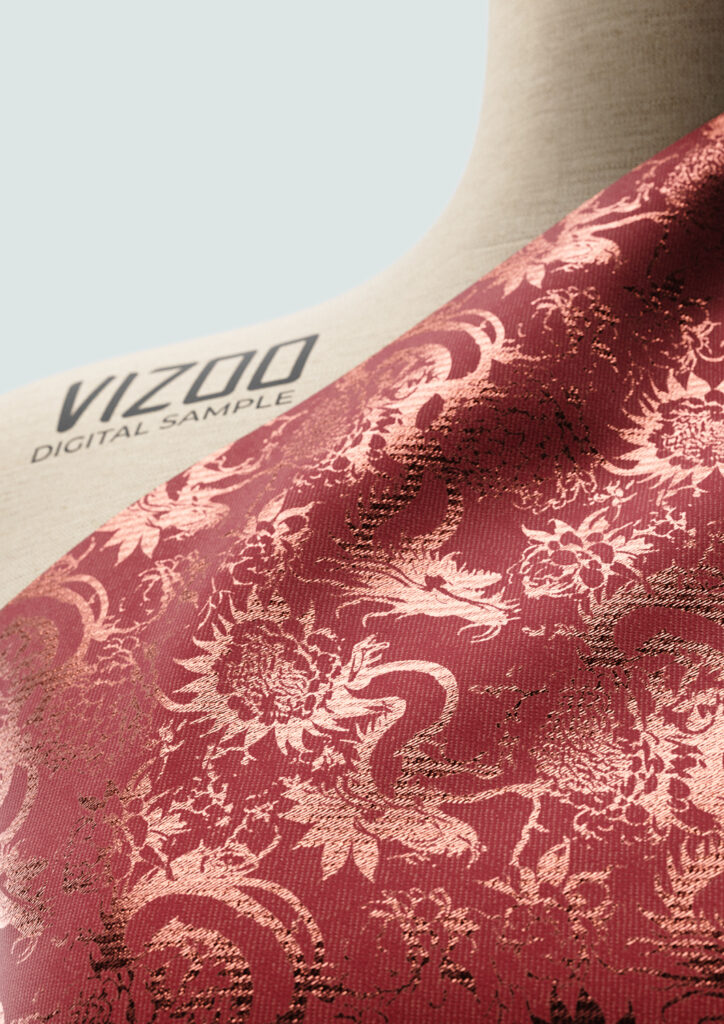

The essential promise of a digital fabric is that it represents the physical material across every necessary parameter – from aesthetic characteristics to physics properties. You’ve dedicated a lot of time in the last year to designing a validation workflow, and implementing the real-time physics engine PhysX, presumably to increase the odds that a digital material is as accurate and comprehensive as it can be, first time. Why is this so important right now?
At present, there are two significant challenges to the adoption of 3D technology: a lack of general trust and limited resources.
Our validation process is addressing the trust issue. DPC does not only have supporters within the brands. Many people do not trust it and so it constantly undergoes checking and review. This results in a slower adoption process. Second, when suppliers digitize fabrics for brands, they cannot objectively assess whether they have done a good job. In this context, we have developed a standardized validation workflow which helps brands and suppliers to assess digital fabrics and build confidence.
It is evident that the creation of a high-quality digital fabric requires a certain level of effort. In particular, the manual measurement of physical properties can be a time-consuming process. Moreover, some companies request the measurement of each and every fabric – even if they are very similar. Given that a 3D real-time simulation program can only be an approximation of the real physical drape, we at Vizoo believe that for most DPC application areas, a good approximation of the physical properties is sufficient as well. With physX providing high-quality physical data with a couple of clicks, many of our clients have been able to speed up their DPC asset creation process significantly, saving resources and maintaining the high-quality of their data.
The biggest question when it comes to fabric digitisation is who should be responsible for it. For direct control and quality adherence reasons, brands might prefer to receive swatches and scan them themselves, but this is hardly the quickest approach. For speed and collaboration reasons, suppliers digitising at source is the logical approach, but this requires them to assign dedicated resources and to target different profiles for different customers. The sensible middle ground is regional scanning hubs run by technology and service companies like Vizoo, and it feels like this is perhaps the model of the moment given that it can free up resources for suppliers and increase speed and quality for brands. But what does it take to run a successful digitisation hub – or a network of them – today? How do you train, certify, and provide technology at the scale required?
We strongly believe that offering a digital twin of their fabrics will become a core responsibility of the fabric vendor. Today, progressive fabric vendors and platforms are already proactively offering 3D fabric samples for download.
Given that this is a completely new area of expertise, there are several ways to offer a digital twin. Some brands and suppliers prefer to develop this capability in-house, while others find it easier to use with external scanning hubs.
As the engagement with scanning hubs increased, we saw that price was a primary competitive factor. Naturally, many companies selected the most low-cost offering which unfortunately resulted oftentimes in low-quality fabric data output.
This issue triggered the initiation of the certification program with the goal to accredit third-party service partners. This audit should help brands and vendors to build trust in the scanning hub services. Beginning 2023, we accredited MAS in Sri Lanka as our first certified hub. Today, there are six Vizoo certified hubs and we are actively seeking to expand this network.


What do you think is necessary for fabric digitisation to help drive the next stage of all-round digital transformation? It seems today like different companies, different industry bodies, different countries, and even different departments within the same organisation are pulling in different directions. At a time when the cost of innovation is so high, how can we encourage people to pool their expertise and resources to elevate the material development and sourcing process for everyone?
This is an excellent question. I do observe, that many fashion companies are using the same tools, to achieve slightly different results. However, the path to achieving this is highly individual, with companies independently building their technological landscapes, investing significant resources and undergoing a repetitive cycle of trials and errors.
I firmly believe that there is significant potential for fashion companies to collaborate on a technological level. Undoubtedly, such a collaboration needs a neutral platform. Here I see textile associations playing a pivotal role in driving digital transformation. For example, if associations were to take on a more active role in facilitating access to technology (like setting up technology hubs) as well as providing trainings for their members, they could significantly enhance the technological proficiency of the entire industry. This could be further extended by different associations cooperating on a European level, fostering an environment of innovation and growth.
To realise the long-term vision for a complete “digital twin,” it should be possible for any decision across the extended product lifecycle to be made based on a digital representation of the physical asset, with total trust. Which of those decisions do you think meet that high bar today? And which do you believe has the furthest distance to travel?
I have observed the successful implementation of digital content successfully in almost all application areas from Design to eCommerce. Recently, AI has the helped to unlock eCommerce application where missing realism was an issue.
Nevertheless, there is currently no straightforward solution for simulating haptics in a satisfactory way nor for replacing any wear testing which relies on the individual perception of the person wearing the garment. Furthermore, I do not think that there is efficiency gain (yet) in achieving a 100% digital process. Let’s acknowledge that ultimately, we are selling tangible garments that are worn by real people.
To conclude, I would like to quote one of our clients: “Keep 3D as good as it needs to be.”