
Welcome back to the Interline Podcast. Today, I’m going to be getting out of the way pretty quickly with this introduction because we have a longer show than usual for you. One that gets into some big topics around sustainability, the viability of domestic production, forecasting, profitability, basically a big sideways critical but loving look at the whole fashion business model.
For this one I’m joined by Simon Platts, who’s an industry veteran with a ton of diverse experience in the UK and in the global brand side of things. And he now serves as an independent responsible sourcing and ESG consultant. If you’ve ever found yourself saying, “well, I’d love to have more transparency, but…” or, “well, I’d love to manufacture closer to home, but…” then mine and Simon’s chat should have something for you.
Listen to the latest episodes / subscribe below, or read on for the full transcript.


Weekly discussions, debates, and technology insights for fashion and beauty professionals, hosted by The Interline’s Editor-in-Chief, Ben Hanson.
Find daily editorials, reports, analysis, and stories at The Interline.
With a business model dominated by licensing, and a heavily consolidated supply chain, eyewear has long been a hostile market for new designers. Now, additive manufacturing and technology miniaturisation are promising to lower barriers and increase the pace of innovation.
To understand the different futures for eyewear as a category, Ben talks to Sébastien Brusset – Head of Optics and Design – and Marc Zouari – Co-Founder – of Visages.


Never miss an episode
Get notifications for new podcast episodes, plus our weekly news analysis, events, and more, delivered straight to your inbox.

NB. The transcript below has been lightly edited.
Simon Platts, welcome to The Interline Podcast.
Thank you.
It’s a pleasure to have you here. First up, give us a fly through of your career in Fashion. Walk us through the history a little bit and tell us what your current roles are, because I think you’ve got a few of them…
A few bits going on, yes. So I started in the industry back in 1985 as a young Saturday sales consultant on the shop floor of Next in Sheffield. I always had, I think people call it, a passion for fashion, but it wasn’t what was potentially going to be my chosen career. I was much more active in the sports field. But I loved working with clothes. I’d always loved fashion, tried to stay with the trends – although the cost around trying to stay with the trends back in the eighties when it was Lacoste and Tacchini and Fila and so on was quite difficult. But I did my best with what I could do.
So I got a job working for Next. During my time in the sixth form, I was offered a full time junior management development program when I left. So I thought, OK, this could be interesting – it’s a proper job, in an industry I’m really quite keen on. And so I took that role and worked full time, worked my way up to become a floor manager in one of the stores in Sheffield. And as much as I enjoyed it, and I love to get involved in customer engagement and so on, I always prided myself on keeping the shop looking really visually attractive from a merchandise point of view. So the windows always looked strong. If there was any space within the stores, I learned from the window dressers how to kind of “zhuzh up” displays. And I really kind of felt that that made the shop look great and it performed very well. And that got noticed by some of the area managers, regional managers who then took me around the various stores within their region to try and help the other branches look good.
That then got noticed by the head office. That’s when I was offered a position to move to the head office in Leicester for Next doing visual merchandising for menswear and boyswear for the company. So I worked in what we call the mock shops, which were like little mini shopping malls, doing visual merchandising displays, seasonal changes and so on. And was approached one day by one of the buying managers who’s now the CEO of Reiss, called Christos Angelidis. And he said, you should be a buyer. You’ve got a really good eye. And I thought, well, that sounds cool, you know, they traveled the world. I’d met a few of the buyers when they’d come down to the mock shops and it sounded great. But do I have the qualifications? ‘Cause I’d come from college, sixth form, gone into stores. And he was like, yeah, you don’t need to worry about that. We want, we want that balance. We want people that maybe come from universities, but we really are looking for that balance of people that have come from the shop floor.
So I got the opportunity and I joined as a trainee buyer and moved through the ranks of trainee assistant buyer, senior buyer, head of department over a period of around 18 years at Next. And then I set up the Next UK arm of the sourcing office, the Next Sourcing offices that we had around the world. We wanted to bring that together in the UK and work closer with those regional offices. So I headed up the Next Sourcing office, which is when I stepped into that sourcing side of things.
Left Next after 20 years, which was incredible. That was kind of my upbringing. And, honestly, you couldn’t have had a better upbringing as a retailer that operates well and works efficiently and values people’s knowledge and commitment. But I left after 20 years and I set up as a supplier with an ex-colleague of mine. We supplied the high street with swimwear and accessories. Pretty much everyone you could think of – we were making their swim shorts and swimwear. Then that went into accessories like hats, gloves, scarves, socks, underwear, nightwear, loungewear.
And then I was approached by another old colleague of mine to head up buying for Blacks and Millets who had just been bought by JD Sports. So outdoors was my passion, personal passion, the outdoors. I’m a keen surfer and outdoor kind of person and quite active in the space of conservation. So it was a real busman’s holiday to be honest, to go and head up their own brand buying for Blacks and Millets, but also develop the portfolio of brands that they were looking to bring on board. I traveled to various different places. One of my great finds was working with a brand called 66 North, which is an Icelandic outdoor brand – incredible product, totally functional, but also had that fashion element to it. So, great product. And we brought that into Blacks, into a few stores to get that off the ground. So I was absolutely having the best time to be honest.
Then another colleague of mine, another old colleague of mine, she’d been at M&S for quite a while as the boss of all non-food products, Kate Bostock, approached me about a job at ASOS – ‘As Seen On Screen’. A great opportunity to go into, not a fledgling, but a company that was growing quickly and that wanted to get hold of the business of product and sourcing, and what needed to be sourced, how it was sourced, where it was sourced from, and how you looked at that from a strategy point of view, visibility, transparency.
Also, I talked about, there’s a lot coming down the road when it comes to product. Visibility is going to be important and knowledge. So I took the role, we called it responsible sourcing. It developed, I took on the ESG part as well, the environmental social governance side of things. I said, if we’re to do this, we’re going to buy product from people, we’re going to need to know where we’re buying it from, who we’re buying it from, what it’s made of. And we’re going to have to go on a journey of improving that visibility and improving the products, sustainability credentials, if you like.
So I was with ASOS for 10 years. I left just under about two and a half years ago. After, you know, really we did quite a lot of good stuff within ASOS and they’re still doing a lot of good stuff as well. There’s still a lot of my team there and there’s some new people as well. But I just felt I wanted to now work a little bit broader than necessarily with one retailer. Although, working with ASOS gave me access to many, many other brands where we collaborated. I use the word “co-opetition”. We work with brands that we perhaps could have seen as competitors, but to try and move in a non-competitive space of improving conditions for people and planet and also the products from a sustainability point of view.
I’ve now set up as a consultant and I’m working with the areas that I really care about – whether it’s innovative material, new technology and innovation, or regional sourcing strategies. So trying to use my X amount of years (far too many years, nearly 40 years in the industry) to better use, to drive things better. Better performance, better visibility, better ways of behaving, better conditions.
As much as I’m a person that cares passionately about the outdoors and planet and people, I’m not what you’d call a “tree hugger” – as much as I care about that kind of thing. I understand and I have a very commercial modeled mind. So everything I talk about, you know, if you have transparency, if you know some stuff, you can do something with that stuff. So it’s how you link all this to commercial. So that’s my thing now: how can we do things smarter, better, that bring value and equity but also unlock capital so you can invest and drive harder in terms of being that better brand?
So that’s where I’ve come from, if you like.
Well, okay. So, pretty extensive career. But I understand where the focus is at the end there, as you just described. I understand where that crystallises into the roles and the perspectives that you’ve got now.
I think I want to zero in on: you mentioned, not what you’d class as a “tree hugger” or whatever the common parlance is for people. But let’s focus on that side of things, because I think the perspective that you’ve got across fast fashion, what you would class as fast fashion in there, across a pretty broad spectrum of different brands and product types and categories, across a blended selection of job roles and things. You’ve got that perspective on efficiency and effectiveness and bringing stuff to market.
You’ve also got the perspective, I think, on sustainability from a real insider’s point of view, which is to say you’re not an outside advocate, but somebody who has been directly immersed in go-to-market and creating and sourcing products. And that probably gives you a bit of a vantage point on that side of things.
So I want to start with a bit of a big question early, which is: fashion kind of feels like it’s constantly on the cusp of doing the right thing when it comes to sustainability. It feels like we’re always just around the corner from having the right external factors and the right intrinsic motivations to become a more sustainable industry, environmentally and ethically speaking – but at the same time, as you know, it’s also an industry that’s been built on what people used to call “chasing the cheapest needle”. What’s your general perspective on whether fashion as a whole (and put a pin in ultra fast fashion for a minute) is actually moving in the right direction or whether it’s kind of just spinning its wheels and always staying just around the corner from proper action here.
Yeah, yeah. Well, I think that the analogy of these spinning wheels and it kind of being almost like you start to improve and then they take several steps backwards. I mean, there are economic circumstances that lead to that adjustment, if you like, in speed and ambition. So I think that’s always going to be there for sure, but I do think with everything that’s coming down the road now in terms of law, legislation, technology, innovation, AI, changing models around the way that people consume.
The definition of consumers is generally to eat something or to ingest something, but if we just say consume in terms of how we take products and what we do with it and when we want it and how we shop and so on, it’s changing and it now makes it more of an opportunity to be better. I mean, being good at business will mean you have a good business and what’s not good about knowing your whole supply. I call it a value chain. It is a supply chain, but because you’re talking about where everything comes from, it’s a value chain.
Yeah, we use the term value chain as well.
And if we can start to just switch our mentality a little bit and understand and use these better words that associate you with something different. You say a supply chain, it’s a supplier, it’s a supply chain. It just sounds a little bit rubbish. Whereas if it’s got the word value, automatically you think about it, just psychologically you think differently. So if I now know where I’m buying my materials from, which ginners, spinners, dyers, which forest fields, farms, if it is a man-made fibre. How can it be something that’s better from the beginning, is it a functional man-made fibre and therefore it’s relevant, or are we just buying man-made fibres because they’re cheap?
And so there’s lots of elements to play in this. But if you throw into the fact that knowledge is going to give you commercial power, if you throw into the mix that you’re going to have customers that want speed and agility, and you’re going to have technology that’s going to support you – if you’re going to get into all that, that level of information, why wouldn’t you want that to be able to then set your business properly from a base?
And then you look at (and we’ll have to talk about this) – there are things called digital product passports coming down the road. So we’re going to need that information anyway. So it’s becoming less of a, well it’d be nice to do it. Or, you know, we’re a Patagonia, we’re a Finisterre, we’re a Nobody’s Child. We want to do this because we feel it’s right to actually, you’re going to have to do it to be able to trade or certainly to be able to continue to trade in the way that you want. And it may be regionally.
We didn’t have to tidy our bedroom up; it’s okay, but we’re not going to spend too much time on it. It’s kind of like, look, if you don’t tidy your bedroom up, everything on the floor, when I come home from work tomorrow, it’s going in the bin pal. It’s kind of, you know, it’s last chance saloon.
So I think these laws, these regulations, these duties and tariffs that are going to come into play not too far away. I mean, we’re in 2025 [at the time of recording] We’re in a fashion environment that’s always months ahead from a design point of view, even if you’re operating in a faster fashion market. 2026 in a few weeks’ time is next year [at the time of recording]. And there’s a lot landing in 2026 and ‘27 that’s going to mean that these kind of, well, we might do something is going to be a, we’re going to have to do something.
So I think that just around the corner will be, you know, legislation and laws not going to fix fashion. No, no way at all, but it’s going to certainly be a little bit of a stick that’s needed. And then along with the carrot that comes through, well, knowledge and power and continued trade and different ways of being able to source products and sell products that reduce markdown, reduce overproduction. Well, I guess we’ll talk a little bit more later about overconsumption because that’s a piece in itself. But certainly reducing the overproduction side by being smarter and knowledgeable and being more profitable at that intake part allows you to then valorise everything else that’s coming down the road in terms of delivering an exit and a profitable business.
Well, let’s take that pin out of ultra fast fashion and let’s do the over consumption, overproduction piece now because you and I obviously both have a UK perspective here. So we’ll keep on our domestic lens for a second. When we spoke ahead of this recording, you mentioned you’ve been part of some sessions that involve the UK lead for the company that most people use as a synonym for a lot of the problems that are inherent in selling huge volumes of cheap clothing. I’m keen to get your perspective on what the outlook is for that model in general? Because, I’ll be honest, I’m conflicted about some of it.
On the one hand, we really do need to curb the amount of pure product that’s going through the system, the overproduction side of things, especially if there’s no end of life plan tied to it. That is waste with temporary stops on the process. On the other, affordability matters a lot at the moment. And I’m not a free markets absolutist, but I’m one of those people, I tend towards free markets in the sense that people clearly want or need cheap fashion in volume. So it’s difficult for me to judge commercial enterprises for catering to that demand. What do you think is the outlook for that ultra-fast fashion model just generally, but I think specifically here in the UK as well?
Yeah, well, I think that, you know, we saw the model. We had bricks and mortar. And I’m sure before bricks and mortar there was something else. And I’m sure when bricks and mortar and high streets came along, that something else was a bit like, wow, this is not fair. And similarly with when e-commerce came into play and that model that we’ve got and that we’ve, you know, we’ve bolted a jet engine onto a horse and car, and what that’s delivered is exactly what would happen if you bolted a jet engine onto a horse and cart. An absolute disaster. And that’s ultimately where the overproduction using that legacy model and then just trying to do it quicker and trying to force a square peg into a round hole that at best starts to kind of eventually wear down and kind of starts to fit but with a lot of friction and that friction being cost, waste.
I mean the very fact with overproduction that we still have a model that does that as you said earlier, the cheap needle for me, it’s about chasing the smart needle. And the “smart needle” for me is a proper regional sourcing strategy, not just, well, I can get it cheaper here. And even with the amount of markdown I’m buying, no one’s doing anything about waste. I’ll just mark it down. I’ll job it off. I’ll get rid of it, whatever. Even we’ve heard about, you know, we’ll burn it for energy or we’ll just destroy it. Well that’s not right for the future; it was never right for the present but it’s something that people have done and, you know, we’ve got away with it but it’s such a waste. And the very word waste – that’s a commodity and if we’re going to talk about production in future and one of the world’s biggest let’s call them ultra fast fashion brands right now which still has a lot of questions to answer to but he’s working on solutions and has already delivered a model that doesn’t overproduce. How it makes it, how it does it, a lot of questions but the overproduction and you consider that most bricks and mortar and even a lot of e-commerce are still knowingly buying in excess of 20 to 40 percent marked down product. That’s commercially unsustainable and it’s certainly from a planetary boundary unsustainable.
And you said a key thing there, which is there’s a difference between making and shipping a lot of clothing and making and shipping excess clothing. The two don’t actually have to be the same thing.
Imagine if we use the tech, and this is it, even in my lifetime, the technology, the ability to be able to, you we were born out of a legacy, people didn’t know where things came from. You might have known who you were giving your order to, but did you know where the materials, the trims, the packaging – you know, it was never a thing. But now every little piece is a piece of added value.
And again, starting from designing that product and how you design it, how you develop it for its current life, towards its extended life, and then for its ability to come back into the mix and stay in a closed loop cycle to then go again. If we could just address the overproduction side of things, we would reduce the potential impact of what is called waste and the impact of the industry on what it takes and how it takes things combined with other things by nearly half. And then you can move into the, okay, people need affordable clothes, not cheap clothes, cheap disposable. That’s not what people need. It might be what people are buying, but what they need is product that does the job, whether it’s going out, whether it’s climbing a mountain, whether it’s going to work or a uniform, it needs to do a job.
And I think – and I have gone into the maths on this – if the knowledge, the equity that can be gained from the things you don’t know are put into play, I would argue that any brand that says, well, we can do more sustainable materials and we could pay a bit more to our workers, but if we do that, we’re going to have to charge the customers more. I would say, OK, hold that thought, go and do everything that you need to do as a business first and that many other industries whether it’s aerospace, automotive, believe me, they know where every rivet comes from, every single piece of componentry and they design it and then they recover it and recycle it. And they need to know that because if they don’t know where their rivets come from and that plane comes down, you’ve got a big problem.
Now in the world of textiles, they’re just not needed to, but now a digital product passport is going to need that as a necessity. But what it does enable you to do is unlock that potential. And if you can do that and then say, and we’ll give you this transparency. And actually, we feel that there’s an element of a cost add on for you as a consumer. Fine, but don’t do the lazy thing, which is just say, well, we can do it, but you’ve got to pay more for it. That’s just lazy.
I would agree. And I think as well, if you do that and it doesn’t come with the attendant, transparency and actual effort into understanding your supplier base, then all you’re doing is raising prices to make people feel better. I think, when you talk about the couple of things that you mentioned there, which is coping overproduction, providing transparency and getting to the correct volume of clothes at the correct price that does the job.
Correct, correct. You’re not addressing the issues.
I think there’s a couple of levers that people want to pull. One of those is domestic production. And one of those is actually making things in-country because theoretically at least you remove a lot of the uncertainty if you don’t have to commit to massive volumes of orders offshore six to nine months in advance in order to get things to where they need to be.
But I think it’s also – you and I would probably both agree – not exactly easy and not a bed of roses to make domestic production take and to make it work. So I think I want to start with one of the problem side of things. So you and I both in the UK, I think maybe for people who aren’t, they wouldn’t be familiar with the kind of expose on the factories in Leicester from a couple of years ago, where, you know, one homegrown fast fashion company became a wedge for exposing the fact that a lot of what we think of as problems with the overseas sourcing model – wage theft, exploitation – that sort of stuff exists at home as well. So it’s not the case that we can just say, if we took the existing model and we moved it closer to home and we didn’t architect in transparency, we didn’t architect in fairness, that that would somehow be workable and that would somehow be better.
I want to get your take as somebody who I know thinks a lot about the domestic production side of stuff here in the UK. I want to get your take on what the impact of a lot of that has been on UK brands and on UK sourcing and manufacturing.
Yeah, I mean there was a lot that went on, especially over the COVID period. I live in Leicestershire, and I don’t know if you remember, but Leicester went into an extended lockdown. A lot of that was laid at the door of the textiles industry. I would say there’s a lot of truth to that. As we all know, not everything we read and see in the news is 100% accurate. But there were issues and it’s done a lot of damage, a lot of damage to domestic manufacturing, in Leicestershire, but also some of the other regional hubs.
The UK has many, many brands, many, many suppliers making lots and lots of different types of product from high end to high street retailers. But it did hit hard – a lot of them were stories and a lot of truth as well. But actually this year [2025] in November a report was done called the Tasset Report and it actually found that a lot of the claims were about exploitation and were quite overstated and that the things that were happening within the supply chain in the UK as a general were not actually that much different to what’s happening anywhere else in the world.
I can tell you, having been to most regions in the world where products are sourced, there’s good and there’s bad. We could take customers to factories in Bangladesh that are state of the art, but you’ve still got an issue around what these workers pay; they’re paid a living wage or a wage in Bangladesh that’s legal, but is it right that they’re kept in low wage scenarios by our standards?
So there’s so much in this, but from a UK point of view now, we’re not going to be opening Arkwright Mills again, we’re not going to be going back, we don’t need to go backward, we can look forward. And what could the UK be strong at? So it can be strong on Jersey, it can be strong on Woven, we’ve got access to knitting, but we are losing skills. We are certainly losing a lot of the skills that were there during the sort of ‘70s, ‘80s and ‘90s. But it’s not all gone. The light is still on and the opportunities now for using onshore as part of a blended sourcing strategy. Absolutely, brands should be looking at what the UK can offer – whether it’s printing, whether it’s jersey – and how they understand the value of what the UK, similar to nearshore, can offer because it’s not going to be as cheap as some of the other regions further away where labour costs are different. But you can certainly get far more visibility, transparency, and work closer to the season. Well, it’s not really a season anymore, but work closer to the demands of a consumer and reduce that over consumption by using technology.
Why forecast when you can now cast and why, for example, print t-shirts and try and guess whether it’s going to be a shark that someone wants on a t-shirt or a little horse when actually that trend comes up you can print on demand and reduce your overall impact and drive up your profitability.
And I think that’s a really interesting bit. And I want to drill down on that actually. So, two things. One, we’re talking about the UK here because, you know, Simon and I are both based in the UK. A lot of the principles here apply to any region. Every country right now is trying to shore up domestic brands and trying to shore up domestic value chains as well. What those value chains can produce and what those brands produce is dependent on the region and it is dependent on what inputs and skills and stuff is available to you within the country. But the principles are consistent. But I think from a brand point of view, the main barrier that gets in the way of domestic production is what you were just hinting at there, which is the unit cost mentality.
I think for a lot of valid reasons, companies focus on the cost of making a product through established offshore relationships and manufacturing hubs. And when you contrast that like for like against the cost of doing the same in-country, the math doesn’t add up. It’s a very binary way of looking at things, but it’s very much a case of I can make this over there for considerably less than I can make it over here. My margin is what gets squeezed in the middle. Therefore I don’t see how I can continue down this road. But I know you’re keen on the idea and you mentioned it of valorisation. So, looking at the other benefits of producing closer to home, and recognising the other drawbacks of producing further away.
So yes, it’s cheaper to produce on the other side of the world. You then have storage costs and inventory costs, you have markdowns, mistrend windows, and things like that. When you produce in-country, you have other opportunities. Walk me through what you think is the right sort of calculus the brand should be framing that near shore, on shore part of a blended sourcing strategy through.
Interesting you said then Ben, you said, I know the maths doesn’t add up. You’re not wrong, but I would actually turn back to any CFO and say the maths that you have currently on your model doesn’t add up and you’re just not looking at it right. Because all those things you just talked about you’ve not only got cost incurred by capital, lost sales, markdown potentially quality, lack of transparency. Lack of transparency is going to lead to the inability for you to be able to trade in some regions if you don’t have it and you won’t get it – not to the level you need from certain areas because it just doesn’t exist. It’s such an opaque space. They’re all costs but if you’re looking at an intake margin and this is how still, and I’ll tell you, you’ll have a number of finance people within the industry say, no no no we work on profitability. Well. no you don’t, because if you did you’d be doing smarter things. You are KPI in, you’re giving key indications to commercial teams to go and chase intake and a cost price. There might be an element of speed, but then you’ve got air freight. Well, I’m sorry, the air freight window is going to not get you out of jail for much longer because that will be extortionate. The carbon footprint of airing product around the world is going to close that loophole if you like, because you might get a certain price for air freight, but then your extended producer responsibility costs for your carbon footprint is going to be phenomenal. It’s going to be a crazy price. So that’s going to close down.
So there’s going to be all these factors that, actually, when you start adding up the new maths – not the old math of I bought it cheap I didn’t have to pay any taxes for markdown and disposal and waste, I didn’t have visibility. No one questioned it. It would just shove it under the carpet when that now comes to reality then the new maths of understanding the value.
I remember when I first started at ASOS and spoke to a group of buyers and said, you know what, forget intake margin. It’s irrelevant. And I then retracted it later during the conversation and said, no, intake margin is relevant and it’s relevant to get the best intake margin you can get. But that means visibility, knowledge, data, information, part of a blended strategy. Get the best price you can get for that product using the knowledge of, know how much the fabric is, I know where this has come from, I know how much I want to buy, do all those things, 100%. But it’s then about holding on to that intake margin and being responsible for the exit, the net margin.
And I think as EPR comes into effect, buyers are going to have another task on their hands. They are going to have to have much more of an involvement in what that exit margin looks like and that profitability. And that will be another trigger that promotes regionality.
Nobody wants to buy product that’s not going to sell. But if your KPI don’t get in the cheapest price and you’re working on, you know, long lead times and cheap, then it’s too attractive. And, like you say, you then look at something nearer and see a completely different cost price on paper in front of you, but you’re not looking at everything else that you’re going to have to account for.
And I think when that starts to raise itself and become something that sits in front of the buyer and says, wow, actually, I’ve now got tools and I’ve got AI and information. And this is why a certain company in China is working very well in this space because they’re a tech company and they value that data and information. If you’ve got that information in front of you that says, well, actually, I could buy this product from here, here or here. Here’s the three different cost prices. This runs through the data and technology that we can now use to predict, to now cast instead of forecasting. And it’s telling me the amount I want, when I want it, where I need it, I should be buying it from this region. And my God, that is not the cheapest price, but it’s the one that’s going to deliver us the most profitability through using smarter ways of buying and having the right thing, as you said, in the right place and also at the right time and at the right price.
Yeah. We talked about the brand maths there. Let’s talk about the supplier and manufacturer maths. So, brass tacks, is small batch domestic garment manufacturing a viable business model in the UK? I know you’ve done work with people who are trying very hard to make it one. And I’ve spoken to a bunch of those people as well. Same applies to the US, same applies to elsewhere, anywhere that doesn’t have government or state support for this kind of thing. I know a lot of those businesses are still going, but they’re very likely having to make ends meet by bringing in revenue from other sources besides cup making.
Is it a sustainable model on its own right now? And if not, what would it take to make it one?
So, working in the space right now, it’s not working very well because we don’t have the synergy between what the buyers and the commercial teams are asking for from the UK with little knowledge. I’ve known conversations that are still happening literally like now where people from brands are coming asking for prices that you’d barely get out of say Turkey or North Africa. And then they’re saying, well, if you can’t do it, we’ll move it here.
And then they’re threatened to lose business. So the model is not working very well because it’s not being treated with the respect it needs and the full understanding of what that product and what that price and what that service can give over someone else that’s a little bit further away, but so much cheaper. So it’s not working very well at the minute. But again, when all the ducks, if you like, get into a row in the coming next 12-18 months and there’s a full understanding then smaller volumes.
It would be great if the UK government did get behind British manufacturing with maybe a small percentage of its uniforms and PPE like we did during COVID – we got behind that and we started to stand things up. Unfortunately that government at the time decided to then go offshore for a cheaper price and I know several planes will have people full of PPE turned up that were completely useless and had to be destroyed. So it’s not the same metaphor, but what I’m saying is if it’s planned and it’s understood and it’s organised and it’s part of the government strategy, then yes, that would give a great foundation for good British manufacturing to have a little bit of continuous flow line production.
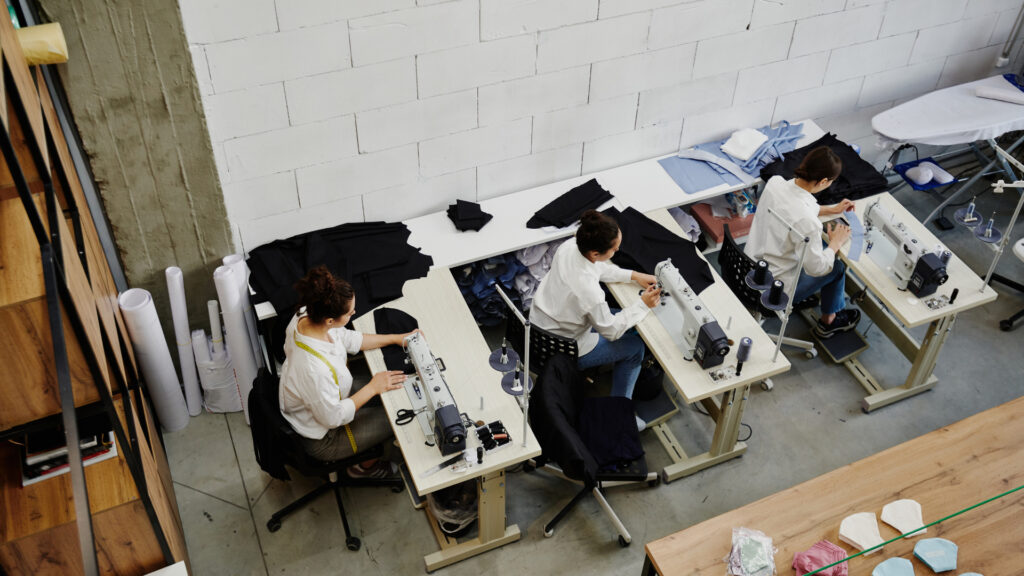
Then working alongside brands and retailers that understand the value, the offer that those suppliers can give. They are set up perfectly well with technology and machinery to produce small runs and do it little and often rather than have to take that financial risk with potential markdown and quality and so on and so forth. All with full transparency and cadence which plays towards your DPP, your digital product passport and allows you to continue. If, things do start to line up in the coming months, then I think the UK will, and is set quite well to be able to, offer that speed, that agility, the small volumes, and it’s using the technologies that we know are out there right now, the digital printing machines, the knitting machines that can produce garments rather than having to just do an arm and a body piece and a collar and so on.
I think there is still light for UK manufacturing, but by doing the right things. As I say, don’t go backwards. Don’t be thinking, great, we’ll start setting up mills again and we’ll start using water. It’s got to be a look to the future of what a UK fashion and textiles industry could look like rather than, why can’t we go back to what we had? It’s never going to go back, but it can have a future if it’s planned for and if it’s understood and valued.
So I’m very optimistic about what the UK could be. And I’d love to see a commitment from Government to help support British manufacturing – a little bit of carrot, if you like. So there’s plenty of stick out there. But if the UK Government’s got behind British manufacturing for textiles and maybe created, you know, a different way, if it built British manufacturing, it generated more taxes coming through people that worked in the industry than it would take in a small bit of product that actually is in decline.
So I know these conversations are happening and I’m hearing positive vibes on some of this as well. So I think we need a few more things to align and then we will have something that’s really healthy and circular. When we talk about recovering products, recycling products, and then reweaving and reknitting fabrics that then can be used in new products, there’s other parts of what UK textiles industry can look like rather than just we’re going to sew some garments together.
Yeah, I think that’s a good way of framing it. And, I referred to it before as cut making, and that’s just the language that people will use for these kinds of things. But I agree. I think innovation is the sole way to do it. I think earlier this season of the podcast, I spoke to Nick Reed, who’s founder of a climate conscious menswear brand in London. He had a ton of great stuff to say about transparency, technology. He had some less charitable things to say about his attempts to work with a fully UK material supply and manufacturing base for the reasons that you’ve just described, which was that UK manufacturers – I’m paraphrasing him here – can’t take capital risks because they don’t have that base of reliable work. It’s not there. The same way that if you’re a big factory overseas and you have a huge volume of predictable orders for t-shirts for argument’s sake, you’re then freed up to invest in other areas and freed up to invest in innovation without jeopardising your core business.
If you’re doing small batches on an unpredictable basis and you don’t have that background contract, government contract, whatever it is, something else to keep you solvent, then that’s when the challenge emerges. Because innovation is not cheap. The machinery you mentioned – 3D knitting, 3D weaving, 3D print, direct to garment, print, direct to fabric print – none of that stuff is free to acquire. I think you’re right that the conditions are lining up. I guess my concern, playing Devil’s Advocate, would be that these companies have to stay solvent and these things have to remain a good idea and have to remain effective for long enough for all of those pieces to fall into place.
And that bends where you need a more strategic approach to your supply base and a partnership with the suppliers you work with so that you can understand. I mean, one of the biggest issues we’ve got globally is that over the years, the industry grew in such a way that we call them “big sheds”, big production units in places like Bangladesh, Pakistan, India, Sri Lanka.
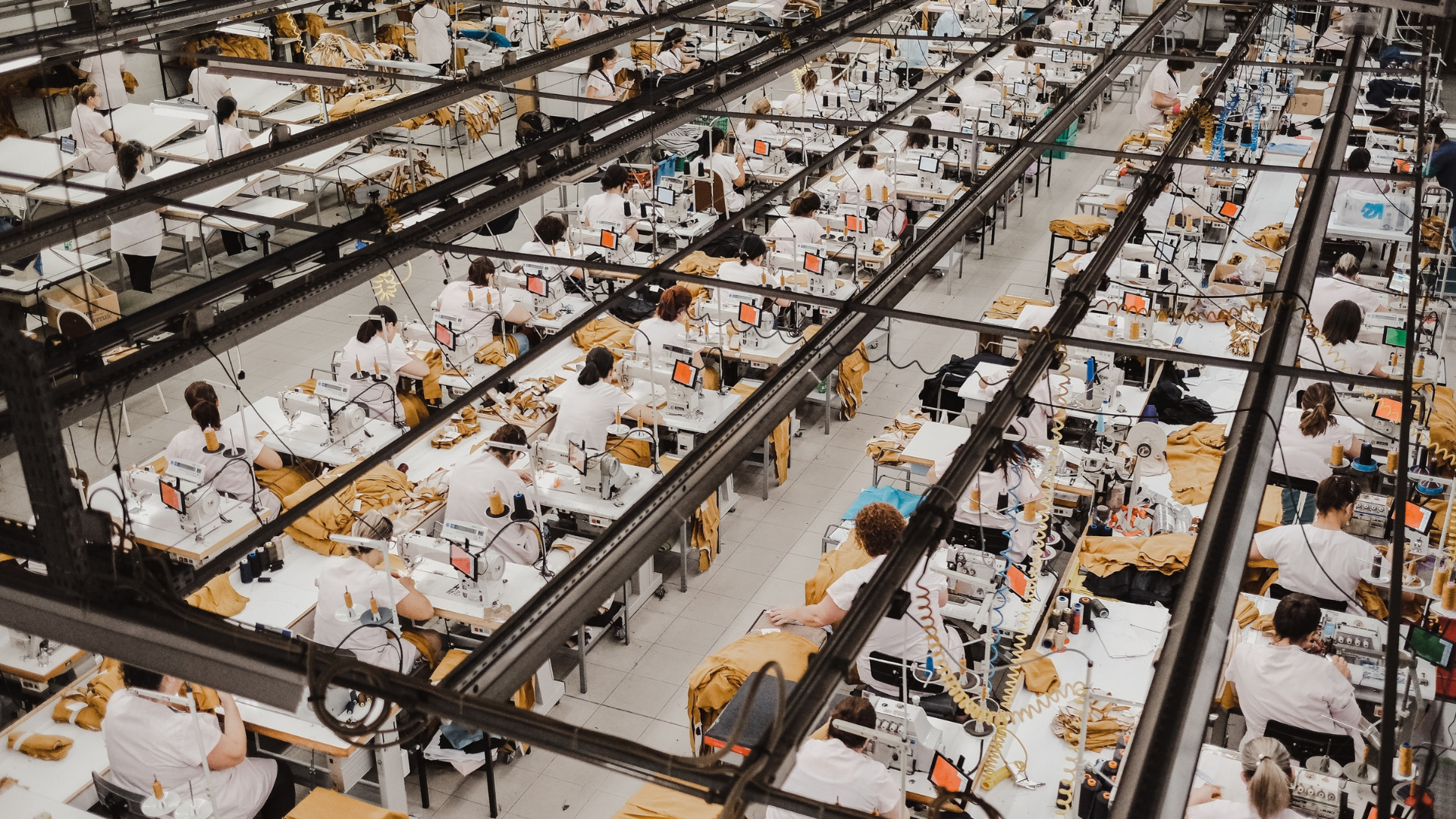
People wanted depth and volume and there wasn’t e-commerce, then e-commerce came along. All these manufacturers invested in building bigger and bigger and bigger units that could produce hundreds of thousands of similar garments or the same styles in different colours. And then the consumer base went, I want more choice. I want more width, less depth. And then the brands and retailers turn to these suppliers and say, okay, so you’ve just built a whole thing, which is like catering for families in a restaurant. And all that’s come in is couples are going out and you’ve got couples sat on family tables – it’s not efficient. But I’ll tell you what, if we change the configuration and work with you, and I’ve done this myself, working with suppliers that actually made the garments and were vertical rather than just giving it to agents. But to work with those guys, you’ve got to be very slick, efficient and lean, and have a relationship and make it a two way relationship. You don’t just tell them what to do, when to do it. You listen to them. You learn what will make their processes efficient. You put that into your model and say, okay, well, I can’t do this, but I can do that. Can you do this? And then you start to build something all of a sudden. Okay. It’s not the same efficiency as making hundreds of thousands of the same thing, but nobody’s doing that anymore. So just get over yourself, forget that and set something that’s fit for future.
And what the UK guys are starting to do now is realise that actually, yes, we’ve got a bit of resetting to do and it is a bit frustrating because we spent a lot of money on getting you ready for one thing and now you’re changing your mind. Remember, it’s not the brands that’s changing the mind. It’s the way that consumers want to have products. But yeah, OK, we either get out of the game or we change with the times. And I think the UK is ahead of the game in the way it’s operating like that, which is why I say they’ll be ready.
Yes, with a little bit of fodder would be great, but they’ll be ready. Then brands and retailers need to then still work closely and grow how they deliver that product at the right price, but how that delivers profit and understand the new maths. All of these things need to come together. And that’s where the opportunity is. If you just leave it as it is and try and keep forcing this square pay into this round hole, then you’re right, we’re never going to turn that corner.
I think the other element you’re talking about is disruption. There’s a measure of disruption that’s necessary there. If what we’re talking about is shaking up the way that an industry traditionally operated, not going back to it, and also educating the buying side to the fact that you need to think differently about this stuff, you are talking about disruption. And think that’s where you’re talking very much about technology as well.
It’s always interesting to us as a tech publication to see just how much disruption and how much tech comes from startup founders and people who do have fashion backgrounds who have that kind of legacy to work with, but also then the ones who don’t. I think that if there’s one thing I can say about fashion technology in general, over the course of the 15-16 years I’ve been covering it, it’s a pretty even mix of people who’ve seen the challenges firsthand and want to try and solve them and people coming from outside who think they have the solution and are impressed or set back by the scale of the problems within fashion.
What’s your take on that disruption pipeline? Have you seen any strong examples of where somebody from either inside Fashion or outside Fashion has gone: I think there is an opportunity to do something different here and I think I can create a solution that gets us to where we’re going faster?
It’s funny, Ben, because I’m starting to see that the better solutions are coming from people that are perhaps outside of the fashion industry and that have seen similar scenarios. We’ve seen things in the food world, transparencies, you know, come through in the food environment and we’re now seeing people that have worked with food companies working now with clothing companies on helping them map their supply chains.
I think there are still innovators out there, especially in the resale and recovery model and potentially recycle model where it’s people from industry that are saying, look we could do this differently. We can look at rental models subscription models. We can do resale. That seems to be coming from people within industry. But some of the tech solutions that I’m close to right now that are bringing real tangible products to market around how you might be able to valorise more data and information and how you would use that to avoid future costs and how you would use that to develop future circularity, future circular products, they’re coming from people that are outside. And I think it’s that lens of – and I know it’s a bit of an old cliché saying – fixing the problem using the same mindset that you had to create the problem sometimes means you’ve got this blindness. Having someone outside that didn’t create that problem and therefore thinks about it completely. I mean for sure Ben, I should have invented the Dry Robe. I was wearing what the equivalent of a Dry Robe was like 30 years ago, but it was a proper Homer Simpson moment, you know, but it’s because I never thought about it because I was just in it.
[Laughs]
But people that are outside and that are in that tech space, they’re bringing a completely different lens. And I have to say, having been to lots of events recently and looked at lots of different tech solutions, it’s kind of like, oh my God, why didn’t I think of that? It’s coming, and I’m seeing more outside here.
It’s a lot coming from outside. Interesting. I’d agree with that.
Final question: what are three things that you think are going to define fashion in 2026? They can be technologies, market forces, or a combination of those. And we don’t need to go super deep on them. Just which, which do you think are the major forces?
Well, I think that the upcoming legislations, digital product passports and regional strategies that Europe, America, Europe, some of the Scandinavian countries going even deeper around their credentials for sustainability and transparency. That’s going to be a massive lever. It’s not going to fix the problem, but it’s going to be a massive lever that drives an action that will be better for the industry, for people and planet. That’s one.
I kind of hate to say it, but I do think the garden still needs a little bit of weeding to allow the good stuff to grow. And I think, unfortunately, we’re going to see brands that we know and we’ve known for years, maybe not tens and tens of years, but maybe a few years, I don’t think we’ll survive much longer because the model’s changed. They haven’t changed with the times. They might be desperately trying to keep their model alive, doing different things and so on. But I just think we’re going to see quite a few more brands disappear within the next 12-18 months. But the good side of that is I think the ones that are investing now in the right technologies and solutions to give that customer awareness.
I’d probably say my third thing is that I think consumers finally are starting to understand that they maybe need to ask some questions. You know, certain things that they’ve done around food – well they’ve asked questions about where the animal husbandry or where that product came from they’ll start to apply that and start to behave a little bit different about how they decide what to buy, when to buy it and how much they actually need and then you’ve got the economics as well. There’s pressure on people and their wallet and people might make choices about, well I actually need something that’s going to last longer rather than that quick adrenaline hit of I’ve got a cheap product and I’ll just throw it away – and again you won’t be able to throw it away. EPR will mean that that’s not a thing that can be allowed by brands.
So I know that’s not three definitive things but there’s something in there.
Yeah, they’re all interrelated and those are some good ones in there. Let’s see how things play out in 2026.
For now, Simon, thanks so much for joining me for this conversation. It’s covered a lot of ground, but it’s an interesting one. Hope to chat to you again. Thanks for coming up. Bye bye.
Yeah. You’re very welcome. Take care then. Cheers. Bye bye.
And that brings us to the end of my chat with Simon. With any luck, you’re now thinking a little bit differently, maybe about the decision-making matrix that you put sourcing, production, planning, and other exercises through. And while you might not necessarily be suddenly about to jump on producing in the UK or the US or Europe, hopefully you’ve got some indication of why that’s likely to be a bigger part of a blended sourcing strategy for you in the near future.
For now, thanks for joining me. There’s a lot more to come this season, so stay tuned for that. We’re going to be covering some ground that we’ve covered today, pulling on some of these threads, and we’re going to be looking at some completely different stuff as well. I’m going to speak to you again soon.