

Key Takeaways:
- With audiences consuming an average of 13 hours of media daily and AI accelerating content volume across every platform, brands are generating more exposure but not necessarily achieving more meaningful connections.
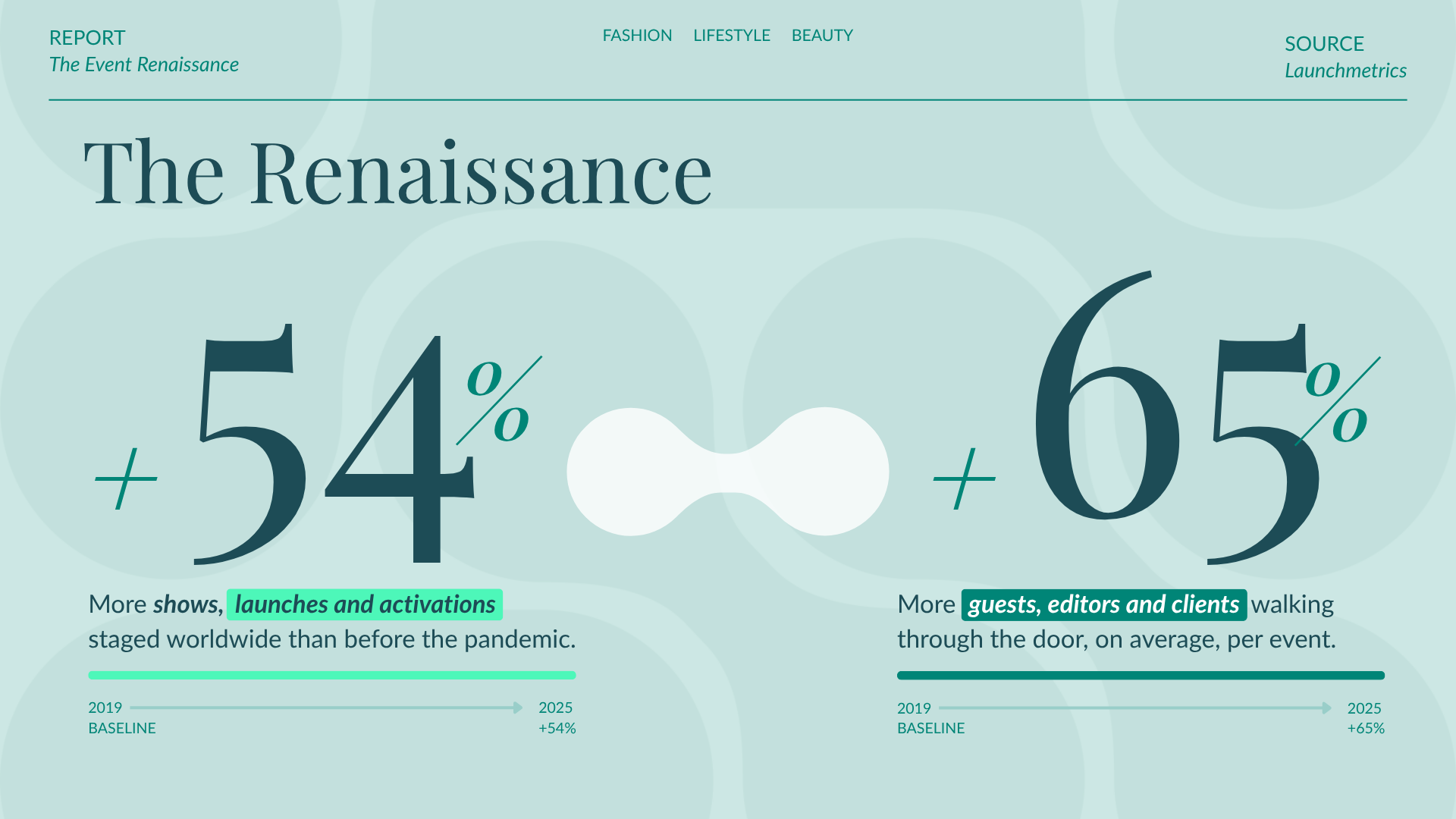
- Launchmetrics’ data shows global event volume has grown 54% since 2019 and attendance 65%, a rebound attributed to physical experiences offering undivided attention.
- McKinsey research suggests a 10% increase in consumer focus correlates with a 17% increase in spending — a dynamic that makes attention quality a more valuable metric than attention quantity.
The digital playbook worked, until one day, it didn’t. For more than a decade, brands followed consumer attention online, building marketing strategies around social platforms, streaming and precision targeting. Digital offered scale, speed and a direct line to audiences. But what it couldn’t always offer was quality, focused attention.
Consumers are spending more time consuming content than ever before, yet for brands, more exposure has not guaranteed more impact. It’s contributed to more noise. According to McKinsey, audiences now spend an average of 13 hours a day engaging with media, often across multiple screens simultaneously.
At the same time, AI is accelerating the volume of content entering those environments. Content creation is becoming faster, cheaper and more automated across every platform, compressing the window brands have to capture attention. The result is a media landscape defined by diminishing returns: more content, yet less connection.

Brands have noticed, and now they’re responding by returning to in-person experiences.
Across fashion, lifestyle and beauty, live events have grown significantly since 2019, with overall event volume increasing 54% globally and attendance rising 65%, according to our most recent report at Launchmetrics. This rebound reflects a broader shift in how consumers engage with brands in an oversaturated digital environment. As AI fuels content consumption, physical experiences are becoming one of the few environments capable of generating undivided attention and lasting memories.
For brands, that shift has important implications.
Digital channels are optimized for scale, but they also compete against constant distraction. Consumers scroll while watching television, browse while commuting and move rapidly between platforms throughout the day. The result is an environment where exposure is easy to generate, but sustained focus is increasingly rare.
Physical experiences operate differently. They create focused environments where audiences are fully immersed in a brand moment. Whether through a fashion show, community activation, immersive pop-up or intimate dinner, live experiences command a level of attention that digital platforms often struggle to replicate. They create emotional immediacy, social participation and stronger memory formation.

In-person experiences also generate significantly higher levels of consumer focus than digital environments, where multitasking dominates. McKinsey notes that a 10% increase in focus correlates with a 17% increase in spending. For marketers, the implication is clear: attention quality increasingly matters more than attention quantity.
This is one reason experiential marketing is expanding well beyond traditional flagship events. Brands are investing more heavily in intimate dinners, cultural activations, community experiences, pop-ups and immersive retail concepts designed to create deeper engagement.
In many ways, physical experiences now function as proof of authenticity. As consumers become more aware of how algorithmic and AI-generated digital environments operate, they are placing greater value on interactions that feel human, meaningful and aligned with their values. Bringing people together in real life signals cultural relevance in a way traditional digital advertising increasingly cannot.
The Most Effective Events are Builtfor Physical and Digital Audiences
The brands seeing the strongest results from experiential marketing are not treating events as isolated moments. Instead, they are designing experiences with two audiences in mind: the people physically present and the much larger audience that will engage with the event digitally afterward.
That shift is changing how brands approach their event strategy. A successful activation today is not only measured by attendance, but by the quality of content generated, the reach of post-event amplification and the long-term brand impact created across channels. In the end, the physical event becomes both an experience and a source of ongoing media value.
At Launchmetrics, we increasingly see leading brands approach events as integrated media ecosystems. The live experience becomes the catalyst for influencer storytelling, earned media, owned content and broader cultural conversation. A store opening, for example, no longer ends when guests leave the venue. Its impact continues through creator coverage, social sharing and post-event editorial amplification.
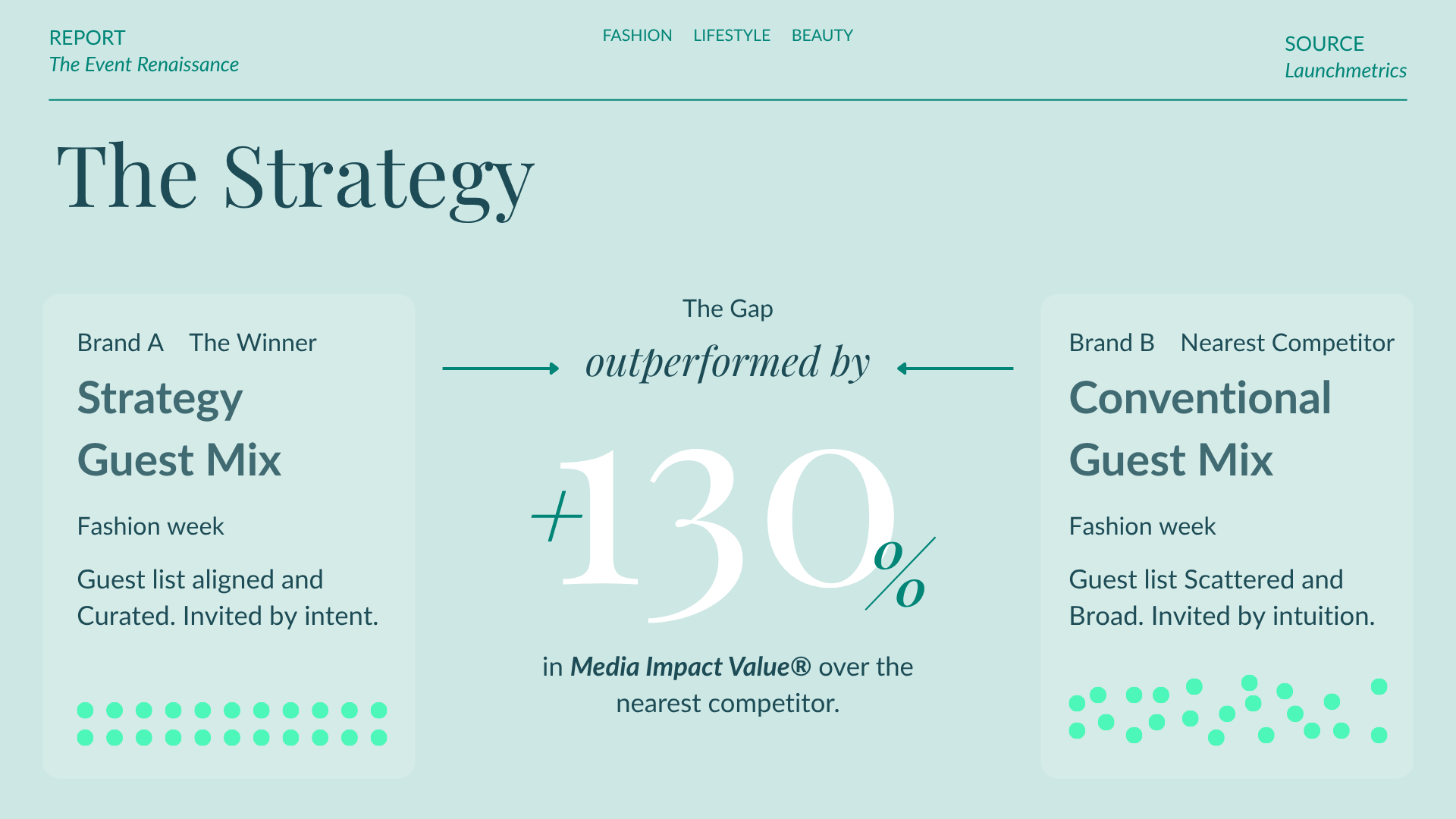
This is where strategic planning becomes critical. According to proprietary data highlighted in The Event Renaissance, one major fashion brand outperformed its nearest competitor in Media Impact Value® (MIV®) by more than 130% during a recent fashion week largely due to a more strategic guest mix. What set those events apart wasn’t a larger budget or more elaborate production. It was precision: knowing which guests were most likely to show up, whether they were the right fit for the brand and how their attendance would extend the event’s reach to wider audiences.
Who attends an event directly shapes how far that event travels afterward. Invitations, seating plans, creator relationships and attendee mix all influence how effectively a physical experience scales across digital channels. In this environment, guest strategy has become media strategy.
The brands performing best today understand that the event itself is only the starting point. The broader objective is sustained attention beyond the room.
But digital amplification only follows when the physical experience earns it. Guests share what moves them—a space that surprises, a moment that feels genuinely exclusive, an experience worth documenting. The brands achieving the strongest post-event reach are those whose events are compelling enough that guests want to capture and share them naturally. That is why the quality of the live event remains the foundation of everything that follows.

Technology is Becoming Essentialto Experiential Strategy
Consumer expectations around live events are significantly higher than they were even a few years ago. Operational friction that once may have been overlooked such as long check-in lines, RSVP confusion or poor guest communication, now directly impacts brand perception.
At the same time, events themselves are becoming more complex. Brands are managing more formats, more global markets and more frequent activations while also facing growing pressure to measure ROI effectively. What was once an occasional marketing initiative has evolved into an ongoing, multi-channel engagement strategy.
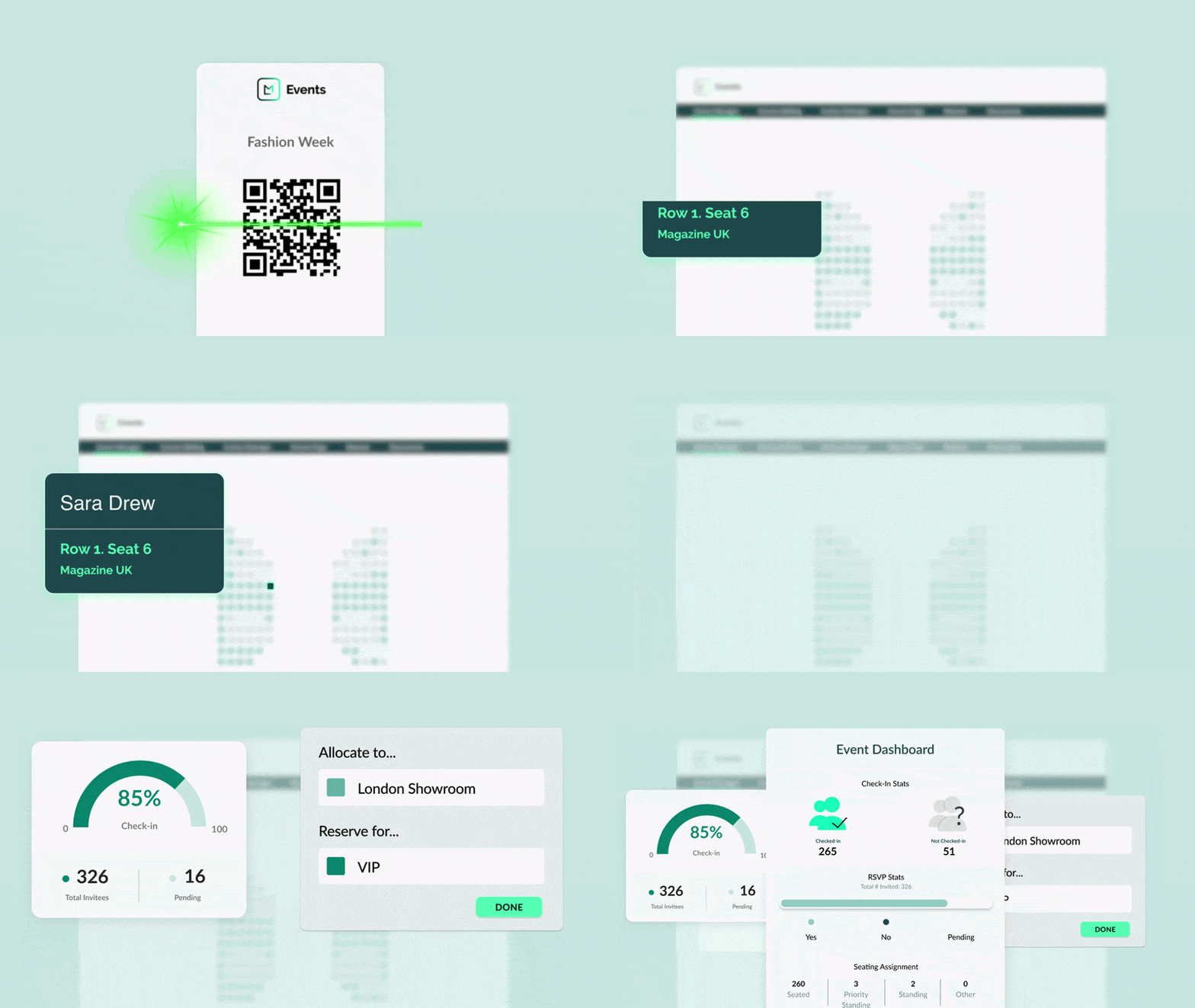
This is why event technology is becoming a larger strategic priority. Leading brands are
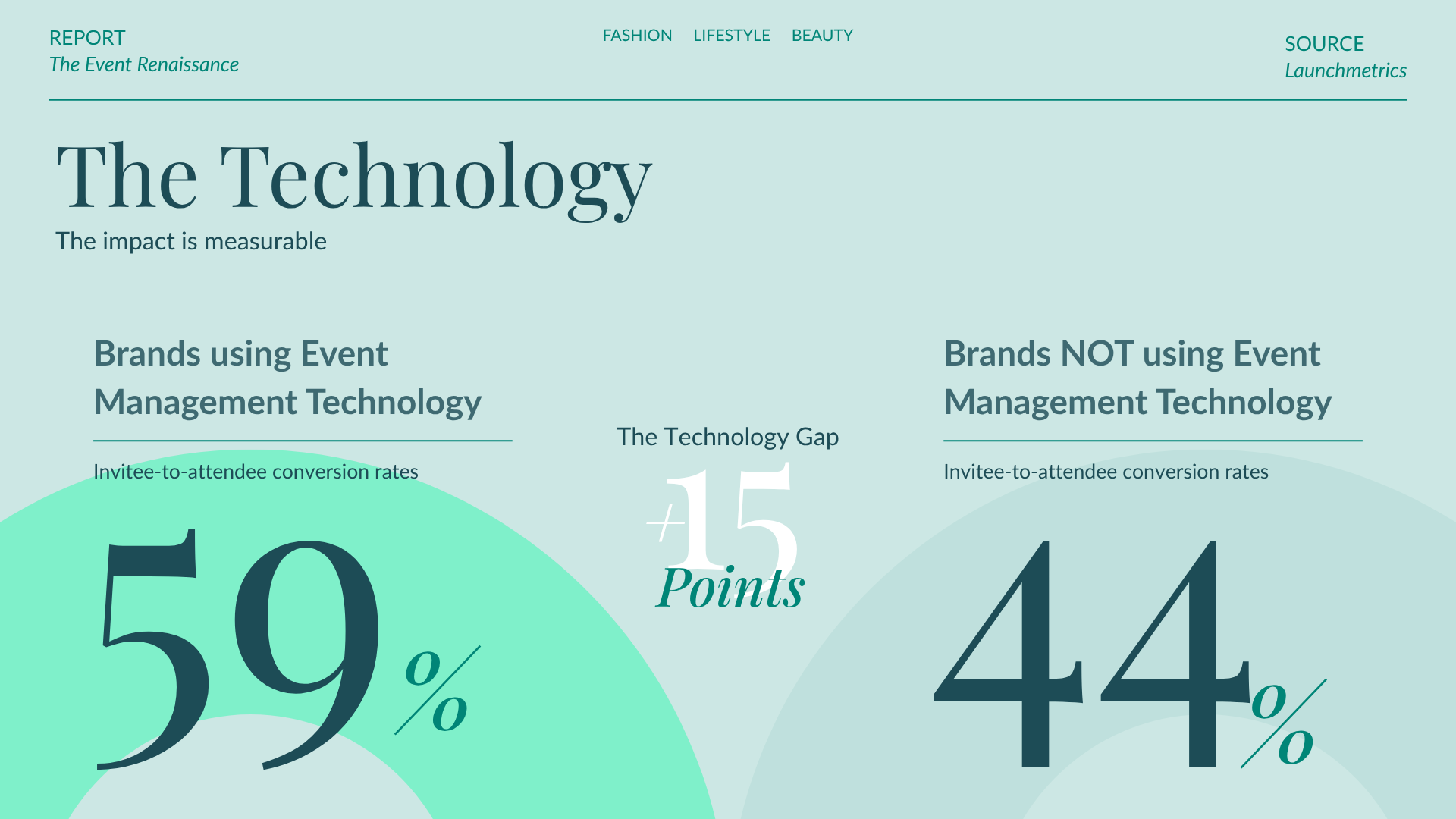
increasingly investing in centralized platforms that manage invitations, guest communications, seating arrangements, check-in systems and post-event analytics in real time. The impact is measurable: brands using event management technology see invitee-to-attendee rates of 59%, compared to 44% for those without. They’ve recognized that creating a seamless experience is nearly impossible in today’s world without the right technological foundation in place, and that when leveraged properly, technology can increase the quality of audience engagement from beginning to end.
Technology also enables brands to connect physical activations back into the broader digital ecosystem. Modern events generate significant amounts of audience intelligence, content and performance data. The most sophisticated organizations are using those insights to refine future event strategy, improve audience targeting and better understand which experiences generate the strongest media and business impact.
In this environment, experiential marketing is becoming increasingly measurable, making it easier for brands to justify continued investment in physical experiences.
AI Will Increase the Value of Human Experiences
AI will continue reshaping marketing operations, especially around content creation,
personalization and efficiency. Those changes will create enormous advantages for brands capable of moving quickly and scaling effectively.
But AI is also accelerating content saturation. As more content becomes automated, consumers will place greater value on experiences that feel differentiated, participatory and real. In many ways, the growth of AI-generated media may ultimately increase the value of human interaction rather than reduce it.
That does not mean digital channels become less important. It means physical and digital
strategies need to become more integrated. The brands gaining competitive advantage today are not choosing between physical and digital engagement. They are using physical experiences to create concentrated attention and digital platforms to extend that attention at scale.
In other words, live experiences are no longer standalone marketing moments. They are strategic inputs into the broader brand ecosystem, generating attention, content, community and measurable business impact long after the event itself ends.
In other words, the convergence of human connection and digital amplification has become one of marketing’s most valuable currencies.