
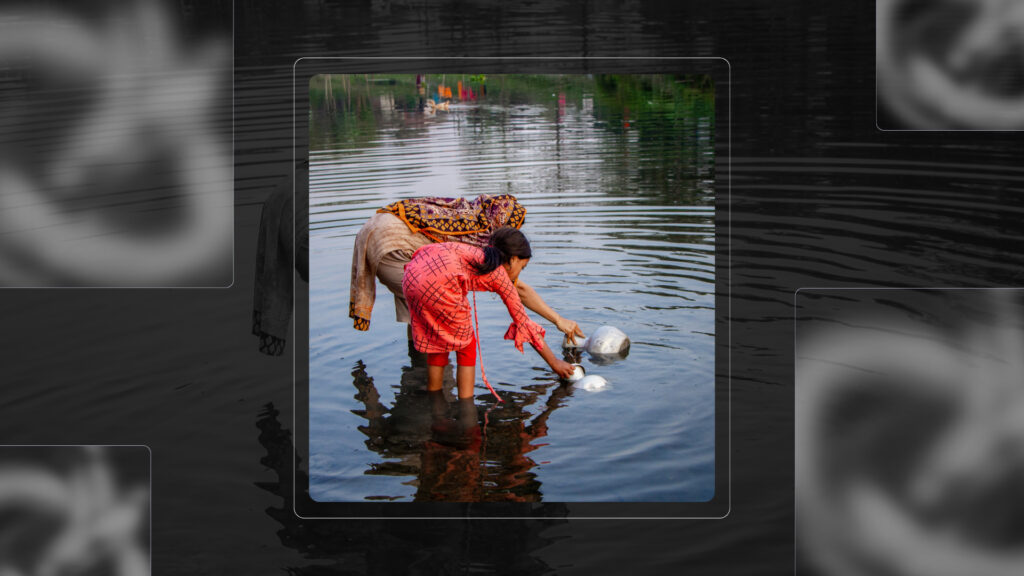
Hey, and welcome back to The Interline Podcast.
A bit of a different intro today because I’m working from home while we have some work done on the house. And also because I need to head out shortly and send off my postal vote for the UK local elections, which are happening in a couple of weeks from the time that I’m recording this episode.
Now, this definitely isn’t about to become a podcast about elections. Not least because these ones are going to be decided by the time you hear this. I think you get snatches of my politics occasionally leaking out of the sides when I talk to people. And you might be able to put together a reasonable proxy for my views from those if you listen long enough, but I’m not about to get all preachy on you in this show or any other.
I do, though, want to engage with a couple of dubious clichés up front for today’s episode. The first is the saying that people get more conservative as they get older. I’m oldish, or at least older than some of our listeners, and I don’t think that’s true. It’s certainly not true for me. The other is that the deeper immersed you get into business, the more removed you become from social issues. Or maybe more accurately, the more commercially minded you get, the more you start to see all of the economic and practical reasons for not doing something based on principles. And I think that one is harder to push back against, particularly if you work for a big public company. I’m not naming any one company specifically, but when you’re part of a massive machine, and you can see the cogs that need to turn before you and after you, you’re much more likely to be faced with a humanitarian or environmental issue and think, yeah, I see the problem, but finding an answer is more complicated than you might think. Hell, I’ve found myself doing that because social and planetary crises are hard to address and operating within the structures of a corporation doesn’t make them any simpler. Even if corporations do, or should at least, afford people more collective power than they had as individual citizens.
This is something I’ve seen expressed pretty clearly in the gap between activists, which fashion has its fair share of, and brands. Campaigners see pressing climate and human crises upstream and they call them out. But the space between calling attention to something and having a viable solution to that thing, or even part of it, can be massive. And from the brand’s point of view, it can be unrealistic.
Obviously there are brands that don’t think this way, and there are people within every brand who certainly don’t, but generally speaking, the big impasse at the heart of sustainability, broadly speaking, isn’t that people don’t care, it’s that the levers of action feel too far away or too heavy to pull. All of which is a roundabout way of saying that campaigners who can talk cogently about fashion’s role in social and climate justice issues but who also understand the inner workings of the industry enough to suggest some grounded practical steps towards action. Those are not people you come across every day.
Which is why I’ve been waiting for a while to bring Amira Jehia onto the show. Amira is the founding executive director of Drip by Drip, which is an international NGO which advocates for and acts towards a water just fashion system.
We’ll get into what water justice actually means in a minute, but the reason I’ve asked Amira on is that she wrote a piece for The Interline a few months ago, which explained why water is a rare case where social action and business risk mitigation line up.
Addressing water distribution scarcity and pressure isn’t just a humanitarian challenge that’s going to feel far too distant for you, the listener, to do anything about it’s also something that represents a very real threat to fashion’s business continuity in a meaningful time frame.
I’m not explaining any of this nearly as well as Amira does so I’m gonna hand over to my conversation with her in just a second but I want you to go into this without sitting back and crossing your arms and getting ready to explain why the problem is intractable and the solutions are impractical. Because when social aims and commercial aims line up, the risk of not acting is likely to be felt on a personal and a professional level.
So let’s hear what Amira had to say.
Never miss an episode
Get notifications for new podcast episodes, plus our weekly news analysis, events, and more, delivered straight to your inbox.
NB. The transcript below has been lightly edited.
Okay, Amira Jehia, welcome to The Interline Podcast.
Thanks for the invitation.
Ben Hanson (04:15)
No, not at all. It’s a pleasure to bring you on.
So you’ve previously written a piece for us, which, we’ll get to. That was the catalyst behind me reaching out and wanting to bring you onto the show. Before we get into the specifics of what was in that piece and the wider topic, we always try and start these shows by asking people what their day to day looks like, or maybe their typical working week. The timeline varies depending on the kind of job that they have. Normally, I’m talking to a brand or a tech executive, a lot of who’s jobs are pretty well defined and who’s days I can imagine fairly straightforwardly.
I’m imagining your days are pretty different. And the thing I’m most interested in for somebody like you is how you balance time and effort across brand partnerships, fundraising for donors, education and advocacy, grassroots action and relationships. There’s so many moving pieces of running an organisation like Drip by Drip. And I’m curious to see how they play out day by day, week over week.
Yeah, happy to answer that. First of all, let me thank you for the opportunity to provide an op-ed to The Interline and now being a guest on your podcast. I really appreciate it.
And to answer your question, that’s very difficult to answer actually, because I never have a week that looks exactly the same as the previous one or the next one coming up. And that’s the same for my daily routines. I actually do not have routines because there’s always something jumping in. And that’s what I mainly do.
I try to just work with what’s been thrown at me on a daily basis. And I jump between having conversations with C-level managers from small, medium, really large multinational fashion and textile companies and trying to discuss their ideas about water, what they do, do they have a roadmap? Are they understanding it as a risk yet? What can Drip by Drip do to support them as a company?
And then I obviously jump into calls quite often with organisations on the ground, our partner organisations, trying to figure out what sort of projects we can run, what the biggest needs are currently in different aspects socially on the ground, but also ecologically. What are the biggest challenges that we can meet? Then we’re obviously trying to translate the needs of the companies to the needs of the local organisations we work with. So we try to find the balance between both of their needs and try to match them.


And then we’re constantly onboarding new organisations in different countries. And then obviously as an organisation learning a lot about different ecological contexts, about different regions. We’re, for example, currently in the process of onboarding a new NGO partner in Indonesia and we haven’t been actively running projects there yet. So I’m in the process of learning about the water situation in Indonesia, different basins, different challenges, especially obviously with regards to textiles.
I think the most important thing is that I do not lose sight of the needs on the ground while being in talks with corporates that are more in my local context and trying to keep both on top of my head.
Okay, so a very divergent set of things you could be doing on any given day. And I guess more than a brand or anybody in a similar kind of role, your role is reactive to the world. Your role is reactive to the outer environment, to the news. Obviously brands feel the same way. They’re governed by trends and so on. You are, as you said, understanding the real situation on the ground and the real situation on the ground changes day by day.
Yes, very much.
Okay. Now the other thing we always ask people to do upfront is to define something. It’s a good exercise because sometimes really simple terms have really complex definitions or they have simple definitions that unpack a bunch of other stuff in the process of going through them.
For you, I’ve picked water justice. Now that’s a term that you use deliberately as I understand it. So rather than saying water stewardship or something similar, why is that the right vocabulary to capture what you’re trying to draw attention to, and also what you envision the ideal outcome of your work to be?
Yeah, that’s a great question because water justice, I would say, is at the heart, maybe even the DNA of why I founded a Drip by Drip. Because water stewardship is a term that’s been widely used, but it more implies responsible management of a resource. It’s very closely linked to corporate language that centres efficiency and risk mitigation.
While justice is a completely different question because it’s asking who is bearing the cost of how we’re using the resource of water now and why do we have to say no to that specific way we’re using it? Why is water free for some people? Why isn’t it free for others? Why do some people in the world bear the cost of living in water scarce regions while others are understanding it as a resource that’s available in ample amounts and can just be used because it is never going to deplete.
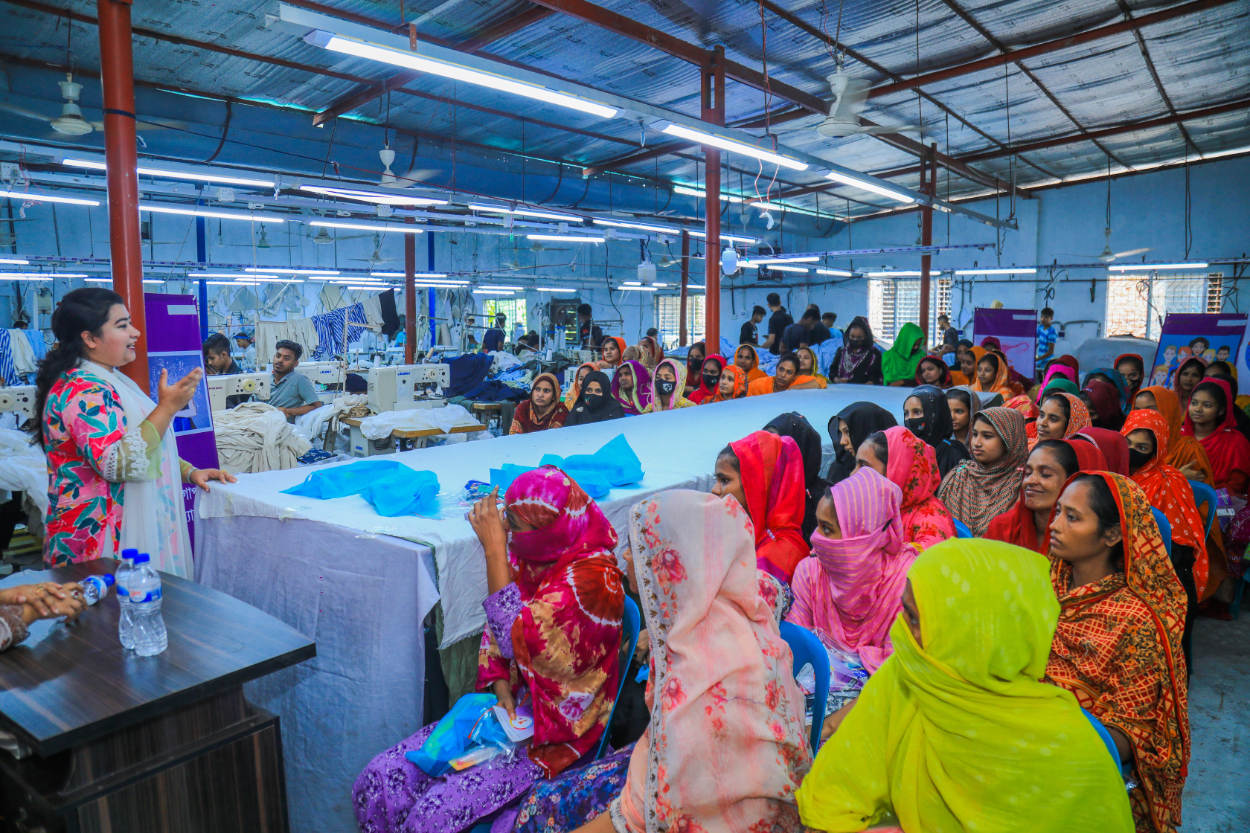
So these are the questions that Drip by Drip is trying to work around and especially in the textile producing regions that we work in such as Pakistan, Bangladesh, India, also Ethiopia, now Indonesia in the upcoming future. These are regions that are suffering a lot from water scarcity and water pollution. On the one side, because these are generally regions that do have water scarcity issues with regards to ecological systems such as monsoon season where there is ample of water in a couple of months throughout the year and then the rest of the year there is absolute scarcity and then they have issues such as flooding.
So they have lots of challenges that they’re facing on a daily basis with regards to water. And I think water justice means recognising that, naming it and committing to addressing the power imbalance because the companies and the people from the fashion and textile industry that are using lots of these resources are usually the ones that are sitting on the desk making decisions about frameworks, about reports, standards, all these things while the people that are actually suffering from the water scarcity do not have a lobby. So they’re usually not part of the conversation or part of the board discussions.
And I think this is what Drip by Drip is trying to address to bring these two different groups together and make each other understand what their specific needs are and trying to find common ground of how we can collectively support a process in which the whole industry is using water more efficiently but at the same time more sustainably.
Mm-hmm. Cool. I think in that sense, it has parallels to framing around food security and things in the sense that there’s enough food globally to go around. The way that it’s distributed and allocated is the problem. And the way that it’s distributed and allocated has a very big social engineering component to it. The same I’m guessing is true for water. There is enough water to go around globally speaking the way
that it’s distributed, as you said, scarcity in some regions, abundance in other regions, is a social challenge and as much as a logistical one.
I think justice is probably the right word to use whenever you’re thinking about those kinds of social challenges, because it implies that there is injustice in the distribution.
Exactly, yeah. I mean, just to add a small fact, we always consider water to be this resource that’s there in ample amounts. But if we look closely at the data, there’s only 2.5% of the global water resources actually available for consumption without having to heavily clean or filter it, because that’s our freshwater resources that are not bound in ice blocks in Antarctica, which are not salient or full of arsenic.
So I think we have to make a shift in understanding water as a resource that is not unlimited, even though it rains and we have a cycle of water, like ecologically, we do have that. But if we do not manage to keep this resource clean enough for human consumption, then it is not there in ample amounts anymore. And I think that’s a shift that we all need to make in our understanding of what water actually is and how much of that we have available globally.

Yeah. Now the other thing you mentioned there was wanting to move away from the sort of corporate language and corporate framing. I want to actually move us back a little bit into that direction because the piece you wrote for The Interline a few months ago, I mentioned earlier, you talked in that about water being fashion’s blind spot from a business continuity point of view, as well as representing a really under recognised business risk.
We’ll pick up the second part of the risk shortly, but for now I want to understand, why is fashion blind to where it uses water in what quantities? And I want to understand how that lack of visibility has been perpetuated over time. Because I think you can easily argue that fashion hasn’t made sufficient progress when it comes to reducing its carbon footprint. But the reason you can make that argument is because people understand what a carbon footprint is – the scaffolding, the objective measurements, the methodologies for calculating emissions and converting them into carbon dioxide equivalent. People largely bought into those. They’re pretty well codified. That’s the reason that we can have a back and forth on that is we can say, I can measure this thing and there isn’t sufficient progress being made. It’s intelligible to the people listening to this, what a unit of carbon is, where it comes from, and there are regulatory frameworks that are built on top of that accord and that understanding.
Do we have that or do we not have that for water? Because unlike carbon emissions, I can measure water right here in my house with a cup or, you know, I can look at a meter. I can install a flow valve that monitors output on the tap in my garden. Water feels like something we should be able to measure. Arguably, it feels like something we should be able to measure more easily than we can with something abstract like carbon.
Is measurement the problem? Is it a communication education issue? Is it a lack of political and industrial will to engage? Where does that blind spot come from? Because I find it hard to understand, and I think some listeners will, when water is a quantifiable, palpable thing you can see in your house, and it feels difficult to grasp with the fact that we just aren’t measuring it or ignoring it.
Yeah, I think there are two sides of the coin actually. Part of it generally is structural and what you’ve said about carbon is absolutely true and the most important thing is that it’s backed by decades of scientific consensus, agreed methodologies and regulatory frameworks. So there’s been a lot of education globally for at least the past decade trying to make people understand how important carbon dioxide is.
We have those mechanisms when you’re booking a flight that you can compensate. It’s very obvious to you and the internet and every online shop is full of it, full of information about the CO carbon dioxide footprint of a product or as I said a travel. So people have learned that this framework makes sense and they understand that it’s really important.
Water does not have any of that because its impact is very contextual, is very local and is deeply variable because it varies so much between different regional contexts. If you’re, for example, sitting in a company in the US, a fashion and textile companies, it is really hard to understand the water implications that are very locally based in Bangladesh, for example, in Dhaka, where you have your production facility, unless you receive some sort of a training or your factory leadership is giving you more context and helping you understand or you reach out to local organisations to understand it.
You have to put in a bit more effort into understanding the specific situation that is occurring on the ground where you specifically are using or having your supply chain in place. So using water in a rain-fed region, for example, in Tamil Nadu is completely different from extracting groundwater from a drought-stressed aquifer in California. But most reporting frameworks treat those two options the same.
And that’s, I think, the most important thing, that data exists. But it is not contextualised and it is not local. So it’s very misleading because we’re using averages, global averages, which is unfortunately not useful at all.
But I also think that it’s a question of will because carbon reduction has become commercially very legible. You can, as a brand, market it, investors can measure it, regulators have built frameworks around it. But water has not reached that point at all yet. ⁓
So the worst consequences, as I said previously, fall on communities in the Global South who have very limited voices in boardrooms, policy forums where the priorities get set. So their voices are not properly being heard. And that invisibility, I assume, isn’t accidental because it reflects who bears the cost and who makes the decisions. And I think that’s a global issue of globalisation in general with different industries, different commodities.
And until that changes, water will keep being treated as a footnote. I’m afraid.
I think it’s a question of how well you can insulate yourself from the consequences. Whenever I think about that sort of decision making matrix on that sort of political capital, it’s always a case of, do I, my customers or my constituents directly experience the negative consequences of this action in a meaningful timeframe? If not, then the commercial urgency, particularly if you’re a public company, simply isn’t there to engage with it. And so I think I agree with you from that point of view.
I mean, the problem is coming closer to our own doorsteps in the West, right? I mean, we’ve heard in the last couple of years, the news was full of articles about water scarcity in South Africa. And then even in Germany, we have the discussion of are people allowed to fill their pools with water during summer season, since I would say at least the past five to six years. So water scarcity is becoming an issue in Germany. And I think many other Western countries, and I mean, in California, we’ve read lots of articles about it too in the past couple of years.
It is coming closer to our doorsteps, but still understanding the, let’s say, severance of living in an environment where water scarcity is a daily threat to your safety and security as a human being is really hard to understand if you do not have any sort of relationship to people in that specific region.
I think it is hard, or it is not really fair also to put the full responsibility on let’s say the sustainability managers’ shoulders in the bigger fashion and tech companies. But I would say that they at least have the responsibility to try to understand or reach out to people who can maybe teach them a bit or explain things to them. So I think that’s the least we can all do.
Yeah, that sounds right. And I think the other element of making it all of this legible, intelligible to the folks who read The Interline or who listen to this podcast is continuing down that road I just described of putting it into business context. So the piece that you wrote for us a few months ago, you spotlighted the fact that water justice, as we’ve defined it, isn’t just a social issue. It’s obviously got a base social component to it. It’s also a matter of business continuity and contingency planning, risk mitigation, all very corporate phrases, but things that people will intimately understand.
Now, I think a lot of brands are accustomed to looking at those things, business risk, and contingency in the short to medium term. I think that’s the sweet spot that people recognise because you’re not just measuring one season out or one calendar year out. You may be measuring three to five, something along those lines. That’s relatively straightforward to forecast and predict. It’s maybe harder, I think, for a business audience to see that maybe 25 years from now, so a quarter century, we’re looking at having three quarters of all apparel and textile production sites, so the majority of the entire apparel and textile supply chain, under extreme water stress. So that’s something that is forecastable, but it’s on a sufficiently long timeline to feel distant.
It still feels like an important prediction, though, because it gets you around, what the industry’s usual response would be to something like this, which would be to relocate or to diversify its sourcing base. If water stress becomes the norm, which, you know, if you’re about three quarters, that it is not the exception, then there’s no running away from it. There’s no relocating from that. And that means that in the working lifespan of a lot of people listening to this episode, you know, I’m only mid forties, technically I’ll still be working by that point. We’re staring down sourcing continuity, cost volatility and risk at massive scale, scales that dwarf what we’re accustomed to wrestling with today, scales that way out of whack with what you might think of in the three to five year horizon.
So, I’m curious, if you’re talking to a brand for whom that sort of water justice feels distant, feels like somebody else’s challenge, as you’ve described it, or it feels like a remote concept, do you make more headway?
Do we collectively make more headway by talking about these more like self-interested data points? And how do you think about getting an industry that runs quarter by quarter, season by season to start thinking that sort of quarter century ahead?
Yeah, I have to say first of all, I would say 95% of the brands and companies that are company representatives that I talked to do not have an issue understanding this as a crisis and something that they somewhat have a share in. So they do understand it quite easily. But obviously using facts and figures such as the one that you mentioned that 75% of all production sites will definitely face extreme water stress in just the next 24 years. So that’s actually not that long down the line. And that’s sourcing continuity risk, obviously. So that helps in making them understand, but they usually even understand without linking into their direct business.
I think the issue is more having funds available, so some sort of a budget to actually mitigate that risk, to really be willing to change something about it because that obviously in some way requires funds and financial means.
Again, I think all of the news that we hear or see in the last couple of years definitely helped to put water or bring it up higher on the agenda of the fashion and textile industry – such as the 2022 drought that dramatically strained China’s largest freshwater lake, which directly impacted cotton production and was something that many brands actually have felt or that they were in relation with. So they understood that there are direct implications of these water challenges occurring in their production regions.
I think that the harder challenge is that 25 years, or 24 if we go with the assumption of the UN, still feels very distant to an industry, as you said, that is running on quarterly cycles. So what I’m trying to make them understand is that those conditions are already present today. So in the reports of the UN and other major organisations, we hear those numbers, 2050, there is something going to happen and this might be a big challenge for your business.
But at the same time, on a daily basis, I personally, in my work and my whole team and the organisations on the ground, see what living in these regions and working in these regions, because I mean, to be honest, most of the affected communities are textile workers. So they work in the specific industry that is actually sucking up the water that they need to survive. So this is not a future risk that needs to be modeled. It’s a current operational reality that most of the brands that I’ve sourced regions such as South Asia are exposed to, but they’re usually not accounting for it or not understanding it or not trying to understand it.
So this is, I think, what we all need to do to better prepare and understand what’s actually happening today already on the ground.
Yeah. And I think to your earlier point, something that feels remote and something that’s hard to quantify and doesn’t have the framework that carbon has, for instance, is a harder thing to take up. It’s a harder thing to make a business case for investing in, in mitigating. And I think building that understanding is the internal responsibility that the proximate internal challenge that brands have. If you can anchor it to continuity risk that is tangible, then that feels like a good way to reinforce that business case.
Now, at the time we’re recording this, you’re a couple of weeks out from releasing the first edition of a publication called The Drip. I read it and there’s a couple of stories that jumped out.
Okay. Yeah, perfect.
I always liked to do my background. It’s one of those things. I don’t want to get on one of these and kind of go, yeah, I think it came out. I don’t know if I got around to it. No, I did read it. And there were a couple of stories that jumped out at me because they were representative of deeper issues that I think our audience is probably already familiar with. They’re instructive.
The first of them was an account of a supplier that was undergoing an audit who showed inspectors around an effluent treatment plant and they showed them it running obviously in operation. Then they switched it off after the inspection had ended because it turned out that actually running it ate up basically the entire margin the company could make from their brand orders. So aside from the completely out of whack financial incentives, we’re going to return to in a minute, you’ve got two challenges here. One is the trustworthiness of data when it comes in the form of certifications, which are intermediated by in-country observers who are definitionally not there all the time. And it’s also complicated by the gigantic scale of the rollout that you would need if brands were going to say, okay, I can’t have an inspector there all the time. What I need is direct sensor-based monitoring of water usage and pollution and so on.
How do you solve a data capture challenge like this? One that is huge, complex, as we said, not well codified, but it also lives on another continent where you are not.
Mm-hmm. Yeah, first of all, I would like to add another example to this, to the one that you shared from The Drip, which I always like to point out to.
Go for it.
I was in a conversation with the sustainability manager of a major European outdoor brand, one of the bigger ones, and he’s been in business in different roles in fashion, Texas supply chain for the past 30 years. So he was very well experienced and a very interesting man also to talk to. And while we talked about water, something he brought up was like at our factories, we do not have any issues with water because I’m always presented with a glass of water when I’m visiting my factories because I demand it. And the water always looks clear to me and I can’t identify a weird smell or anything. So I told him that obviously chemicals are not always colourful. So if you just see a clean glass of water, it doesn’t mean that it’s not highly polluted. And that actually stayed with him. So he reached out a couple of weeks later and we organised some sort of a training for his team in terms of how to actually identify water that is not clean or polluted.
But that shows what the situation on the ground mostly is for managers or even for service and buyers from the companies going to the respective factories. And the case that you mentioned keeping on the treatment plan while the visitor is there or the audit is being done and then turning it off is something that is daily routine in the countries that we’re operating in.
And that’s also what suppliers very openly tell us in one-on-one meetings because that’s the actual challenge. It’s not that the suppliers want to destroy their environments and they want to pollute their local rivers knowing that their workers and other communities living nearby will suffer the consequences. But they don’t have another choice.
So there are two things I think need to happen in parallel. The first is moving toward continuous monitoring, you said, sensor-based systems. And there are very easy systems that you can use, which are relatively cheap, where you just insert a sensor into the tank and it monitors whether the water is clean or not. So whenever the effluent treatment plant is being turned off, the sensor will notify you and tell you that the water is polluted and not as clean as it should be. So you get some sort of let’s say, some cautious information or notification from the system. So because that obviously makes it much harder to pollute the water than just taking a snapshot during an audit that’s really, really easy to perform.
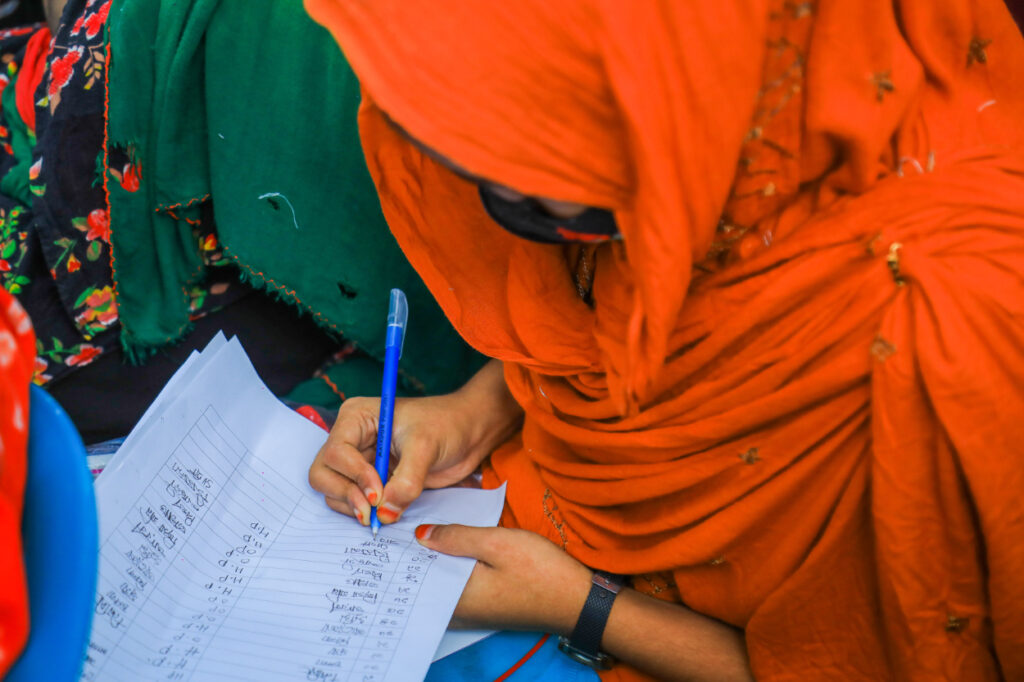
And then the second, and honestly the approach that I find much more compelling is community-based monitoring. So there’s also another article in The Drip, from a local organisation in Bangladesh called ESDO. And they have tested community-based monitoring in Ashulia, Bangladesh for the past two or maybe even three years by training local residents, garment workers, but also farmers to collect and document water quality data with very simple tools. So nothing too sophisticated, nothing too technical, nothing too expensive, but creating data that empowers those people to show evidence and hold industry and government accountable because they can prove that the water that they have to consume, because it’s the only source available, is highly polluted and they can even show which sort of pollution it has, what sort of chemicals, what sort of industry it is linked to.
And I think this is genuinely powerful because it produces data that’s harder to dismiss, obviously, because it comes from also the people that are living in the consequences, but it also turns accountability into something that lives in the communities and not just compliance departments that are far away from the actual challenges.
And I want to come back to the point about pricing that I mentioned before. Another story from The Drip was from the kind of tier one level where the head of sustainability at TeamGroup, was explaining that brands on aggregate, not naming any in particular, demand state of the art monitoring and disclosure capabilities from their suppliers with one hand, right? The things that you’ve just talked about, the direct surface. But then with the other hand, they try to negotiate those same factory partners down to the lowest possible price. So within that calculus, it feels like what sustainability is in this regard is basically like an unfunded mandate. Or to put it another way, it’s an additional extremely high potentially cost of doing business that sits solely on the shoulders of the party that’s already bearing a lot of the cost and a lot of the risk to begin with.
Yes.
I don’t think the solution to that is going to be brands should pay a premium to fund their upstream partners’ environmental initiatives, because I don’t quite know how that pans out. That requires you to have a lot of political capital and urgency for action. But I also don’t see the argument that suppliers should fund initiatives that don’t directly benefit them, except from keeping them baseline competitive. And the suppliers are solely responsible for solving for an accountability demand that isn’t actually theirs to begin with. They are not the party selling to the consumer who is the one demanding this side of things.
Is there a solution to this? You as a brand are asking your suppliers to give historic access and accountability and action, and at the same time, you are selecting your suppliers and navigating your sourcing base with price as your primary driver.
I feel like that’s unworkable, but tell me what you see.
Yeah, I mean, one piece of data that I’d like to add to that is that running an effluent treatment plant properly can add 5-15% to production costs. So just to give an estimate of how much it costs the supplier to actually run the thing. And I have to add that in most of the countries, they are legally bound to have it running 24/7. So unfortunately, there’s not much enforcement in place in most of the countries. But at least the laws are in place. I mean, they are aware of that, obviously.
So Mohammed Monower Hossain, who is the TeamGroup’s head of sustainability, wrote the article in The Drip. He says it perfectly. He says, brands demand state of the art infrastructure and then push for the lowest possible rates, what you just mentioned before. And I think there are two different kinds of brands that we need to consider here.
The first ones are the ones that are generally interested in becoming more sustainable, having their supply chains more sustainable and obviously selling more sustainable products to sustainability aware customers. So I think these brands should be intuitively or generally really interested in making their supply chains cleaner. So they should be willing to pay the actual cost or the true cost of a responsible product. And that obviously includes not harming the environment in the process of producing the garment. And that is far beyond tier one, because it starts at the very farmland where the cotton or another raw material such as hemp is being produced. So these kinds of brands, I think, have a responsibility of understanding their supply chain and learning who’s involved and what the challenges are and what the actual costs are in order to produce a sustainable piece of clothes.
The other brands that are just bound by reporting mechanisms and laws and trying to abide by the regulations but that just want to sell good products, maybe not necessarily the most sustainable ones but good products. I think for these brands I would say that pricing structures actually have to reflect the cost of the production and even if it’s not the most sustainable production it needs to be responsible production.
So one solution could be to have longer-term sourcing commitments. So to build an actual relationship with a supplier with the aim to work with each other over a longer period of time. Because that obviously helps negotiate, I would say, prices, but at the same time give some sort of security to the supplier to invest in infrastructure without the fear of losing the contract before they recoup the costs.
This is one thing you can do. And the other thing that I think is very powerful is to have procurement departments and sustainability departments in the same room and the same conversation, because the sustainability department can make the procurement department understand why the cost is relatively higher, but why it’s important to pay that cost still. Then on the other side, the procurement departments or maybe even the safety departments can try to figure out how those costs can be integrated into the costing structure of the company to obviously still make profit because I mean that’s what companies are here for and that’s completely fair.
So, putting all those different departments on one table and having them discuss the issue and trying to find solutions within the company I think would be a good way of doing it but that’s not the case. Usually the departments are completely independent of each other and they don’t understand the challenges that each one of them has. So obviously there is a lot of potential for compromise that is not being used. So I think this could be a very, very smart way of fixing this or trying to fix it at least.
Yeah. Well, costing is a big piece there. I think the other piece that most of the people listening to this will be familiar with when it comes to where sustainability strategies intersect or don’t intersect with product development is material selection or material development.
And so you mentioned earlier that a lot of water assessment frameworks are globalised rather than regionalised. You gave the example of rain fed cotton in Tamil Nadu and then something that is cotton from a more heavily irrigated region in California, for instance. Those are regional examples, the key is that one of those is obviously far more water intensive and depleted than the other. So treating them the same is a faulty methodology, but it’s also going to be subject to the same data capture problem that we talked about before.
Because if you’re a US brand, theoretically at least, it’s easier for you to substantiate water use in the US than it is for you to substantiate water use in India. And the upshot of all of that averaging is that those material choices that I just mentioned, so material procurement development, those decisions can be based on
faulty insights, because impact assessment and disclosure are, they’re not accurate on that basis without more granular visibility into water use for different strains and scenarios. I can understand how a company would go, actually, it feels like maybe if I just use some synthetics here rather than natural fibres, that’s actually a more “sustainable” choice that creates another set of problems.
Now, all of this just sounds insurmountable. I’m trying to put myself in the shoes of a brand and I’m trying to say, okay, the costing framework you just talked about, now the material choices you just talked about, how do I actually make a credible decision? Is there a more credible, detailed, regionalised impact assessment framework for water? Because if I was working for a brand listening to this, that’s what I would be asking myself now. If I’m taking this back into my decision making and costing material selection and so on, what framework am I actually using that would properly account for that regional variation and everything else?
Yeah, that brings me to my favorite index that I love to talk about, which is the Higg MSI, which is obviously being widely used and most of the companies that we work with are using it. And I think that there is a desire for this one perfect framework that incorporates water, carbon dioxide. I mean, we have other issues also on the ground ecologically that need to be taken into consideration.
But the truth is there is none such thing. Because all of these different factors are local or have to be put or placed into a local context. So the best thing generally a sustainability manager, for example, can do is trying to understand the context of their specific sourcing region or production region and connect with local organisations that can give you a really good set of data that is very localised and very specific for your region because the Higg MSI historically is treating all data globally as equivalent and that’s not just a small rounding error, it fundamentally distorts impact assessment and it leads brands towards sourcing decisions that look better on paper than they are in practice because they do not differentiate between different areas and their specific needs.
Then we have topics such as microplastics, fossil fuel dependence, end of life impact. So there are all these sorts of topics that you need to put into one basket and understand where the best compromise is in order to really develop a sustainable product or good product.
So one tool that I can recommend in terms of water is the WULCA framework, which exists to bring especially a more location specific and context aware analysis to water and which is finally accounting for local scarcity, seasonal variation, regional stress. So that’s a framework that we always recommend, and then there is even a version which is the Social-Scarce Water Footprint – abbreviated SoSWF, which also incorporates social context into this dimension of water resource management, basically, or understanding the local context of water resources and their challenges.
So, unfortunately, these frameworks, even though they exist, they’re rarely integrated into the platforms that brands usually use in order to make their sourcing decisions. So, what I would say to a brand is treat the LTA data as a starting point, but not as a conclusion. It has to be paired, unfortunately. And I know it’s a lot of work. I am absolutely aware of that. But pair it with farm level evidence or local context data. Build relationships with the people behind the numbers on the ground that can provide you with data that is actually localised and contextualised. And then try to understand what the best options for you as a company are.
And I mean community monitoring work is something that I do highly recommend because the communities on the ground know very well, for example, that in this specific region, the rain is much heavier during monsoon season. So it’s much easier to water, sensitively produce cotton than in another region.
So, build those local relationships and try to work more longer-term with your producers and that will help you extremely in making much better sourcing choices. I’m very, very, very sure of that.
Okay, and so you mentioned there’s a lot of work involved, I think is a fair summation. And I think people will appreciate that sort of middle ground context. I’m always thinking about the inciting factors in the catalysts to make brands do that work. And one of the most important levers that has existed in that space in the last few years is regulations.
Those regulations and legislations have also had their own kind of checkered history recently. If we think about the EU’s Corporate Sustainability Due Diligence Directive, CSDDD, that was supposed to be a step change for supply chain reporting and disclosure, including on water. Then a bunch of the provisions were tempered. I think it’s fair to say, hopefully this isn’t an oversimplification, the onus on brands for data governance and disclosure was ratcheted down somewhat.
I know you’ve previously said that this was a missed opportunity, we don’t need to re-litigate that. Instead, tell me, what impact do you think that diminishing of regulations will have on everything that we’ve talked about so far? When there is a lot of work involved and you remove or soften some of the strictures that were going to make people do that work, what does it look like? What’s the outlook for an industry doing that work on a more voluntary basis?
Yeah, unfortunately, my vision or my idea of the future is not very optimistic because we are in conversation with a lot of friends that were actually preparing to report and actually just start to understand the challenges beyond the tier one suppliers, which is a very big missed opportunity by the CSDDD being diluted.
So that was something that was initially included, but in the end did not make it to the final version. So yeah, a missed opportunity, but just to give some context to make it a bit more clear, in The Drip we know that the European Parliament voted for that rollback of the CSDDD, while a factory fire in a Bangladeshi subcontractor washing facility had just killed 16 workers. So a facility that mandatory due diligence might have reached and that voluntary frameworks did not. So these six workers could have been saved if the CSDDD would have a bit more teeth than it does at the very moment.
So what worries me most about the rollback is not the brands that were never going to act though, because I understand that there are some brands who wouldn’t have done it in the first place, but it’s the brands that were preparing to act because they had to and who may now feel less urgency because obviously the law is not in place anymore.
So on the other hand, regulation was never sufficient on its own, but just a baseline, a floor. It created this baseline of accountability that voluntary action simply cannot replicate because voluntary action stops when it becomes inconvenient. That’s our experience as an organisation. And that’s exactly why Drip by Drip is built the way it is. Because the grassroots work and the systemic advocacy exist together. Because we’ve never been able to rely on regulation alone. And for a problem like water where the consequences are borne by people with the least power and voices are not being heard, you can’t wait for the floor or the baseline to hold.
Unfortunately, even though it was a missed opportunity, I think that still the responsibility lies with the brands because in the end it is part of your business model as a company, right? I mean, if your business model does not allow you to make a profit and have a valuable and healthy organisation or company by destroying the local environment where you source from or where your products are actually being produced or not being able to pay a fair price to the people who actually make your products, who make the clothes, then maybe your business model in the first place is not very viable and maybe not the right one. And maybe it’s something that you need to work on in order to make it work better for everyone who’s part of making this product come to life and being something that a customer values and appreciates.
The way that I’ve characterised this before is the rigid definition of sustainability, i.e. can you continue to do a thing over and over and over and over again without it being so depletive that that becomes impossible on a mid-to-long-term horizon? I think a lot of fashion falls into the unsustainable bracket when you define it like that. And I think that’s where the through line is from voluntary action to business continuity risk to everything else that we’ve talked about is eventually an unsustainable business model simply runs out. That’s the way that I would choose to frame it.
Yeah, definitely.
Taking account of that, finally, if a mid-size fashion brand that was relatively new to this kind of action, but had its heart in the right place, i.e. not something like Patagonia, but also not an ultra-fast fashion company or a tiny startup, there’s somebody in the middle. If they came to you with a modest budget, so they have internal capital to do this and internal OpEx to do this. And they had a realistic set of red lines as well for how far a water justice initiative could eat into their profit margins. So they come to you, say, we’ve got funding, but it can’t completely destroy our margins and our costing. What would you tell them to do with that budget and with that internal political capital right now? Not something long-term, something they could implement in the next 12 months.
Mm-hmm. Yeah, that’s a conversation I’m having fairly regularly. And what I usually say is start where the impact actually is and not where it’s easiest to report. Because if you really want to create an impact in a rather short period of time, then just to give you an example, building a water filter is an immensely impactful thing to do. And it’s relatively cheap. It’s around $3,000 cost-wise and it provides up to 1,000 people with access to clean drinking water 24/7 for at least 10 years. There is low maintenance, technical training that the affected communities need in order to operate it. So there are obviously solutions in place and many organisations that are offering to collaborate with brands that also provide them with a set of solutions and help them understand what they can do with a given budget and what would create the biggest impact.
But what I would also say is to look beyond tier one because identifying the dyeing, finishing, raw materials, suppliers where water use and pollution are most acute obviously helps you to create something that’s impactful because this is where the water problems lie and this is where you should act. So that’s another thing.
Most brands can tell you where they cut and sew or where their items are being cut and sewn, but far fewer can tell you where the fabric was dyed or where the cotton was sourced from. So, understand your supply chain, I think, is a very important thing. And I think it’s actually the step that comes before investing into some sort of an impact project on the ground, because what the people on the ground really need is for the brands that are in the global north to understand their supply chains, to understand what companies are involved, what regions are involved, which farmers are involved, because then that allows them to look into the problems and the challenges more closely and identify a proper partner in order to mitigate their own risk, but at the same time create impact for the people on the ground.
Once you know where your challenges are and what the challenges are, find a local organisation or obviously find a partner like Drip by Drip. I mean our partnership model is built exactly for this. We connect the brands with the grassroots organisations. We have a due diligence process with grassroots organisations on the ground. We build long-term relationships. So we have a trustful and very committed partnership with our organisations on the ground who are always expert in the challenges on the ground and potential local sustainable solutions to them.
We consider ourselves to be some sort of a translator between the report language of the companies, which I understand is important and will remain important, but also the kind of impact-driven language of the local communities and the needs that they have. And we try to find the best compromise between both worlds’ needs and obviously create the biggest possible impact.
So this is what I would say to a brand. Hope that helps.
Yeah, and it does. And from my point of view, I would say The Drip is worth reading as well. It was educational and instructive for me. It helps to put a human face on a supply chain that can feel faceless, I imagine, to a lot of people listening to this.
If you’ve reached the end of this podcast and you’re wondering what to go and do next, Amira has those recommendations. But from my point of view, I think reading The Drip is also very valuable.
Thank you.
Amira, thanks for taking the time to let me quiz you. Those are really good answers and I’ve enjoyed this conversation a lot. I hope we get to have it again in the future.
Me too. Thanks so much for the invitation and also for reading The Drip and recommending it. Thank you so much.
And that’s the end of my conversation with Amira.
I’m gonna get out of the way quickly now because I think that discussion stands on its own merits without any extra contextualisation from me.
We’ll be talking about something fundamentally different next week. So for now, thanks for listening as always, and I’ll talk to you again really soon.