

Key Takeaways:
- After rolling some AI-generated images into its promotion for Milan Fashion Week, Gucci came under fire in the mainstream press for supposedly cutting corners. The real aim was, more than likely, to grab attention in markets that are noticeably souring against the use of AI.
- Despite widespread distrust of AI in Western retail markets, the hushed maturity of programmatic advertising and content creation systems – especially when linked to LLMs – is about to create a visual content avalanche on a historic scale, and consumer backlash is already softening through attrition.
- A race to the bottom, content-wise, seems inevitable. And there is a chance that luxury brands see this coming and are expecting to hop off a runaway train once it picks up speed, the way the sector previously did with social media.
Summarise and debate with AI:
Take the content and context of this article into a new, private debate with your AI chatbot of choice, as a prompt for your own thinking. (Requires an active account for ChatGPT or Claude. The Interline has no visibility into your conversations. AI can make mistakes.)
At the bleeding edge, fashion has always been a provocateur’s game. The best campaigns, measured in pure volume and voracity of reaction, are the ones that poke the proverbial hornets’ nest and get people outside the industry’s immediate gravitational influence talking.
You might not sell a lot of clothes by making enemies, but you sure can exert a lot of long-tail influence that then trickles down – in more anodyne, diluted form – to the mass market that way.
By those metrics, Gucci – now art-directed by mononymous nest-poker extraordinaire Demna, of Balenciaga fame – pulled a blinder this week, by turning what look like a few lazy AI prompts, dropped into the promotion for their presence at the ongoing Milan Fashion Week, into a firestorm of criticism that spilled over from the trade press to the general news.

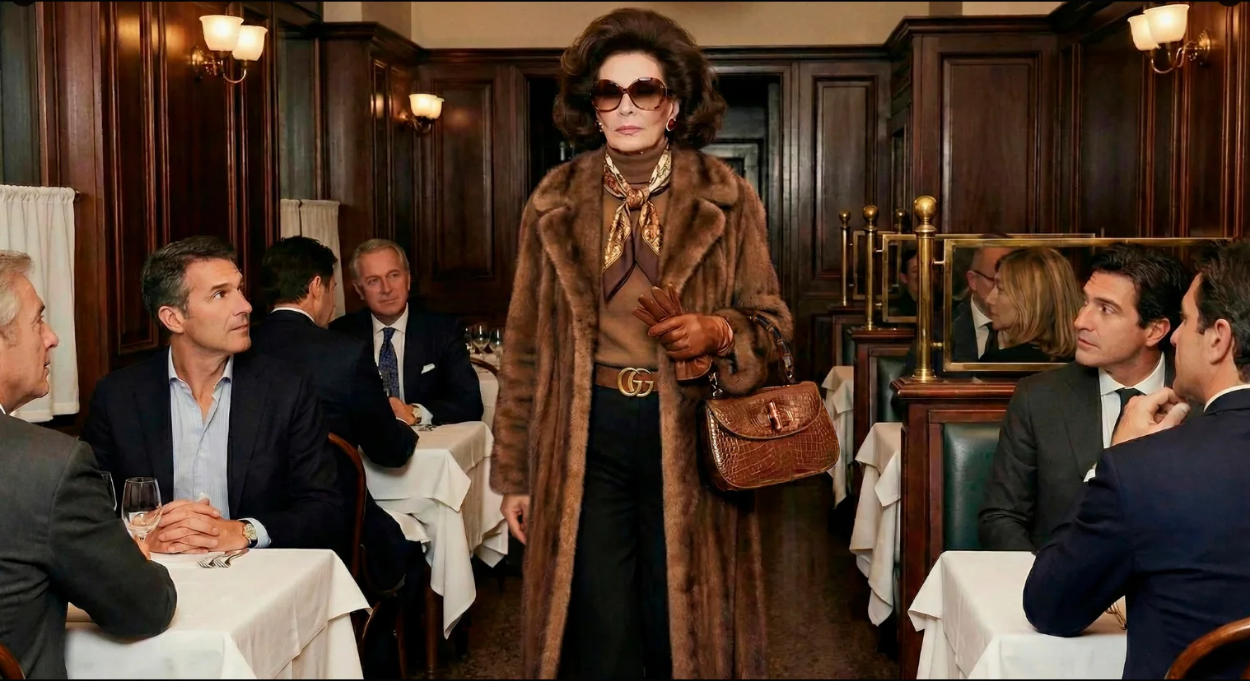
In terms of return on investment, this is probably one of the most “valuable” deployments of image generation, even if the results might feel dubious depending on where you stand. One person typing into a chatbox created ripples that reached newsdesks worldwide, and now eyes are on the brand.
Anecdotally, this is the first time in recent memory where The Interline heard a story that we were analysing being debated between parents in the school playground at pickup time. Such is the reach that household name luxury brands can capture with minimal effort.
Most of the debate around this particular story, though, feels misdirected. General media, and the shouty consensus on social media, are heavily indexing on this being a case of unnecessary automation. Gucci can afford to pay photographers, models, stylists, makeup artists and so on, the argument goes, so they’re in some way abdicating their responsibility as custodians of craft and branding by cutting costs and doing things with AI that they should have done the old fashioned way.
This feels like missing the wood for the trees. Clearly, Gucci is not a starving artist. The company can, and does, employ world-class creatives of every stripe. Saving money, time, or both is not the aim, even if Gucci’s parent group, Kering, is still trading close to 50% down compared to where it stood five years ago.
Before you read on...
Our weekly news analysis will always be available to read here at The Interline, but you can get it (along with notifications for new podcast episodes, events, and more) in your inbox by signing up to our mailing list.
The objective is much more likely to be attention. And grabbing that attention through cheeky use of AI is easier to do in the West, where the USA, UK, and countries across Europe see more drawbacks than benefits to the use of artificial intelligence, as compared to China, where more than 80% believe the opposite.
And, probably not coincidentally, reporting from this week shows luxury brands almost universally downgrading their sales forecasts as consumer spending power in China has been eroded by a shortfall in spending on social programmes.
In practice, that impact on luxury spending in one of the world’s top markets may prove to be minimal – Bain and Company analysis from this month pegs it at between 3% and 5% contraction, averaged across luxury product categories – but there are divergent outlooks for domestic brands and overseas (primarily European) imports, with the latter standing on rockier ground based on the same data from Bain.


If you want to make headlines by deploying AI in a creative scenario, in other words, it seems like a pretty safe bet to do it in the market that’s home to largely negative sentiment around AI – and the one that isn’t currently contracting.
(There’s a less charitable read that leans more into the idea that this whole exercise was about laziness rather than getting a reaction, which is supported by the nagging recognition that one of the images in question looks like it definitely began life as an upload of some GTA character art, but we’ll leave that one on the table for now…)
For all the headlines this particular example of AI use in visual content creation is getting, though, it’s clouding a bigger watershed: the fact that there’s now an extremely short window where this kind of AI provocation can actually work. Because the shock impact of a big luxury name using AI is destined to lessen, sooner rather than later, when the public consciousness internalises the realisation that so many other brands are also covertly using AI for visual content creation, and that the market largely doesn’t seem to care.
Or, perhaps more accurately, people do care, but their capacity for clamouring against it all is being worn down by an endless treadmill of AI-generated content making its way into fashion’s visual media landscape.
There’s an interesting scoop from Glossy this week (paywalled, sadly, and readers know how The Interline feels about that) about Meta opting advertisers into its AI ‘enhancement’ flow, and then seemingly continuing to use AI to alter and remix sponsors’ content even after they’ve opted out. The story only cites one brand who observed this happening, with the results being a very off-brand and sanitised remix of a campaign that originally embraced some edge and diversity, but Mark Zuckerberg has been extremely open about his company’s vision to automate the entire stack of advertising this year, to the extent that advertisers would basically input the results they wanted to achieve, and Meta’s AI platforms would handle creative, bidding, placement, and results analysis.

Now that idea – that Meta would suddenly just run buck wild with your ads, and manipulate your brand positioning in the process – feels like a juicy moment because, well, Meta isn’t exactly the world’s best-loved brand.
But the reality is that we crossed the AI-generated visual rubicon quite a while ago. The Interline remembers a period, about 18 months past, where seeing generated artwork on a company’s stand at a trade show, or in the background of a webinar, without a disclosure attached, felt remarkable. Now it’s just par for the course. In fact, The Interline has had to drop our own “this image was generated using AI” flag, because the proliferation of AI in stock photography libraries has rendered it essentially pointless.
In this sense, saying that something is AI is, in itself, what the kids call a flex. Because it implies that you know people don’t like it, but you don’t care. Ergo: AI becomes the provocateur’s favourite tool, at least for the moment.
Now, none of this touches on the valid use cases for image and video generation (or refinement) in-house, of which there are a ton. But internal enterprise audiences also tend to understand provenance because they work within established rules and parameters of the ecosystem and the tech estate.
Instead, the bigger issue is the firehose of outwardly-facing generated content. And while this has been a concern for a couple of years at this point, it’s important for fashion professionals to take note of just how far programmatic content creation tools like Gamma have come – especially in their API modes, where users can connect basically any tool and have an LLM call the creation platform’s tools and build a presentation deck, a social post, a landing page, or an entire website for them.

And that note-taking feels particularly urgent in light of yesterday’s addition of scheduled / repetitive tasks to Claude Cowork (a GUI instantiation of Claude Code), which, paired with the above, makes content creation a truly perpetual “set and forget” exercise.
To be clear, The Interline has no problem with the existence of any of these tools. We are not, and never have been blithe technology evangelists, but our default position is that if market demand for a product exists, someone will make it.
But this is the bleeding edge of AI usage in more ways than one. It’s raw and new and in-your-face, which makes it a logical fit for some folks at the helm of big brands, but it’s also going to create a lot of casualties out of the companies who voluntarily hop on board, or who get caught in the melee.
The concern, as we see it crystallising, is that an avalanche of programmatic and unstoppable content inevitably leads to a tangle of bodies at the bottom, and probably just a few companies who, through luck or by consciously choosing to step aside and indulge in either more moderate AI creation or none at all, will then stand out.
To bring this whole story full circle: Gucci, knowing this, still seems to want to prod at the world’s nerve endings not as a way to cut costs, or even to consciously contribute to the systematisation of the content churn, but to potentially put entire sectors (who follow luxury leaders for inspiration) into a fretless downhill race.

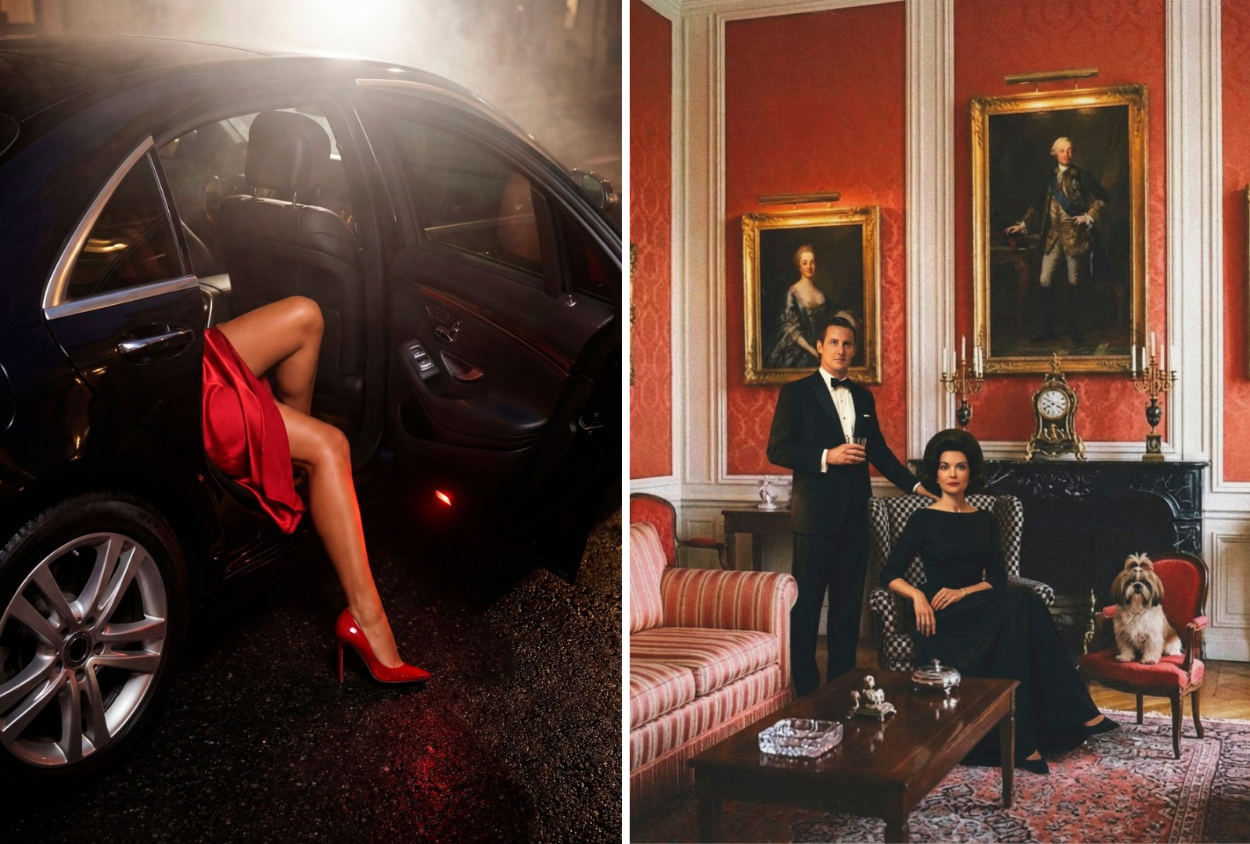
Of course, The Interline doesn’t have any more insider insight than you do (well, perhaps some), but maybe there’s a longer-term rug-pull being put into effect, where luxury brands that clearly do have the talent on-tap to do things the old-fashioned way, are poisoning the well and convincing the rest of the industry to get on a slippery slope they intend to leap off when they pivot back to authenticity, and find themselves with a much thinner pack to compete with.
And if that sounds like conspiracy theory, let’s remind ourselves which sector led the way in digital advertising on social media, only for Bottega Veneta to famously delete its accounts later on?
Repeating the same playbook with AI-generated content? Now THAT would really be poking the nest.