

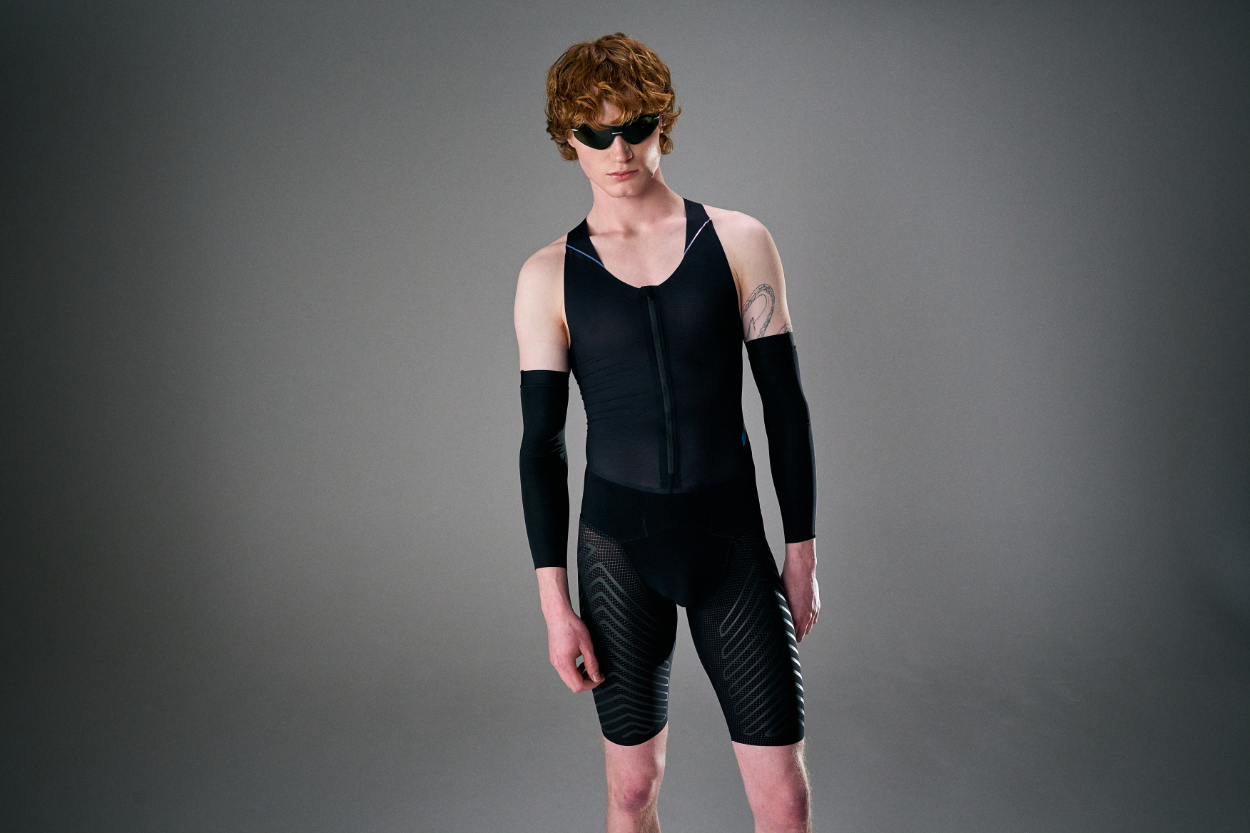
[Featured image: Adidas X RHEON Labs.]
Hey, and welcome back to The Interline Podcast.
If you’re listening to this, you already know that The Interline is a fashion technology publication. We aim to be the fashion technology publication, but I’ll let you be the jury and determine whether or not we’ve earned that designation at this point. It’s rare, though, that we get asked to define what that actually means. Sometimes I’ll talk to old friends I’ve not seen for a while who want to know what my job is, or I’ll talk to parents at the school gates, and they’ll say, hey, what’s fashion technology exactly? But generally speaking, people assume it to be what it primarily is, which is software for fashion companies.
But we actually have a more expansive definition that we’ve used internally at The Interline for a couple of years now. We define fashion as apparel, footwear and accessories. Straightforward. But we define technology as software, hardware, material science, and up and downstream process innovation that has a digital component.
That’s longer and a lot less catchy, so you can see why we don’t put it on the masthead. But it’s also more representative of where innovation is actually going on, which is not always in a code base on GitHub or on someone’s computer. The other reason we don’t put that definition front and centre is that the industrialisation and commercialisation of material science and production innovation has had a pretty chequered history over the last couple of years in particular. I don’t need to name company names, but you and I are thinking about the same stories. You know, a novel fibre, a bio-based alternative, a new finishing or dyeing technology. These things have tended to make headlines, and then they’ve either disappeared quietly or they’ve combusted more publicly when the speculative spending and the grant funding and the sponsorships all drop away. And it turns out the brands aren’t making real commitments to using them in their main collections.
Today, though, I want to have a conversation about exactly that. Upstream innovation in the strictest sense, where a novel product emerges as the end result, and also the migration of hands-on lab coats on science into commercially viable inputs that different categories of fashion can then meaningfully use and that hopefully sustain and scale over time.
To have that conversation, I’m joined this week by Stephen Bates. Stephen’s the CEO of RHEON Labs, which has developed and is well into the process of commercialising a smart material for energy control.
Now, if that doesn’t mean anything to you immediately, don’t worry. I’ll get Stephen to walk me down the garden path of high school science early on, and we’ll figure that one out together.
I did want to talk to Stephen, though, not just because he has a high up role in a science-y segment and a segment we don’t discuss enough, but because I think what he has to say is going to be instructive for understanding how fashion thinks about not just materials and industrialising and commercialising them, but how those materials influence the way we design, engineer and market products, whether those products fit a well-defined pre-existing category or whether they’re in genuinely uncharted space.
So let’s find out what he had to say.
Never miss an episode
Get notifications for new podcast episodes, plus our weekly news analysis, events, and more, delivered straight to your inbox.
NB. The transcript below has been lightly edited.

All right, Stephen Bates, welcome to The Interline Podcast.
Ben, good to be here. Thanks for inviting me on.
No, not at all. I’m glad you can make it.
Now, we always try and start these shows with a bit of an interrogation of what somebody’s day-to-day role is like. And yours is potentially an interesting one because you’re in a very business-y role, in a very science-heavy company that has its roots as an academic research group. So there’s a whole lot of different kind of priorities and things jostling there.
So, tell me how that manifests itself in what you work on day by day.
Yeah, it’s a good question, Ben, and you’re right, it’s still a pretty varied role. And it covers a whole range of different sorts of skill sets. And I’m guessing part of the reason why I’m doing the job and hopefully doing a reasonably good job is that I have a lot of those sort of skill sets in the armory.
I’m originally an engineer, very much a material science base from my time at university. Product development was a key part of my early career. I got a business degree along the way, and I’ve been doing this job as sort of a hands-on CEO for quite a few years. The reality is with an organisation like this that you kind of need all of those things for where we are now, even though I’ve got a team of people who are far more capable in almost all those areas than I am, because I need to understand what they’re doing.
But in the process of getting from inception to where we are now, I’ve needed to play those particular cards more seriously, more strongly at different stages. You know, right at the beginning I absolutely needed to understand the science and make some very fundamental decisions around that through the process of developing the proposition. The product development experience was crucial. These days, yes, I’m still involved in all of those things, but I’m involved in them from the point of view of assisting in thinking, helping to develop the thoughts and the process and ultimately making decisions.
Leading the business is about making strategic choices. And yes, I’ve got a great team of people who are experts in their areas, but if I don’t understand what they’re telling me, then my role as a decision maker is really undermined. And there are points where I still get involved in the detail.
So, yes, it’s varied day to day. These days can be all of those things, but a lot of my time is spent obviously with customers, with strategic partners and increasingly obviously with the visionary investors that we’ve needed to bring on to back our growth and development.
Still varied, still very exciting, and plays on all of those skill sets.


Yeah, getting pulled in a lot of different directions, but having the competency to deal with all of them, often, I guess, in the scope of a single 24-hour period. There’s a similar kind of thing on this side of the table, to be honest.
I can imagine.
Days are very, very varied, but the same thing. You need grounding and you need knowledge in order to be able to make strategic decisions. So I get that.
Yeah, and a key part of it then still is the so called management by walking about. You know, we are a lab-based business, we’re not just a bunch of offices, there’s a lot going on – we may get into that later in the conversation. And walking around the building is a critical way to do what I do, and to find out what’s what’s going on. If you know there could be an issue down in the workshop and if I can see it and I can understand what’s happening, not only do I consider the implication on the organisation, but I might even be able to roll my sleeves up and help. So that is a key part of what I do on a daily basis.
Cool. So the first question that I have for you is going to index a bit more heavily on your science and engineering background, I think, than your business one.
So the second thing that we try to do with every one of these shows is ask a guest to define something. Now, normally I will pick a seemingly simple word or phrase and I use it as a way to tease out some ideas that maybe aren’t as obvious as you would think. So you’d be surprised at how often you can ask somebody to define a very simple word and get quite an insightful response from it.
Okay, test me out.
This time around, I think we need to do a proper scientific definition because as prep for this, there’s a lot of terminology that came across my desk that I don’t think we can just start throwing around without understanding what it is. We can’t start banding around phrases like strain rate-sensitive energy absorbing superpolymers without being super clear about what that means up front.
Now, I’m no scientist, right? You can look back at my grades from high school if you like. I’m a literature guy – science and physics and chemistry were not my strong suit, let’s say. But the touchstone I have for the particular branch of science I think we’re talking about here is actually weirdly a school experiment that I did back in the day and that my daughter repeated not too long ago. She’s towards the end of junior school getting into high school. And that’s the non-Newtonian fluid you can make by mixing corn flour and water. I’m sure the listeners have seen this or done it themselves or be familiar with it. You know, what you end up with is something that stiffens and turns pliable when you squeeze it fast. But otherwise it goes back to being a sort of viscous liquid when that immediate force goes away.
I’m sure there’s plenty of more educated people in our audience than me who’d like a more detailed explanation, but let’s use me as a baseline there. So working from that reference point, how many of the principles from that childhood experiment are consistent with what’s going on under the hood at RHEON?
Okay, well it’s a great place to start then. And you know, you say you’re not a scientist, but you’re a long way down the road by recognising the relevance of that experiment that your daughter has reminded you of – cornflour and water – that phenomenon is absolutely relevant. What your daughter’s made is a mechanical dilatant. Now she may not have realised that that’s what she was doing, but if you get the relative proportions of a solid and a liquid just right when you mix them up, what you get feels like it’s locking up or stiffening suddenly when try and stir it quickly. And that’s what you’ve described in the experiment. As you say, if you leave it alone, it just flows really easily. None of that stiffness is apparent.
It’s called a mechanical dilatance because the interaction between the liquid and the solid is a physical thing. If you can imagine that you’re two phases here – liquid and and solid – and they kind of get in each other’s way when they’re trying to move.
I’m a very visual thinker. So imagine you’re in Waterloo Station or any crowded railway concourse at rush hour and you’re trying to run through the crowd. You just wouldn’t be able to. You’d bump into people because you couldn’t twist and turn fast enough. But if you were walking you could do that really quite effectively. You could move through those people and actually you’d make faster progress if you did it slower. Now that’s a physical effect, clearly, you’re bumping into things. And this idea that you’d flow faster if you were walking is kind of analogous to that.
Now, into the world of our technology, what our founder did back at Imperial, where the technology was created, was creating a chemical dilatance. So now the interaction between the things – and this is true of our material – is happening at a chemical level, not a physical level. But it also has the ability to suddenly become stiff. But it’s achieving that because the chemical bonds are happening at a molecular level. Now that’s really clever, and it’s very innovative, but it’s also much more useful because it works in tension. So you can pick our material up and you can stretch it quickly and it stiffens.
The concept of picking up cornflour and water and stretching it, of course, is nonsense. Mechanical dilatants don’t work in tension, they only work in compression, and you see it when you stir them, and that’s the experiment. But if you can make something that works in both tension and compression, now that’s useful. And if you can then turn it into components that hold their shape, and again, cornflour and water doesn’t hold its shape, it just flows. You can now make useful components that behave in tension and compression with this unusual behaviour.
Now that’s the basis of a game changing business. And what one of the key innovations of the organisation is.
So you’re absolutely right where you started. Strain rate sensitivity is the way of describing that weird behaviour. And it’s happening in our organisation in a material at a chemical level, which is what makes it different.
And one thing I realise isn’t baked into that question is how does that manifest itself in product from your side? So how does that science translate into what it is that RHEON actually creates and sells?
Yeah, it’s a good question. I think it’s because a lot of what happens in a product development process is people design things with an inherent compromise. They can’t have two things, two characteristics in a product, because those two things are inherently at odds when you deal with conventional materials. So for example, if you want a close fitting garment to be both comfortable but also supportive – and think about a sports bra as a case in point – you want a textile that stretches really easily because that’s comfortable. But actually if you move in that garment, you actually want the textile not to stretch so easily because that would provide support. So if you could find a textile that stretched slowly easily, but wouldn’t stretch easily when you tried to stretch it fast, then you could have both.
Now we can do that. So we’ve taken away the need for compromise in design by having some halfway house behaviour for the textile. We can make a textile that does those two things and does them dynamically. It just reacts to what the user is doing. It reacts to the real world rather than being a compromise at some sort of halfway house condition. And that’s kind of what we do. We take away for our customers the compromise of product development and allow them to do two things that have previously been at odds. And that’s completely liberating for many of the markets that and the product categories that we serve.

That’s a good answer.
Now, I think it’s fair to say that listeners to this show and readers of The Interline will have heard a lot about ‘ingredient technologies’, which I’m going to use as an umbrella term to lump together things like alternative fibres, novel chemistries, new methods in fabric finishings, and so on.
Yeah, for sure.
And they will be familiar with a fairly predictable and fairly gloomy arc. Some of those follow, which is that they don’t have a great track record of commercialisation. There’s almost a kind of playbook that you see with these kinds of things where you start with a halo partnership with a luxury brand or a government-sponsored initiative or a celebrity endorsement for a small collection that grabs attention. Then there’s a lengthy period of deliberation that ends with everybody agreeing that the idea, while exciting and interesting and freeing in principle, isn’t commercially viable at scale in practice.
Now, I’m not saying that RHEON is necessarily going to follow that playbook, but when I look at the work you’ve done with the NFL in America, for instance, it does seem to fit the established narrative where you have grant-funded work that in an ideal world will trickle down into product.
What are you doing to try and make sure that the next chapter doesn’t play out for you the way that it has for some of these other ingredient technologies?
Yeah, again another great question. But I know exactly what you mean. I’ve seen this sort of phenomenon too. These sort of so-called ‘shooting star’ technologies – they fail because although they’re exciting and they can capture people’s attention, they haven’t sorted out the critical go to market issues. I mean there are lots of examples of them. You cited one already. Is it really affordable by the mass market? You know, not just the sort of super premium high-end brands that they work with, but can you roll it out in volume? Critically, is it easy to implement?
I see a lot of technologies and we’ll talk some more about that later if you want. But you’ve got to have a technology that the supply chain can embrace, can take on. Critically, is the benefit actually proven? It’s all very well making promises, but have you got hard data, especially third party validated data, to prove that it does what it says on the tin, as it were. And really boring things, like in our case, washability. You know, you stick our material onto a garment, well, you know, is it going to go through a wash twenty times and still look good and still perform?
So all of that stuff is critical to get sorted out. And the so-called ‘shooting star’ technologies don’t necessarily do all of that. They just get carried away and they go to market maybe a bit too quickly, too soon, maybe without some of those things addressed.
Now the NFL competition that you mentioned, that was very considered. Yes, it was grant-funded, but one of the reasons why it’s grant funded is that if you’re an investor-backed business, you don’t want to use equity funding for doing R&D. So it is a very significant discipline within our organisation to make sure that we leverage whatever grant funding we can.
But the fundamental reason for doing it was that it was all about proof points. The NFL is the toughest test in the world for head safety, for all the reasons I’m sure that you know and your listeners will understand. And showing that a technology works in that environment is the gold standard. And also showing that a technology startup from the UK could actually win a competition in the US of that nature really put us on the map. Frankly, not just for head protection, but just generally in the US. Gridiron football is a religion in the US. And if you get a profile through an organisation like the NFL, then people take notice. And our partnership with Milwaukee Tools, you know, one of the world’s largest PPE companies, was a direct result of that competition. They saw what we’d done and they engaged. Fast forward to today and we’ve put Milwaukee Tools’ latest construction site helmet at the top of the independent Virginia Tech safety rankings and that is meaningful for them and now that’s commercial.
So that’s how we take an NFL competition and we turn it into good business. But I think you’re making another point here about halo partnerships, and I think that’s a more sophisticated point because yes, again a lot of businesses do that and fail because that’s all they do. But there’s a really important role for those halo projects when you’re starting up. In the same way that the NFL’s head health challenge got us recognised and respected as a business, the partnership we did with Adidas and the subsequent exposure that we got at the Paris Olympics did the same, albeit in a different environment. Because we were very reliant on a small number of key accounts, as many startups are, for the early part of our development as a business.
And the last two years have changed dramatically. We’ve now got more than fifty active customers and that’s growing steadily. And it comes from the credibility that those early partnerships earn you. You know, getting a big business like Adidas to put our brand on product and showcase it at an event like the Olympics, was a game changer for us. We’ve then just got the door opener to go and talk to other customers and to build our business from there.
Okay. And I think the other thing that sticks out to me about RHEON compared to what that kind of cohort that I’ve just lumped together as ingredient technologies is that, unlike an alternative material input, for instance, RHEON is pitched as being an additive platform technology. So in other words, it’s a way of increasing the value of existing clothing footwear or you mentioned Adidas, I know you have some of those in the market with them already.
But I actually want to focus in a little bit on your partnership with Decathlon, because that seems a bit more instructive for where I suspect you want to go from here. And I think it’s a bit more instructive for what additive means in this context.
Now, anyone who’s been reading The Interline for a while will have seen stories from Decathlon that have been told through us before. We’ve had what were at the time called their kind of digital asset team, write for us about the way that they approach kind of from product creation, testing and marketing and so on. But in the process of putting together those stories, reading back on them, I’m always reminded of just how broad the product mix is for Decathlon. But also I’m reminded of the fact that they produce some pretty class leading products in certain areas. They don’t just do breadth, they do depth.
So tell me how that partnership works.
And give me some insight into how you envision the two parties, so yourself and them, making choices about which products to add RHEON to. Because if you’re not having to go all the way back to the drawing board and architect something fundamentally new, if what you’re saying is, well, I have products that are specialized for a particular sport, for instance, they’re for a particular use case, and either through tension or compression, there are scenarios where I think they could be better if we add something to them. That feels like a different decision-making process than saying I want to make something new from a completely novel input.
Yeah, it’s a really good point. The additive nature of the technology is absolutely right. And in fact it’s one of the ways that we often win business. We demonstrate the effectiveness of the technology by taking existing product and improving it by adding our technology to it in a very kind of demonstrative way. The reality is that the the more sophisticated solution arises from going back and r reimagining the product because
As I said a moment ago, you know, by taking away that compromise in design, you end up with a better outcome. I mean a case in point is if you apply our material to a pair of running shorts, you actually want to change the underlying material. You want to reduce its stretchiness in order to benefit from the applied material. So you open up the gap between the stretches easily and it doesn’t stretch at speed if you like. So it’s about giving people that freedom.
But as a starting point, we absolutely demonstrate the technology by applying it to existing product. Decathlon was attractive in exactly the way that you described because of its strength and depth. It was attractive to us from a commercial point of view because of its volume, but not volume without quality. As you rightly point out, they have a number of very performance-oriented subbrands. I mean KIPRUN, their running subbrand, is a case in point. They’re also highly vertically integrated as a business so they can really manage supply chain effectively and that helps them to adopt our technology more readily. They’re also very innovation focused and when you combine the wide product range with all of those characteristics it’s a very, very good partner for us and allows us to be what we are, which is a platform play. Because you can apply our technology across such a wide range of different categories of product.
You know, we’ve only integrated our technology into clothing for Adidas with running shorts, leggings, sports bras. But at Decathlon we can enhance not just clothing, but things as diverse as, you know, paddle rackets or even bicycles. And it was one of the reasons why the Decathlon CEO, when he announced the collaboration, he cited it as a ‘global innovation partnership’ and that is very much what’s happening. You know, the way we work with their central innovation team, because they’re structured to have innovation managed across their business in a central function, we just look at all the opportunities that exist to enhance product, both existing products and potentially even make possible new products and create a roadmap of developments with them which makes sense to their strategic ambition. And obviously things that we can handle internally. And we just work through those.
You know, the first of the products is already on sale. It’s a set of running shorts for KIPRUN. They’re selling extraordinarily well across the various different regions. And the next wave of developments is coming out soon and there are more, you know, slated so I can see Decathlon being a very substantial commercial partnership for us for you know for many years to come.
And how about from a price point perspective? So if I think about what we’ve just said about Decathon, where you have the performance-oriented things, which tend to be more expensive than the mass consumer or the prosumer side of things. Does it make sense in the here and now for RHEON to show up in the mass market stuff? Or does it make more sense for it to remain in the performance thing? And do you see that becoming more of a fixture of their mass market products? And I guess mass market products in general beyond this partnership over time.
Yeah, I think there’s a sort of a ‘good better best’ concept within most markets. And I think, we will never be a business that focuses very hard on the sort of entry level part of any market because there, of course, everything is stressed to the point where ingredient technologies find it very difficult to play.
But the idea that we’re only applicable to the high-end because we’re an inherently high cost technology is absolutely not the case. You know, we can engineer to deliver benefit at all of the meaningful price points in the centre market and the top market. And we’re even looking at some ways to implement our technology that will really creep our technology down into some of those lower price points.
Where Decathlon operate with their premium brands, subbrands, is absolutely heartland for us. We can operate there, you know, very easily. The fact that we can apply our technology to some much higher end brands like SOAR Running, for example, is because we’ve got the freedom to do some other things when the price points are higher.
But, no, Decathlon’s not creating challenges for us from a cost point of view. It’s actually creating opportunity because of course with volume comes the ability to do some things that are often more creative.
Now that’s brand activation. We’ve talked about Adidas and Decathlon there. That’s one of your routes to market. The other is the model that I think you’re pursuing with Stretchline, which would at least theoretically mean that anyone making active wear, performance gear and so on that needs narrow elasticated fabric, so waistbands, could source RHEON as an input from an existing sort of de facto supplier.
That gets you a lot of distribution. It also takes away maybe a little bit from your level of control over how the science gets used and communicated and the kind of products it shows up in.
Now, when you and I talked a while ago before this episode, we talked about Gore-Tex. And that route to market reminds me of that. It’s product technology sold as both a direct train of material, but also on an innovation licensing basis. And Gore-Tex shows up in a lot of places. You know, it’s effectively synonymous with its function. And that’s seen as a seal of quality for the brand and the consumer, but it shifts the framing from Gore, the company, being any kind of solicitous-involved creative partner. And Bill frames it more as a commodity supplier. And there’s no doubt that’s a killer business model. And everybody would love to have been the inventor of Gore-Tex.
I also see it being as one it’s kind of hard to walk back afterwards once you become a commodity that shows up everywhere. Is that a model you want to go after? And am I even right to see that there’s a distinction between being that kind of commodity supplier and doing the sort of more deeply engaged collaborative work that you were just talking about?
Lots of things to pick up in that question.
It’s really interesting. Let me start with the Gore comparison, because you are absolutely right. There’s no coincidence to the similarities between not just our business model but also how we’re going to market. When I was setting up RHEON – and bear in mind it was a technology that came out of university, you know, there was no business, no brand, no strategy, no customers. You know, it was very much a clean sheet of paper – I spent a day with a friend of mine who works at Gore in Munich. I wanted to understand how they operated. I wanted to really get behind the curtain of their ingredient branding model. So that was extremely informative and it’s therefore no coincidence that we are operating in a similar manner.
We’re emulating their approach in the obvious ways of going to market with an ingredient brand, but also perhaps some less obvious ways. Performance sportswear is a great market to build a credible ingredient brand. And it’s one that we chose for many of the same reasons because it’s quite comfortable adopting new technology. It tends to have quite a rapid product cycle, so time to revenues are quite clear and it’s quite stratified so you can start with high profile brands and then expand.
But in the same way that Gore uses the credibility that comes from that ingredient branding visibility to sell their technology into unbranded markets like automotive, is exactly what we will do in a few years time. It’s worth noting that Gore makes 85% of its income from these unbranded markets. And we have exactly the same opportunity in the future, but we have to earn the right, as it were, to use that credibility by building the brand in the markets that we’re focused on at the moment and performance sportswear is our choice.
You asked about Stretchline, I think by sort of suggesting that maybe it’s a break with that model that we are emulating?
Mm-hmm.
Well, the answer is yes and no. Of course we’re emulating aspects of Gore-Tex, but we’re not slavishly copying them. And the relationship with Stretchline was very much a strategic experiment. We are an experimental business. We try things. It is the nature of of breaking boundaries and exploring. And we knew already that putting our material into a brass strap was an extremely effective way to integrate the technology into that garment. It’s not the only way, but it was one of the ways that we could do it.
And as we were talking to customers, we kept seeing, you know, Stretchlines’ products in factories. They were clearly a very trusted supplier to the garment industry. I mean, they’re arguably the biggest narrow fabrics business in the world. And we started to talk to them because if we could integrate our material at source, then that could become a very cost effective way of taking the technology into that particular area of a bra and that could widen the market.
Now, you know, you always need a bit of luck in these situations and it was our good fortune that at the same time as we were talking to Stretchline about this idea, they were doing the development of an orbitally knitted strap, so a seamless strap. And it was the perfect carrier for our technology. We could integrate into the centre of this orbital knitting as it was being created and then flatten, as it were, all of the materials together and create this RHEON Orbiknit solution. And as a result, our time from concept to product was months, not years. So we launched it in November last year. We’ve already got 60 brands sampling it around the world.
So, has it diverted us from our model? No, not at all. It’s just part of a toolkit. We already offer our brand partners a toolkit of solutions for just a sports bra, let alone other sports garments. And the strap that we are developing or have developed with Stretchline is just one of those tools. And the great thing is that it comes from a trusted supplier and a trusted supplier who already has a lot of sales relationships out there in the market. So it feels completely natural for us to be doing that. And it isn’t an either or. You know, we’ve got customers who are looking at integrating a Stretchline strap and putting our material into another location in the same garment.
So it’s early days, but I’d say our initial experience of it is that this is not just a good solution here, but potentially it is another type of partnership that we could explore in other areas of the business. So it’s creating opportunity elsewhere as well.
Yeah. Cool. And I appreciate it feels a little bit like I’m putting you through the ringer with some of these questions.
No, not at all.
But the thing is, this is what the market does and needs to do with any new technology from any new kind of ingredient technology, any new karma technology, any new input that it has to go through this process.
Yeah, of course.
So let’s see it as me trying to fast track some of the questions that the wider industry will be asking. And the other one of those is so one of the other reasons that upstream innovations fail is they require too much change to implement into existing supply chains. There needs to be incentive alignment, but there also needs to be a reasonable amount of effort on the part of upstream partners to actually integrate things. That’s why you hear people talk about drop-in industrialisation being such a big deal. It’s saying you take your existing supply chain, just slot this in and it works.
Now, we’ve already talked about RHEON being additive in the sense that it goes on top of an existing substrate. So it’s not requiring you to rip out anything that’s already in place. What does it require you to add in? And where does that go? Just humour me here. Am I putting new hardware onto the shop floor with my manufacturer? And come to think of it, is the manufacturer your customer in the long term? ‘Cause I feel like where the technology lives, what it takes to put it there, that’s as much of a business model consideration as it is a practical question.
Yeah, it absolutely is. I think I touched on this when we were talking about shooting star technologies and one of the reasons why they fail. You know, you’re absolutely right. If you’ve got an extremely exciting technology, you do well to make sure it’s extremely boring in the production environment. It wants to be so ordinary when you are in that factory space because they’re super tanker-like factories and that whole sort of supply chain, it doesn’t turn easily. So you want to make it as straightforward and familiar as possible or it’s a massive barrier. And having your manufacturing solution sort of shaking its head and saying, no, this is too difficult will kill a technology, even if it’s delivering huge advantage of the product.
I can tell you a story from my time at Marks and Spencer. We were approached within the Innovations Group by an absolutely brilliant technical solution that would effectively solve the problem that exists with shirt buttons. So putting buttons on shirts and keeping them on is just a huge problem for the industry. It really isn’t a very good solution. It creates all sorts of quality issues and if somebody could snap their fingers and solve that problem, they would do it overnight. But out there in the world of shirt manufacture, there are hundreds of thousands of sewing machines that sew buttons on. And the factory community is not going to ditch all of that asset investment overnight. So you’re just not going to solve that problem by coming up with something else that makes all of that equipment redundant and requires a whole lot of other equipment to be purchased and installed.
So that technology was never going to get the chance to solve the problem. So the problem remains.
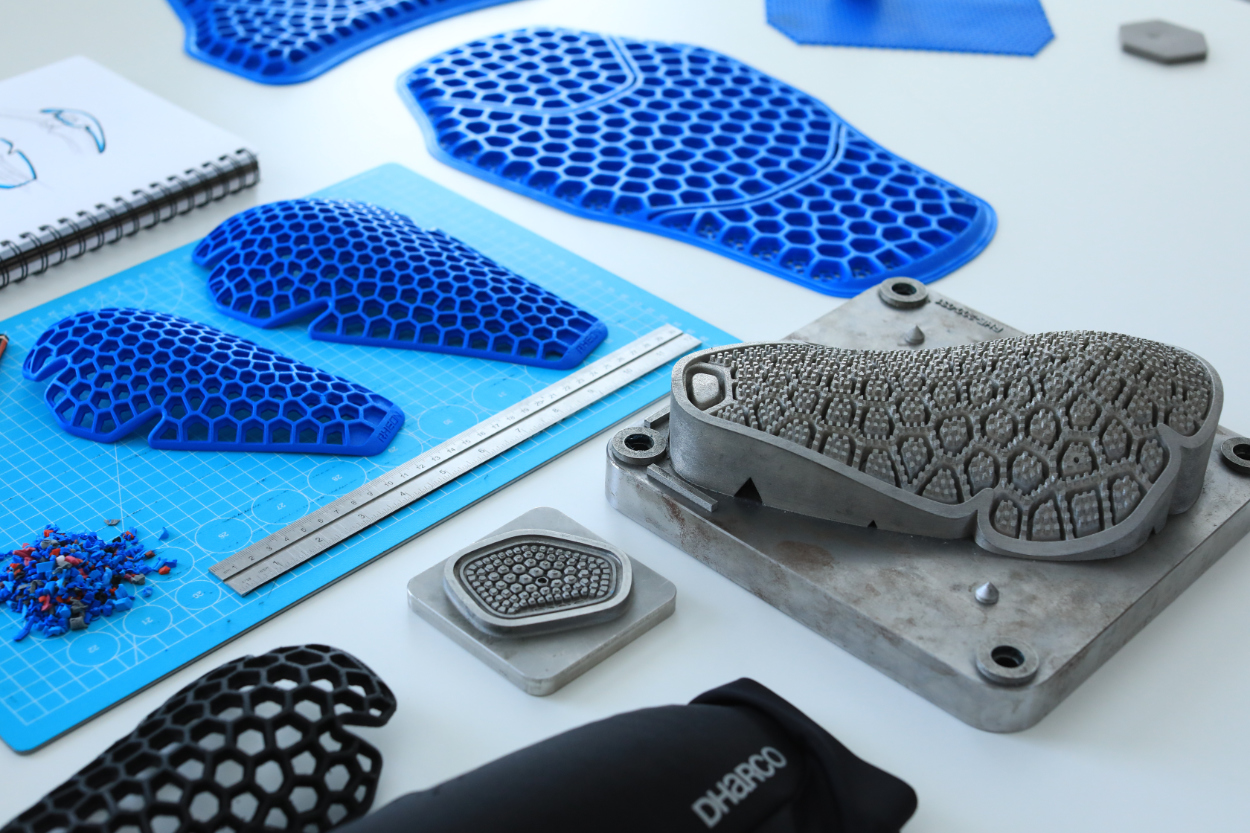
So when I talk to our investors about our technology, I said the real innovation is that it’s really easy to process it in factories on existing equipment and the techniques that the factory workers need to understand, they already understand. They’ve already been trained. You know, when we visit tier ones, we show them it’s just like putting a logo onto sportswear. They’re using heat presses, they’re using stencils, they are aligning them in the way that they do already, and it’s just the same. And when they’re molding our material in an injection molding factory, we simply say, look, you might be using some rather unexpected machine settings, but you can still make our components alongside conventional plastics, you just need to know how to set up the machine.
You know, we’ve got a team in China, they will spend time with that factory and in a matter of a few days they can be operating at 100% quality. It really is incredibly straightforward and that’s a critical part of the success of the business. It’s effectively seamless in the factory.
And so then my follow-on question would be how seamless it is in design and development. So when you and I spoke a couple of months ago, so spoiler for listeners, this process of booking guests and coming up with topics and things is not instantaneous. You and I talked a little bit about building bridges between material and process innovation and then representing those innovations in product creation workflows, specifically digital product creation workflows, i.e. people working in 3D to conceive, test, simulate, visualise products.
Now, a lot of effort’s already gone into capturing what happens to traditional fabrics, you know, monomaterials or blends when they move, and making that reasonably accurate to simulate in 3D. There’s a whole field of softbody avatars that are pointed at that purpose and understanding what happens when those fabrics interact with the wearer.
Here with RHEON, we’re talking about materials whose actual state changes when they move, as you’ve said, like it’s stretchy under slow motion and stiffer and more supportive under fast motion. It’s a different level of dynamism entirely.
Now, I know the team at Decathlon are deep into 3D virtualisation. So are a lot of other companies. Tell me a little bit about where you see your work intersecting with the companies that are heavily indexed on digital product creation.
Yeah, we use digital design techniques a lot in design. Effectively we capture the body movement during activity. So we’re capturing digital data that defines how the body moves. And we use that data to drive our design solutions. We sometimes say that we use the body to design its own solution because if you’re trying to control certain body movements, but at the same time not restrain other movements, which are the positive movements, then the value of that data is huge and we use it to drive what’s called sort of generative design.
So we make sure that our materials are positioned on a garment in a way that’s wholly beneficial to the wearer. We want to suppress or control the unwanted, the unproductive, the sort of inefficient movements but we don’t want to constrain the useful movements and that use of digital data I think it’s pretty sophisticated even at this stage.
But you’re making another point here about the changing nature of the material and you’re absolutely right that when you’re designing in 3D for example you might do finite element analysis so you’re designing how materials and components change shape under load. Now we’ve got a material whose properties are changing under load. So if we’re gonna operate in a 3D design environment and legislate for that dynamic material characteristic, then we need what’s called a dynamic material card. So now we’ve got digital data defined for our material that allows the computer to understand, as it were, the digital signature of our material so that its behaviour changes during a dynamic event.
So imagine you are designing a crash helmet in 3D and you are doing a simulated impact on that helmet again in the computer environment. The way that that helmet behaves is going to be consistent with the material properties of the elements in it. And if one of them is a material whose stiffness changes during that impact, then that requires that digital signature. Now we have that dynamic material card and we use it for exactly that purpose for the design of impact absorbing items like helmets.
What I think you’re asking and what we’re very interested in as a next step is taking that into our garment design process and starting to simulate those changes at a garment level. That is definitely next generation for us but certainly certainly achievable.
Yeah. And that was what I was thinking. I was thinking your CLO, your Browzwear, or so on, somebody who’s designing a piece of apparel for a very specific performance purpose. And so at the moment they can test for compression and tension and things like that with traditional fabrics that have some measure of stretch and stuff to them. Yes, I’m envisioning a world where somebody is able to do the same, but with that dynamic material card so that they can simulate the state changes in the material as it moves around.
There’s kind of an add-on question to this, and you’ve alluded to it, which is that there are basically two categories of products I think that we’re talking about here, or maybe two subsets of a particular product category. I don’t know whether you’d call this whole thing energy control materials, dynamic materials, but I want to just try and understand how big you think that category is in terms of the products it can appear in, and also which of those if you if you intend to specialise in one of those areas or if you intend to go after them both.
So you have, I think the label you use is reactiveware, which I like. I think that’s pretty snazzy. That covers all the garments that you’ve just been talking about, the kind of emerging category where the energy that you’re controlling is coming from the person wearing the thing. And that’s an area where it’s potentially a pretty large category. People see the benefits and it feels like it’s one that’s emerging.
Then you’ve got the other categories you’ve alluded to where the energy you want to control is coming from an external source, like an impact. And you’ve talked about the NFL headgear. If you take the same kind of thing, helmets for motorcycling, mountain biking, skiing, and so on. Those are definitely not emerging. They’re very emerged industries that are also tightly regulated and have certifications and so on.
One of those seems harder to go after than the other, in the sense that an emerging category is yours to define, whereas a codified and regulated one is yours to kind of try and wedge your way into.
I know you’re exploring both of those avenues, but how do you see that part of the go-to-market developing over time? Do you want to keep doing both those things, or do you think you’ll end up specialising in one or the other?
Okay, so to get into this, it’s probably good to start at the big picture. And at various points as we’ve been talking, I’ve alluded to the wide applicability of our technology and that is a fundamental attribute. Its ability to change, its nature as a material means that it can liberate, as I said earlier, product development in a whole variety of different areas. We’re focused at the moment on the sportswear and sports equipment market for the purposes of creating an ingredient brand. But it’s not the fact that we need to focus even more because that already brings with it a whole lot of synergies that we can work with.
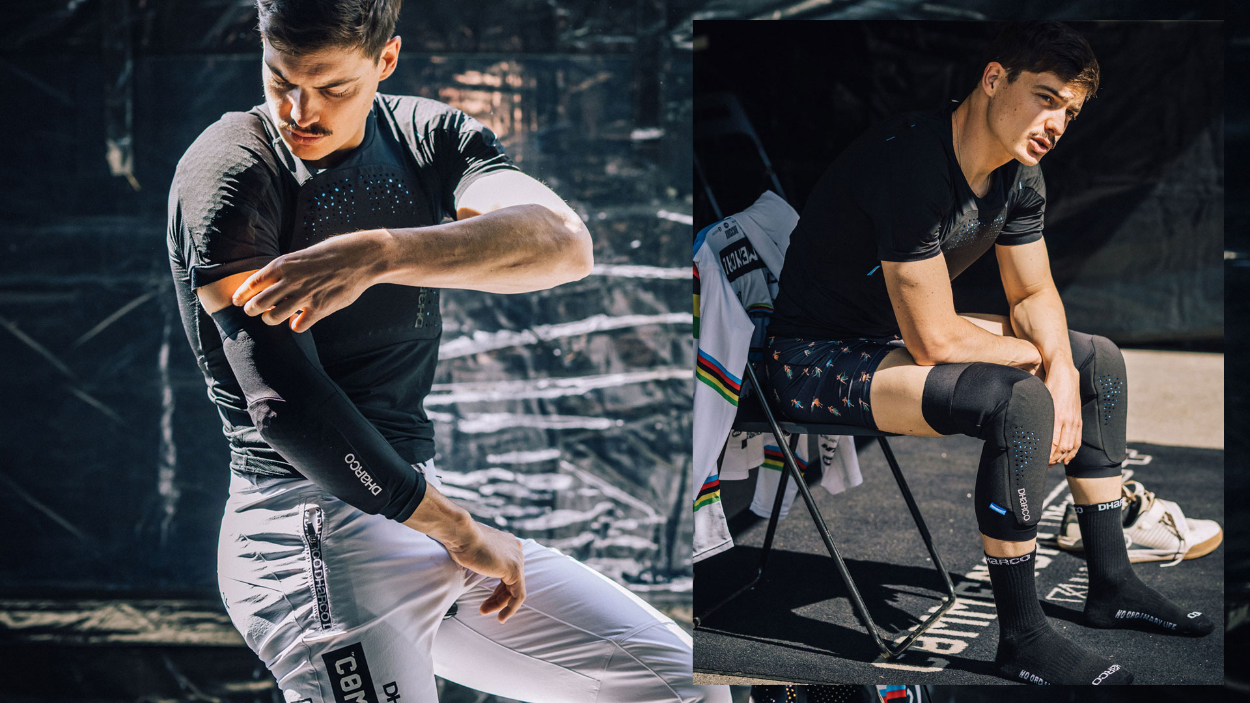
Now, it’s true that protection is a highly regulated business. But regulations are very much the DNA of our business. It’s an engineering mindset really. Our Founder still chairs one of the BSI committees that sets standards in sport and impact protection and we’ve got lots of staff members who come from the industry. So making RHEON products that meet standards is really, really well understood, and that’s what we’ve done in taking our technology into the body armour and helmet business. But it’s the advantages that the technology has over existing products that also meet those certifications – that’s why the business is growing very successfully because it is those advantages that make us stand out from the alternatives.
It’s also important to note that many of our customers buy both solutions from us so they buy the sportswear solution and they buy the protection solution because it’s all part of the platform play that I described.
We were talking earlier about Decathlon. You could imagine mountain bike body armour, sports clothing and other applications within their product range all being relevant to them. So it makes us more attractive as a technology partner, but we have a variety of ways to deploy the technology and furthermore, we’ve been talking about focus, but let’s talk about expansion for a moment.
As we start to expand the offer, and indeed we’ve done that recently – we’ve brought a vibration damping solution to the market, and the first market application is in sport. We’ve launched a paddle racket with Macron and we’re working with lots of other racket brands and some golf companies and some ski brands and bikes as well. Because the same advantages that the material has in the applications we talked about earlier, can be delivered to carbon composites. And it’s like a natural evolution that we use our technology to enhance product with the customers that we have.
So whilst the technology and the development are common to all of those things that I’ve described, you’re right to explore what needs to be different and it’s the front end. The marketing front end is absolutely different. We’ve recently created different social channels for our offers because even though you know B2B and B2C are very blurred these days and we are very much at the boundaries of the two.
So, if an end customer wants to understand our ingredient technology and search for RHEON we want to make sure that she lands somewhere that’s appropriate. Maybe her interest is in sports bras, but maybe her interest is in adventure motorcycling. So whatever it is, we want to make sure she lands in the right place because those communities are really rather different. So it’s the front end from the customer’s point of view that might look very different. Actually there’s a lot of commonality in the background.
Mmhmm. And I think you’ve probably answered this question, but I was curious about what the operational lift on your side looks like for setting up a new category as to whether the platform play is sufficiently portable that you using it in a pair of running tights is broadly the same thing as using it to create motorcycle armour, for instance.
Is that fully the case, or is it the case that every new category is maybe in an R&D project in a tooling phase on its own?
Look, it would be too simplistic to say that there’s no lift to set up a new category. I mean, we talked about the vibration damping solution a moment ago. And the reality is there’s a lot that is similar though. The supply chain solution, for example, the film used in our sportswear comes from the same converters as the film that we sell into vibration damping. So straight away you’ve got the same relationships that you can work on the back of and you’re dealing with the same material converters so you’ve got a lot of similarities in the background. In many instances the customers are the same as well but, yes, it’s a different proposition.
So we have within our organisation what we call a ‘futures group’ and the futures group was set up to manage these new propositions – not just to develop them, to take them through the R&D phase, but also to prove to ourselves that there was a solid commercial opportunity to actually create that proof point. So we task our futures group with finding and selling to the first customer. So it was our futures group that sold to Macron and there’s now a vibration damping product on the market and all of the other customers that are now engaged with that proposition, with that technology, have come because we’ve picked it up as a mainstream proposition now, because it’s passed, as it were, that internal test. We have that first proof point.
And just to tie a few threads together before I bring us to a close, now you’re doing something else interesting that straddles a lot of what we’ve just talked about, which is pellet extrusion 3D printing. And the vision, if I’m reading it right and thinking about it right, is for you to be able to produce custom-shaped components with basically no tooling cost, and certainly no kind of lengthy setup per application. And also to maybe be able to do that anywhere to facilitate doing it on demand.
It sounds like that’s at a relatively early stage, or at least it was the last time we spoke. But give me your take on where you think that side of things goes from here.
Yeah, we’ve been using 3D printing in-house for a while to support developments. What makes our 3D printing solution unusual is that it actually creates parts that behave virtually identically to an injection molded component. That’s very unusual to be able to simulate not just the shape but also the performance at a component level. So it’s not just a looks-like sample, it’s a works-like. Now we realised that we had something that was unusual and so it wasn’t just useful internally – it might also be useful to the market more broadly.
So we launched that material as a new solution at the Formnext show in Germany last November. It’s a bit like the deal we’re doing with Stretchline really. We’re just exploring really what the market might do with this technology. And so it’s an opportunity to see how people react. We’ve proved our material with three different key machine providers, the small scale, middle-sized, and big component applications, so that we can take inquiries from all those sorts of areas.
And we’re in the early stages of working out what the market might recognise as an opportunity. But there are some very, very interesting things already coming into the business. And, you’re right, it allows us to make complex shapes without tooling, but also importantly, to make complex shapes that you simply couldn’t make, even with tooling. And I’ll give you a really good illustration of this. We talked at the beginning about the original NFL developments. There was a prize winning head protection solution. That was an injection molded component. It was a complicated shape, but it was an injection moulding. Well, just to prove what was feasible with 3D printing, we took that original design, we re-engineered it for 3D printing and we made two versions of it. You know, one version was 30% lighter than the injection molded solution, but it had the same impact performance. And the other solution we created delivered 30% better protection by using the same amount of material as the original injection molded solution. Now 30% improvements in either of those areas is a big deal. And that is what we can now demonstrate to the market.
Here is a technology that isn’t just good when you injection mold it, you can now go to another level with 3D printing. So, as I said, some of the inbound applications that people are asking us to engage in are really intriguing. So watch this space. Maybe I’ll come back and talk about this one in a few months’ time.
That’s one to pick up, yeah.
My final question is another one I think we’re going to talk about potentially in the future, which is: you’ve mentioned a couple of times, I think towards the top you talked about removing constraints and compromise from things. Just then you’ve talked about making complex shapes that exceed the capabilities of traditional tooling. I think I’m thinking a lot at the minute about how design changes when you’re freed from those constraints, particularly at the current moment when generative AI specifically is making its way more deeply into product design and development.
Now, a bunch of people listening to this will maybe rightly be concerned that some classes of design work are going to be automated thanks to generative AI. But then there’s the viewpoint that maybe what ends up happening or at least a separate stream is that generative AI gets pointed at a completely different type of design, which the frontier pushing sort of stuff to create new types of products.
That’s particularly interesting if you’re pairing it with a material that is also fundamentally new, or you’re pairing it with the ability to create complex shapes that are fundamentally new. We’re approaching over time here, but tell me how you think that plays out. You know, if what we have is a new way of we have a new material, we have a new way of potentially making things and we have a very new paradigm. I hate that word, but I’m gonna use it for design. How do we think that plays out?
Yeah. Look, we’ve been using a form of AI for some time. We don’t design in a conventional sense. We use algorithms to create design and the data sets I talked about earlier are the input. But we can’t take humans out of the loop. And so the idea that we can sort of step back and let AI do the job that we do is just fanciful and frankly also philosophically, I’m very uncomfortable with that idea.
The reality is, AI is only as smart as the person developing it. So we try to make our AI enhanced solutions smarter by keeping the human in the loop. So, for example, we will design things, we’ll test them, and when we’ve got the real world results of those tests, we’ll feed that back into our algorithms so that we are closing that loop, and remembering what we know.
So when we’ve designed something and tested it, we’ve got the real results of that in our knowledge base, which will improve the predictive ability of our design solution when we’re creating something new. So, we have to have that human element. And for example, when you are designing for performance, but there is an inherent aesthetic, you also want a human in the loop as well, because now you can choose the various solutions that your design system might predict are all going to perform well – which one do I like the look of? So you can put your customer as the human in the loop to choose the solution that they want to see on the shelf from that product.
But we are a solutions business and we’re not a materials supplier and so we have to think about how we work with our customers. And we are at the moment again doing another strategic experiment by seeing whether some of that design capability we could codify and we could deliver to our customers as sort of a white label to enable them to do things like size grading, which is a very mechanistic thing. We create a design solution, we intelligently size grade it. Well, maybe our customers could do that. Maybe that’s something that we could add to our proposition. And, yes, there are pros and cons to it, but you know the best way of finding these things out, as I said earlier, is by experimentation. So we’re just trying it with a friendly customer to see whether that’s a route forward.
Mm-hmm. Excellent.
Well, Stephen, it’s been a pleasure talking to you. I think it makes sense for us to loop back around to this conversation at some point in the future and see how some of this experimentation plays out.
For today, though, thanks for humouring all of my grilling and questions. This has been a fascinating one for me. It’s definitely an interesting space. And I’m keen to see how it all plays out.
Ben, it’s been a pleasure talking to you. Thanks for the time.
And that’s the end of my chat with Stephen. While we don’t exactly have a defined length for these shows, I do know this one ran a little long, but hopefully the extra time was justified and you found it worth it.
As I said earlier in the show, I appreciate that I came across as grilling Stephen a bit there and trying to pick holes in his business model, but there are two reasons I did that. The first is he’s a CEO, he can take it. It’s his job to have answers to these kinds of questions as they come in from partners, investors, and so on. The second is that the industry is going to put any ingredient technology or alternative input company through the ringer. Because the history that Stephen and I talked about where scientific material and production innovation burns bright and then fades out quickly when the rigours of scale and commercialisation take hold. That history is front of mind for anyone who is thinking about how to fit these kinds of things into either sustainability strategies or into product innovation pipelines.
I think Stephen gave some really good answers to my questions. And I came away from this conversation more optimistic about upstream innovation than I have been in a while and hopefully you feel some of that same energy.
I’ve got plenty more exclusive interviews to come, some with the same amount of grilling, some with less. So thanks for listening this week and I’ll talk to you again really soon.