

Originally released in The Interline’s AI Report 2026, this executive interview with Bamboo Rose is one of a 17-part series that sees The Interline quiz executives from companies who have either introduced new AI solutions or added meaningful new AI capabilities into their existing platforms.
For more exclusive interviews, stories and opinions from different industry perspectives, and real survey feedback from voices from every level of fashion, download The AI Report 2026.
We’re observing a big disconnect (in both our own fashion-only data and in wider benchmarks from other sources) between the increasing capability and reliability of AI, in both a general sense and in discrete applications, and the lack of trust that end users place in its outputs. What does trust in your specific applications of AI look like, and how do you achieve and measure it?
Trust in enterprise retail AI isn’t about blind faith; it’s about transparency and context. The trust gap exists because users are frequently handed “black box” recommendations without any visibility into how they were generated. If an AI tells a sourcing manager to switch suppliers or alters a demand forecast by 20%, the natural human reaction is skepticism. To break that down, we treat our AI as a performance co-pilot rather than an opaque decision-maker.
We achieve trust through data lineage and identical governance. Our Metadata Layer (MDL) ensures that whether an AI agent or a human is looking at product data, they are bound by the exact same permissions, regulatory parameters, and compliance rules. Furthermore, when the Bamboo Rose Assistant or our embedded tools provide a recommendation, like predicting a First Cost or flagging an HTS tariff code, we surface the “why.” The system demonstrates its work by pointing to the exact style characteristics, historical document data, or compliance test reports it analyzed.
Measuring trust comes down to adoption metrics and exception handling. We track how often users accept AI-driven recommendations versus how often they override them. If adoption curves rise horizontally across our 275,000 active users, it means the system is proving its accuracy in daily workflows. True trust manifests when the AI moves from an experimental tool to a natural extension of the user’s daily interface.

Right now, AI applications for fashion are starting to fall into neater categories, which broadly correspond to stages of the product lifecycle. It’s intuitive to grasp what a generative creative workspace is and does, for example, or what an AI predictive pricing tool is intended to accomplish – and if you’re a brand or retailer with an AI budget to assign, you can look at those kinds of products and do a straightforward mapping exercise.
“Decision Intelligence,” which is the full-spectrum way that Bamboo Rose talks about AI, is a different prospect because it slots above basically everything. How are you approaching the challenge of explaining what that label means, and where its specific, measurable impact is likely to be felt, when companies are maybe more used to being sold discrete tools for specific purposes?
The retail tech market is unfortunately cluttered with standalone, vertically-oriented AI tools that fix one small problem but create new data silos. We explain Decision Intelligence not as a single featureset, but as an intelligent orchestration layer that sits horizontally across the entire product lifecycle. It combines machine learning, optimization, analytics, and autonomous AI agents to transform raw data into faster, high-value choices.
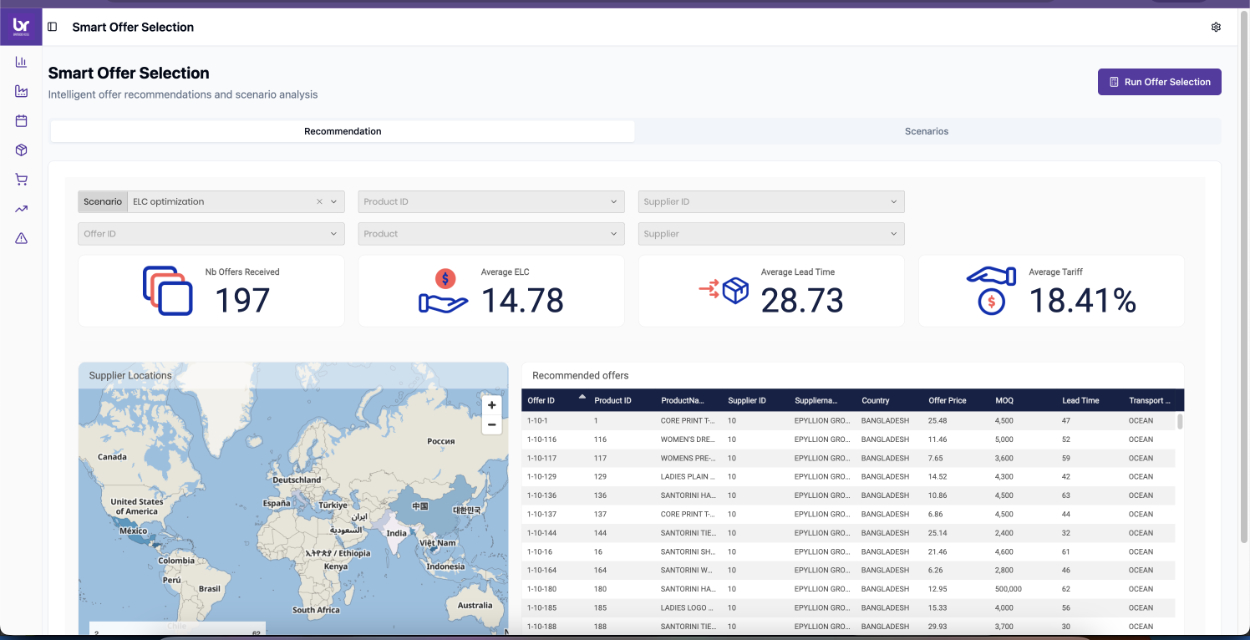
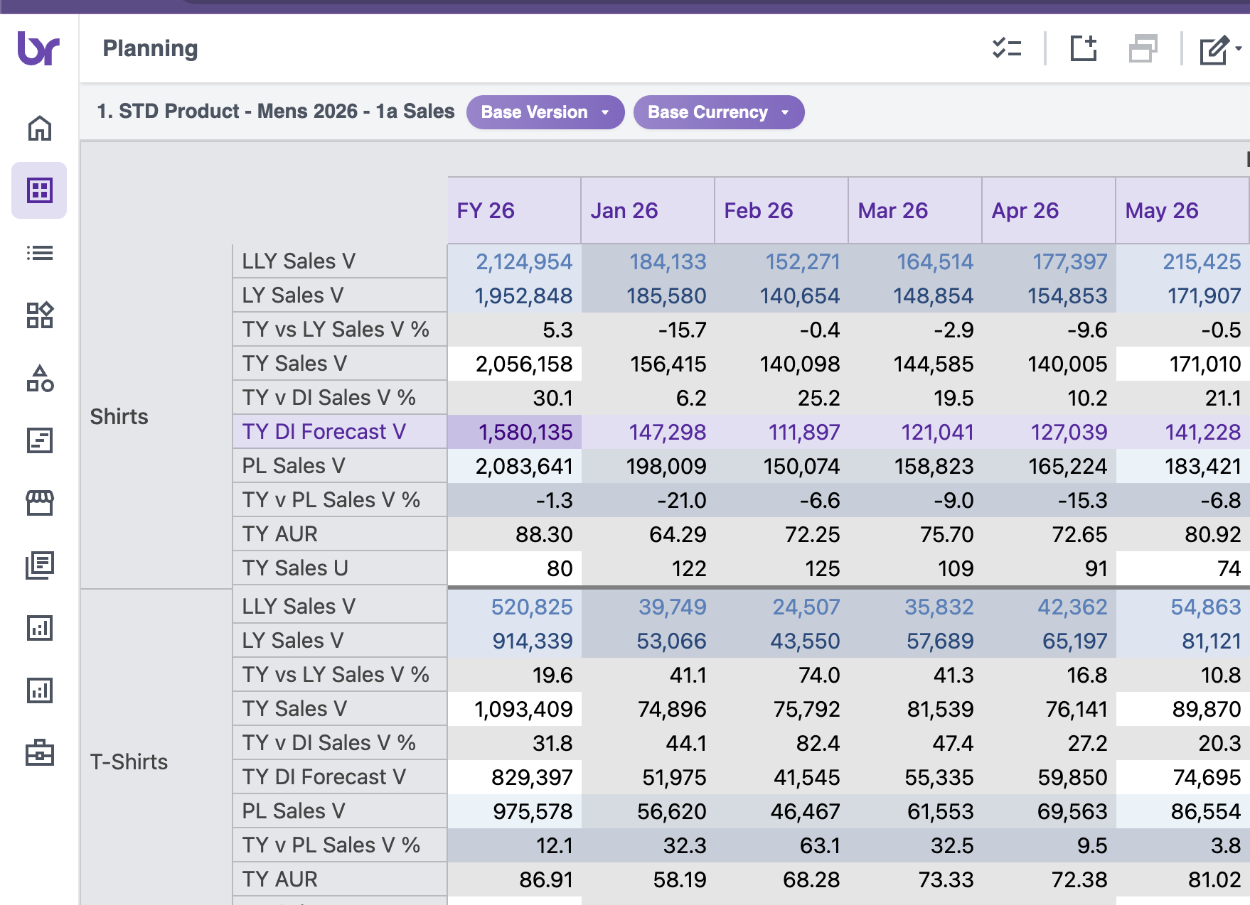
Instead of asking retailers to buy another disconnected tool, we show them how Decision Intelligence elevates their extant core platform. It focuses entirely on collapsing the time knowledge workers spend gathering and reconciling data so they can expand their actual decision-making bandwidth. The measurable impact isn’t just “30% faster time-to-task.” It is measured in direct margin protection—such as optimized supplier selection, reduced tariff exposure, and improved forecasting accuracy.
Over the next year, the value will become highly visible through a major shift in behavior: moving from static dashboards to active conversations. By using the Bamboo Rose Assistant, team members don’t need to dig through complex systems or compile spreadsheets to find an answer. They ask for it in plain language, and Decision Intelligence delivers a sourced, governed recommendation instantly.
Taking account of the positioning we’ve just talked about, walk us through some real-world applications and key use cases for Decision Intelligence across the product lifecycle – as well as instances where it interacts with other deployments of AI.
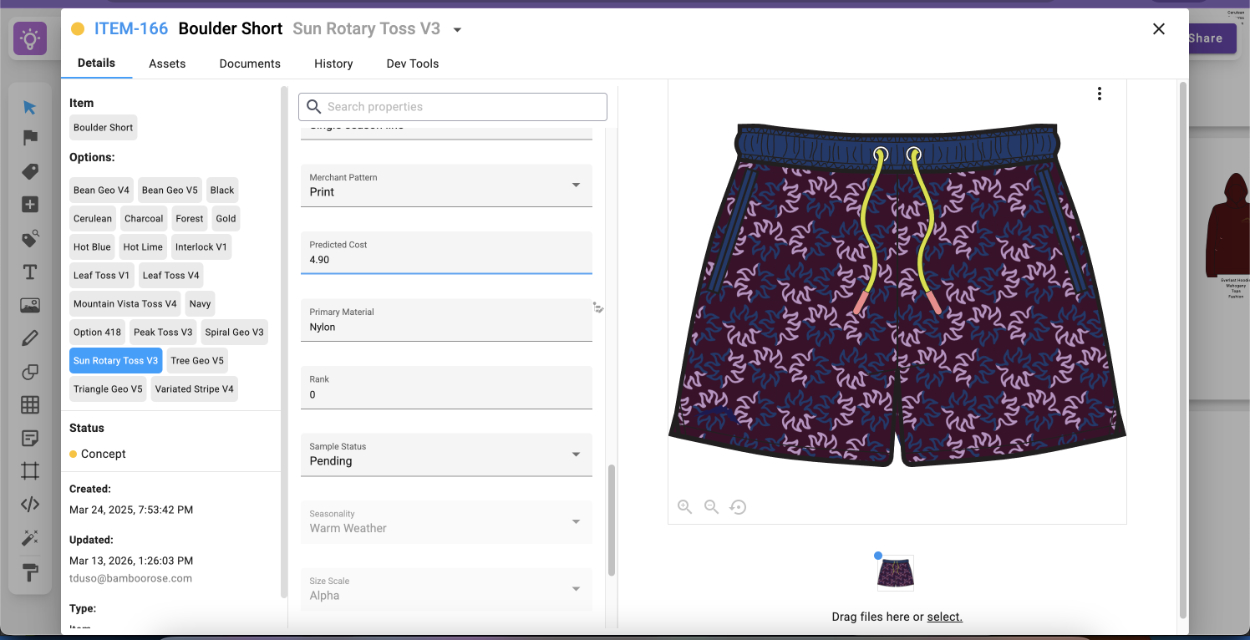
Decision Intelligence shines brightest when it unifies disparate operational functions. In the design and development phase, our Doc Hub automatically extracts structural attributes from product descriptions, test reports, or legal documents, to accelerate tasks such as item creation or instantly turning compliance test reports into searchable data. Our AI also enables tariff and cost intelligence—predicting First Costs inside our Buying Hub or HTS Auto Classification to infer complex tariff codes based entirely on a garment’s style characteristics.
The true power of horizontal orchestration, however, is how it handles multi-layered supply chain volatility. For instance, if a disruptive trade policy or tariff shift occurs, Decision Intelligence doesn’t just flag the risk. It communicates across planning and sourcing functions simultaneously, evaluating alternative supplier options, assessing raw material availability, and recalculating margins in real time to recommend a diversification strategy.
This creates a highly collaborative ecosystem when interacting with other AI deployments. A retailer might use a generative creative workspace to brainstorm aesthetic concepts, but those raw designs must eventually enter the reality of a global supply chain. Decision Intelligence steps in where creative AI ends—translating those conceptual designs into viable tech packs, running demand forecasting, and executing automated supplier matching to ensure the product can actually be delivered profitably.
Whether you believe that AI is going to completely upend the world of work or not, we are still at a historic point, because, in addition to AI fuelling human decision-making, AI agents are either poised to actually take over and automate some portion of those choices, or they’re already doing so. That marks a serious change, because every decision up to this point has been made by a human being, and the brands and retailers reading this interview will soon be handing some of that responsibility off. How do you see this playing out?
We’re moving from tool-driven operations to decision-driven operations. Agentic AI here isn’t about replacing people — it’s about expanding how many good decisions an organization can make and execute in a day. In most retail and supply chain teams, a large share of skilled human time goes into decisions that are high-volume and low-variability: does this test report cover the right standard, is this certificate still current, which offer in this batch is the cost outlier, what attributes describe this product. Those are real decisions, but they don’t need a strategist — they need consistency, speed, and an audit trail. They’re the first to move.
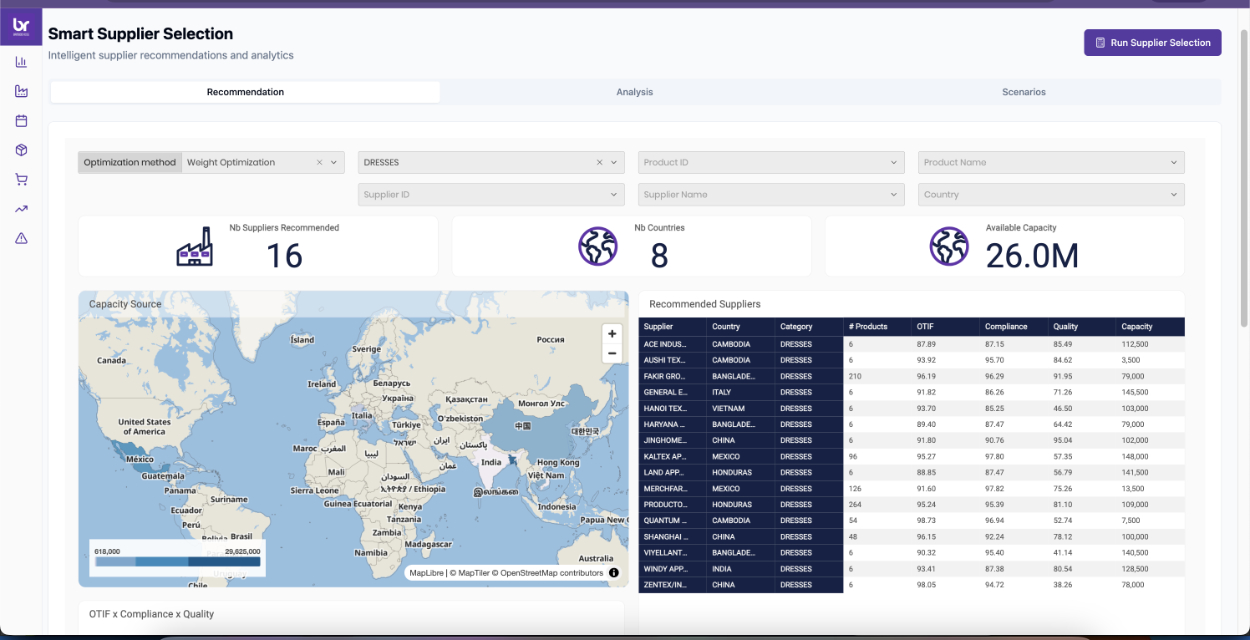
The way this actually plays out is a gradient, not a switch. Some decisions agents will take outright because they’re well-bounded and verifiable — flagging a compliance document that doesn’t match its purchase order, classifying a routine product. A larger set becomes draft-and-confirm: the agent assembles the evidence, models the outcomes, and proposes a decision — a buying scenario, a supplier shortlist, a cost roll-up with the outliers already surfaced — and a person approves it. And a tier stays human: range and brand strategy, the relationships that define your sourcing base, and navigating a tariff shock. What changes isn’t who’s in charge; it’s how much of the routine middle a person has to carry personally.
The hard part — and the part this conversation usually skips — is that you can’t responsibly hand a decision to an agent unless the agent operates inside the same controls a person does. At Bamboo Rose, that’s the point of building Decision Intelligence on a Metadata Layer that exposes TotalPLM™ to agents through MCP: every action an agent takes runs through the same role-based and row-level permissions, and leaves the same audit trail, as a human user. Handing off the decision doesn’t mean handing off control or visibility. That’s the difference between a digital workforce you can trust and a black box you can’t. The brands and retailers who get this right will be the ones who stop treating AI as software you click, start treating it as a governed digital workforce, and invest first in the data and permission layer that makes delegation safe.
There’s a lot about the typical retail / brand technology estate that, it’s fair to say, isn’t exactly in peak condition to have AI layered on top of it. It’s become a bit of a cliche already to point this out, but the industry’s desire to automate and connect is likely to clash against the standard of data that’s actually available for AI to use. You see MetaData Layers (MDL) as being important for addressing this, and for getting fashion to the point where it can connect its retail operations, automate deeper tasks, and generally go after the full promise of Decision Intelligence. How do you see that working in practice?
The industry cliche is true: AI does not create value out of thin air; it amplifies the quality of the data it consumes. If a retail technology estate is built on fragmented legacy architectures and messy spreadsheets, AI will simply amplify those errors at scale. You cannot achieve true horizontal automation if your planning, sourcing, and logistics systems don’t speak the same data language.
Our Metadata Layer (MDL) acts as the essential translator for TotalPLM™. It ingests chaotic, multi-source retail data and restructures it into a clean format that AI systems can understand, reason over, and act upon securely. Instead of requiring a massive, multi-year IT overhaul to fix legacy data, the MDL sits atop existing architectures, providing a unified semantic foundation.
In practice, this creates an open and incredibly extensible ecosystem. Because the MDL applies identical data governance and security parameters across the board, it safely exposes clean retail data to multiple execution models. Our embedded tools run on it, customers can build custom applications on top of it, and external LLM platforms — like Claude or ChatGPT— can securely hook into it. It turns a fragmented tech estate into a unified, connected environment ready for deep automation.

Last year, we asked technology executives whether they predicted AI would become more obvious, as a primary interface paradigm, or whether it would disappear into the background in the way that vital but invisible platforms like AWS and Azure have done. This year’s data suggests that the answer is both: fashion professionals that use AI interact with it as both the engine and the steering wheel. But we also see that, for a lot of companies, both kinds of applications are still largely in the scoping or refined-pilot stage. What do you see being the trigger for deeper adoption and wider roll-out?
The trigger that moves retail from cautious piloting to enterprise-wide rollout will be the harsh reality of external market pressures. While a stable market allows organizations to experiment slowly with technology, the permanent unpredictability of today’s global trade environment, characterized by intensifying tariff shifts, margin compression, and accelerating speed-to-market demands, leaves no room for manual delays. When legacy processes begin failing under stress, scaling AI becomes a commercial imperative rather than an innovative luxury.
Adoption will also accelerate as the user interface becomes completely frictionless. When AI is embedded directly into the daily workflows people already occupy—like automated data extraction in Doc Hub or real-time cost targets surfaced inside Buying Hub—the friction of adopting a “new tool” disappears. Users don’t have to change their behavior or learn complex software; the system simply surfaces smarter outcomes where they are already working.
The tipping point occurs when executives stop measuring AI by minor productivity gains and start looking at overall decision velocity. When a brand sees a competitor transition from days of manual data reconciliation to making complex, optimized sourcing and assortment decisions, the fear of missing out will drive immediate, widespread deployment. The baseline expectation for retail technology has permanently changed.