
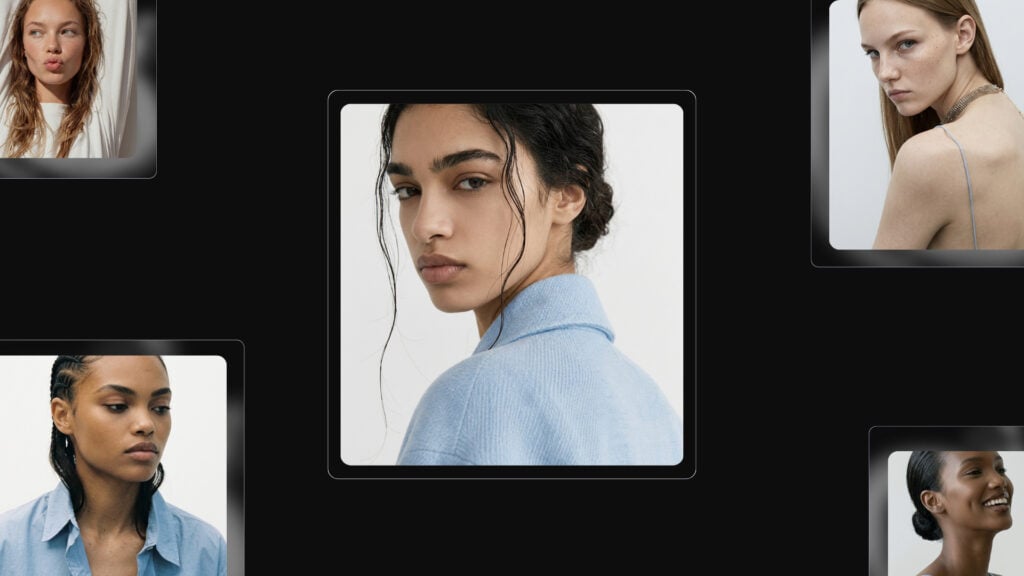

Hey. Welcome back to The Interline Podcast. You’re seeing a lot of generated images these days, and I don’t have to know anything about you or where you shop to make that proclamation, because everyone is seeing a lot of generated images right now.
That’s because generative AI has very quickly become a massive part of fashion’s imaging pipelines. From the world’s biggest retailers working to automate photography that previously came saddled with super-high overheads, to small brands who suddenly find themselves able to produce PDP content at a scale they couldn’t have before, or to generate campaigns they never would have had the budget to shoot for real, everyone’s reckoning with what it means to be able to create pretty real-ish-looking fashion photography without cameras, models, lighting, locations and so on. In a lot of cases, that reckoning has turned into AI-generated images being just everywhere, labelled and unlabelled.
If you park the ethical concerns for a few minutes — and I promise it will just be a few minutes, because we’re coming back to them in this episode — this all makes pretty unavoidable commercial sense. Unlike 3D/CG, which have a high skill floor and require a relatively heavy time investment, anyone with the right tools can generate an on-model image of a garment that’s potentially fit for purpose, depending on what that purpose is, in minutes.
I’ve had a few conversations recently with people who’ve called this all essentially a solved problem, or something close to it. I don’t know if I fully agree with that, but it is hard to ignore the sheer speed at which AI has taken root in the journey from a finished sample to a believable buyer-facing image. But if that’s all table stakes now, what are all the brands who’ve taken generative imaging and embedded it into their content pipelines doing next?
The technology, in the big-lab, open-market sense, isn’t standing still. GPT Image 2.5 came out a couple of weeks before we recorded this episode, and that model contains some pretty pronounced advances in multi-turn editing and coherence. Video generation, too, is rushing forwards. But what is a fashion brand actually going after now? The universal answer seems to be control and precision.
It’s no secret that a lot of AI generations still don’t hit the mark and end up being discarded. Depending on who you talk to, the actual percentage figure they place on the state of the art there can be wildly different, but the essence is that there’s still plenty of ground to gain when it comes to making image generation work more accurately, more consistently and more reliably.
But what you then build on top of that pursuit for accuracy — or, as today’s guest is going to call it, authenticity — is starting to look very different company by company. Some want full lateral coverage for their online storefronts. Some want to push the frontiers of generative campaigns. Some want to get into programmatic content refinement and personalisation. Some want to do all of that.
Before we start, let’s take the ethical and practical concerns out of park now and put them back in gear, because the way people feel about AI culturally is also very different person by person, and isn’t getting any less polarised over time. For all its commercial impact, generative photography is still far from universally well received and well liked on the consumption end. That’s without mentioning how human models, photographers, stylists, make-up artists and so on feel about their livelihoods at the moment.
So there’s a lot going on in generative pipelines, in other words. I could have brought plenty of different people on to talk about that, but a fair few of them would have been able to give me answers about adoption and interface design, which wasn’t really what I wanted today. We’ve done that relatively recently.
Instead, I wanted to bring in someone who’s been involved in actually training frontier models for image generation, specifically for fashion, and someone who has a candid insider’s perspective on how far industry uptake has really progressed, how much further it’s likely to go, what technology vendors are prioritising and building, and why.
So I’ve invited on Eran Dagan. Eran is the CEO of Botika, which, and I quote, offers “AI fashion models trusted by world-class fashion brands”. You know by this point that I like talking to CEOs who know their products and who know their market, and Eran is definitely one of those.
I don’t agree with him on everything, and you’ll hear some pushback from me as we get into this. But I do think Eran has a well-justified perspective on what it means to create authenticity out of tools that build synthetic content, and about what that’s going to do to the industry over time. So let’s hear that perspective.
NB. The transcript below has been lightly edited.
Never miss an episode
Get notifications for new podcast episodes, plus our weekly news analysis, events, and more, delivered straight to your inbox.
Eran Dagan, welcome to The Interline Podcast.
Thanks, Ben.
Glad to have you here. We start every one of these shows with a couple of things: we take a look at the guest’s day-to-day role, and we ask them to define something. I’m interested in what your day looks like because, from my outside observer’s perspective, the rollout of generative AI in the imaging pipeline for fashion just seems to have blown the doors off, not to put too fine a point on it.
It’s happened so quickly and so pervasively that I’m actually not really sure what it looks like to be the CEO of a company selling that kind of technology to brands. In my head at least, it’s half brands biting your hand off and half people slamming the door in your face for ethical reasons.
I imagine there was a short window where maybe you spent a lot of time justifying and evangelising image generation. I do want to press you on some of the economics and the ethics later, but I think it’s fair to say that basically any company that does product photography now is already thinking about, experimenting with and confronting the idea that generative AI might be a more straightforward, low-overhead, maybe potentially more creative way to do it.
No doubt the technology is still improving, but the business case seems to have written itself, essentially. That’s resulted in a very competitive landscape, which I’ll also get to shortly. But aside from the commercial side of things, there’s also a lot of feelings about generated images. The market I described, where there’s a lot of people excited about it and a lot of people very pessimistic about it, feels accurate to me still.
How accurate is that mental picture? How are you seeing the industry respond to what you’re putting out day by day? And when you do sit down at the start of the week, what are you paying the most attention to?
I think that picture was very accurate two or three years ago, when AI was very early and people were still maybe a bit more on the fence in terms of: are we going to use that or not? Is it any good or not? Is it just, honestly, a trend that will pass or not?
I think now the conversation has changed. In my day-to-day, that conversation is mostly gone. Brands accept that AI is going to be a meaningful part of their workflow, and they’re now trying to understand just how much of their workflow is going to be done with AI. So there’s less resistance and less evangelising, as you’ve said it, that we have to do. We had to do a lot of it starting up.
I remember talking to brands and they were like, “Look, we’ve tried computer-generated photography, which came before AI, and it was no good. It never lived up to our expectations.” We had to do so much work just showing them that technology has changed, and that the results that we’ll be getting are substantially better.
That shift has mostly completed, I think. Like you said, there are still a lot of open questions, but the general sense is that brands accept that AI will be there. Then it’s a matter of how deep the integration will be and how much we’ll use.
The current questions, in my mind, are less about, “Does the image have six fingers or not?”, which used to be the main test our customers would put us through. Right now, it’s more about: how controllable is it? Does it fit my brand? Am I legally covered when I use it? Can I scale it to thousands of products, and how does it impact the rest of my workflow?
Images are shot in the studio, but there’s so much work that happens later. I think brands right now are navigating how the entire process is going to change.
Back to my day-to-day, that’s my focus. I try to imagine a world where AI has been adopted. We’re past the conviction point. We really think about what happens once you assume that AI is there. How does it impact the entire brand, and, I would say, the greater creative processes and tasks that brands work through?
When you mention the question being more about how deep we’re going to embed AI in our imaging pipelines, our marketing and so on as a brand, what would you say is the average depth right now? How far have people gone?
I think here is one of those places where the scale really depends on the brand. We have brands that produce thousands of images a day right now on Botika, and we have ones that are just dipping their toes, trying out, seeing what works and what doesn’t, trying to scope it out a bit better and understand which products are a good fit for AI and which ones they still want shot physically. So it really depends.
We see the digital natives that go all-in on AI and everything is AI-powered. And we have more traditional brands that are just trying it out and seeing if it can help them work out some surprise issues: if they have a deadline coming up and they see they won’t be able to pull it through with traditional photography. It really varies.
If you think about the ones that are doing thousands of images a day, are they primarily e-com? Are they product detail page images, campaign photography, social channel assets? Or is it just a pretty broad mix of it all?
The pattern that I’ve seen is that most of them start with the PDP, because there’s just the sheer scale of it that you have to process and push through to get every product out in time and make sure it’s well represented. We typically see customers start with the PDPs and then move on to socials, marketing campaigns, all of that. But PDPs are, I think, an easier starting point for most brands.
That mirrors what I’ve seen as well. I think the value is easier to quantify if you’re going for reducing the cost involved, gallery completeness and all of these other metrics that you would use. They’re harder, more rigid metrics than campaign photography, which is quite subjective.
For the definition side of things — we’ve done your day-to-day — I want to ask you to define authenticity. Don’t take this the wrong way; I’m not purposely being a pain in the arse here. But in a very literal sense, you trade in synthetic content, or at least you trade in the tools that allow companies to create their own synthetic content. But your product promise, right at the top of the website, is authenticity. Tell me what it means, in your opinion, to create an authentic synthetic image.
Excellent question. When we started the company, we spent a ton of time working on what makes an image a good image. For every product page, you could shoot it in endless variations, and the one thing you always have to get right is the product itself, because it is a product page.
To me, authenticity is really: is the product represented faithfully? A customer has seen this image and will purchase this product. When they get the product, will it be exactly what they’ve seen and what they’ve imagined, and how they thought it was going to look and feel and drape?
To me, an image can be synthetic and still be authentic if it portrays the product authentically. There is a little bit of an interesting mix here of taking something from the real world and trying to reproduce it digitally — reproduce it synthetically, I have to say — but in a way that is faithful to the source. It’s all about that, I think.
If you are representing the colour, fabric, texture, draping, proportions, if everything’s accurate, then the customer will be happy. The customer will see something that was rendered synthetically but is faithful to the product they’ve received. It’s all about making sure that everything you see is as accurate as it can be, and making sure that customers eventually get what they’ve purchased.
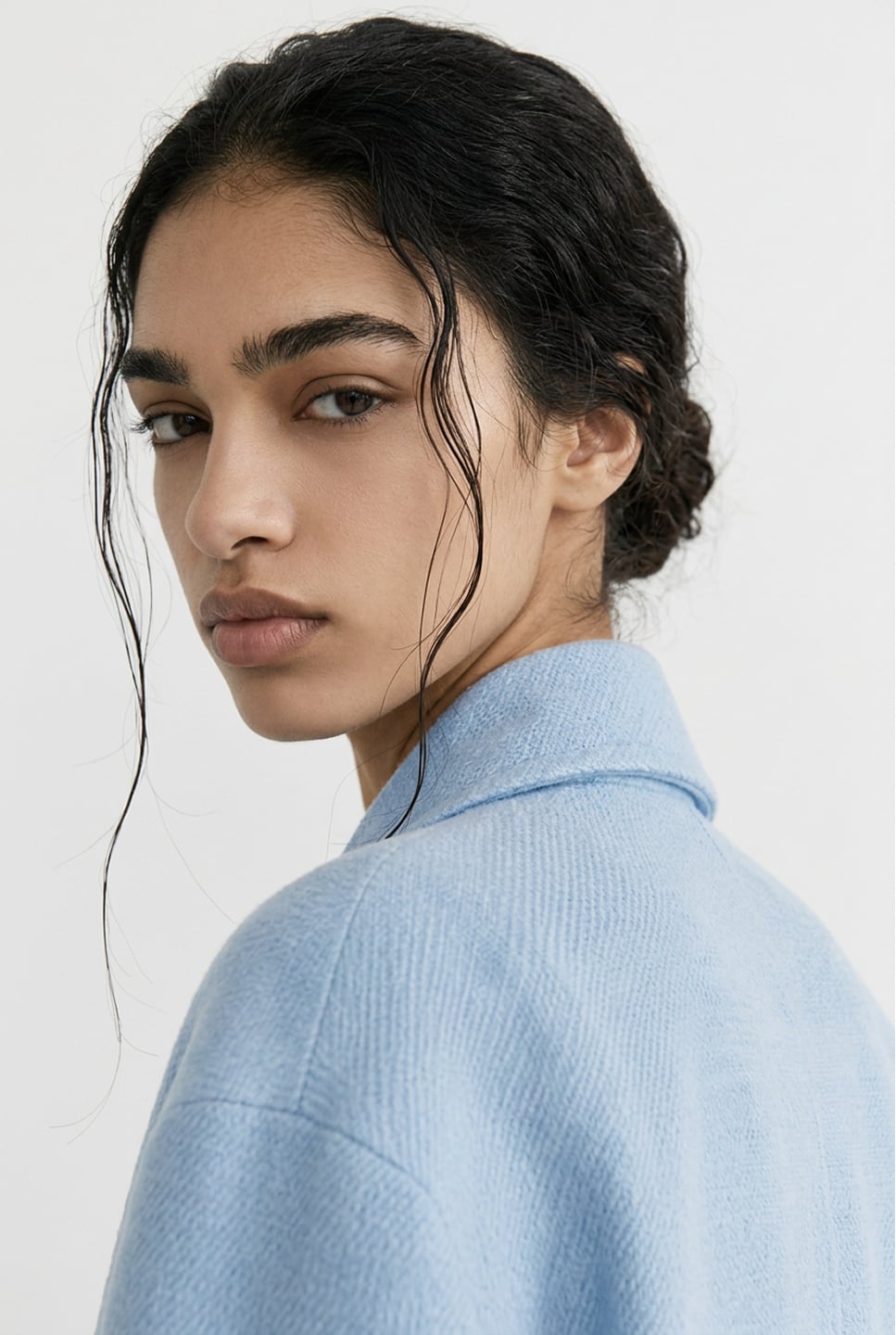
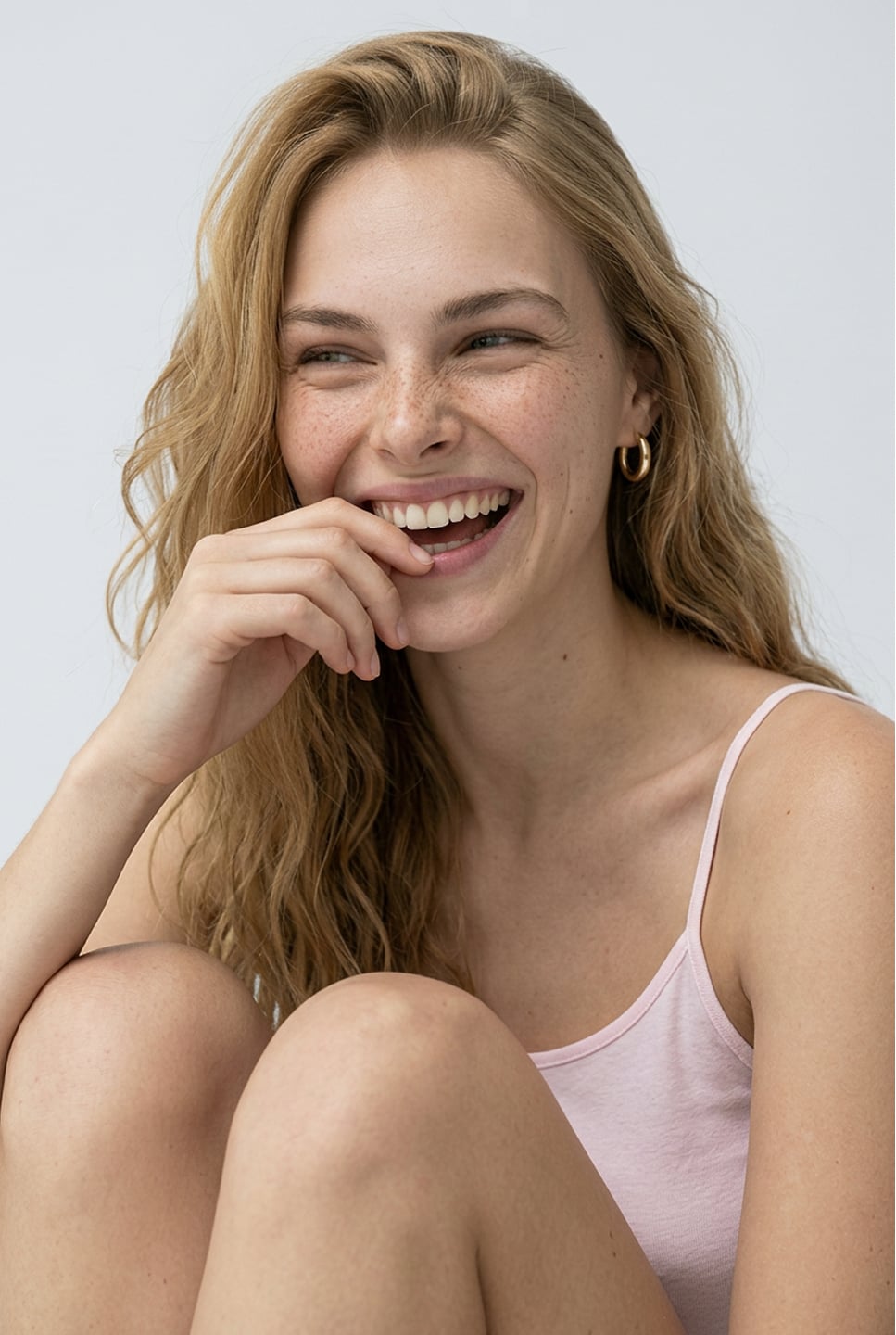
When you say “as accurate as it can be”, what is the state of the art when it comes to that kind of authenticity, if we scope it like that? It could be the percentage of generations that you consider to be accurate. Just walk me through what you see as the frontier of authenticity. How far are we to that goal of what makes a great image, but it’s created synthetically?
I think we can look at it in a number of different ways. You could look at negative signals, like a return rate: if a product was returned because it was unfaithfully rendered. Or you can look at just how many images that a brand produces on Botika are actually used on their website, so pass their internal QC.
We typically find that this is a good enough measure. It’s not perfect, I have to say. Everyone can make mistakes. Even if you are the brand and you know the product, you may have missed something, and we can talk about how we try to help brands work through that.
But in general, we see that it’s about 90% of the images that we render in Botika don’t get sent back. When I say “sent back”, we have this feature where, if you do find a mistake, you can mark it up and we’ll fix it for you. It’s that guarantee we give you for getting you from the AI state of the art to 100%.
Like I said, the state of the art right now is around 90%, and you still have 10%, which is a significant part of the business, that you need to fix. We chose to fix this with a dedicated retouching team that we have. It’s one of those decisions we made very early on, not understanding how big an impact it would have on the trajectory of the business. But it’s been one of those services that really helps you trust the system, and the fact that if the system doesn’t get it right, then somebody will get it right for you.
When you’re talking about clients who are generating thousands of images a day, that’s a hundred or so images a day per client that potentially need that additional work, if the error rate is in the 10% range.
Exactly.
You mentioned some of the work that you’ve put into getting to the state of the art, and I think it’s a good jumping-off point for us to establish some technical basics before we get too deep into the economics and the ethics. As I mentioned earlier, this is a competitive space. There are a lot of companies doing image generation for fashion, either for initial creative design exploration or for the spectrum of downstream use cases that we’ve talked about: PDP, campaign and so on.
A lot of those solutions are also built on the same commodity models from the same pool of AI labs, and their points of differentiation seem to come from the interface, the experience of the team and so on. Explain to me what is going on under the hood with Botika.
I did some reading, and your infrastructure partner Modal published a case study of Botika’s operations that talks about, and I’ll quote here, “proprietary foundation models with tens of billions of parameters” and “roughly 15 models serving production inference”. It’s clear that Botika isn’t just an aggregator of other people’s models, but it’s also not immediately obvious from that quote, to me at least, what the small-ish proprietary model does or what those 15 runtime models are.
Walk me through the technology infrastructure behind the images and the tools. Are you selling your own models, existing models in a better harness, both, or something else?
I think the important differentiation here is that there’s the image generation model, which is our own foundation model. And there’s, like you said, about a dozen other models that participate in the generation process: tagging metadata, extracting all sorts of features, pretty much acting as part of the generation pipeline.
But the generation itself runs on foundation models that we’ve been researching internally, in-house. My co-founder is actually leading this. It’s an interesting team of really smart people, to say the least. All of them did their bachelor’s when they were around 15 years old, and have had a ton of experience in generative AI.
We have been building our own foundation model. I have to say it’s a pretty big undertaking, research-wise and time-wise, but I think it is worth it. We’re definitely not taking one of those open or commodity models and putting a fashion interface around it and calling it Botika. We train models that generate the images that our customers need and want.
When we started working on the company, this was a big part. I told my co-founder, “Look, I want us to be able to take customer feedback and very literally translate that into model improvements.” We want to be able to control the entire cycle. We don’t want to be attached to whatever roadmap Nano Banana or GPT Image has. We chose to take, I think, the long way and build it ourselves.
There’s a lot of stuff that happened in that model around taking a lot of references in, being able to take about 20 reference images of the model — the human model, I mean — background, make-up, lighting, the products themselves. We go into very intricate details and take them all in at once, and generate one very accurate and still very visually compelling image.
I think the distinction here is that we don’t really need to own every single model in the stack, but we own the generation part.
I’m going to split my next question up into two pieces. The first one is a bit of a follow-on from that: you don’t want to be beholden to the roadmap for GPT Image or Nano Banana or any of the other labs, but as a company creating your own foundation model, you are competing with them to some extent.
Do you worry, or do you keep tabs on frontier development and the state of the art from those big labs with those big image generation models? Do you worry that, as they progress, they start to erode some of the advantages of having built your own?
We definitely track everything that’s coming out of the big labs, and we try to use that progress ourselves where it makes sense. Particularly recently, there’s been a lot of progress around image editing. That has been useful for us. We don’t have to reinvent the wheel here and build another very big model just for editing.
I think the core problem that we try to fix is a bit different from the big labs. The big labs are building generalist models that try to be good enough in everything. The problem with fashion is that nothing is really good enough. You’re chasing perfection. Like we previously said, it’s all about that authenticity. If the product is beautifully portrayed but slightly off, then the image is not usable.
The way we optimise is, “How can we be more accurate?”, and not, “How can we be more creative?”, per se. I think a lot of the big image generation models try to be very creative.
I would agree. It did seem like GPT Image 2.5, I think it is, in particular seemed to have a big focus on coherence across multiple turns or editing, and I understand that. You can take advantage of some of those open-market features without having to give over your entire stack to that single generalist model. You’re able to take advantage of the best characteristics of what’s out there, but apply it to your own foundation model, which is narrowly focused and scoped on fashion.
Exactly.
The other part of that question was: when we talk about the state of the art and the authenticity side of things, and we are talking about representing real physical products, what standards do you set at the point of input?
The vision, as I understand it, is to go from any kind of photo — lay-flat, ghost mannequin, any kind of photo of an existing final approved sample — and then be able to generate the PDP assets in particular that we’ve talked about already. What sort of standards do you need to enforce at the point of input? Is it literally any photo? Is there a certain level of quality and different angles and representation that you need?
Because there’s inference from known quantities and then there’s inference from unknown quantities. A single photo of the front of a garment is not necessarily the information to get an accurate or authentic depiction of the back of the garment. To get a good image from Botika, as you define it, what do I need to be putting in about my product?
Honestly, there’s a lot of things that you can work around, but what we found is the one thing you can’t really compromise on is just natural lighting. If you take a product and, let’s say, your light is very yellow, we could try to adjust the white balance and play around with that. But the truth is, once you’ve captured that photo, nobody really knows what the true colour of the product is.
Using natural light, I think, is important. Again, you can try to course-correct after you’ve shot it, but it’s one of those things you don’t really want to do. Colour is extremely important for consumers if you’re selling something and the colour is off. I think it’s the number two reason for returns, if I’m not mistaken, after fit. You definitely want that part done right.
We typically ask for just well-lit photos and a front and back view of the garment. When we started Botika, the technology to go from flat-lays to on-model was still very early. We used to only support existing on-model photos or mannequin photos, and go from these to professional on-model photos.
Over time, as we saw the technology progress, we just released a lot of the constraints. Now the main thing we care about is: can we see the products well, and is it well lit? You always want decent resolution, so anything that comes from a phone is actually good enough, because you want to see the zipper, the logo and all the fine details that you don’t want the model to miss. But I would say, at the current state of things with AI, decent lighting is pretty much all you need.
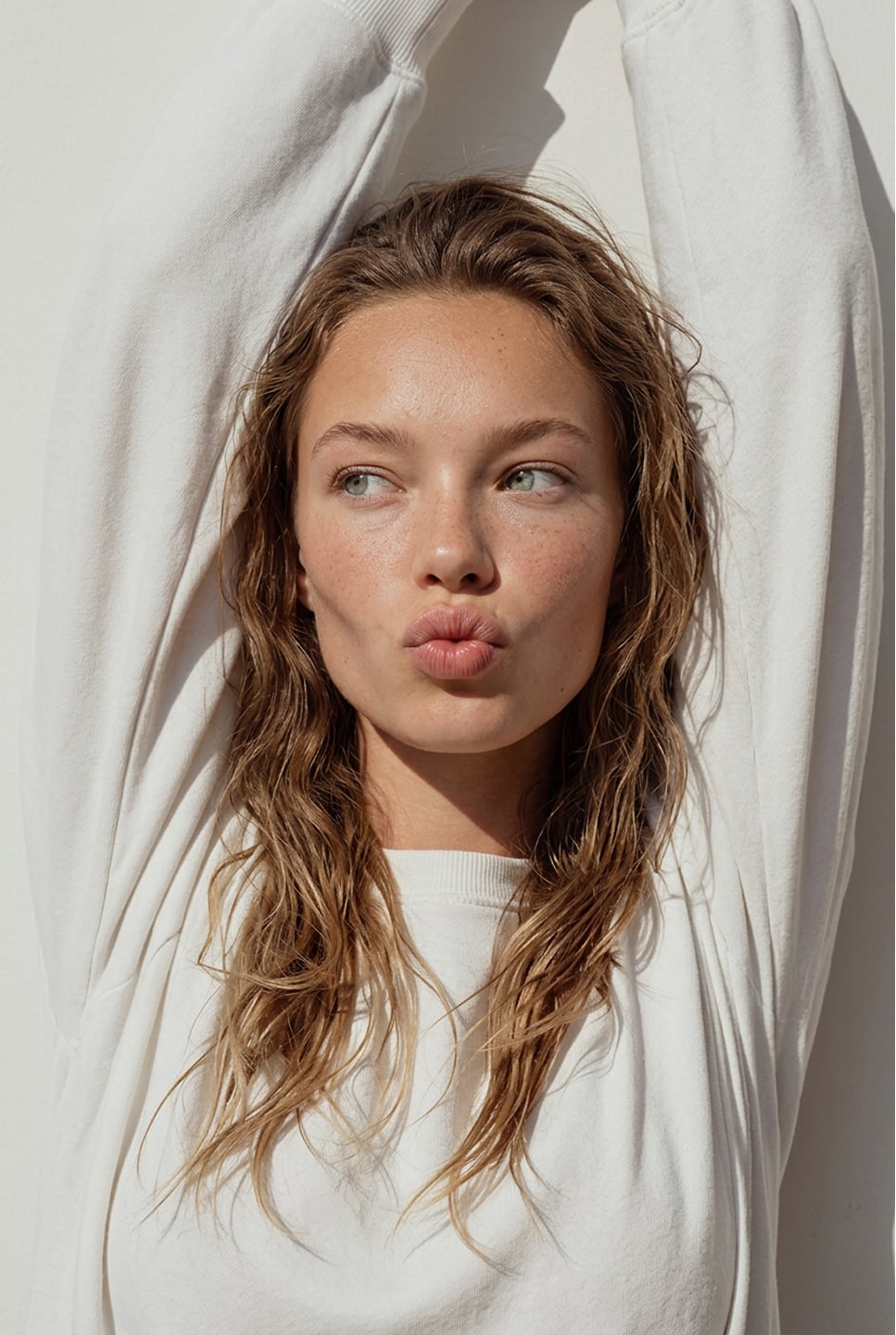
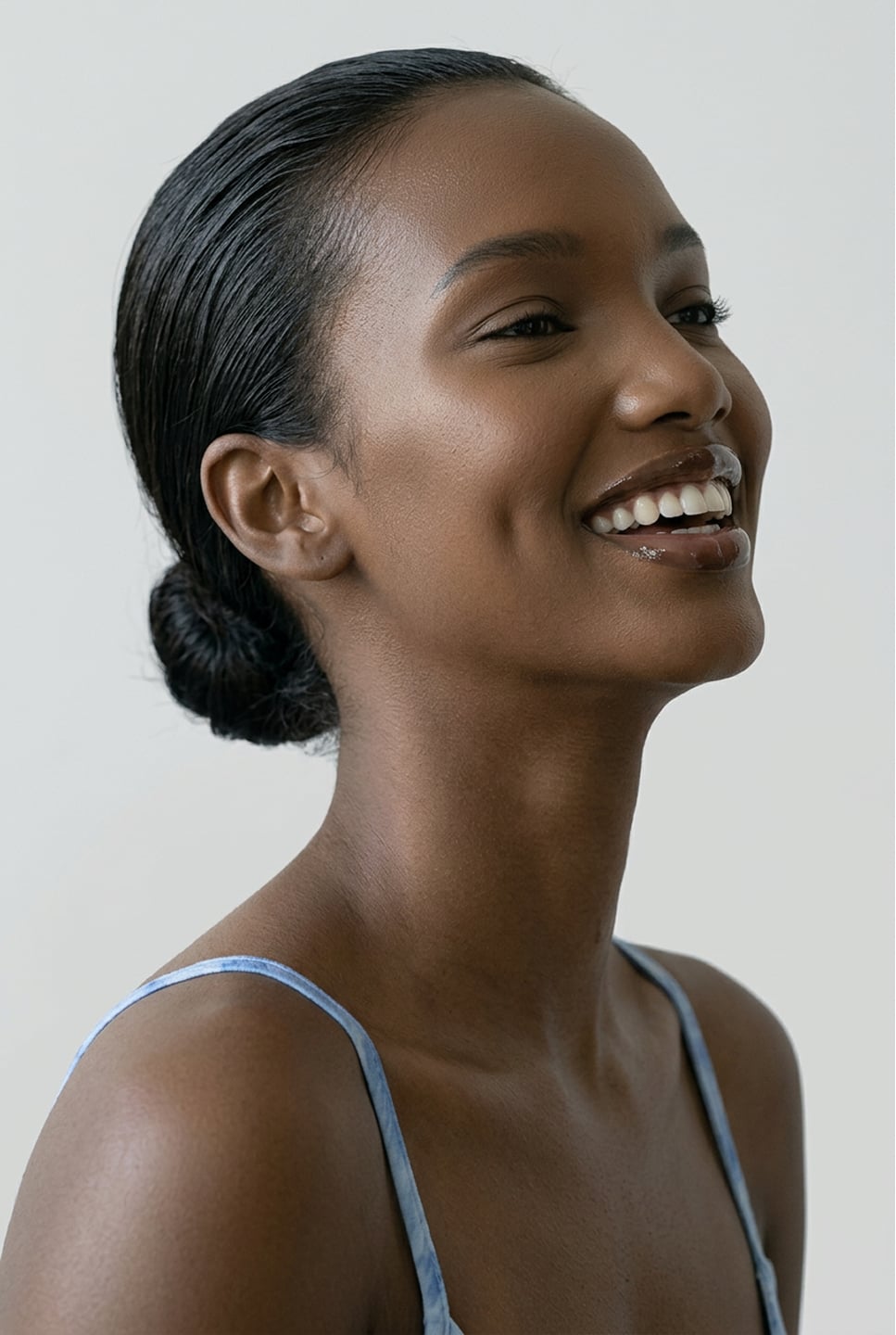
That’s a useful answer. We’ve just talked about representing products. I’d now like to turn our attention to representing people. We’ve had a couple of conversations on the show in the last couple of months about likeness and persona in the age of AI. We recently ran an op-ed from Benjamin Hori about ownership of faces.
It’s safe to say there’s a lot of uncertainty around the legal status and the ramifications of showing people and faces in generated images, especially when the provenance of the original image, the original photo, whatever was used as an input, is hard to ascertain. In a lot of node-based generative workspaces, the initial image could have come from pre-existing photography from a previous campaign; it could have come from somebody importing an image from web search. It’s unclear in a lot of cases.
Botika, I think, has a specific stance on this, which is that every Botika model — human model — is generated from scratch with no real person as the starting point. You’ve said that there is, and I quote, “no risk of misusing someone’s likeness” through this pipeline.
Tell me how that works, because my understanding is there are two ways a likeness can find its way into a generative output. One is the one we’ve just described: the user used it as an input. They took a celebrity, they took a previous model engagement that they’d done, and they used it as an input. The other is because that person’s likeness is sufficiently represented in the original model training data — i.e. the person is famous or just gets photographed a lot for some other reason — for some combination of their features to then exert enough influence over the model weights that you get something recognisable, even though the model is not specifically reproducing a single image or a single face.
The same Modal case study I referenced before talks about you having a 100-terabyte image dataset, which is a lot of images, and I can’t imagine those are all synthetic training data. Just walk me through this, because surely there can’t be a scenario here where you’ve rebuilt all of the primitives of fashion shooting with no reference to real photography of real people at some point. There must be some licensing or something else going on. Explain to me how that promise works.
I think it’s a good point. There are two slightly different things here. Yes, our dataset is very large. Like I said, it’s about 100 terabytes. We’ve built it over years. But that dataset is really more about garments, products, outfits, fit, all the metadata around them. It actually doesn’t contain human faces. When we get new data, we just crop out the face to ensure that nothing gets stored as part of this dataset.
It’s a lot of data that teaches the model what garments look like, how fabrics behave, what happens to fabrics in different poses, how fit changes across different bodies. It’s not about, like you said, how we memorise faces. That is one of those things that tend to happen with large models that have trained on public data.
The distinction here, I think, is that garments have no structure. You need to have a lot of data in order to understand them, while faces actually have a lot of structure. Eyes go here, nose goes there. There are some degrees of freedom, but it’s a lot easier to just play within that structure and get new, entirely unseen faces, and imagine those almost as if you were a painter and you were to paint a face. You have a certain number of elements that you play around with.
This is what we try to do with our creative director. This is what they do. It’s one of those areas where you don’t really need those enormous amounts of data. When we create Botika models, we just start from scratch, like a blank canvas. As you’ve mentioned, some platforms allow you to upload your own model or create a model that resembles somebody who is real. We just don’t allow that.
There is no way to prompt us into creating a new model or upload your own reference image. We just don’t allow you to do that. It’s obviously very conceptual, but this is how we treat the problem.
It is conceptual, and I’m going to give you a conceptual, philosophical reply to it, which is your painter example. If I was a painter and I sat down at an easel and painted a face, I would subconsciously be painting some aggregate of all the faces I’ve seen in my life. I’m not doing it completely sui generis. It would be coming from things that I have seen.
The same would be true if I sat down with an Elder Scrolls game and I was like, “I’m going to build a character face here.” Somewhere along the line, I am instinctively pulling that from prior knowledge and prior experience. I don’t think there’s any way that you can completely extricate the idea that somebody might end up recreating something that looks superficially like somebody else.
It’s no different to musicians sitting down and coming up with a melody and then going, “Oh crap, I’ve just reinvented something that already exists.” It’s a very real thing that happens. But the fact that it’s not trained on a big public dataset of celebrities and previous fashion models, I think, is the key.
I think that’s exactly right, because you can always accidentally create something that is similar to existing work. By the way, when we upload a model to the system, we try to do some reverse image searches to make sure that it doesn’t look like somebody that we can, at least via public means, find.
We try to cover this, but it’s always the work of our creative director, their ideas and how they play with the different elements that really make up a face. But I definitely agree with your point.
Let me pull on this thread just a little bit more, because I’ve spent enough time talking to brands over the last year or so to get a feel for how people want to use generative workspaces and image generation tools. They seem quite keen on taking existing references as inputs for these workflows.
Everybody listening to this will be familiar with some of the legal test cases for retailers who’ve said, “We’ve previously done a campaign with this human model, and we believe that their model release or contract is sufficiently loose in its language that we can use AI to remix it.”
That’s the extreme example. But then you will also have a brand who, for instance, has done a bunch of shoots in the past, and they might go, “I just want to extract the pose from this one. This person is standing exactly the way that I want to have this generative model stand. I just want to use that as a reference.”
You mentioned you’re not going to let people upload any face references, based on what we’ve just talked about. But what if they want to upload pose references, environments, materials, something else that they want to riff on? How do you manage that side of things?
We never let them, like you said, upload the human faces, or, I have to say, other elements that make up a human model. The term “likeness” is pretty broad, right? It’s not just the face. It’s the body. It’s a lot of other things.
If you want to give us existing references, we’ll normally give you our own internal tools that you can play around with. For example, for posing, we have this nice interface where you can pose a virtual model. Then you have that pose, and it was created digitally, and it doesn’t copy a real photo.
Environments are, I think, a bit more tricky here. In general, environments can be totally imaginative. They could be real places, and then you don’t really know where that data of those real places came from. We typically work with the customer to understand what exactly it is that they need, and then we try to find a way that I would say is the safest.
But I have to say, with AI and all those different elements that make up an AI picture, it’s hard to control all of them. We try to really de-risk the biggest factors, which are the model and their likeness. The other parts are, I have to say, uncharted territory a little.
I think that’s right. The fact that it’s so uncharted is the reason that people fall back on existing behaviours, like, “Let me take a reference and let me just riff on it slightly.” Those two things go hand in hand, to be honest.
Brass-tacks question: who owns a Botika image? Who owns the output? What you’ve described so far is, as you said, your own tooling. It’s a fairly closed loop that you’re taking when it comes to image generation. If everything is happening in that proprietary closed loop, I think people might ask themselves how free to travel the outputs are. Do you provide the images to users under licence? Does the customer get full, perpetual rights at the time they generate an image? Explain to me how the output works.
The customer can use the outputs freely, I have to say, as long as it doesn’t conflict with our terms of use against certain types of uses. But those terms, we built them around the use case of fashion brands that can use models across their website, marketplaces, advertising and social, so wherever they need them.
Even though the generation happens within the Botika platform and it uses proprietary tools, the image is very much the customer’s to use. We don’t really want the value of Botika to come from tracking the asset and you being on a harsh licence. It should come from, I think, the work that Botika can keep doing for you.
I want to get your take on some of the economics. I mentioned it up top. As I said in my intro question, I’m pretty clear that I understand the business case for replacing traditional product photography. We’ll zero in on PDP photography, but you can reference this to campaigns and everything else as well.
I fully understand the business case. If I was running a content studio for a big fashion brand, bringing a lot of styles to market for a lot of different markets potentially each week, and I’m photographing hundreds of garments a day with human talent, I’d find it very hard to look past the sheer potential cost savings of doing things this way. Models, photographers, stylists, locations and so on: they’re expensive, they’re hard to procure, they’re hard to organise, they’re messy, even if that mess sometimes leads to some creative sparks. I get it. The pure commercial business case, I get.
Implicit in that business case, though, is the understanding that if you’re saving on production overheads, which is what we’re talking about here, that means reducing the amount of work sent to those people, to those human models, to those stylists and so on.
When I had Glazione Rocha from Zalando, who’s Creative Director at Lounge by Zalando, on the show a couple of months ago, he was pretty open about this. He said, “Look, the balance of roles that are needed to execute on a campaign vision is shifting.” Maybe you don’t end up with fewer people overall, but the type of work those people do is changing. Depending on the final deliverable, that does mean some roles may eventually not be needed at all.
I think the obvious quick answer that people would give to this would be: we eliminate a bunch of stylists and photographers for basic e-commerce stuff, but maybe we reassign them to take on image work that we wouldn’t have done before. Maybe we do more campaigns. How much of your customer base’s workload, honestly, is content that wouldn’t have been made before, versus how much of it is content that’s now faster and cheaper to make without the people who used to be necessary to make it?
Good question. There has been a shift in this. As we spoke about earlier, customers start by replacing something that they’re doing. They take the PDP imagery and start doing that digitally. But we now see, I think, the first wave of customers who’ve been using Botika for two years now who are taking the next step in terms of using AI.
That is when they really start leaning into it in terms of creating stuff they couldn’t create before. Think about different imagery for different markets, a lot more variations per SKU, doing operational stuff like replacing out-of-stock products that are in existing looks with other products, or testing different PDP images and refreshing content more frequently.
The first step has been, “Let’s replace what we have.” But once AI compressed the existing workflow, then the amount of content actually starts expanding. You can get a lot more work done, a lot more imagery done, than you could before. As you said, the economics of it previously simply weren’t really possible.
It starts as, “How do we do something faster, cheaper?” But now, I think, is the step of, “How do we get just more value and more photography?” And, in a sense, how does the generation never stop?
But do you see those new opportunities, those expanded use cases, as a bigger market for generative AI tools? Or do you think they open up a reskilling market for some of the people who might have fallen by the wayside in that replacement phase?
I think it’s a little bit of both, to be honest. It’s hard to claim that AI doesn’t replace some of the people in the process. But at the same time, it does create a lot more opportunities and a lot more work downstream for other people to work on.
I do think there are people — and we are seeing this with brands already — who are shifting to more digital roles from physical roles. But I can’t say that everybody has a new position in this world. I think it’s unfair to say that.
I think that’s been true of a lot of technology revolutions as they have happened, so I don’t think AI is exclusively to blame there. I will say that same Zalando conversation also included quite a lot of explanation of the fact that AI is not necessarily a shortcut when you’re using it for creative purposes.
You still end up with the same amount of people having input on creative direction. You still end up working with agencies. It doesn’t fundamentally change it, but it does shuffle roles around. There are roles that will be, I guess, progressively deprioritised if AI becomes a bigger part of the imaging pipeline for fashion overall over time.
The other half of the business case, beyond what we’ve just talked about — that images are easier and cheaper to create at scale — is that those images then go on to sell more clothes. That’s the promise here, or to reduce returns long-term, but sell more clothes.
In one of your published retail case studies, you talk about a fourfold conversion result, and I want to get into where that comes from. Is that four-times conversions compared to products that had what you would call incomplete galleries before, where you only had certain angles of certain colourways, and maybe you had videography of one model and not of another? Is it a case that it was poor-quality traditional photography before and the AI image quality is better and drives more behavioural change?
Basically, are people buying more products because AI completes a picture that was only partially painted before, or is AI doing something else to get transactions over the line?
I think they’re both, really. First of all, each brand that we work with has this story about a product that wouldn’t sell for whatever reason, and then they shot it again and again until it started selling.
We worked recently with a very large, billion-dollar brand that insisted on shooting one specific product, I think, at least five or eight different times through the studio. It took a while, but it became a bestseller once they’d tweaked the pose, I have to say. It was just something about the way the fabric drapes that made it sell.
I think AI gives you the ability to iterate and experiment. The problem with photo studios is that when you shoot something, it gets static. That’s just the way it’s going to be portrayed, and you don’t really have the time or resources, or even attention, I have to say, to reshoot it. With AI, it makes it a lot easier to just try something and try something else, and keep doing that until you find something that works.
But going back to what you initially said, for a lot of brands it’s even just getting their products on models, if they only had, for example, flat-lays before, or just upping the level of photography that they can get to. It might be easy to forget now that everybody has access to AI, but not too long ago, smaller brands didn’t really have the ability to produce images that looked like [their own] images. I think it’s both of these.
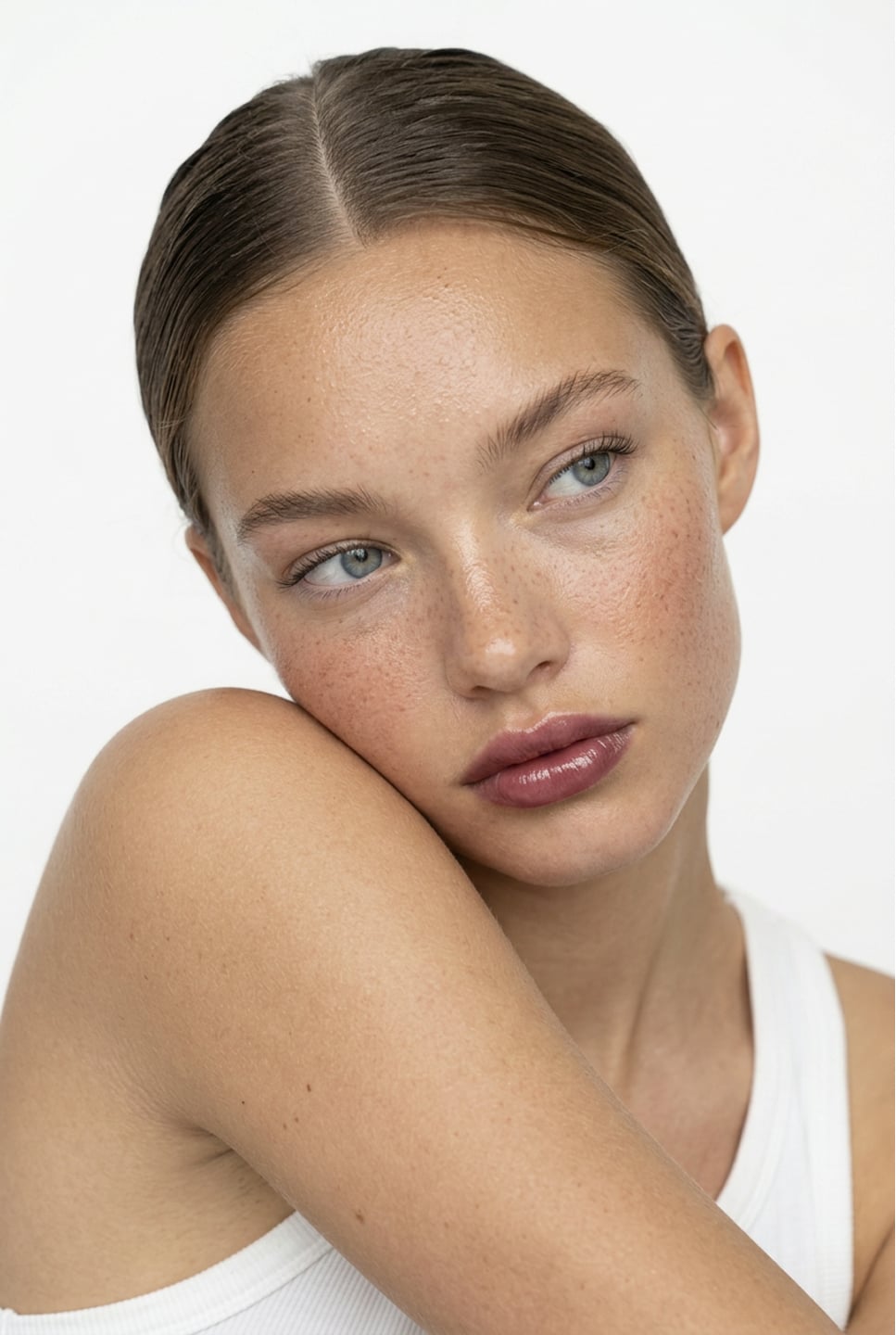
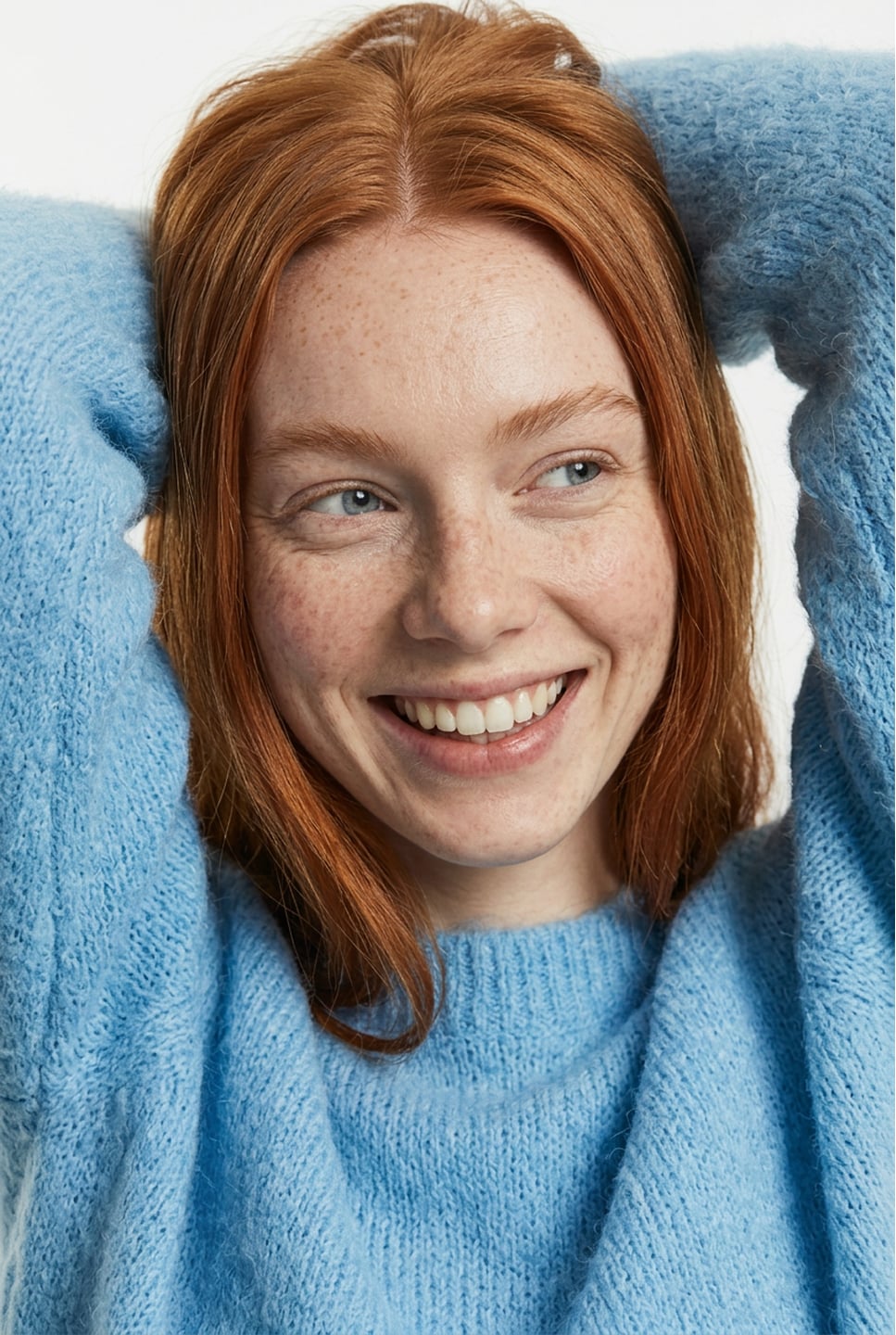
There’s one other element, I think, to conversion and customer experience, and that is the idea that people like seeing garments on models. They also like seeing garments on models that represent them. Something that’s a big promise of generative photography, but also something that bothers people about generative photography, is this idea that it can be, to borrow a phrase from your website, “inclusive by design”.
The pro argument for using AI to represent products on a more diverse set of human models, if I understand it correctly, is that it allows companies to build more representation and diversity into campaigns, so that a wider range of shoppers can see products on people who look like them.
The counterargument would be: you didn’t need AI to do that. You could have done that pre-AI, and doing it now represents a fake, ersatz representation that’s maybe worse than the real thing, not because it’s synthetic necessarily, but because it closes doors for modelling talent that had, in many cases, only just had them opened. I think everyone’s conversant with the idea that fashion had a very fixed idea of what constituted beauty and acceptable body types for a long time.
Like a lot of people, I’m pretty conflicted about this. Again, I understand both arguments, and I’m also part of a demographic that just gets implicitly catered to in all marketing, so maybe I have a privileged read on it. What do you think when it comes to this diversity stuff? If you increase through AI the range of faces and body types that we see in marketing and on PDP pages, but the actual range of people who get paid to be in front of or behind the camera ends up getting narrower, is that a good trade?
Honestly, here as well, I don’t think there is a clean answer. This is very clearly a very real trade-off. AI can reduce work for models, photographers, stylists, everybody that is part of the production work. It’s hard to argue against this. I don’t think there is an argument against this.
What we’re trying to say is that the scale of people who view this content is a lot bigger. We’re talking billions of people who shop online. Historically, like we previously said, due to economic reasons, most of them have seen products on a relatively narrow range of people and models. With billions of people shopping, we can make them feel a bit more included with AI.
Yes, like I said, it is a trade-off, but I think the impact is still meaningful and net positive. If, as a customer, you’re able to see a product on someone who looks a bit more like you, it could genuinely change how confident you are in buying it.
I can’t say that AI solved inclusivity. It might be too simplistic. But I think the cost here is real, and there is a lot of benefit to it as well.
That’s a reasonable answer. Final question before we go: what’s next for Botika? I am not going to name names here, but it seems like every generative workspace for fashion is now converging on the idea that they’re also going to be a PLM platform and a CAD tool, and they’re going to do technical specifications and pattern development. Are you looking at extending the footprint of your platform the same way, or are you staying in the image and photography lane?
We’re going, I have to say, in a pretty different direction from these guys. I don’t think the big opportunity, for us at least, is to become another PLM or CAD tool. I have to say there is significant opportunity there. It’s just that we think there’s, like you said, plenty of people who are playing there.
We’re focused further downstream. Like I said maybe earlier in this call, it’s more about what happens when AI is part of the workflow. How do you run e-commerce content where there’s so much content? Each product comes with ten different variations for testing and different markets, and personalisation is running.
For me, the next milestone for Botika is becoming this almost agentic e-commerce team that helps you manage your PDP. You direct, pretty much, and Botika runs. You define the brand, the rules, your goals, and we keep the catalogue on-brand. We create, we replace imagery, we react when products go out of stock or sell very well, we run A/B tests and personalisation. We localise to different markets.
We try to take a lot of the busywork so you can focus on, “Here’s what I want to do. Here’s the direction.” We do the actual actions behind it. I think today most AI tools are still very imperative. You ask them to do something, they make it, and then you take it from there.
To me, it’s all about closing that loop between, “Here’s a new product and here’s my vision for it”, and then Botika takes that vision and translates it into photos, runs tests, publishes the product and monitors it. It pretty much helps you focus on the big picture rather than the day-to-day work.
That does seem to be a fertile space for a lot of companies as well. I believe YouTube are leaning more into the idea of A/B testing videos, automatic generation, programmatic generation of thumbnails. It seems like we’re headed towards a web — for shopping, for media consumption, for everything else — that is a lot more reactive to customer need in a way that is not scalable for individual people to do.
You need a lot of trust in the tools to be able to hand some of that off, to direct rather than manually do. But it also seems like the value of doing that is potentially going to be quite high in the near future as well.
Definitely agree. I think it’s about turning content from something that was shot once and then presented to millions of people to something that is always on, and is constantly evolving and generating according to the viewer. I think e-commerce is a pretty interesting industry to test this concept in.
I agree. We’re going to be keeping tabs on it over the next couple of years. As that evolves, maybe we’ll bring you back on and we can chat about how things have progressed at Botika and how things have progressed in the wider context. In the meantime, Eran, thanks for letting me quiz you on a whole bunch of different stuff today. I’ve enjoyed this conversation and appreciate you being here.
Thank you so much. It was a pleasure.
And that’s the end of my conversation with Eran. It was a long, heavy, reasonably technical one, so I’m going to get out of your way pretty quickly now. But hopefully I fielded the kind of questions there that you feel like you would have asked in my shoes. If I didn’t, I want you to let me know. You can email me at editor@theinterline.com.
We’re already canvassing for the next Mailroom episode too, so your thoughts and questions on not just this show, but anything, are very welcome, especially if you feel like recording them as a voice memo for us.
I’m going to be back next Tuesday with Grace for the latest edition of The Edit, and next week I’ll be back to quizzing another executive one-to-one about one or more of the things I think are shaping where technology and fashion are going. For now, though, thanks for listening, and I’ll talk to you again really soon.