


Hey. Welcome back to The Interline Podcast. If you’ve been listening long enough or if you just happened to catch my recent interview with the CEO of Akeneo, I’m something of an old-school PLM guy. Maybe not as old-school as some. I got given my start in this space by somebody who has decades more experience than I do, but I’ve done my time in the trenches of analysing, advising on, and benchmarking product lifecycle management platforms.
Now, I argued in that recent show, and I’ve argued the same on a few other recent occasions, that PLM is about to become maybe more vital than ever, as AI underlines the importance of having a single source of truth for product information. But that framing implies that PLM is the be all and end all of how product teams work, where they put data, and how they go about making decisions. And that’s certainly not the case.
For a few years now, the definition of who a product creator is has been broadening, and it’s also become evident over time that designers, merchandisers, planning teams, and other folks working within brands, well, they haven’t felt like all of their bases have really been covered by existing technology. This is why so much of that weird unstructured space between a brand having a plan and then executing on it has tended to exist in a pretty messy mix of tools like Miro and good old fashioned spreadsheets.
My guest today is the CEO of a company that was created to cater to that gap in the market. Brian Lindauer is the CEO of VibeIQ, which is designed to be a platform where, and I quote, product teams build, evaluate, and approve the line. He’s also though somebody I’ve known for a long time, someone who has an even longer history with PLM and other enterprise tools targeted at fashion product teams than I do.
And despite saying all that, I haven’t actually really brought Brian on today to talk about PLM. I haven’t brought him on to talk about planning or line building really either, at least not directly. I’ve invited him on because Brian’s the definition of a technical founder. He’s built and sold systems for decades, and until super recently, he’s also been hands-on programming VibeIQ as well. He’s not been doing that solo, to be clear. He has a big team, but he’s the kind of CEO who knows his own products inside and out because he’s built a good amount of it himself. And if you’ve listened to these shows for a while, you know I like talking to technical founders and CEOs.
But again, I haven’t really brought Brian on to talk about coding either because as you’ll hear him say shortly, he doesn’t really do much of that anymore. Not because he’s too busy running a company, but because he’s probably the most forward thinking CEO I know when it comes to buying into the realisation that AI can write the code for human review. And that’s not all. VibeIQ itself is also going pretty all in on having AI agents working alongside human users. And Brian’s been spending the last year in particular really hashing out that realisation in the kind of detail that you only really get from somebody who was and is a software engineer.
So I wanted to talk to him today not about building software differently, although that does come up, but about how the day to day lives of real fashion professionals working at the coalface of building products are likely to change and how quickly we think that’s going to happen. Fair warning, this one gets a little bit philosophical, but if your work touches product creation and you’re at all interested in the practical impact that AI is likely to have on it, I think you’ll get a lot out of what we have to say.
Final bit of context, we taped this conversation a few weeks after I got back from hosting VibeIQ’s annual customer council in Colorado. That engagement gave me a good chance to capture the opinions of real brands firsthand, but it hasn’t otherwise coloured the questions I wanted to put to Brian. With that out of the way, here we go.
NB. The transcript below has been lightly edited.
Never miss an episode
Get notifications for new podcast episodes, plus our weekly news analysis, events, and more, delivered straight to your inbox.

Brian Lindauer, welcome to The Interline Podcast.
Hey, Ben. Thanks for having me.
Not at all. This one’s been a while in the offing, and I’m glad it’s finally happening. We always start these shows by asking a couple of things about the guest’s day to day and then asking them to define something. We’ll start with the day to day. I’m going to stretch this first question a bit, and I’m going to ask you how different your day to day looks right now compared to what it looked like maybe the best part of twenty years ago.
The reason I’m doing that is I’m dating both of us here, but I was around for this: you were involved in the initial wave of enterprise PLM. I got my start doing PLM analysis. I think it’s fair to say that both of us have seen some pretty serious changes in how you make and deploy software in fashion and retail in that time.
I’m sure people listening to this can guess at the obvious differences, like the fact that nobody’s probably asking you for an on-premise deployment or, yeah, actually, maybe they are in the world of local AI. Maybe we’ll get to that. But I’m thinking more about the technical side of developing software and the cultural side of making people want to use it and making sure that it makes their lives easier.
How does your time shake out today across those two elements, building things and deploying things? And how different is that balance, if at all, to how it was in the early days?
Yeah. Well, that’s a great question. There’s a lot in there. I’m not sure if I was prepared for that Ben, but let’s give it a shot. Just a quick origin story. Started working in this industry in around 2000. I was working with PTC at the time. And we were trying to implement their standard, discrete manufacturing PLM solution at Timberland. And it turns out that wasn’t what footwear and apparel companies needed. So that started a journey of working very closely with this industry and trying to figure out what sort of software was required to bring a product line to market and doing that now for, I guess, twenty-five years, a quarter of a century.
So what’s changed? I mean, some things have changed a lot and some things haven’t changed at all. We’re still working on the same problems. I think we’ve moved the needle quite a bit. There really wasn’t enterprise PLM back in 2001 for this industry. And obviously there is today. And I’d say like a whole generation of PLM technology has sort of lived out its life cycle to some extent in that timeframe.
I think a whole generation of professionals as well. I think that’s the thing that strikes me is there’s a whole generation of people who’ve had a career in fashion now who have only known it with that backdrop of PLM.
Yeah, no, it’s a great point. I guess that’s maybe one of the nice things about working so long in one space is that you’ve grown these connections and relationships with people and we’ve sort of grown together over this time period. And someone who was like doing a very low level, maybe data analyst job back in 2001 is now vice president somewhere. And that’s been a pleasure, working with this industry for so long.
But to your question, the process of building software has changed dramatically. Back in the day, you’re literally hand-coding everything from the database to the front end user experience to everything in between, and couldn’t be more different today with AI. There’s very little programming going on at all. And the focus is now, not entirely, but very much so really focused on the problem and the decisions related to what’s the right software solution to creating value for this industry.
Interestingly, back in 2001, I was an engineer programming like hands-on keyboard, typing and compiling stuff. And then as the years went by, I spent increasingly more time on product management strategy and what it means to run a business. But then this year, in the past few years, we’ve gotten a lot closer back to the tech. I think every role in a software company is now much closer to the process of building the software because of what AI lets us do. People who were higher level in a job function now have the ability to create software, which is really exciting.
So you’re in this place now where anyone can build software. And the real emphasis is on, well, what software should we build? Right? You have all these choices and options and each decision you make now is more important than ever before.
And maybe that’s the thing that hasn’t changed a lot, right? The types of problems we’re trying to solve for a footwear apparel process back in 2001, we’re still working on solving them. Right? Like, how do I decide what my product line should be? How do I create a design and share it with all the people that need to see it and understand it? How to make decisions about how it’s manufactured? Like now we’re just working at different levels of detail. But the core problem space is the same.
Yeah, and I think it’s who’s involved in that process maybe is the bigger transformation. We’re going to talk a bunch about AI, so I’m glad you were the one to bring it up rather than me, because I’m going to quiz you on it. And that does bring me to the second question, which is the definition. So weirdly, I don’t think I’ve ever asked anybody to define the word agent before, so maybe I’ve missed a trick. But I picked it this time because I don’t think anybody really has a concrete idea of what it means.
Now you and I have talked a bunch in the recent past about AI using software either alongside people or for people, and I know that’s something that you’re actively building. I also know it’s not something you’re just kind of blindly rolling out and you’re putting a lot of thought into where an AI agent should show up in VibeIQ, what it should do, what it shouldn’t do and so on. So I think this is useful grounding early on in the conversation: tell me how you define what an agent is and tell me where and how you think users are expecting them to show up in the enterprise tools they use today.
Yeah, another great question. Ben, you’re giving me stumpers here. I mean, you can look it up online, right? I think an agent literally says a person, entity or system authorised or designed to act on behalf of another. I don’t think there’s one answer for what an agent is in this new world. I also don’t know if that definition has changed much based on what’s in the dictionary. I think maybe to answer, I’ll kind of pose a couple other questions or kind of frame it.
I think there’s different types of agents. Right? There’s the general-purpose agent, and we experience that when we log into ChatGPT or Claude Desktop and start typing up prompts and asking questions. There is no premeditated agent definition. It has access to lots of tools and information, and it can answer lots of inquiries, right, can do a lot for you. But it’s general-purpose, right, nothing was like built ahead of time compared to something that is engineered for a special purpose, an agent that has a pre-built prompt, has a very tuned set of tools it has access to. You might think about a merchandising agent or design assistant agent or a system implementer agent. Now there’s been some premeditated work to go and build something ahead of time, which you then assume is higher value to the people who are working with it because of that premeditated work.
The other kind of framing I think is important, is an agent that you, a human invokes and the agent reacts, like a reactive agent who’s there waiting that can then do something on a human’s request versus an agent that is automatically doing something for you proactively. Maybe we call that autonomous or maybe even scheduled, that work while you’re asleep or they’re acting as like a team somewhere doing work for you. They’re self-empowered to some extent.
So if that’s a two-by-two, you have like general and then specialist, and then you have reactive or autonomous. It’s a good framework for thinking about agents. I don’t think you can answer just one way without that context.
An agent, by the definition, is a person or entity or a system. I think we have to appreciate that when we talk about agents and AI, a lot of the way we think about them has parallels to how we think about other people, right? Like if I hire someone into my company, I’m hiring them to do a job and I’m giving them a breadth of responsibilities. And I’m deciding to what extent they’re empowered to go do things on their own versus having to check-in and take direction from someone else. So it’s just a useful exercise, I think, whenever you think about agents to also ask yourself like, okay, if this was a human, how would I work with that person? I don’t think we do enough of that.
No. I think that’s good framing. And I think if we think about sort of sitting down and interacting with VibeIQ or any other enterprise system, there’s… It seems like there’s two classes that you’re describing. One is something that I can personally delegate to, that is subservient to me that runs on command. The other is basically an entity with identical permissions to me or similar privileges or they exist at the same level that I do that I am actively collaborating with.
And that’s been my biggest unlock in terms of how I work with AI over the last twelve months, I reckon, is moving away from that kind of turn by turn mentality of okay, this is just a thing I poke and prod when I need a specific thing doing versus this is something on — I’m not going to get philosophical — but something on a roughly equivalent standing to me that I can give a goal to and I can trust it to go away and execute on all the intermediate steps to get towards that goal.
And what’s interesting to me is that latter one, you start to have agents as roughly equivalent citizens to human users in software.
It’s like that: am I hiring a team to go get after a mission and figure out how to solve it, or am I asking an assistant to do some work for me very deliberately? Yeah.
So just back to the human equivalent, I think people as they work with AI are operating with it at those different levels. I think most people today are sort of using AI as like a personal assistant, giving it a task to go find some information and answer a question. I think fewer people are empowering agents to go get after a goal or a mission.
You can kind of say the same thing. Like, if I have a task I’m trying to achieve at my company, how do I get it done? Do I hire a team and empower them? Or do I hire people and then task them? That’s a very different way of thinking about trust and autonomy. And I like the idea of thinking about RACI charts when it comes to AI.
Increasingly, I think we’ll find ourselves thinking about AI in the org chart. Someone said that recently, I can’t remember who it was. Might have been in our customer council, but we don’t have to reinvent the wheel here, right, when we think about responsibility, accountability. Yeah. It’s an interesting time.
Yeah. We’re used to doing it and particularly enterprise systems that are designed to have internal users, external users, partner users and things and so on have robust permissions and roles and all that kind of stuff. I think that’s correct.
You mentioned the customer council, I was there. So I joined you in Denver a couple weeks ago at that customer council. And when I was there, you described some of what we’ve just been talking about in like a three tiered sort of way, that you have goals on the top which people should set, you have decisions in service of those goals which people should maybe make in partnership with AI, and then you have tasks and maybe that’s where the agent should be doing the bulk of the work.
At the same time, you also have kind of real customers, real people saying, okay, we’re comfortable with that. We’re comfortable with using AI for some things, some analytical work, for example, but we’re not comfortable using it in some other places, maybe where it touches on, like the art of forecasting or trend or design or wherever it feels like it’s intruding on roles and functions that people believe that they should keep.
On the one hand, that all feels clear cut in the sense that you can go well let AI do the science and let people do the art, or let AI do the grunt work and let people develop the strategy. I feel like what you and I have just been talking about is something a bit blurrier than that though. What do you reckon?
Yeah. That framework you mentioned, I think is useful. I think it’s always good to have a framework like this when you’re talking about such a nebulous topic like AI and agents. But just to recap it real quick, goals, decisions, tasks, right? Goals are what we’re trying to achieve as a company, an organisation. Decisions: you have a multiplier of decisions you need to make to go figure out how to get to those goals, and tasks is kind of a dirty word. It immediately makes you think this is stuff that’s not value added. It’s in service of getting to some sort of decision or goal.
And it’s pretty easy kind of thing to put in front of a group and say, who here would like to use AI to get rid of all the tasks? Right? I think everyone raises their hand. Yes, please. And in this industry of consumer products and fashion and apparel, I like to say there’s, like, millions and millions of tasks that are not really value added in service of getting to a decision or good decision or a good goal. It kind of clicks immediately the opportunity for AI.
But then when you start looking at it more closely, you squint at it and you’re like, okay, well, what’s the difference between decision and a task? Things get very contextual. Like a good example might be, we got a line review in a few days, and we need to pull together the line in a presentation format somewhere, so we can look at the line and review it. A lot of that is task, right? Like collect all the data, get all the images, make sure it’s laid out correctly.
But there’s some decisions in there too, like, well, how should we lay it out? What does my VP need to see? How do we present the right way? It’s muddled, right? It gets a little complicated.
Another similar kind of frame of reference is like building software, right? Humans don’t type code anymore. So it’s definitely a task. But there’s a decision like what is good code? What is bad code? Who decides? There’s not one size fits all answer there either. There’s lots of code these days where I don’t think we need to worry about is it good code or bad code. We judge it on its output, not how it’s written. But there’s other types of code, or systems that you need to program where you definitely would not say I’m comfortable with AI making all the decisions there. I’m going to watch it very closely.
So I think we’re feeling our way through it.
But increasingly, I think the trend is every month that goes by, the types of decisions that we are comfortable with AI making for us is moving up and getting a bit more sophisticated.
And I equate that to, back to the human analogy. If I hire junior engineers or junior assistants or like people that are new to a task, I’m going to trust them with less. Right? And I’m not going to defer to them for certain types of decisions. But the more experience they get and the stronger they get and the more, if they’ve been working somewhere twenty years and they’re obviously a domain expert, I’m going to trust them more. I’m going to give them more responsibility and accountability, and I’m going to leave more decisions to them.
And I think that’s what we’re going to see play out in AI. I think we have been seeing it play out with AI. Just eighteen months ago, I would not have shipped any code at all without human code review. And that’s shifting, right? That trend is moving. And I think the same thing’s going to happen in other industries as we move forward.
Yeah, I agree. I mean, personal analogy, but eighteen months ago, I would not have trusted quote unquote computer use with any of the major model families to do anything significant on my computer on my behalf. I don’t trust it with a lot now, but I trust it with a whole bunch more than I did back then. And it’s a function of having tested it and having seen capabilities evolve and having been able to demonstrate that.
The capability frontier is part of it, as you said. The other is, to use your analogy, somebody who’s been working at an organisation for twenty years, they’ve been able to build up a big knowledge base and that’s the other thing I think that people talk about when they talk about effective implementation and use of AI is giving it industry-specific knowledge, that domain expertise.
I’ve talked to a bunch of brands about this, I know you have as well, and practically speaking I think what that means is giving AI, a generative model or the actions of an agent, sufficient context and grounding and foundation so that it can create outputs that are reflective of a brand’s strategic objectives or visual identity or somebody’s individual objectives or what have you.
It feels like there’s like easy to compartmentalise ways to do that for instance, like if you create sports jerseys, it seems straightforward to me to be able to say well here’s the team’s colours, here’s the team’s logo, here’s a mascot, here’s five prior seasons that we’ve worked on, you’ve got all the information you need to trust AI in the sense that you’ve given it fairly robust context.
But then when you think about that for a more complicated business, so like multi category, multi channel, multinational, the company that maybe makes footwear, apparel, accessories, beauty. What do you think it looks like and what does it look like in your experience to turn some of that kind of experience and knowledge and context into more trust in AI? Because it’s not just advancing capability, it’s advancing domain knowledge and brand-specific knowledge as well.
Yeah, that’s a good question. There’s like tons of layers to that question. So first off, like if we’re to talk about what makes Nike Nike and Adidas Adidas, right? Like obviously two very similar companies, but they’re different and the brand is basically the answer, right? I guess you could then say like how they operate. They may have operational leverage and how they work as a company. But at the end of the day, brand identity, and to your point around regional brand identity is huge, right? Maybe the thing right now. And that’s going to be… I mean, I think that’s going to be the hardest thing, maybe one of the last frontiers of AI to really own and understand that.
But in order to be effective there, you need to provide tons of context. Right? And I think maybe the biggest question everyone’s trying to figure out right now is, if we’re talking about leveraging AI to truly understand brand and regional brand nuance, do you need to train something uniquely or do you just need to feed it context? Either way, you need to feed lots of data and examples into the engine to get the outputs that make sense and are truly brand-specific, but do you need to invest in some sort of like pre-trained brand cognizant type system? Or can you just say, hey, like this time I want to work on this category, here’s a data set of prior products, or here’s all my like pre-prompted brand guidelines, and is that sufficient to feed into a general model and have it achieve its outcome?
I think we’re all learning that right now. Data is king, and examples are what makes it all happen. But like, how do you actually operationalise it? I think it’s the biggest question.
I at least want to take a moment and highlight, I think the whole like brand versus operations thing is another good framework to have in our minds. If we think about how an Adidas or Nike or Ralph Lauren or some, let’s say, global, consumer brand leverages AI. There are the things that make you unique, that make your beer taste better, if you will. And then there’s all the stuff that does not. And if we throw that under the general operations bucket, there’s so much opportunity there. Right?
So thinking about how you leverage AI to build highly differentiated products that match your brand is like one bucket. And then there’s the example of how do you use AI to optimise and eradicate non value added tasks in the stuff that’s more essential means to an end versus the end itself.
There’s different strategies you can apply in those two different buckets. And I just think that’s a good framing, right? One’s a little bit harder to achieve maybe than the other. And like, you need to understand what your tactics are in each of those two different buckets.
Yeah. The data is king thing. I’m just going to pick on a little bit because you’re not wrong. But I think a concern that I’ve heard expressed a few times, not once or twice at the customer council that you and I were both at, but also more broadly in the conversations I’ve had with brands, is this idea that AI will always be inherently backwards looking because it requires that data in order to create outputs.
I do sympathise with that to some extent. Right? I do think it’s true that if you just take an off-the-shelf model, it does seem like the typical AI output in every field seems to trend towards the statistical historical mean.
But then, if you’re watching the news, it’s also true that experts can get fascinating novel results out of AI in every modality. It’s also true big AI labs can throw millions of dollars at long-standing problems that human beings have applied themselves to and created decades or centuries worth of knowledge and then end up with something that looks like new knowledge on top of it.
I know you don’t think companies are going to hand over the reins of signing off on a full assortment or a style to AI, but do you think there’s a hard limit on the ability to involve AI in the creation of something new? Do you think it’s always inherently backwards looking or do you think there’s a timeline or even now that companies are going to be able to deploy AI in service of actual novelty and actual innovation and actual newness?
Well, Ben, I think that might be a philosophical question.
I think there might be one or two of those to come, I’m afraid, in the next twenty minutes.
I don’t know how well you know me, but I can go deep. My first inclination is to ask the question, well, how do humans do it? Right? Aren’t we just leveraging the past to create the future? Maybe that’s the philosophical question. Right? Like, I’m pretty sure I can’t predict the future. All I have to work with is what I know or have seen or have experienced. So I mean, to be human means to take the past and make sense of it. And, I guess in this case, try to contemplate what would be useful or valuable or fashionable in the future.
So I struggle answering your question a little bit. I think, that’s a great question though. I think this is where we’ll find ourselves leaning on humans the most right now is to apply that very intangible judgement and taste to then ultimately make those sorts of decisions, right, versus deferring to AI on that.
And we’re going to feel our way through that. But, the data sort of scientist part of me says, we’re doing the same thing to some extent.
And then we get deep down into the philosophy of like what it means for something to be beautiful or whatever. But let’s not go too deep there.
I think we’re going to learn a ton. I think what we’re going to find, just practically speaking, is AI is going to continue to surprise us with the options that it can put in front of us. And we’re going to keep experimenting with, hey, if I give this kind of context in, what can you give me out? And it’s going to give us things to look at and review and assess and ideas, more ideas. And I think some novel ideas that maybe we wouldn’t have considered previously without the help of AI. And that may allow us to go apply that towards a future strategy or a future brand direction or a future style theme or what have you as humans. I think that’s going to increase every day as we go forward.
Yeah. And I think, apologies for dragging us too far into philosophy a little bit, if I can anchor it in a product which I’ll try and do for a second, the way I would think about this would be rather than having people always focused on setting an outcome but then also having to figure out the optimum way to get to that outcome.
And you can think about that at a product level, right, let’s say I make a running shoe and I’m like we need to get to, I’m not a runner, 10% energy return on a stride or what have you, I don’t know if that’s frontier or not, but that represents a 3% improvement on what we currently achieve with the platform that we have.
At the moment you would be like okay let’s apply our best research minds and our best athletes and things to figure out a route to get there. I think that’s where you start to see some of the novelty in AI and some of the surprise would be suggesting different approaches that we might not have considered with the knowledge that we have to reach that.
So you still have the taste and you still have the direction in the sense that you have somebody saying this is an objective that we need to achieve, but you start to not devolve, but you start to kind of collaborate more on routes to get there that might not be the ones that you’d envisioned.
Yeah. That’s the surfacing of ideas. Right?
And I guess there’s lots of different, like flavours of that, whether it’s an inspirational, design or to the example used around like energy return in footwear. I think AI is going to surprise us both. And I’ve been pretty close to the mechanical product creation process, with my background in PTC. And there’s some really interesting things happening there, with AI leveraging CAD and simulation and things like that to identify, maybe best bet, mechanisms and tactics for achieving performance in products as well. That might’ve been difficult for humans to do just because of the work effort involved. And now suddenly there are a bunch of options pulled forth that I can review and assess.
An idea or a thought that just popped in my head is like, bringing forth ideas or opportunities or approaches for consideration is definitely something we’re going to see way more of.
At the end of the day though, someone needs to make a decision. And one of the key aspects of decision making is accountability. Just to introduce a new term. If you’re building a strategy, you have to pick between options and whoever makes that decision to go left or right, is accountable to that decision and the outcome that’s produced.
Right now, we have no way: we’re so far away from thinking about AI being accountable for anything. Right? So as soon as there is impact and ramifications of a decision that’s going to be made, that’s going to stay with a human for quite some time because of that accountability factor.
We probably don’t talk about that enough, but it’s going to guide so much of what happens with AI, and how we decide if AI should be empowered to do something or not. It’s going to come back to that accountability aspect. Yeah.
I think that’s right. I think the fact that we strayed into philosophy as easily as we did is evidence of the fact that, like you’ve said, we’re still feeling our way through a lot of this.
When we think about the people listening to the show reading The Interline, people running brands, people heading departments within fashion retail organisations, they’re going to be asking themselves some of these same questions. And the bit that I get stuck on is that’s so far outside of their day job that I wonder if they should be staying at the frontier here, right? I wonder: is it a mandate, is it a requirement, is it a beneficial thing for people working in fashion to really be at the frontier of AI or can they kind of just trust other people to come back and report from it, can they trust their software vendors to take the latest frontier capabilities and productise them and get them ready for them and break them into discrete pieces.
What’s your take there? Do you think people working in fashion need to experience the frontier? Do they need to stay there? Do they get to a point where they’re like, okay, AI can do everything I need it to do in this discrete area and I don’t need to know any more? Because what we’ve just talked about is so far outside the primary concern of making great products that I understand why it’s so important.
Hell, I’ve structured a lot of these questions around it because I know you and I both care about this stuff. But I wonder if the people listening think about it the same way. Do they need to think about it the same way?
That’s another great question. It’s tough to answer sometimes as someone who’s been working with technology their whole career, to pull yourself out of that and put yourself in different shoes. This is probably a mix.
So one thing I think is really important across the board for every person on the planet right now of a certain age is you should be using AI, right? I think it’s really important that people try things with AI so it’s a familiar concept and it’s through use of AI that you become aware of what it’s capable of doing. And it’s really the only way to create trust. And if you’re not exercising it, you can’t really achieve either of those two things. You can’t just read about it. It’s not practical. It’s not real and so forth.
On the flip side, if you have a job at an apparel retailer, and your job is to do x, y, and z, you need to do your job x, y, and z. And we can’t expect, every employee to be out inventing new ways of working with AI. That’s not practical either. So there’s a middle ground there somewhere.
I don’t think anyone should just wait to be shown how to use AI. That feels wrong. But at the same time, I think it’s the responsibility of the company or organisation that you’re in to deliver AI solutions to employees because they’ve vetted different ways to go about it and to provide best practices and templates and skills or plugins and things of that nature. But no one should just wait to receive all those things. You have to find a middle ground.
That’s a good answer. Harking back to the first question that we had about how this era of software development deployment is maybe different than the one that you saw best part of twenty years ago or that I saw best part of like sixteen years ago and how much of it is the same. I think the key thing that you hit on was there’s still the decisions being made about what we need to accomplish with technology but there’s a unique kind of set of capabilities in people’s hands now to build those solutions for themselves which was not the case before.
You mentioned your background as a hands-on coder, programmer, somebody actually typing manual code. Historically, if you wanted to develop an enterprise application, you want to develop something to do something for you, that was a skill that you need to have that was non-negotiable.
You don’t need that now. I think it’s definitely the case that basically anyone in fashion can prompt an application into existence to fulfil a need. I’m not saying it’s going to be a great application, I’m not saying it’s going be effective to maintain, but it’s something that people can do and it’s something that is happening.
Those conversations that I’ve had where people said we historically used a competitive analysis platform to do scraping of the retailers of the brands that we compete head to head with and we’ve now just built that for ourselves. It seems like a fairly easy target.
What’s your take on this? Because as somebody who is developing software to sell into the industry and to deploy, what do you think of as your sort of edge? What’s your outlook on this kind of possibility for people to build their own tools?
Yeah. That’s another great question. So, I think definitely what’s changing right now, without question is the cost of creating software. And I think you have to peel that one back a little bit. Like, what is software? Software is a means to an end, right? Like, software is only about as valuable as the process it accelerates or the insights it produces or the tasks that it automates.
So pretty much anyone can create software. I think that’s only going to increase. Like, I think everyone’s going to be creating software, but I think most people aren’t even going to be aware that they’re creating software. I think I see this happening all the time today. People are using Claude or something like that, and they ask for a dashboard or report, and Claude writes software in order to produce the dashboard or report. So they don’t even realise that they created software. What they realise is that they’re able to get that dashboard or report or widget or whatever it is that they’re trying to use. And then they might delete it, throw it away. So there’s going to be a lot of software that’s written, used, thrown away.
When you’re deploying something like VibeIQ, or you’re considering software like VibeIQ, really what you’re thinking about now is not just like what software are we purchasing or acquiring. The emphasis really goes towards a lot of other things like service and security and availability and different dimensions.
So, you asked a lot of questions with your question there. I think that the way that software vendors are viewed in the market will start to shift, and the value of a relationship with a software vendor is going to be scored a little bit differently.
But I think it’s still going to be incredibly valuable. And at the same time, I think enterprises are going to produce more software on their own than ever before. I mean, people in general will create more software than ever before.
And we’re all going to have to get familiar with the new economics of that. And what does software even mean? I know it’s a very nebulous response. I just think the conversation is going to change a lot from look what code I created to look what I was able to achieve.
And you can apply that to an individual trying to do a job function, like in finance or in marketing or an app that they created to express an idea at a meeting. And then you’re going to also be able to apply that same sort of thinking to SaaS software, software vendors, the relationships you have with your software partners. It’s going to be a lot less about the code and the functions and more about the outcomes and the value that’s provided.

Yeah. And I think that’s an interesting way to frame it. The way that I’ve seen it happen with people kind of developing personal software, whether they know they’re doing it or not, is everybody’s first inclination when you give them the ability to create software of their own is I want a dashboard that rolls up and provides me visibility into data that I currently have that’s sat in a few different places.
If you think about it from a personal point of view, it might be your work calendar, your personal calendar, your kids calendar, your to do list, your shopping list. A lot of people will then go okay I want to code either a native Mac application or if I’m really experimental I’m going to sign up for an Apple developer account and I’m going to make myself an iOS application in Swift and it’s going to give me visibility into all of those things.
The same thing seems to happen in enterprise where people are effectively saying okay what I have is a few places where data lives and I’m happy that it lives there, the data model is correct, the business logic and stuff is correct in there, I just wish I could visualise across it.
And that to me feels like a new slice on a very persistent problem. Like we’ve had a lot of kind of sources of truth proposed in fashion, there are a lot of places that data lives. Some of those are places that data should live, probably, your PLM or so on, things that are structured. Some of them are places that data probably shouldn’t live, your Miro boards and things like that are not connected to the main trunk or what have you.
It feels like we’re at a bit of a fork where what you’ve just described, enterprises creating their own software, people creating their own software, can either lead to what I think you’ve described as that more fragmentation where what you end up with is people entering more data in more systems and stuff gets lost even more than it already is, or you end up with better visibility across the systems that you already have.
What’s your take here? Do you think AI, do you think this all ends up connecting work better or do you think it ends up fragmenting work?
It’s probably going to do a little bit of both, but I think where we’re at right now is that anyone can create software, can pull data out of a system and create an app, anyone can do a lot more than they used to.
Back in the day, you’d set up an Access database and anyone could do that. Or you, I think more recently, anyone could set up an Airtable or a Smartsheet or obviously a Miro board. So you start getting all these pockets of data maybe that didn’t exist before.
So that was before AI, and now AI has come to bear and you’re going to see a lot more of that same thing happening. And there’s goodness to that, but it’s also a problem if you create now, a tenfold increase in the number of data silos you have.
You don’t want that because where the real unlock of AI is going to be is when you have good context to feed it. So if I ask a question like what products are going to be in stores next summer in France, AI needs to know where to look for that answer. So you do need that system of record source of truth, maybe more so than ever because of the power and the ability to use it.
But on the other hand, there’s this idea of like work in progress or, local ideation, get some data, do some work with it. I think we’re going to see a lot of that happening as well.
And then you have to figure out, how do I get it back to my source of truth? Or what’s the relationship between my work in progress and my source of truth? Just a lot to explore there that I think we’ll learn a lot here over the next couple years. But you have to, you have to have it. You have to have the source of truth somewhere.
And do you see VibeIQ as a place to do both of those things? Do you see VibeIQ as a platform to be a source of truth, but also to be a place for people to do that work in flight?
Yeah. In pre AI, one of our main hypotheses has been, how do you get your teams working with data in a free-form way? So you can do what if and you can do ideation and you can do it in a user experience that facilitates a collaboration, but still have that data accessible to the enterprise.
And we’ve made a lot of progress there. Because I think that ideally, the difference between the source of truth and the work in progress isn’t really the end user’s concern. Right? Like, ideally, they shouldn’t have to think about that. They can do their work. They can ideate. They can work with concepts. They can share and get feedback from people. And then data becomes source of truth as automatically as possible. And that is the VibeIQ hypothesis.
And I think it’s playing out relatively well. I think now with AI, there’s new options and considerations that we’re going to be exploring here as we move forward.
No. I think that’s right. Bringing us to a close, so at the end of the AI webinar you joined me on a couple weeks ago, you ended by saying that your hope was for all of the complexity that you and I talked about there and we’ve just talked about now that where we end up when AI is better embedded and better understood and we started to feel out some of the things here, is that it will help brands make better products and help consumers find them more easily and enjoy them. It’s a big vision, tell me what you think it’d look like practically, I’m not asking you to give me the step by step solutions for getting there, but what constitutes a better product? What constitutes a better experience? And what role do you think this is all going to play in getting us there?
Yeah. My optimistic outlook: I’d encourage anyone these days when they find themselves having an AI conversation, make sure you think through the optimistic outlook. It’s good to think through the pessimist outlook as well, but make sure you don’t exclude what’s the best case.
I mean, I’d said it to the customer council: the people here at VibeIQ, we’re product creators. We love getting up and building solutions and software and products for our customers. The fun thing about working here is that our customers are also waking up every day, trying to build amazing brands and products.
And my optimistic view is that AI is going to help us cut out all the stuff we don’t like doing. All those tasks that feel tedious or truly just a means to an end, they get in our way and really let all product creators focus on the product itself and like the reason that it exists and use the creativity that’s inside of us all.
And, as a consumer, on the reverse side of that, seeing what that produces, like I want that running shoe that gives me 10% more energy return. I want the things that I have passion around. And that’s my optimistic view: that we will find ourselves focusing on the stuff that makes our beer taste better, or the thing that makes Nike Nike or Adidas Adidas, more of the energy, the operational costs of the company is funnelled into those things. And brands become even more unique and differentiated, and the people that care about those brands have even more to be excited about.
And I think it’s just a good way of thinking about waking up in the morning, what we’re trying to achieve is go make… Let’s go make that future reality. Right? Let’s make that happen.
Final question because I’ve pinned you down to talking about AI a lot today, which I appreciate you humouring me on. The reason I did it was, of all the CEOs I know, you’re the one who has shown me the most evidence of really thinking about how this becomes embedded in enterprise software, so that’s why I wanted to grill you on it.
I do want to give you an opportunity at the end here, obviously AI is exerting a heavy influence on your roadmap and development but it’s not the whole picture. Beyond some of the agentic stuff we’ve talked about, what’s next for VibeIQ?
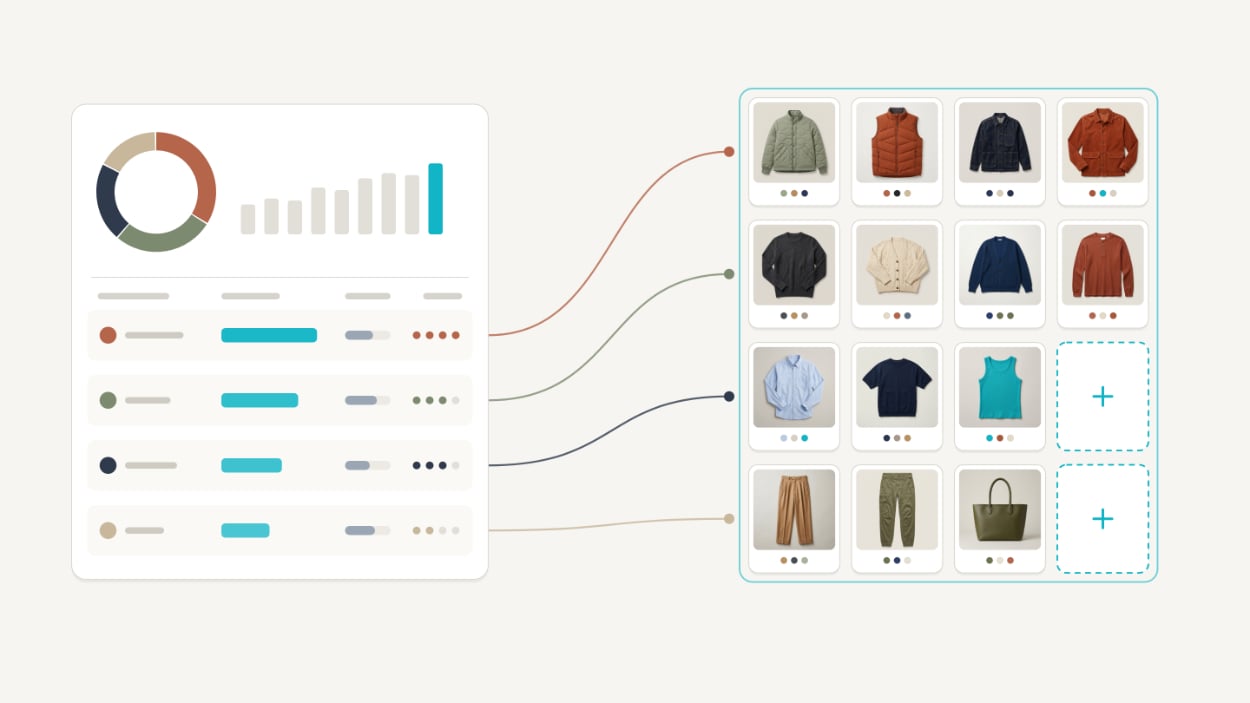
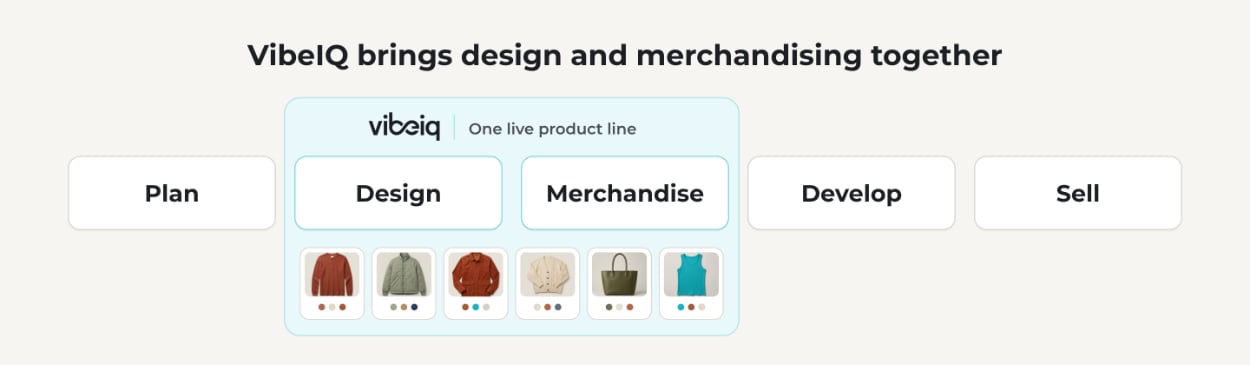
In a nutshell, what we’re trying to do is bring merchandising, design and the product creation process together. So companies can discover, understand and produce their best possible product line as they go to market.
So, you’re right. AI is a means to an end. Ultimately, we’ll get there. We’re going to stop using those two letters over and over again here in a few years or sooner, but we’re focused on merchandising, design, product creation, and how they converge over time because of what AI is allowing to happen.
So for us, we talk about AI a lot, but we talk even more about those roles and how their jobs are changing. And we’re working closely with our brand customers and partners to find that future and making lots of progress. So hoping to make a lot of headway here in the next year or so as AI keeps changing and moving under our feet.
Well, perhaps I’ll have you back on in two years or less, and we’ll see if we use the AI acronym nearly as much as we have today. Brian, thanks so much for your time, I enjoyed this conversation, and I’m looking forward to having another one in the future.
Yeah, thanks Ben, it’s been a pleasure, take care.
And that’s the end of my talk with Brian. Hopefully, we struck the right balance of practicality and philosophy there. You can tell Brian likes talking about all this. I’ve also tried myself to be objective on this show all year, but you can probably hear that I do as well.
And if you’ve read the AI Report, you’ll know that I also feel like AI has reached a level of capability in the last six to nine months in particular that makes it basically a guarantee that most enterprise software is going to have a user community made up of humans and agents. Whether they’re going to be peers to one another, well, that’s kind of an open question, but as we’ve talked about today, it’s both a philosophical and a practical one.
We still have a few more episodes to come this year before we take a holiday break across both the show and The Edit, so please stay tuned for those.
For now though, thanks for listening, and I’ll talk to you again really soon.