

Hey, welcome back to The Interline Podcast.
We’ve done a lot of very focused interviews lately, and I like doing those, because depth is what we’ve always been about at The Interline. That’s why we’ve been in the long-form written content game for so long, and it’s why these prestigious, hour-long interview shows still run weekly alongside our breezier news-analysis show, The Edit. One of those is definitely easier to plan for and record than the other.
There’s a lot you can do in an hour or two that you can’t do in less than half an hour, and grilling guests who specialise in a particular area is one good example of that. Today, though, I purposely want to do something higher-level and broader. Rather than picking apart one stage of the product journey or one tranche of technology, I want to talk about it all. And specifically, I want to talk about where tech adoption dovetails with the strategic goals that survey data tells us are common across all brands and retailers.
Everyone wants to improve profitability. Everybody wants to reduce risk, and everybody wants to get agile enough to go after new market opportunities.
To have that chat, I’m bringing on Liza Amlani, who is one of two people behind Retail Strategy Group, a boutique advisory practice that works with apparel companies and other retail businesses to help increase their chances of hitting those goals. Liza is also a sometime contributor to The Interline. She’s a merchant herself in her former life, and an author. So between us, we have a few touchstones, a few different formats, a few different media to draw on when it comes to exploring these bigger topics.
So without further ado, let’s get rolling.
Never miss an episode
Get notifications for new podcast episodes, plus our weekly news analysis, events, and more, delivered straight to your inbox.
NB. The transcript below has been lightly edited.


Okay. Liza Amlani, welcome to The Interline Podcast.
Thank you for having me. Very excited to be here.
Likewise — I’m excited to talk to you. Let’s start the way we usually kick these things off, which is by getting a feel for what the guest’s day-to-day job looks like. Now, you have a lot going on. I know this because you and I have known each other for a little while, and I know it from the amount of stuff contained in your email signature, let’s say.
So, you’re the Principal and Founder of Retail Strategy Group, which partners with brands and retailers with the aim of maximising profit. That’s a very timely objective, and I’m going to dig into it shortly. You also go by the Chief Merchant title, you write The Merchant Life, you teach at FIT, you sit on boards, and you’ve just put a book out into the world.
You’ve got a lot of irons in the fire. Which of those takes up the most time?
That is a great question. And I’ll have to say that watching the World Cup is what has taken up the most time. But in all seriousness, I have a partner I work with in the business, and he’s really helpful in helping me be efficient with everything I have on my plate. My goal is to create dramatic results for my clients — value like full-price sales, improving margin, and accelerating speed to market — and the key is to do that rapidly. So just having someone in the background helping me be more efficient has been a real asset.
I don’t do this alone, let’s just say it that way.
Good to know. And just walk me through — you mentioned your clients there. Walk me through how Retail Strategy Group works with clients, and maybe give me an indication of who those clients are, without giving anything under NDA away.
Sure. We work in a number of ways — it really depends on what the client is looking for, what outcomes they want to achieve, and how I get them to that end goal fast and efficiently.
Brands and retailers are my clients across the globe, and I work with a lot of apparel brands. This is where it’s been really interesting for me — across soft lines, so apparel, accessories, footwear — because I was a merchant for over twenty years, I really can put myself in my client’s shoes. And I think that’s where I’m able not only to create the most value, but to really understand how their day-to-day is impacted by, for example, the processes they’ve been using to develop product and create assortments for decades. I’ve lived that, and I know a lot of brands still work in the same way I was working in for over twenty years: using Excel, excessive overdevelopment and sampling, and using physical samples as a touch crutch, that sort of thing.
So I really take my own experiences and use them to help create value for the brands and retailers I work with.
Now, the second thing we do is get our guests to define something — and I’m actually going to break the tradition a bit today, because I’m going to get you to define two things separately. I’ll start with the first, to keep the thread going and give you an easier entry point.
I want you to define the thing you offer to your clients — one of the things you offer to your clients — maximising profitability. I want you to define what profitability is. Not in the basic sense; I’m not an idiot, I understand you have to make margin by selling something for more than its cost of goods sold. But specifically in fashion, tell me what you think are the most important levers brands and retailers have at their disposal to pull, that let them actually increase the chances of making a profit on a given style.
I’d like to start by saying that process is profit. In fact, process innovation is the most underrated opportunity in the apparel supply chain today. Superior processes, I believe, trump superior product any day of the week. And you brought up our latest book earlier, The Material Life — that book is really about the idea that how we create the product is more important than what we’re creating. We’re in a situation today especially where I’m seeing brands just tripping over themselves with outdated, archaic processes.
And what that does is translate into things like overdevelopment, harming brand and vendor relationships, and just not being able to keep pace with the customer. We know the customer is transforming drastically — and we’ll get into that in a minute. But fit is a perfect example of the final point I just made, where fit today is so dynamic, yet the way we create product, the way we merchandise and allocate and plan, is static. So that’s a really important point to make, and we’ll get into it in a bit.


And the last thing I’ll say is that the industry cannot out-SKU itself out of poor processes to improve margin and profit. We’re seeing that especially in all these earnings calls lately, where we’re hearing about SKU rationalisation as this new, amazing thing that’s happening with brands today — and they’re really excited, they’ve cut SKUs by 30-40%, or whatever the number is. But the fact is that, as a merchant, I’ll tell you we do that every season anyway.
You cut bottom sellers, focus on the top sellers, look at what’s driving the customer in the store, and so on. And when we look at the likes of Uniqlo, Quince and Inditex, it’s no accident that they’re really enabling superior processes to get to market — and to get to market in a very innovative, very accelerated way.
Let’s loop back around to profitability for a second, and let me be more specific. Where does margin leak out? Think about process innovation for a minute — taking the processes that are established, as you said, and that have become entrenched over decades. Where does margin leak out most strongly? Where are the biggest holes?
Margin leaks significantly throughout the development process. What I see, consistently, is this overdevelopment of materials, this over-assorting of the assortment, because merchants can’t decide what they want until the very last minute. And then what they’re doing is airing products, or reworking the assortment, or late adds. All of these things add up significantly to the cost of the goods. We’re allowing this to happen — and I was allowing this to happen when I was a merchant as well.
We would have things like development ratios: here’s what you’re allowed to overdevelop. Why are we even saying that overdevelopment is a normal process? This is what’s adding to the cost of the product being created.
And then think about physical sampling. Now, this is something I talk about a lot. We have a touch crutch. We are addicted to touching and feeling garments before we approve them, even if we’ve seen them before. I’ve been in many, many showrooms where I consistently see core product — seasonless basic product — being redeveloped and recreated every season. And if we go backwards into the process, we’re doing the same thing with materials.
This is, I believe, where we are losing margin, and where we’re impacting our time to market and our cost of goods sold. This is where I think we need to really focus in. Get that magnifying glass out. I would say this is the number one thing. There are a lot of other things, but that is the number one thing.
Prioritisation counts here. You mentioned SKU rationalisation before, and how that’s something the company and the merchants have always done. Taking that thread and pulling on it a little, what’s the difference between process innovation, which you’re hanging a lot of weight on, and everyday process improvement? Because everybody would say, “I’m trying to get better. I’m trying to optimise the processes in front of me.”
I’m trying to cut waste. I’m trying to cut time. I’m trying to become more efficient. What distinguishes process innovation from just everyday process improvement?
I would say that process innovation is almost like a fundamental shift in mindset, where we look at what we’ve been doing all the time — “we’ve always done it this way” — and then ask ourselves, is there a better way? Because there’s always a better way. Whereas process improvement could be as simple as looking at your TNA — so your calendar of events that leads up to your milestone moments — and just cutting a step here or there. So I think there is a difference between improving the process and innovating it. Improvement is always needed, of course, and there are very simple things we can do to improve our process.
But innovating our process requires a mindset shift. I’d say that is the key difference.
Okay, I agree with that. It’s very similar to digital transformation versus everyday software implementation — same thing. One requires you to re-interrogate the way you work and be willing to build things back up from the foundations. The other is saying, “I think there’s a more efficient way to do the thing we’re already doing.”
Absolutely. And I think today it’s even more of a challenge, because with so much technology coming at us from every angle, every part of the retail end-to-end, there’s this need to balance high-tech and high-touch. This isn’t a new idea, right? But the more we invest in technology, the more we must invest accordingly in human touch.
We have to balance that out. And I think self-checkout is actually a prime example of this. I was in Costco two weeks ago, and it was so interesting, because I never go into the store — I get everything delivered. But I was travelling and heading to a board meeting, and I stopped in at Costco.
I always use a self-checkout because I find it’s faster. I was in the self-checkout line, and what was different in my experience is that there was this wonderful person walking the line back and forth, asking if people wanted to pre-checkout. I was like, “Oh, what is this?” And I said, “Sure, let’s do it.” I didn’t know what it actually was.
What they did was scan everything in my cart. I get to the till at the self-checkout area, I scan my Costco card, and everything that was pre-scanned popped up. And I was like, “Oh my god, this is incredible,” because it not only saved me the effort of taking everything out of my cart and putting it back in, but it really sped up the process — and it was delightful as well, which is not something you really hear about a self-checkout process, unless you’re at an amazing Decathlon store with a great customer-service person beside you.
So I think there’s really this incredible balance of technology and touch that we need to focus on when we’re implementing technology, when we’re looking at digital transformation. I think I’ve totally gone off topic, but I do think there’s this need to balance tech and touch in anything we’re looking at from a technology perspective.
I think that’s true, and I think it transcends in-house use cases as much as it does downstream, consumer-facing ones. I’ll say I also don’t go shopping very often. I make an exception for Costco, though — and some of that’s down to the free samples, I won’t lie —
I hear you.
But the rest of it, it’s a very different shopping experience. And for anyone listening in a country that doesn’t have a Costco: you’re missing out on the free samples, I will say.
Now, your book — we’ve referenced it a couple of times, The Material Life. If I understand its central contention correctly, it’s that most brands are either design-led or merchant-led, to their detriment. So you’re saying materials should be elevated to that leading status, and that materials should be at the vanguard of all decision-making.
I want to try to understand something here.
Now, a lot of luxury companies work that way. A lot of luxury companies start with the fabric and let the silhouette emerge from that. A lot of more mass-market or premium brands are driven by the vision of, potentially in some cases, a solo designer, or a big design department. So is your contention as simple as “more companies should follow the luxury playbook”? Is it a case of saying that material procurement and development is so complicated that it should be what determines the viability and direction of product development in general?
What does it mean, practically, to be material-led?
Typically, what I’ve seen at, I’d say, 80% of brands, is that when we look at the product-creation process, the designer will start with a design brief. Then they’ll create sketches. They’ll design based on the line plan. Two things are happening here.
Materials teams today are looked at as service providers. So when designers are off sketching and designing, they’ll go to the materials teams and request a new design or development of a material — a material being colour, fabric, trim, and print and pattern. They don’t necessarily use what’s already available, because that’s not the way they’ve typically worked. Material libraries are not always utilised.
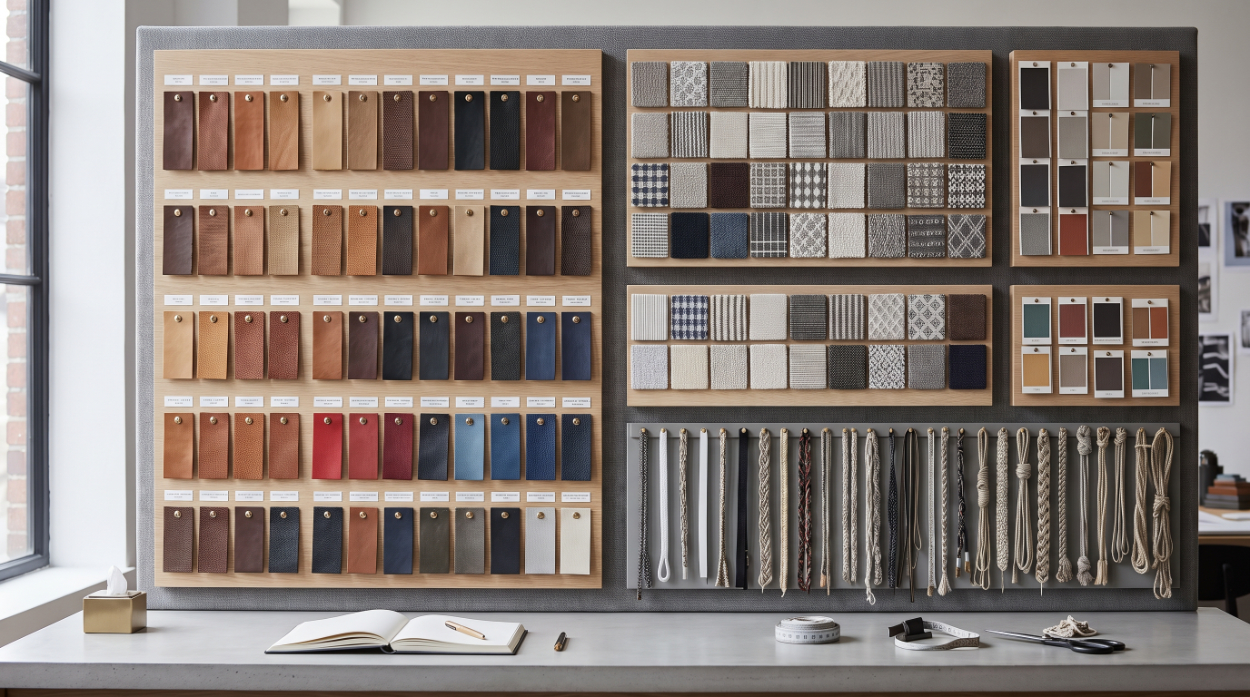
What I’d like to do is give you an example of working in a kitchen — I find this example resonates. Think of the kitchen pantry, and using what’s in that pantry. When you look at Top Chef, or any of these reality chef shows, there are ingredients available in the pantry, or the chefs are given a list, and they use that to create a recipe and make something wonderful. Now, I don’t know if you watch TV, but The Bear is a show I was addicted to, and I just finished the last season. The chef, Carmy, would send his team scrambling, because he would change what he wanted to create every single day. And what that cost him was that his teams were reactive. They couldn’t find what they were looking for. There were surcharges, costing them even more for ingredients they hadn’t planned for, and the teams would scramble.
So there’s this incredible opportunity if we innovate the process, if we elevate materials, and then design starts designing into those materials — like in Top Chef, using what’s available in the pantry. You save time on iteration, you save time and resources and effort creating materials that will never be used, and you have this ability to significantly reduce overdevelopment. And that is the concept of The Material Life, and of our book.
That’s a good analogy. I don’t watch much TV — very busy job, three kids — but I did watch at least some of The Bear, and from what I remember, Carmy trained at the French Laundry. So there’s your luxury link, from a top-end, Michelin-starred restaurant down to the everyday use case — same with this.
Now, I’m going to dip into our archives at The Interline a bit for this one. You wrote a piece for us in 2023 called “Velocity Over Speed”. In it, you drew a distinction between going fast — which anybody can do, you just push — and going fast in a clear direction with everybody aligned to a common vision. The reason I’m dredging that up now, a couple of years later, is that I’d argue the most successful brand at the moment is probably Shein. And I’d argue they have all the speed and none of the velocity, and they’re successful anyway. They’re introducing thousands of new styles a week. They don’t really have a clear unifying vision; they have no objective, really, besides capitalising on a market opportunity at the lowest possible cost.
You talked before about railing against overdevelopment, and I think that’s right for a lot of the market — I think it’s right for the mid-market and upwards, and it’s certainly right in premium and so on. But if you have the scale of a Shein, or somebody like that, it seems to me you can just spread-bet your way out of that problem.
Well, I’d actually argue that Shein does have velocity, because they understand who their ideal buyer is. And I think that’s where a lot of the issue starts with brands in general: they don’t know who their ideal buyer is, because they’re planning what they want to assort a year or more out, and hoping it’ll sell at full price. So I’d say, first off, brands need to understand who their ideal buyer is — because Shein definitely does. Even though we might not agree with their model, and they absolutely over-assort and overdevelop, and consumerism has a lot to do with that as well, I’d also say it’s important for us to build processes around who our ideal buyer is, and then deliver on what they want.
So we avoid the losers of the assortment, instead of accepting them — “let’s just try it and see what happens”, this concept that more supply will equal more demand. I also want to bring up Reformation, because Reformation recently disclosed their IPO findings and how they go to market.
The reason I bring them up is that I’d say they’re similar to the Shein model, in that they do test-and-learn. They replenish into best-sellers, and they react to market signals from their ideal buyer. So when we look at what Shein does and why they’re successful, it’s because they are — some would say — a technology company, just like Amazon. But what they’re doing is leaning into product their ideal buyer wants, and then replenishing that product.
Replenishing into the best-sellers, and then going to market and building on that — I think the better question is always to ask, how can we deliver in the way the ideal buyer wants us to? So Reformation is doing quite well in that aspect, where they’re giving their ideal buyer what they want, replenishing into what’s already selling, and then using those market signals from their ideal buyer to create new products they already predict the customer is going to buy.
That’s really good framing. We’re using a lot of examples from outside fashion here — we’ve been to Costco and everything else. I like the framing you’ve just used, because it reminds me of — and I might mangle this, because I don’t take a lot of domestic flights in the US — I think it’s Southwest Airlines.
What the CEO said was that the sole decision-making criterion he would use, for anything from how you distribute peanuts to how you sell tickets, was: does this decision make us the lowest-cost airline? If not, then it’s not a choice I’m making. And I think that’s got some alignment with what you’re describing about understanding who your ideal buyer is. I think you’re probably correct that Shein — they want to be cheap, they want to be high-volume — but they have a very canny understanding of the kind of person who likes cheap, high-volume fashion.
Yes, they absolutely do. And — this is a total sidebar — but when I was teaching at FIT, I guess this was a couple of years ago, my students told me how much they loved thrifting, because it was sustainable. They loved vintage, because of all those things as well.
But then they’d show up in Shein in my class. So I was like, this doesn’t make sense to me. But then, when you think about it, they really do know their ideal buyer. They understand — yes, of course, the students have values, but in some cases it’s more important for them to show up and fit in, and find things that are really relevant to their own personal style. And Shein offers such a vast product assortment that they’re able to do that.
So it’s really interesting, what I’ve been seeing with folks who are actually buying Shein. I see the same thing at Brandy Melville. I don’t know if you have that store in the UK, actually.

We don’t, I believe.
Okay. So this is a very interesting model — I’m definitely going off-script here, but it’s an interesting point to make, because Brandy Melville has this concept of “one size fits most”. So they really do only have one size of product. And even though the customer complains about it, and they’ve even shut down their fitting rooms, the customer is still buying the product.
I was in front of the store a couple of weeks ago — a line-up. They’re known for this; they have a line-up every single day. It’s fascinating to see that they have this model. They’re releasing thousands of SKUs. I can’t even imagine the overdevelopment there. But what they’ve solved for is the size issue, because they only have one size — so they’re not creating multiple sizes of a garment, and they don’t have excess inventory from a size-depth perspective. It’s a fascinating model, but they know exactly who their ideal buyer is, and why she shops there.
Useful reference. We don’t have it in the UK, but for anyone in the US, that reference lands.
Now, another concept from your book is the idea of “acceptable inequality” — the understanding that different products at different levels of complexity should be treated differently. I’d argue it’s probably already the case at the extremes, right?
I don’t think anyone listening to this is proposing that the value chain for a basic t-shirt should be the same as the one for a luxury handbag, or technical mountaineering gear, or what have you. I’m guessing the nuance you’re talking about is between broadly similar mass-market categories, where companies tend to push everything through the same milestones, the same gates, the same systems, the same solutions — and they’re missing an opportunity to do some fine-grained efficiency control of value chains for different product types.
Tell me more about what you think that means.
So I think every brand can benefit from looking at their assortment in this way, where not all products are equal, so they shouldn’t be created in the same way. We call it acceptable inequality — it’s my version of AI. If we look at, let’s say, core basics — because we know every brand has core basics, or a seasonless assortment, that don’t need to be recreated every season — also, not every colour has to be lab-dipped again and again and again.
And, lastly, not everything needs a physical sample. If we think about it from the vendor’s point of view, one of them explained to me that sample capacity has to be treated as sacred — and I 100% agree with that. We should only be physically sampling net-new products, or something that’s new and innovative; your core and seasonal assortment should not be physically sampled. And when we start looking at the assortment in this way, where we rate the complexity of the garment, or we start really using our materials library instead of developing a new black or a new navy or a new pink that we already have — we start to create time and space for true product innovation.
Then we can actually create new and novel things, never-before-seen products. And this needs to be the ongoing process, not a singular event. So we create time and space for that by saying, okay, let’s look at the complexity of our garments. We’re already assorting core basic, or seasonless, versus fashion in some way — so we need to look at creating those products every season in that same way.
Okay, I think that makes sense, and it’s a logical distinction between the tracks that different types and objectives move along. You’ve mentioned overdevelopment a few times, so let’s go straight for it. Let’s talk about overdevelopment at both the product level and the component level, because materials are definitely in there.
You cite some statistics where a brand might adopt maybe only 20% of its colour development, and maybe around 35% of its textile development. That’s a lot of material development work that gets thrown away, but it’s also a process that falls into a blurry ground, I think, between creative experimentation and pure process bloat. I imagine there’s a difference between development that is objectively redundant — you just talked about sampling seasonless styles that don’t need it; another example might be multiple people requesting a sample of a zip or a pull that already exists in a library — and, on the other hand, the development that falls into the “well, we needed to do these five failed approaches to find the sixth one that was good”, the artistic argument for that.
What does the reality behind the numbers look like? What’s your suggestion for solving it? Because I imagine some people listening will say, “Yes, we overdevelop, but some measure of overdevelopment is necessary, because that’s where the happy accidents originate. That’s what allows us to get down to the stuff we really want to take to market.”
And to be clear, I’m not saying we shouldn’t develop new materials or new products. What I’d love to walk through is the typical process. So if we think about our concept-to-market process, or product-creation process: after seasonal strategy, design will create a design brief. They start sketching into the line plan.
Then designers will ask the materials teams to source, design and develop new fabrics, colours, trims, prints. They iterate until the designer approves. And the issue here is exactly what you said — there are unnecessary developments, developments that never see the light of day. What we come up with is really low adoption rates.
In many instances, the overdevelopment isn’t even being tracked — and neither are the adoption rates. And if we fast-forward, when we’re at prototype, the merchant decides whether they want to rework something. They want to add something new. They want to exaggerate the print, because they’ve seen something in the market they really liked.
And what happens is we go backwards and start again. We have a new material developed, more iterations, and so on. So this is the typical process. And when we’re at proto, I’ll tell you, I have never seen development of materials tracked at proto. As a merchant, I’ve seen for many years — as well as working with brands — that this is a real problem, where the merchant is reworking the assortment either after it’s locked or right before it’s locked.
And then we start the development process again. My suggestion is: we have to start tracking. And tracking from the start of product creation — whether you’re materials-led, materials-first, or whether you’ve elevated your materials teams or not. You have to track your material-development rates, and you have to do this by category, by function, and then start holding teams accountable.
I’ve implemented this at a few brands, and we’ve seen a tremendous lift in adoption and a tremendous reduction in overdevelopment, because then we start being creative about using what we’ve already developed over however many decades the brand has been creating. We start using the library. And then maybe we digitise the library, and start digitally creating some products where we don’t need to see a physical sample. That’s when we think of those development lanes I was mentioning earlier.
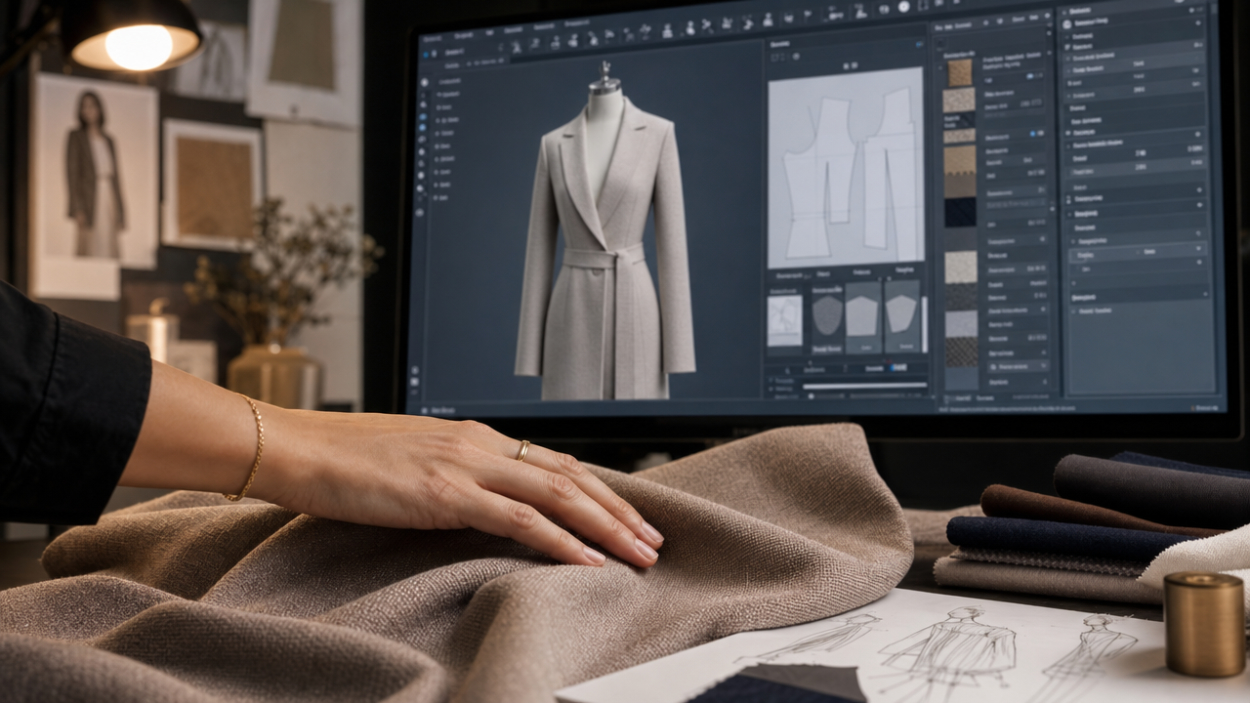
So let’s talk about that — digital product creation as a foil for overdevelopment. I can see that to some extent, and I wonder if you and I see it the same way. Part of me thinks the skill floor and the time investment you need to design and then virtually engineer garments in 3D put a cap on how much you can develop.
It gets you away from overdevelopment just because the work is harder and more time-consuming, and happens all in one place instead of being distributed. And, obviously, 3D is going to let you cut out sample rounds, because that’s the biggest demonstrable value it’s had in a lot of implementations. But I’m struggling with the vision for using 3D to cut overdevelopment in two other ways. The first is that when you cut out a lot of early-stage material-development experimentation using 3D, you need a level of material-digitisation maturity and adoption that the industry doesn’t have. You just mentioned, “let’s go to the library, let’s digitise the library” — that’s firmly a work in progress for most brands, and most companies do not have that material library digitised.
The second is that if what you’re trying to do is curb the number of ideas you develop, and get a handle on what makes it to line review, I feel that generative AI is maybe a better route to that than 3D would be.
If what you’re trying to do is get ideas into the development stage, have people scrutinise them, and then determine what you’re going to adopt and take forward — tell me the role you think you see digital product creation playing in curbing overdevelopment now.
I would say that Gen AI is probably the least appealing idea here, and here’s why. Technology should enable a designer’s creativity, not limit it. So the intention is not to limit the ideas, but to limit the number of developments that send the rest of the organisation into this reactive mode, into a wild-goose chase. So if we use technology to take care of the things that are already proven — like our core basics — and digitise those things that are routine, that’s where we’ll start to see designers having the time to be more creative, to go to market, to go to the shows and see what’s happening, and get excited about creating, instead of thinking about all the rework the merchant’s going to send their way, or whether technology’s going to take their jobs away. And I think this is where digital libraries for colour and fabric can be used to expedite the approval process, and to serve up a menu of what already exists.
Whatever the creative inspiration might be, there might already be a solution in the library, whether it’s physical or digital. And I think that’s where we can really see this opportunity of giving creative teams time to be creative.
Okay, that is a good answer. Now, I think you’ve got the honour of being ahead of the curve a bit when it comes to mapping and understanding the impact of GLP-1s — so Ozempic, Mounjaro, and now generics, depending on where you are in the world — on fashion. You’ve talked about it from a sizing point of view, but you also did a thorough analysis of the parent company that developed Mounjaro, so Eli Lilly, and their race to market as part of your book, using that as a reference frame for how they were able to beat their closest competitor by cutting drug-development times nearly in half.
Now, everyone listening will know GLP-1s as the class of drugs behind a new era of size volatility, because every target demographic is suddenly a moving target in a way it didn’t used to be — people drop weight faster than any linear model would have suggested. You can respond to some of that by updating your sizing ranges, rebalancing your ratios, or doing what Brandy Melville does with “one size fits most”. But I feel like you have a keener angle here on how process innovation and material-first workflows can insulate or prepare companies for size volatility — as well as using that as a lighthouse for how they can think about process innovation more broadly.
This has been a fascinating space. We’ve been studying not only how Eli Lilly innovated their process to get to market faster to compete, but really the parallels of what brands need to do today. And what’s really fascinating here is that GLP-1s didn’t suddenly create body changes, right? This is not a body-transformation era. This is just one of the factors impacting the shape of the customer’s body, and the composition of the customer’s body, today.
For example, we talk about strength training in women, how it’s more prevalent, how we’re seeing more use of supplements, and that’s changing how the body is changing shape. Now, fit is a dynamic condition. Fit is dynamic. It’s always changing.
But what GLP-1s have done is become this magnifying glass on how broken the processes are in fashion. We coined this term, fit volatility, where brands can’t keep up with the dynamic, constant changes of the customer’s body shape and composition due to all of these factors — because those factors are happening so fast, and the body shape is changing so quickly, but our processes are static and slow. I brought this up earlier: it takes fifty-two weeks or longer for many brands to go to market. The customer’s body shape and size is changing drastically — in fact, dropping two to three sizes in a season.
Now, the other thing I’d like to bring up is fit intent. When we think about fit intent, we determine it early in the process, maybe at the design-brief stage. Are we revisiting fit intent when we get insights from the customer, or our ideal buyer, that what they intend to wear is changing because their body shape has changed? They want more fitted silhouettes. They’re buying certain types of garments because they’re more confident, and so on.
So that’s fit intent. Not only are our processes really slow and static, but size lives in planning, fit lives in design, and retailers are commonly siloed. So if we’re determining size at line plan, at the start of our process — planning line architecture based on historical data, market insights and so on — and then, fast-forward, right before proto review we start fitting garments, the merchant team will commit, but they’re using the size curves and the sizes planned at the start of the process. That’s a disconnect in itself.
And the last thing I’ll bring up, which I’ve been thinking about a lot, is that the master fit block is owned by tech design, and that’s updated every three to five years. So not only are we not allocating the right sizes, we’re not evaluating whether our fit has changed — whether the ideal buyer or customer, their body composition, has completely changed because they’re on a GLP-1. So there are a lot of nuances, and a lot of forces here, that are really forcing brands now to take a closer look at their processes.
Now, we’ve talked about a lot of things today.
We have.
Fit volatility is one part. We’ve talked about profitability, we’ve talked about process innovation — all of those are big, chunky issues to get your hands around. Let’s try to end on a practical note.
Okay.
What can listeners take away from the show and do something about tomorrow, or next week — rather than just making a few notes here and filing them away as part of some nebulous, long-term digital-transformation strategy?
So I’m going to leave you with a short list. The first thing is, I think brands really need to audit the fit details, their fit process, and product creation. So ask questions like: is fit intent locked too early relative to what we’re learning from our customer, from our market insights? How often are those master fit blocks updated, and our standard sizing reviewed? And how well does our fit model represent the ideal buyer?
I’ll tell you that when I was with Ralph Lauren, if my fit model changed — oh my god, we would stop everything, because we used the same fit model year after year. Those questions matter, because we need to understand: does our ideal buyer map to how these impacts to the customer are changing the customer’s body shape and composition? For example, the GLP-1 demographics.
The next thing I’ll say is that process equals profit — especially if brands are taking fifty-two weeks or longer to go to market, and have overlapping product-creation calendars. Are they using that timeline for the majority of their product? Are they creating all their product in the same way, equally? Audit that first, and then start thinking about whether that approach makes sense for the entire assortment. Do we need to think about development lanes? Do we need to think about the balance of technology and touch when we’re considering our product-creation process, and how we develop that product?
And then, finally, I’d say we need to start moving past transactional vendor relationships, because brands are addicted to low-cost sourcing. It’s the root cause of a lot of apparel’s inefficiencies. Brands that forge a true partnership with their vendors will gain an edge — because if we share risk, and we have this interdependence, the vendors are really good at what they do, and they have capabilities that can help more often than not.
Supply flexibility is a great example. Prepositioning fabrics. Looking at new approaches to creating product. Vendors are very, very good at what they do. And leaning on vendors, I think, is a great way to start innovating the process, and building relationships that are pioneers instead of service providers. I’d say the same goes for internal teams, like the materials teams, because they too are very good at what they do.
I think that’s an important takeaway for anybody thinking about technology: remember that your teams are good at what they do, and allow them to exert as much influence as they can over technology selection and adoption. Liza, it’s been a pleasure having you on. Thanks for joining me.
Absolutely. This was so fun — and I love that we also worked Costco into our conversation.
Hey, there’s never a bad conversation to insert Costco into.
I agree, I agree. Thank you, Ben.
And that’s the end of my chat with Liza.
As you can probably tell, I’m keen on pinning sweeping terms like “process innovation” down to actual, practical actions — so hopefully, between the two of us, you’ve got a blend of top-level vision and tangible execution in there.
We’ll be back to a more focused topic next week, so I hope you enjoyed the momentary diversion. I’ll speak to you again really soon.