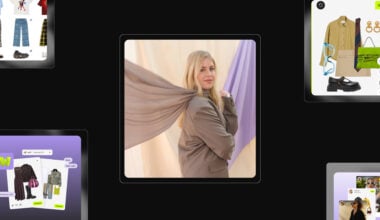
People tend to think about fashion rentals as its own standalone business model, with little direct association with traditional, sales-driven brand and retail models. But across merchandising, logistics (and reverse logistics), consumer experiences and several other areas, there are strong parallels between what rental organisations are doing, and key strategic objectives for the wider fashion industry.
And that means there are lessons for fashion as a whole to learn from how an innovative rental business is making use of technology.
For this episode of The Interline Podcast, recorded live, Ben talks to three senior members of the team behind Armoire – a personalised rental business providing women with an evolving closet of diverse designer brands.
He’s joined by Laura Butler, CTO, Sanober Mukadam, Chief Operating & Merchandising Officer, and Shefali McDermott, Head of Operations. Together, they discuss the vital role technology plays in enabling everything from data-driven merchandising models to item-level visibility for inventory management, logistics, and consumer interaction.
Watch now:
As our first show recorded live, in a single take, instead of in a studio setting, this episode of The Interline Podcast is available to watch in video format:
For the audio version of the show, our embedded players for popular podcasting platforms are below. Or search for “The Interline” on your podcasting platform of choice, to discover more episodes.
Listen now:
Use the embedded players to listen to this episode of The Interline Podcast on Apple Podcasts or Spotify, or click through to follow the show on those platforms so you’re notified when future episodes release.
The Interline Podcast is also available through a range of other podcast services. Search for “The Interline” on your platform of choice, and then follow or subscribe.
Our next episode will be coming soon. In the meantime, you can find key talking points from Episode 10 below.
Key talking points:
As a complex business that blends frontend experience, innovation, and connection with bi-directional logistics and a technology-centric backend, Armoire is emblematic of a lot of the challenges and opportunities that fashion faces at a whole-industry level, including:
- The delicate balance between data science and modelling, and creative choice in modern merchandising.
- The operational challenges of rapid fulfilment and inventory allocation.
- The use of data in delivering personalised shopping experiences and recommendations.
- The challenges of planning for seasons and occasions at the same time as retaining the ability to react to shorter-term trends.
- The mechanics of item-level tracking in logistics, warehousing, distribution, and downstream consumer use cases.
- The mandate for brand diversity and inclusivity, and how retail organisations can approach assembling the right product mix.
- The relationship between the rental market and circularity, and the parallels between the two ongoing channels.
- The viability of generative AI in personalisation, consumer interaction, and product discovery.
Recognise any parallels between Armoire’s challenges and opportunities and your own? Even if your business is not in rental, you’re likely to find some inspiration and ideas in our Sourcing & Supply Chain and Retail categories. Also, consider following The Interline on LinkedIn, Twitter, or Instagram to keep up to date with our newest stories across the full spectrum of fashion technology topics.
To find out more about Armoire, visit their website for a breakdown of how the business works.
Don’t forget to follow The Interline Podcast on Apple Podcasts, Spotify, or your platform of choice. And look for our next episode soon.