
You’re supposed to buy the product for what’s inside: the product, formula, the science that brings it all together. But packaging affects more than how a product looks. It’s become central, not just for branding, but to performance, and what influences it is no longer just aesthetic instincts, more and more it’s software logic.
Not everywhere mind, and not always, but in more places than many people realise, the design of packaging is picking up new traits: version control, test environments, and early-stage compliance logic. The change isn’t about throwing out what packaging has always done. It’s about layering in a new kind of intelligence beneath the visual and tactical surface. One that speaks to regulation, traceability, and performance as much as it does about shelf appeal.

This doesn’t mean packaging has become software. It hasn’t. But its development process is starting to borrow from how software works: simulate, break, fix, repeat. Map constraints, model outcomes, design backwards from a legal or logistical edge case instead of forward from a design sketch. The best packaging still feels beautiful in the hand and pulls the eye to the shelf, but more and more, the real work happens before anyone holds it.
For decades, the process was relatively straightforward. Build the formula. Design the vessel. Check the boxes. Make it. That rhythm still holds in some parts of the industry, especially where production runs are small or the markets are local. But the moment you try to scale – across borders, regulations, or consumer expectations – the margin for error begins to shrink.
Some teams have responded by rethinking the sequence entirely. They’re designing packaging in tandem with the product, not after it. Sustainability analysts join at the same time as colour matching specialists. They’re reviewing compliance risk before a creative brief is even finalised. And they’re asking better early stage questions: Will this pump jam in cold storage? Will the cap still work after six months on a shelf? Is this pigment flagged by EU regulators?

They sound hypothetical, but for any brand building across borders, they’re not. These are the kinds of things that now get tested before anything is made. And while the response isn’t uniform, the trend is real. Even mid-size brands are starting to run simulations. Swap materials in digital twins. Feed packaging specs into LCA platforms to see the impact of one adhesive versus another. When they catch a risk early, it doesn’t just save money, it also saves trust.
That’s where the software logic starts to show. A compact or a bottle might still feel like a luxury object, but behind that object is a stack of decisions that got tested long before it left the screen. Some decisions are technical, others are legal, but someone has logged each one, and if they haven’t, that can be its own kind of risk.
That’s not to say the whole industry is here. It isn’t. Plenty still begin with sketches because that creative start still matters. But those early ideas now often sit alongside spreadsheets, compliance matrices, and simulation outputs. In many teams, regulatory input arrives not at the end, but close to the beginning.
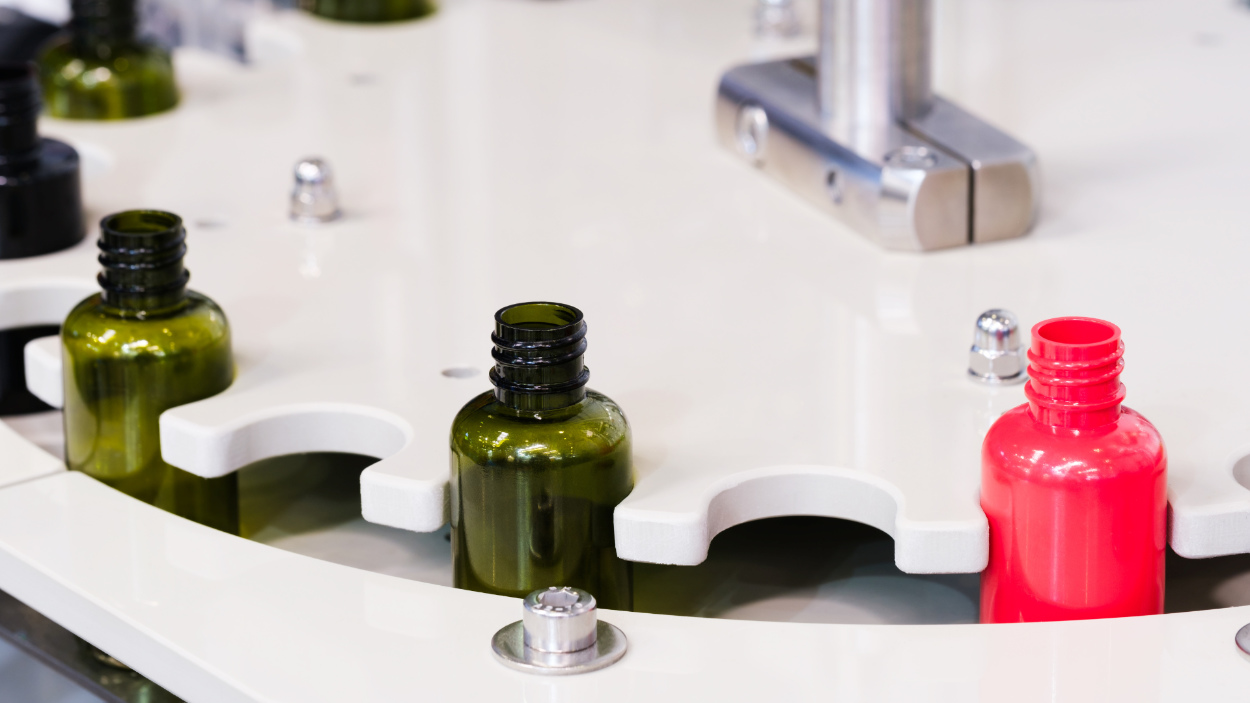
Packaging still has to pull its weight: protect the product, reflect the brand, substantiate the claims, but the conditions around it have started to change. There’s more oversight, tighter timeless, and less room to fix things once they’re in motion.
If your packaging says it’s sustainable (as well as making a similar claim about the product inside it), can you back it up with data? If it says vegan or cruelty free, does that extend to the ink, the glue, the label stock? If it’s built for retail, is it built to survive the supply chain? If it’s designed for aesthetics, is it going to stand up to rigorous everyday use? These are the questions being asked, and they’re often being asked earlier than ever.
That’s the way more brands are rethinking what packaging even is. It’s still a vessel, but now it also acts as evidence. A claim made visible, a decision made durable, and in some cases, a point of failure if it can’t stand up to what it promises.

Tactility still matters. No one is arguing that it doesn’t. The weight of the lid. The feel of the surface. The click of the closure. These moments are still where emotion happens, but behind those choices, there’s often a different kind of craft. The kind that lives in spec sheets and decision trees.
Packaging hasn’t stopped being physical, but more of what defines it now happens earlier, before anything gets made and before anyone picks it up. The decisions behind the surface are starting to matter just as much as the surface itself.