
Key Takeaways
- Earlier this week, Getty Images announced plans to file for bankruptcy, as generative image tools continued their rapid expansion into fashion. The two are not directly correlated, per se, but they put the economics of real photography under scrutiny at a moment when brands have more alternatives to commissioning it than ever.
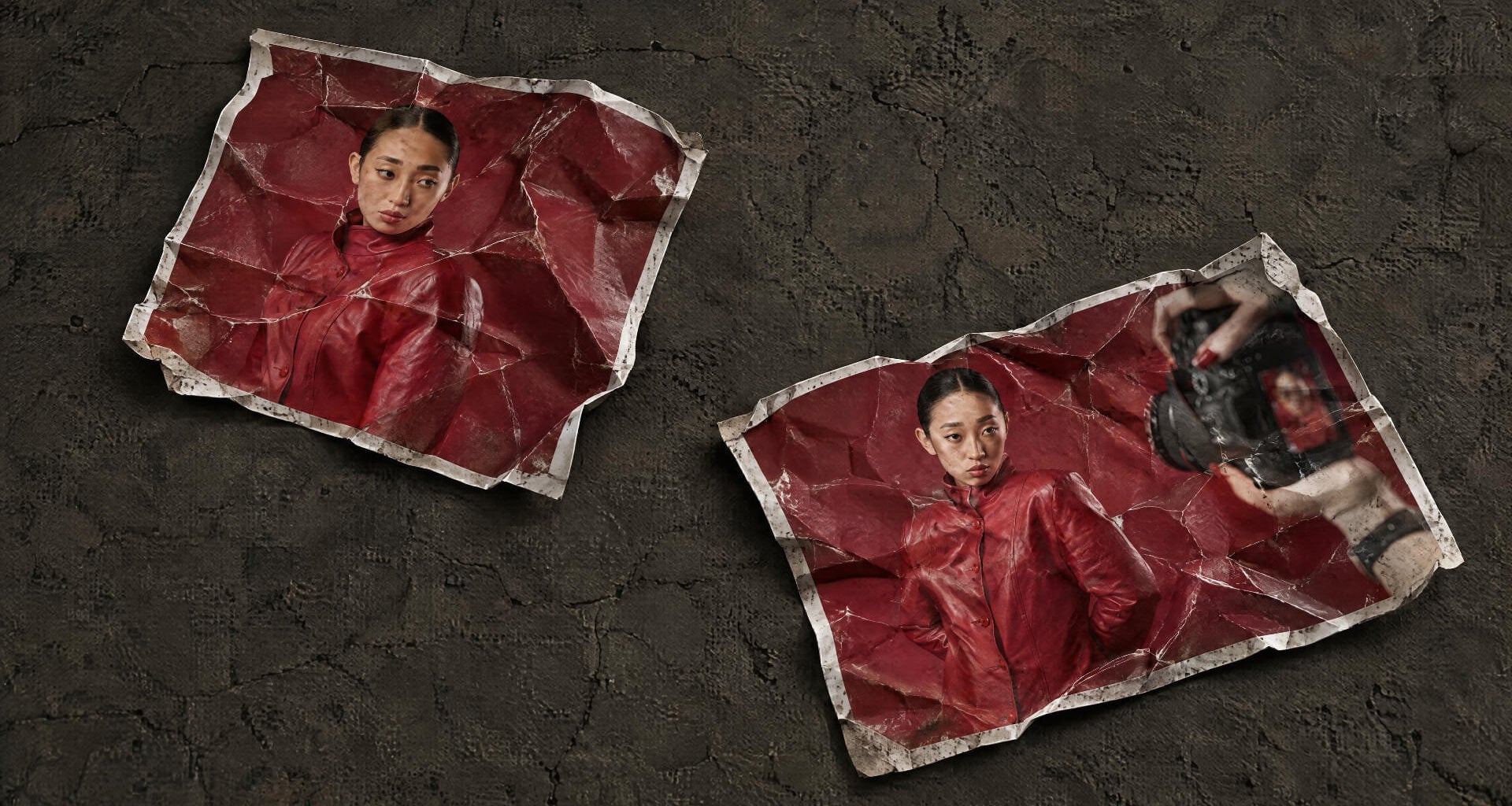
- Real models, locations, and photographers give fashion imagery its claim to authenticity, but they also account for much of its cost. As generative pipelines become commonplace, wanting to preserve that human contribution may not be enough to sustain it commercially. Synthetic content could become the default without consumers ever deciding that they prefer it.
- Fashion’s next test of authenticity will have less to do with whether or not a real camera was pointed at a real model in a real garment, but whether an image honestly represents the product and brand behind it, even when neither was really “there”.
It’s become a bit of a cliché to refer to image generation models as the inevitable next step in a long history of human beings using tools to depict, or at least approximate reality. If you subscribe to this idea, you can draw a direct line from the earliest cave paintings to the advent of film and then digital photography, and you can say “people have always picked up whatever was to hand, and they’ve used it to tell visual stories about the real world around them, so AI is no different”.
The Interline thinks this misses some important nuance – namely that portrait or landscape painting, or woodcut-carving, are different disciplines than photography, and they made a different promise. A painting is, definitionally, a single person’s perception of a subject or a moment, filtered through their own aesthetic sensibilities, their own lived experiences, and the skills they were either born with or acquired.
Photography can, and does, have a lot of art in it, but the difference between a hand holding a brush and a lens with a sensor behind it is about more than just the technique. Photography is a capture of a ground truth. That truth can be framed, styled, lit, dressed, denoised, and manipulated, but the moment the shutter closes is exactly that: a moment that actually took place.
This is obviously deeply relevant for journalism and documentary photography, but it’s also an implicit understanding between product and campaign photography and the viewer: what you’re being shown was real. That person really wore that outfit. That shoot was on-location. That celebrity endorsement required us to bring the real famous person into a physical studio.
Over the last twelve months in particular, each of those markers of reality has become its own dual-edged sword.
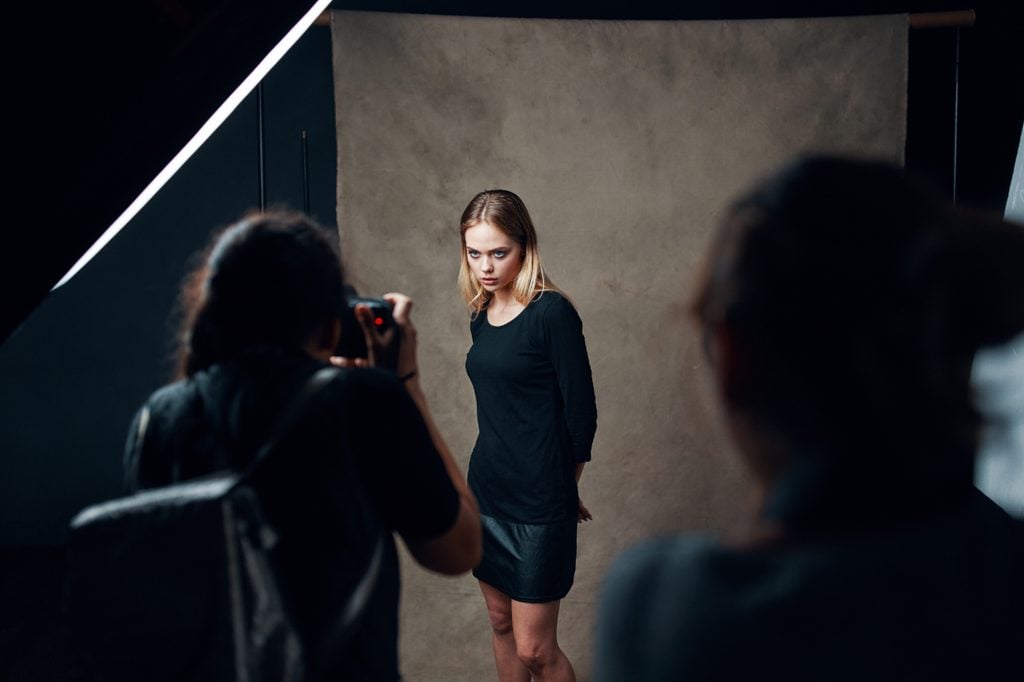
A campaign with real models, photographed in real locations, is, in some ineffable way “authentic”. And the prevailing wisdom is that the end consumer values that authenticity and will reward the brands that can evidence it, as well as retreating from the ones that can’t.
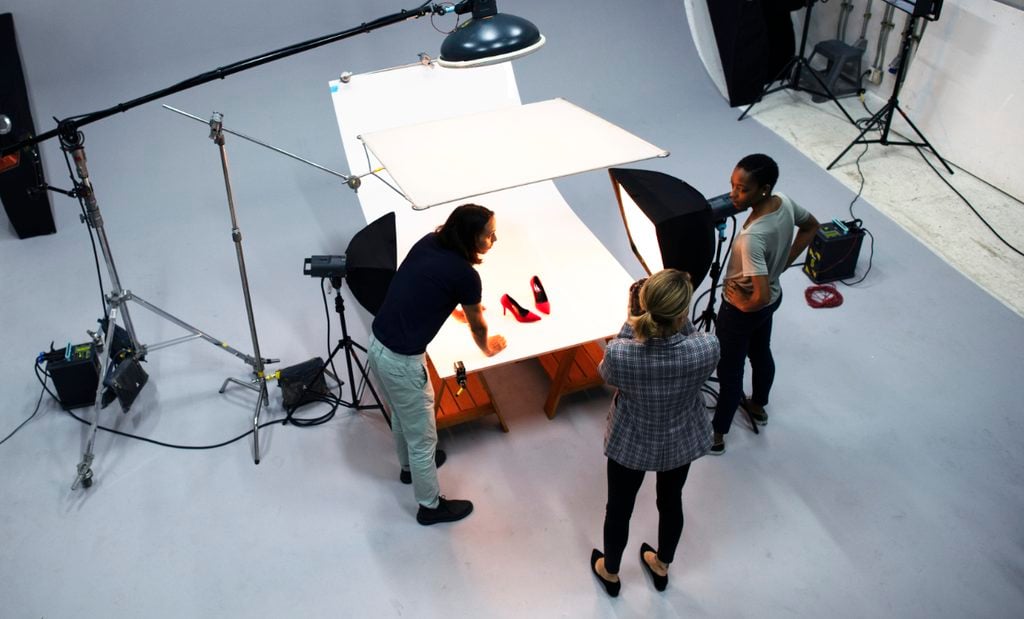
Those same things are also, from a calculating, commercial vantage point “overheads”. The Interline has interviewed technology proponents who use that literal wording, which feels cold, but it’s no less true for being a bit unsavoury in its framing; models are scarce, fickle, and human, and locations require you to get on a plane, both at considerable cost.
As quickly as image generation technology has improved (and we refer readers to Ben’s article about the post-image era for some longer and deeper thoughts on this) this push and pull has kept fashion in a kind of impasse through the first half of 2026. We’ve seen some retailers, like Zalando, move early and forcefully into generative image pipelines for essentially all PDP content, and a growing number of campaigns, but we’ve also seen brands take a stance against AI images that’s, at least in part, driven by personal and market distaste for the idea that “authenticity” is being sacrificed at the altar of speed, cost, and convenience.
But sustaining this impasse relies on the market for authenticity, as expressed by people pointing real cameras at real things, remaining buoyant – or at least roughly competitive with the market for generated images. And this week’s headline news suggests that may no longer be the case.
As announced on Monday, Getty Images (one of the main photo agency institutions) plans to file for bankruptcy. According to Reuters, the company’s shares have lost about 99% of their value since it returned to public markets in 2022, and the stock exchange began the process of delisting it in September.
This trajectory covers almost exactly the same period as the emergence and maturation of image-generation and image-editing AI models and services in the public eye. Getty went public around the same time that Midjourney entered its open beta, and it fell off the bottom of the stock exchange just a couple of weeks after the launch of GPT-Images 2.5.
The technological progress between those two model releases, over the course of just over four years, is obviously remarkable. And while The Interline remembers enough of its high school learning to know that correlation does not imply causation… it sure is a coincidence that a huge fall-off in the value of real photography (or at least one of the foremost companies carrying its standard) happened in the exact same timeframe that the inverse arc was playing out for models and tools that allow anyone, for fractions of a dollar, to generate a plausible-looking image of anything.
Fashion, as any of our readers who listen to The Interline Podcast will know, is inundated right now with generative tools and workspaces. We interviewed the CEO of one of the most visible ones just yesterday, but there are absolutely others.
In a meaningful sense, if you are a brand or retailer who produces a lot of photography, whether that’s lay-flat images, on-model PDP content, you currently have to find a reason not to use AI in place of traditional photography. The Interline struggles to remember a time when a class of technology became this ubiquitous, this quickly.
Before you read on...
Our weekly news analysis will always be available to read here at The Interline, but you can get it (along with notifications for new podcast episodes, events, and more) in your inbox by signing up to our mailing list.
So, if we’re not drawing a direct causative link between the upward trend of AI and the precipitous downward trend of Getty Images, what are we saying? After all, it’s not as though fashion brands were doing a lot of photo-licensing before this week’s news.
As we see it, the headlines themselves are a proxy for something bigger. While the most visible place that everyday people experience licensed photojournalism is in editorial and news content, stock libraries are also reflections of the zeitgeist. The images we are exposed to in a lot of more generic advertising, or in blogs or analytical content, have long been assembled from either free or paid libraries that were fuelled by real photographers taking real pictures.
Somewhere around the midpoint of last year (The Interline has not done any scientific research to confirm this, so chalk it up to ‘vibes’) those same libraries became suffused with synthetic content. Even Adobe, which talks loudly and often about the commercially safe status of its Firefly image models, found itself on the end of complaints from designers who found AI-generated images in Adobe Stock despite using its exclusion filter.
This, naturally, led to an erosion of trust in the authenticity of those images. The Interline dialled down its use of stock photography at that time for this exact reason: we objected to paying to license content that had no human author behind it, and figured that, in that scenario, generating the content ourselves would lead to a better outcome.
This week’s news is a landslide step in that erosion.
Again: we cannot say that Getty is fleeing public markets and going back into private ownership because of AI, but it’s hard to read these two ideas, next to each other, in many other ways. The company says operations will continue, so its libraries are not about to disappear. And its finances have also been carrying some heavy burdens that have little to do with AI: second-quarter results recorded $110.9 million in payments for warrant judgments and associated interest.
So while Getty might not be the best-run or the best-capitalised company, it remains a company. And weirdly, it remains one whose editorial revenue grew 9.2% year on year, according to the same public filings.
But it has also earned, in The Interline’s opinion, the unfortunate designation of being the near-future business case study of how real photography fought against, flirted with, and eventually ceded a huge amount of ground to generative AI.
Getty, famously, tried to merge with rival Shutterstock. That deal was abandoned after UK regulators determined that it could only go ahead if Shutterstock sold its own editorial business, which it was unwilling to do. Not too long prior, Shutterstock had started to forge a relationship with OpenAI (which at that time was training its DALL-E model family), which then expanded into a partnership in 2022. A six-year agreement followed in 2023, licensing additional images, video, and metadata for training.
In a maybe-oversimplified sense, Shutterstock saw the writing on the AI wall, and it decided that being part of what it perceived to be an inevitable future was better than fighting it.
Getty, on the other hand, sued Stability AI (creators of the Stable Diffusion model series) in 2023, alleging unauthorised use of its images in training. In November 2025, the UK High Court rejected Getty’s secondary copyright claim and found limited trademark infringement.
While that was going on, Getty went on to have a contentious kind of relationship with AI. In 2023 it launched its own generator with NVIDIA technology. Then, this June, it announced a deal to display licensed imagery in ChatGPT – notably distinct from training.
In another reductive sense, then, Getty saw a different future for the image economy, only to realign itself (clearly too late) to the one that was actually coming to pass.
And it is clear to observers and analysts like the team at The Interline that that future is basically inevitable. Just as fashion brands and retailers are leaning hard into generative pipelines as a way to build out more complete eCommerce galleries, and to create more experimental campaign workflows, photo agencies that were once arbiters of truth in the wider cultural context are on the wane. It’s difficult to see how that combination leads to anything but a worldwide resignation to the dominance of synthetic content.
This is, in an admittedly gloomy sense, how a lot of technology step changes have gone from tentative steps to permanent footprints. Not because people liked everything about them, necessarily, but because the alternatives struggled to remain viable, and because, as a consequence, everyone had to go along for the ride.
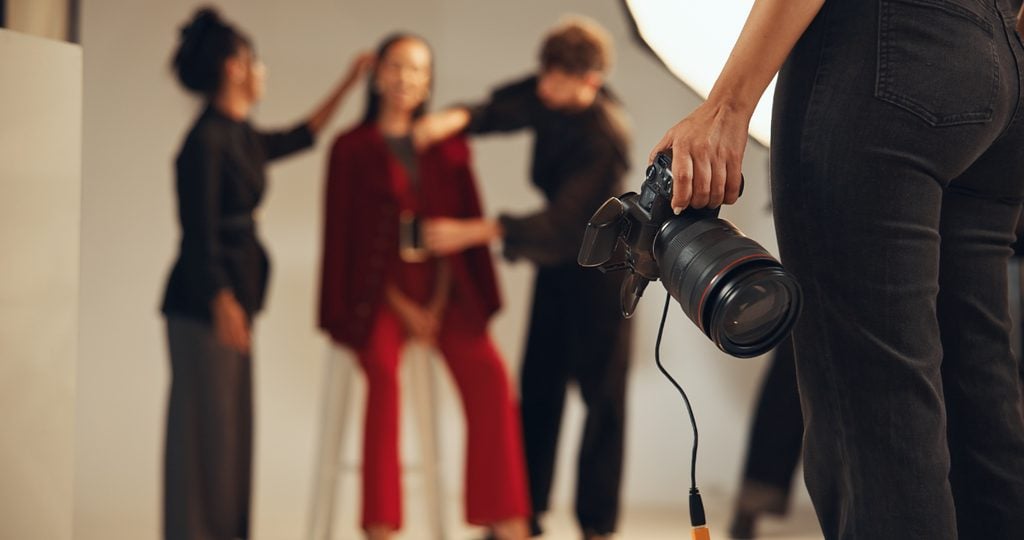
The question facing fashion now, then, is not whether images are “authentic” in the sense that they were taken through real glass, but whether they authentically and honestly represent the products and the brands they are supposed to depict. And that promise is one that the industry has very little time to make.
We understand that everyone is reaching for the same comparison this week. And The Interline is loathe to trot out one of the tiredest reference points in business writing, but there is something to a comparison between Getty and Kodak here.
As everyone has been told, ad infinitum, Kodak failed, in the long term, because it spent too long over-indexing on film while the world moved to digital photography. The operative term here, though, is “long term”. Kodak developed its first digital camera in 1975 and filed for bankruptcy in 2012. That collapse unfolded over decades. The interval between Stable Diffusion’s public release in August 2022 and Getty’s restructuring announcement is a little over four years.
There’s another element to consider, too: Kodak did, eventually participate in digital photography. Just as Getty participated in generative AI. Neither company has been fully blind to what was happening around it, but critically that awareness did nothing to guarantee that their original stock in trade was going to retain its value forever.
To be clear: The Interline agrees that people will keep wanting photographs of things that actually happened, and of products and surroundings that were really there. We have interviews coming with brand directors who feel, very explicitly, that way. We are less certain that wanting those things will be enough to sustain their production as viable competition for the generative alternative.