

Key Takeaways:
- Courts in different jurisdictions are beginning to support the idea that AI can learn from protected work without paying a licence fee. That represents a meaningful mindset shift for creators who were expecting copyright to force a market for training data.
- Despite confused headlines, Anthropic’s $1.5 billion settlement, paid out to a class of authors, was about piracy, not training. The message is that the way a lab acquires and retains work is more important than training on that work.
- To feed the content ecosystem, fashion puts an unusually rich record of its identity online. Campaigns, product pages, imagery and archives build the visibility brands need, while also creating material for AI to ingest.
Summarise and debate with AI:
Take the content and context of this article into a new, private debate with your AI chatbot of choice, as a prompt for your own thinking. (Requires an active account for ChatGPT or Claude. The Interline has no visibility into your conversations. AI can make mistakes.)
It’s no secret that LLMs are trained on the public internet, or that they routinely go out to the web to answer questions that require up-to-date information.
If you create content for that internet, as The Interline does, then you’ve been consciously signing a sort of devil’s bargain over the last few years. ChatGPT might lend some credence to your work through a citation. It might send some traffic your way. But in return it needs to ingest what you create in two ways: during pretraining, and by calling on indexes, crawlers, and scrapers at the time of inference.
The specifics of how language models interact with the web at runtime were covered extremely well in Ben’s interview with Malte Landwehr of Peec, and the ethics of AI training on creative content made by people is one of the areas we queried the industry on in our 2026 AI Survey, published today in the latest edition of our AI Report.
The commercial argument in favour of letting this happen is shaky, at least in The Interline’s opinion, but it does technically exist. People interacting with AI will be exposed to your content if the AI’s output pulls from or cites it. And in theory the traffic that this referral then sends your way will be ‘higher intent,’ since it comes from an active, multi-query conversation rather than a cold link.

But that argument has not, so far, been backed by much in the way of commercial structure or market-building. Unless you’re a big enough publisher or rightsholder to have been able (and willing) to sign a bespoke licensing agreement with an AI lab, then there’s no way to trade your creation of training material or search context for compensation in the way of direct referrals, royalties, or any other method.
All of this has hinged on the implied idea that, by making content available online, people and corporations were happily donating it to AI labs who, under the banner of “fair use” would make it part of their model weights, or part of the responses generated from fan-out search queries, and would then portion out a relatively measly amount of attention and audience when the original source surfaced in some form.
Before you read on...
Our weekly news analysis will always be available to read here at The Interline, but you can get it (along with notifications for new podcast episodes, events, and more) in your inbox by signing up to our mailing list.
For many content creators and publishers, this has felt like a temporary situation to be tolerated, rather than any kind of permanent entente. Between the launch of ChatGPT and today, numerous legal challenges have been mounted, and have steadily been working their way through the cogs of different regional jurisdictions, with lots of interested parties watching them progress.
These suits all have different targets and different angles, but they’re almost universally testing fundamentally the same core assumption: that AI training and citation is, according to AI labs, part of the copyright provision for “fair use” that covers content usage for education, investigative reporting, parody, criticism, and so on.

Two cases that fit under this aegis moved forward this week, in ways that won’t be good news for any companies, creators, or rightsholders who have been banking on the fair use argument being dismissed.
The first concerns OpenAI and ANI, one of India’s largest news agencies. And the initial findings suggest that training GPT-family models using ANI’s content is not prima facie considered copyright infringement at this stage. These early indications also found that ANI had not been able to demonstrate that ChatGPT (the application, not an individual model offered within it) had memorised and regurgitated its work, or that its outputs reproduced a substantial part of the original articles – both standards that would need to be met to show that AI training or inference-time-scraping represented an erosion of the market for that work.
The other is the latest turn in the case of Bartz and others (a class action group of authors) versus Anthropic, which made headlines again this week when it became the occasion for potentially the largest copyright award in American history, at a combined $1.5 billion.
Notably, while the authors involved in this action will now be receiving payments, those payments are not compensation for unlicensed usage of books in AI training; they relate to a $150,000 award per infringement for pirating those books and retaining them on Anthropic servers. The original fair use argument was settled last summer, with Judge Alsup comparing the process of AI training to a human reader consuming a text before then going on to create a new, unique output.
In both cases, which are far apart from one another geographically and in terms of plaintiff to be considered independent, the conclusion is the same: irrespective of whether work is fast-changing news or long-gestating novels, and whether it’s sold in paper form or distributed in an online daily, training AI on it appears to be protected and, as Judge Alsup put it last year, “transformative – spectacularly so”. In Indian legal language the appropriate wording is “fair dealing” rather than “fair use,” but the principle is similar.
Baked into this developing position is the understanding that AI training requires labs to take copies of works. That copying is considered fair game provided the work was legitimately acquired. By contrast, downloading and retaining a pirated copy of the same work, and keeping it in a permanent library, is, for want of a better word, just plain-old stealing.
The law, regardless of where it’s practiced, effectively cares a great deal about how a copy of a work came to live on a storage medium. It seems to care less about whether the author of that work deserves a share of any other work (derivative or otherwise) that then comes out of the building that storage was housed in.
As a publication, The Interline continues to make the conscious choice to allow scraping and training. Unlike a lot of outlets, we have remained staunchly free to read for our entire lifespan, and the only compromise we have made to our “everything free, all the time” principle is the gating of our 2026 reports, which otherwise represent a considerably bandwidth cost for us to continue serving to armies of bots.

We do continue to feel, though, that this is a one-sided trade. After all, a chatbot wouldn’t need to reproduce the whole body of one of our articles in order to provide the substantive value of it to someone discussing, say, digital product creation with Claude. And that person would then only have a dubious incentive to then visit this website and read the full piece. We cannot help but feel that value, nuance, debate, and a host of other things are lost in this exchange.
In every lawful sense, though, The Interline’s content is fair game and will remain that way for the foreseeable future.
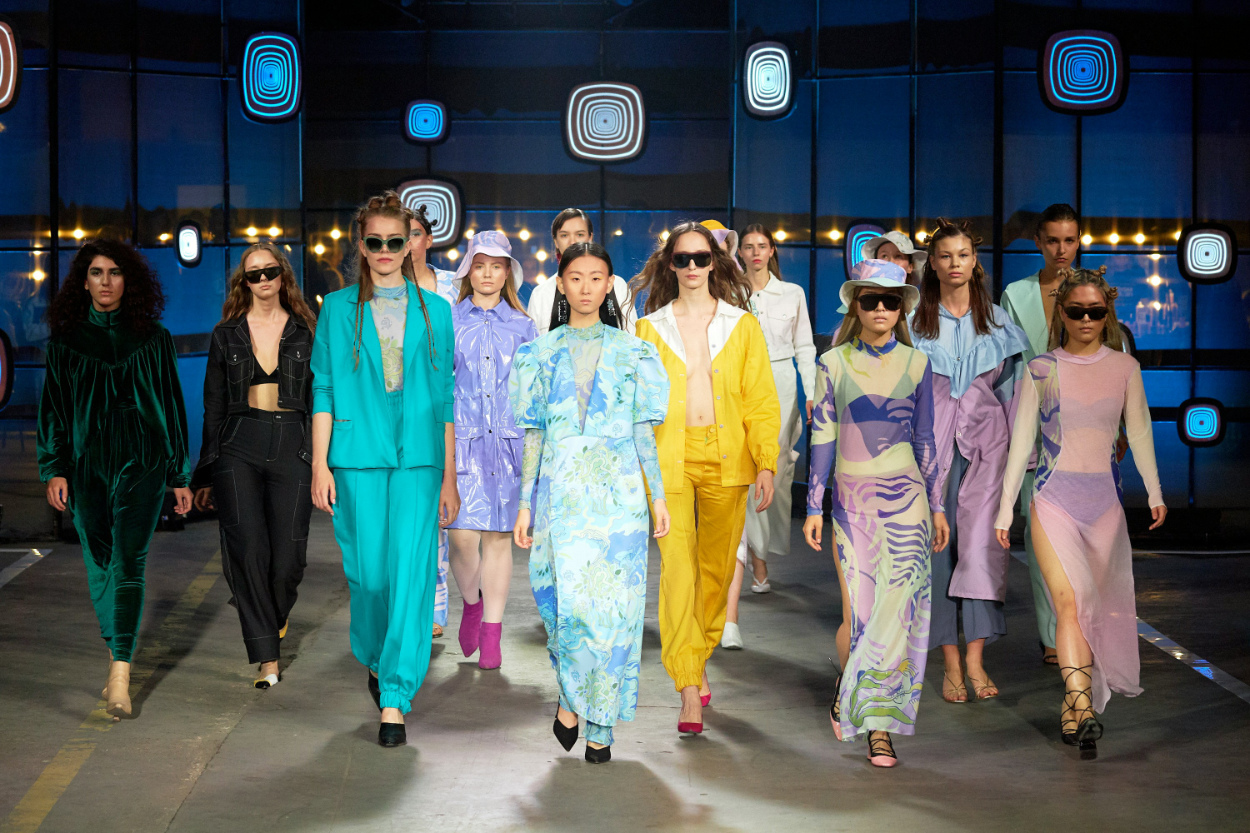
Fashion, whether brands realise it or not, is making the same bargain. And while we make use of stock images, commissioned art, and generative images to illustrate our stories, reports, and analysis, fashion brands and retailers put their stock-in-trade, product photography (real or otherwise) online in a similar fair game setup.
This is, after all, why anyone who wants to shop a brand can see their current catalogue. But this is also why anyone online can easily discover past collections, campaigns, product details, impact reports and so on. And the world of influencers and content creators are also routinely taking those products, images, and other assets and remixing, combining, and extrapolating from them.
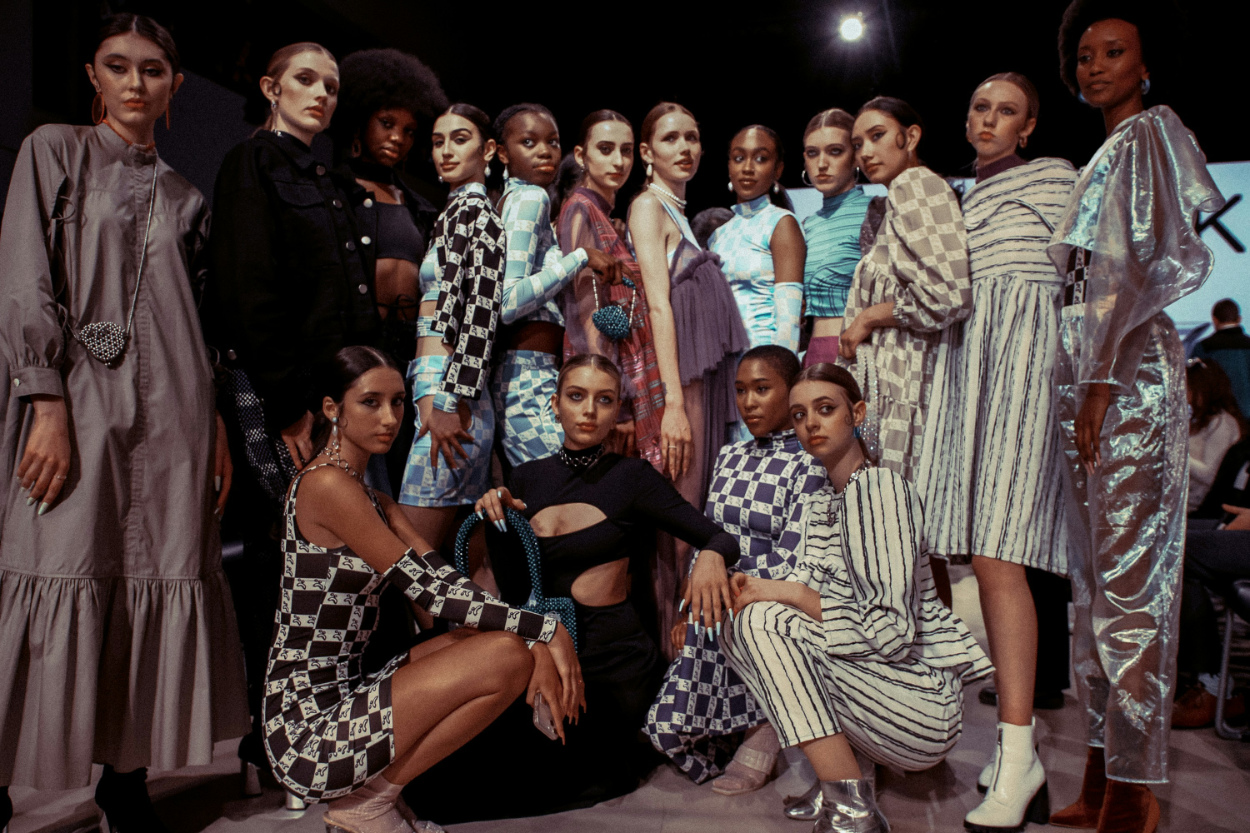
In a very real sense, the work involved in building and sustaining an online presence is the same effort that creates a potent training set. And while some portion of every brand’s online presence is governed by copyright (campaigns come to mind first), we need only look at the total free-for-all that is the early release wave of some image generators to see that guardrails are either absent or easy to break if someone wants to use AI to riff on those copyrighted materials. And as we’re seeing in the legal cases being filed by human models whose likenesses have been ‘extended’ by AI use, the more mature the models become, the less likely they are to produce the kind of obvious copy that would give a rightsholder an easy lever to assert ownership.
Fashion, then, is feeding two systems. One is the system that builds, maintains, and extends brand awareness in the social era. The other is the system that ingests, trains on, and then produces transformative works from those brands.
Absent the kind of legal protection that many thought would be coming, the question for the industry to ask itself is whether you can have one without the other. It seems not.
