Welcome back to The Interline Podcast. I’m recording today’s episode just a few days after we released The Interline’s AI Report 2026, and it’s coming about a week after I sat down and talked to Ara Kharazian, who is the lead economist at Ramp, about the economics of AI. So you might say I have AI on the brain, and you might be right. But the survey data in that same AI Report, not to mention the data that comes from the Ramp AI Index, also tells us that basically everybody in fashion does as well.
Whether it’s on their mind because they like it or because they hate it, more than 90% of the fashion professionals we’ve talked to use AI at home and at work. I’d encourage you to go and download the AI Report for a bit more context on all of that. So while I think we’ve put together a pretty good picture in the last couple of weeks of the fiscal, technical, creative and ethical perspectives fashion has on AI, there’s an extra component I wanted us to tackle to help sketch in the last bits of detail, and that’s the legal side.
If you listen to these shows often enough, or read The Interline regularly enough, you’ll have seen a pretty complicated legal picture emerging across intellectual property, modelling contracts and likenesses, regulations in different regions — the US, the EU and so on — provenance of training data, personal data capture and a whole lot more. Now, obviously, a lot of industries are wrestling with all of that, and with very similar questions about what it means, but I think fashion is uniquely exposed.
It produces a huge volume of visual content, which makes it a prime candidate for generative image workflows. But it also has sky-high return rates, a history of exclusionary casting, and a general issue with products not living up to the promises, claims and commitments that brands make — all of those being challenges that generative content could exacerbate rather than help with. And fashion is also trying to do a lot right now to better understand its customers, to offer them improved personalised experiences across channels and so on, all of which rely on the industry taking in a broader scope and diversity of data, and as a result expanding its risk surface and exposure.
So on top of the big cross-industry questions about fair use and labelling, fashion has legal AI questions that are all of its own. Today, I’m going to try and get through as many of those questions as I can with the help of somebody pretty well qualified to help me out, and that is Tony Lupo.
Tony is the Chairman of legal firm ArentFox Schiff. He’s a practising lawyer who also acts as US general counsel for a roster of global fashion and retail brands, including Diane von Furstenberg, Yves Saint Laurent, Valentino, Fila, Lacoste, Diesel and Christian Louboutin. Tony is well versed across all the areas I’ve just talked about and plenty more, in the US and internationally. So I think you’re going to find his perspective useful, and maybe surprisingly entertaining given the heavy subjects we’re about to get into.
You can’t see it, because this interview show is still audio-only for a little while longer, but Tony is also a painter, and he has some of his own work hanging up behind him. So you might just find he’s more sympathetic — albeit pragmatic — to the artist’s arguments than you might expect.
Finally, as a quick spoiler: Tony and I barely got through half of what I wanted to tackle in the time we had, so I’m hoping to bring him back on the show soon to pick up the rest. For now, though, here’s mine and Tony’s far-ranging conversation about the legal ramifications of AI for fashion.
Never miss an episode
Get notifications for new podcast episodes, plus our weekly news analysis, events, and more, delivered straight to your inbox.
NB. The transcript below has been lightly edited.

Right. Tony Lupo, welcome to The Interline Podcast. Thank you for making the time.
Not at all. The pleasure’s all mine.
I’ve been wanting to bring on somebody with your kind of profile for a while, and you have a very complete profile, which is actually the first thing I want to ask you about. So we start every one of these shows, as regular listeners or readers will know, with two things. We try and build a snapshot of what the guest’s day-to-day life looks like, and we ask them to define something that maybe seems simple but can have a bit of a sting in the tail.
We’ll start with the day-to-day. So you, weirdly like a lot of guests recently, seem to have a lot of jobs all rolled into one — and correct me if I miss any here. You’re the chairman of a legal firm of no small size and scope. You’re outside US general counsel for a long list of European luxury houses. You’re also in the media business, which is very weird because I’ve had this for a few concurrent guests now, in that you run Fashion Counsel, which is both a legal blog for the industry and also a platform that puts you in the interviewer seat — the seat that I’m in today — sometimes. And then finally your firm, ArentFox Schiff, is also advising both brands and hyperscalers on some of the emerging legal frontiers of AI, from intellectual property to land use.
Walk me through what you’re actually doing when you sit down in the morning, because it seems like it could be one of about 10 different things.
So I have the best job in the world. I’ve somehow been very lucky, or been able to manifest being able to work with clients that I want to work with. Originally I started working with tech companies. I worked with Apple — Steve Jobs, when he was alive, in particular. Then did a lot of work with Pixar.
And so I got into the heavy animation space. Then I got into fashion, interestingly enough, through Jobs, where he got a call from the head of a major fashion house who said, “I need a lawyer,” and so Jobs recommended me to this guy. I don’t want to mention the name of the house, because it ended up being one of my best clients ever — because everyone that worked there, every CEO, either left or got fired after two years. And so they populated all these other brands and brought me with them. As a result, now, from word of mouth really, I ended up getting a huge amount of the fashion industry coming and working with me: people leaving and taking me, and we’ve been able to keep the existing client as well.
But that background really has prepared me for the moment in time we’re in now, with the convergence of AI and where we are going. We have some start-up clients we’ve worked with that are going to be able to scale and compete with the big boys in a much faster way than they’ve ever been able to do before, without as much private equity investment — and then some of the bigger houses. And I also think being Italian really helps, because I love clothing. I like the whole style. I like everything.
And so, big secret: I’d probably do this for free.
Not something you want to give away — because then people will press that into service. So it seems like having a dream job gives you a lot of leeway over what you go after, and I agree, I think it’s a very exciting moment here.
Now I’ve got host prerogative, in that I’ve had the ability to pre-think a lot of this, and your expertise is sufficiently broad that I’m going to basically quiz you on a few different legal frontiers when it comes to the AI side of things and how it interacts with fashion. And for the definition question, I’ve picked what I think is maybe the easiest way into all of that, because it’s one that everybody can relate to. Fashion is a very visual industry; everybody has their own face, their own personality and their own likeness. And likeness is the word I want to try and get you to pin down. I could have substituted identity in there, but I need to remember I’m talking to a practising lawyer, so I should be specific about the words that I choose.
Now, what actually constitutes my likeness, or yours, and how valid are the frameworks and the precedents we already have that have protected likeness through the eras of film photography, digital photography, publishing, voice recording — and now this entire process of potential appropriation that can run through a closed, opaque pipeline of generative AI? I’m not famous enough to worry about a bunch of this, but in theory at least we’re now in a situation where someone’s face or voice or their acting style can be ingested as part of AI training runs, if they’re a big enough name to be in there, or it can be ingested through an end user of a generative workspace directly importing reference material — which could be pre-existing photography, candid or otherwise. And that means people’s likenesses can end up in final outputs both accidentally and on purpose, without much accountability.
I’ll get to the specifics of modelling contracts and releases in a bit, but in the broadest strokes I want to ask you whether we’re ready for what feels like an open season on likeness, legally speaking.
So likeness is an interesting term. Pre-AI days, we used a term called persona. That’s also protected. So it’s not even the likeness. You could go back in time where you had commercials where somebody used the persona of Woody Allen — not his likeness, but just that neurotic New Yorker type of persona. And he ended up suing, claiming they took his persona. There was a Bette Midler case as well, where they took a likeness of her voice.
So we’ve had a lot of precedent that we could rely upon for this. What’s different is how good the replication is going to be in the future. I did an interview with Michio Kaku, the noted physicist, and we were talking about where we think the future is going to be, and the singularity and the like. He had the position that you’re going to be able to have tons of video of a grandparent and put everything in there — and if the person’s still alive, videotape them all day long, so that when he passes you could have your virtual grandparent meeting your great-grandkids and answering questions.
So he thinks we’re going to go to that type of level. That’s a whole different thing than we could have ever imagined, right? A real synthetic representation, but it’s not real. But if you play with that and where we are now, the existing laws get you a long way to it. The big issue in many of those cases is access. In the two cases I mentioned before, the Woody Allen and the Bette Midler case, you had a situation where the defendant went to try to get permission and the artist said no. So that does not look good for a jury: oh, you went, and then you went around me and tried to create it. You’re not going for permission any more. You’re just going to say, make a likeness that sounds like Woody Allen. And so that’s just not going to happen.
There was another pretty interesting case that I like to cite. You remember the band Deee-Lite? There was a video game that came out — Sega, in Japan, had it — and they created this dance-studio type of game. They had a voluptuous character with red hair, tied up, and they asked her after the fact if she would do promos for it, and of course she sued. She ended up losing that case. In the US we have the First Amendment, and they felt that this was transformative enough — and it’s a big protection for a lot of artists, because nobody creates art originally. Everything is stolen to some degree, and any artist that says that’s not the case isn’t telling you the truth. Every artist at some point had to borrow from someone else to learn. So there are some protections to come close to something. And the reason copyright lawyers and right-of-publicity lawyers will always be in business is there’s no bright-line test. It’s: did you get too close or not?
And if it’s transformative enough, it’s okay. So if I took a likeness of a character I wanted but transformed it enough, then it would be sufficient. If I missed the mark, then it’s an infringement. So in this case, with Deee-Lite, they felt that because she did not wear one outfit alone — she wore a number of different outfits, she wasn’t really known for one particular look — she wasn’t able to establish her persona as one thing only, and Sega was able to win.
So that’s sort of existing law. I think what is happening now is that so many people are afraid of the deepfakes that are coming out, and everything else, especially as they’re going to influence elections. You could imagine an election coming out where the opponent comes out with a deepfake of somebody doing something horrendous, and the candidate can deny it happened — but once you view that, it’s kind of hard to unsee it. So they’re trying to put some protections in place.
Yes. And you said an interesting thing there, which is the sort of seeking permission versus seeking forgiveness afterwards. My impression, as a bit of an observer of the way that technology rolls out culturally and within particular industries, is that AI especially is in an ask-forgiveness mode rather than an ask-permission mode at the minute. A very glib generalisation there, but that does seem to be the way it’s operating.
You’re right, but remember, you’re allowed to take something if you transform it enough — because that is protected. You look at all the art. I do a lot of painting. You can trace the painters, how they evolved from who they took from.
So the question is, did you take enough, and what’s protectable? And remember, copyright law is a very narrow thing. It’s not given a lot of protection. It’s not like a patent, where if there are other ways you’re doing something you can stop it. In copyright law you have the First Amendment, you have fair use, you have a number of defences that are brought in to give leeway to artists — that they’re not always copying each other.
I mean, think about how many songs are mimicked. There’s a certain number of notes.
We’re going to stay in the US for this one, and we’re going to stay on likeness, or something approaching it, for this next one — because you just talked about the original persona standard. It almost seems to me like there are two strata, or two classes of citizen, when it comes to something like this. If you’re sufficiently famous and sufficiently known for one look, one style, that kind of thing, as you mentioned, then that’s one thing. If you fall into the more general class of people who are not known for wearing one thing, they’re not known for standing one type of way, then you have less of a leg to stand on.
And that brings me to probably the most pertinent area of likeness and persona here in fashion, which would be modelling.
Everyone has a publicity right. You, me, John Doe. So John Doe has just the same right that a celebrity does. It’s different for political figures — we can put a pin in that for a second — but everybody does.
The difference is: what are my damages? No one knows who I am, so they use my persona. Okay, you win — but what are the damages? You take a celebrity or a model and they’re going to say, well, I would have charged a million dollars for that. What would I charge? You have to have an objective standard of what the person would have charged. So everybody has this right; the question is what your damages are.
Okay. So that takes us to an interesting place for this next question, because I think within modelling you have the big famous people — people don’t index on supermodels as much these days — and then you have the more workaday catalogue and editorial kind of modelling, which is the bulk of what people see as shoppers. It’s what they see on social media, it’s what they see on product detail pages. They might see that there’s a model who wears the same thing for one brand and wears it for another brand, but generally they don’t know who that person is. And the market value for that person is not conflated; it’s not the same as it would be for a celebrity partnership.
So if we then think about the specific case I wanted to ask you about: this one was tested in the New York Supreme Court, and it was a model by the name of Francheska Pujols, who sued a value retailer called Rainbow. There are a bunch of quirks and allegations around defamation and so on in this one, but it did come out as a bit of a bellwether case, at least in the media, for what I’ll call AI extrapolation of existing modelling work. By which I mean where a model has done work for a retailer or a brand, so they have been paid under a contract, they have had photographs taken, and the brand or the retailer has then allegedly taken those and used them as inputs to generate new images of the same person — different poses, different settings, different garments, different compositions, things that the model claims they didn’t do, didn’t agree to and weren’t paid for. This isn’t the only instance of this, but it’s the one that came to mind.
Now, if I’m reading a bunch of this right, I think the retailer’s defence here is that they believe the model release that was signed granted them the right to alter, transform and composite the model’s likeness for advertising purposes. I haven’t looked at that release, and presumably you haven’t either, so it’s certainly possible there are specific clauses in it that covered these kinds of AI provisions. But it’s equally possible that this was just a boilerplate release with really broad wording, and what we’re maybe walking into is an era of loose interpretation that could then blow open even further and turn prior consent to photography into future-facing consent for generative AI. Is that a realistic fear? Am I over-reading it?
I think it’s a real fear, but I’ll be frank with you. I would advise every one of my clients — and I’ve represented some of the supermodels in the world, between all my work with Victoria’s Secret to the brands that, like you said, are just bringing in day-to-day models, journeyman models — I tell every one of my clients to make sure they have an agreement that gives you the right to make changes to it. So I want to set the universe up where I think you would agree with me, and most people would agree, that this is fair. I bring a model in to do a one-day shoot and I pay them for the day. And I tell the model, we’re going to shoot a number of different outfits on you. And I shoot the outfits, but I have a provision that says I get to modify this and change it. So then I go in and I don’t like the way a bra strap is hanging on the person. I’m going to use AI to delete it. I don’t think anybody would have an issue with that.
Then you go to the next step. Okay, I shot for the whole day, but you know that blue top and the brown — I don’t like it, I’m going to change it, because we have it also in red, to a red top. What I feel is very fair, and I think it should be fair to agreement, is that if you’re on that shoot for the day and I want to use AI to shave two or three hours off your modelling time, because I’m going to be able to replicate and put you in different backgrounds, then there’s no harm, no foul in that whatsoever. Where I think the other side of the equation is: you’re done with that day, and now I’m going to take your picture in perpetuity and use it going forward — I think that’s more problematic.
There was a really fascinating case that happened years ago with Taster’s Choice. You could easily see this happening. You had a situation in the US where they were going to change the whole can and they had an ad campaign going out. They had a face on the can. And at the last minute one of the execs said, we don’t like it. So they went forward and they looked at what was popular in Canada.
They found a guy that was on the can that looked good, and they said, let’s just use that picture, and they put it on the can. That model sat on the rights for ten years. And then all of a sudden he claims, oh, I just saw that, and I want a percentage of every can you’ve ever sold in the US. So that case went to court.
Now, Taster’s Choice — this is the lesson to be learned — didn’t have a very good agreement in Canada with this person. Didn’t specify territory, didn’t specify term or anything like that. So it was a very weak agreement. But also, as you can imagine, they had so many different ad campaigns that it was very hard to be able, at the last second, to pull that, to look at it and say, yes, that’s fine, we’re going to go out with it. That’s a lesson for the legal team: they have got to be better organised on that and catch it ahead of time. But many times it’s moving so fast it’s hard to do that.
The case ultimately — Taster’s Choice won at the end of the day, but they weren’t able to get an injunction, weren’t able to get that level of damages. But that sort of brings it to where we are today. You have a situation — and I do a lot of work in the film space as well — where I want the right to be able to take a model or an actor and digitise them, to be able to put them in a scene to save me time. The difference, and this is where I think people need to be thoughtful, is that once that project is done, I don’t get the rights to the persona after that.
And if I comped you for the project, and not on an hourly basis or something else like that, then I think that’s a fair outcome in the middle. Does that make sense?
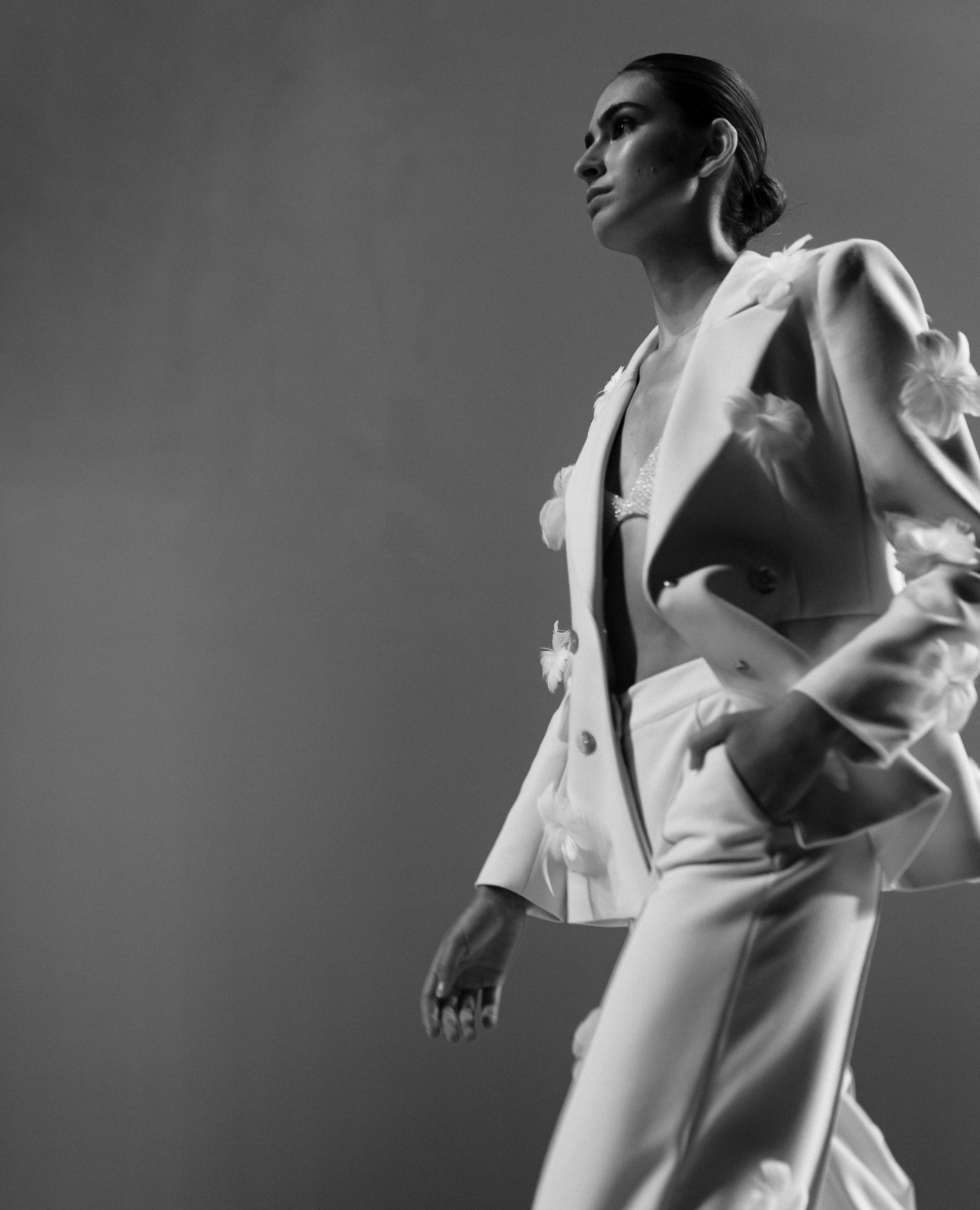
It does make sense. I think if I was a brand, or if I was a model — if I put myself on either side of that argument — I would wonder how to define a project for fashion modelling purposes. Traditionally, let’s just say if it was a location shoot, I think it’s fairly clear.
You want me to go to Paris, you want me to stand by the Seine, you want me to wear this, I go home afterwards. It’s very clear that anything that shows me not in Paris is outside the scope of that project. But if you think about a mass-market or a value retailer, something that sells a lot of very similar-looking products that doesn’t fall into well-defined collections, doesn’t fall into the kinds of clear editorial campaigns that are globetrotting — I think it’s harder to figure out what constitutes a project then.
You nailed it perfectly. It’s on the lawyers. Take a Macy’s. Macy’s needs to be tight on their agreement to say, hey, look, for the summer catalogue here, I’m shooting you in a number of things, but I have the right to use you in that catalogue in anything I want, if I want to synthesise it or make it. And then the model can negotiate the pricing on that — but they don’t get to use them for the winter catalogue.
Now, you also have SAG in there, remember. SAG plays an interesting part, because if there’s motion footage in there, SAG has a whole set of rules that you can’t negotiate around if you’re using a SAG model.
And SAG, for our international listeners, is the Screen Actors Guild, right?
Exactly. And if it’s used for a certain long period of time, then you have to pay it again. But the numbers are there. You know what your damages are going to be.
Okay. And so this one, I think, ends in a very interesting place, which is that there’s a whole lot of wording to figure out here.
And then it’s like — let me throw something more controversial at you, which is what I tell my clients. I would never hire a child model ever again for a basic shot. If you have a kids’ brand and you have one model that you really want, okay, that’s one thing. But kid models are a pain in the neck.
You have to get permission. There are a lot of things you have to go through to protect the company on that. I would only use AI for kids in scenes. I’d have a whole playbook where we took different kid models and then went forward. Now, it’s just too hard, it’s too expensive, you’re dealing with parents, you’re dealing with a lot of things, and I just don’t think it’s worth the squeeze to be bringing in kid models.
Fair enough. And I think we could spend a long time on just that, because you can drive a truck through it and say, well, at some point you can extend that logic to other areas. And you can also assess it from the other side: is child modelling a pathway to a career? If you shut that off…
As a brand, remember, you can’t enter an agreement with a minor. It’s voidable by the minor. So in order for it not to be, then you’ve got to get the parent. The cost of getting that locked down is huge.
And once again, you’re in Macy’s, you’re doing a shot, and there are the parents and there are two kids dressed in something. It could be any kids. You know what I mean?
Yes. It’s interesting, because the fashion industry rightly fixates on the overheads of traditional photography: you need a human model, you need a photographer, you need a stylist, you need a location, you need a make-up artist, you need lighting, and so on. And generative AI is cheaper and faster. I think into that mix we need to throw some of these legal headaches and those kinds of different questions.
Some will not touch any of that. Hermès is not going to play in that space. You have certain brands that are playing to a certain type of audience, and they don’t care — they’re going to do it the old-fashioned way. They like the authenticity, and their clients like it. You have other brands whose clients aren’t going to give a crap. And some of them — I mean, Prada’s latest campaign was all AI-based, right?
They created this whole beautiful AI campaign and people loved it, but it was also very clear that it was AI. It had human-animal creatures and stuff like that.
I remember the one with the giant birds.
Tony Lupo: Yes. Play what’s right — and if you’re the brand, you have to always pay attention to what your audience is going to do. You saw Levi’s got in trouble where they tried to use AI models, and they used diverse models.
Yes, exactly.
Got nailed for that, where they thought they were trying to do the right thing by using diverse models.
Yes, and I can see the argument. Their side was, well, we want to show more in the way of representation — and then the counter-argument from culture, rightly, is that’s not real representation, it’s fake representation.
Exactly.

We could spend a long time on this, but I do want to exercise my host prerogative and quiz you on some of the other bits here. So let’s move on to fair use, because I think this is an important argument when it comes to AI. I’m going to pick up a case that came roaring back into the headlines a couple of weeks ago. This is the one where a federal judge approved what’s apparently the largest class action copyright settlement in American history, between a large pool of authors of books and Anthropic, the company behind Claude. Anthropic was ordered to pay a combined $1.5 billion to that pool of people.
Now, the way I’ve seen a bunch of people choose to interpret this is that an AI company trained its models on copyrighted work it didn’t pay to license, it was slapped for it, and this is some kind of precedent — or maybe a punitive market being established — for the idea that you can’t train on copyrighted material, or it’s going to be prohibitively expensive or risky to do it. That’s not the reality. The actual fair use portion of that case was decided more than a year ago. Judge Alsup had ruled, in the summer of 2025, that training AI models on books was fair use, and it was fair use because of the transformation criteria that you mentioned earlier. That sort of ended up saying that the actual ingestion of copyrighted works for pre-training was solved; that’s not been an issue for twelve months. The monetary award here came from damages of up to $150,000 per work, and it stemmed from the fact that Anthropic allegedly pirated more than seven million books and kept those pirated books on its servers.
They’ve also famously bought a lot of books to destructively scan, so that’s not an issue. Now, correct me if I’m reading any of this wrong, but within the US at least, it seems like what we have here is a precedent being set for just old-fashioned piracy — which means don’t steal things, and if you do, certainly don’t keep them on the books. And rather than being a fair use issue, this is about record-keeping and provenance documentation.
You’re close, because fair use normally is supposed to apply when you have a legitimate copy of something. You got a legitimate copy and you did something with it. And there were a number of instances where those were not legitimate copies. They were pirated books.
But I will tell you, that case settled because Anthropic was trying to get money and they wanted to clean this headache up so they could get the money. It had nothing to do with the merits. They would have probably won that case if they went the distance — certainly on the fair use point with the legitimate copies. And when we’re talking about legitimate copies, let’s talk about if a human had the ability to super-read, and they went on open websites and they read every book and they gleaned something from it and they learned. None of us would argue that the fact they learned how to do something, or learned a formula, or learned a scientific method — that’s protectable.
That’s protected by not just fair use, but also the First Amendment. What the difference is here — and I don’t know if it’s going to be precedent for a lot, because I see other LLMs still fighting this, thinking that they’re going to prevail. Those pirated copies: I know that’s what it was said, but I don’t have the details on how they were acquired. Because if they were on a portion of somebody’s website that wasn’t locked, if you could actually just go and look at them and pull them and you put them in cache to stream them through — they should have deleted the cache immediately.
I think there’s a path here that this is all protected by fair use. Now, if they went through a closed page and they went behind the page and figured out how to get there, then that’s a problem. There’s a lot of case law on that. And they’ll have a problem with that.
As you know, a lot of these LLM models, when they started, were just gathering everything. They were eating everything in sight. So there wasn’t a lot of method. Now, I spend a lot of time questioning a lot of my AI clients on: let’s assume there’s an injunction that says you can’t use this any more. Can you reverse-engineer that to take it out and still have the LLM train on it?
If you say to your AI, hey, create me a thing that looks like Darth Vader — it has to know what Darth Vader is, right? So it had to read this. It had to see it somewhere, had to learn what Darth Vader is to do that. Then the test has always been, in copyright law: what is the output?
There was a very famous case on the Church of Scientology where these lawyers made a mistake and they put the Church of Scientology bible as an attachment to a court pleading, and they didn’t get it made confidential. The Washington Post went down and copied the whole thing — copied 100% of it. So no one could argue that you copied the whole bible and that that is not copyright infringement. But the reporter only published a synopsis of it. And so the court held, rightly so, that the initial copy is not the issue. It’s only what comes out. You need to do the initial copy to be able to read it. You have to look at what comes out. That’s no different from what we’re talking about here in the AI world — except that, if we’re being honest, the truth is this is going to devastate an industry.
This is not like the Washington Post going and copying your bible, or a book, to then be able to do excerpts on it. And I really do think the law is not prepared for this, because I think the existing law is probably going to favour the AI companies in a lot of ways. But the difference is it’s going to devastate an industry. So I think you’re going to see legislation try to come up to figure out how to plug this, to protect it.
The example I always give is that when I grew up, I was taught how to do black and white photography. So I worked in the darkroom. I learned how to dodge and burn. And along come digital cameras. And there are no more black and white photographers any more. That’s a novelty.
You can argue that we destroyed a whole industry from this, because of these digital cameras and Photoshop. But if you’re asking, was it better for society at the end of the day? I think the answer is yes — even though we destroyed some… there’s no more Ansel Adams in this. Now you don’t have photographers. You have a million editors using Photoshop. So people transform to a new type of thing. But at the end of the day, we lost a whole group of artists that don’t exist any more. I shoot infrared film. You can’t even buy it.
Sure. I think the thing I would point out — the difference for me — and I’m going to approach this as a publisher, as somebody who is part of that industry. We publish a free-to-read, open publication, and we’ve taken the attitude that we’re happy with scraping, because we would rather be cited in answers than not, and we’re not big enough to forge any kind of individual agreement with OpenAI or Anthropic or what have you.
The difference with the photography example, I think, is that there was still an incentive for people to shoot photos, and there was still an open market for people to go and consume those things. There was a commercial incentive there as well as the artistic one. The bit that I don’t think people are quite ready for is: if it does end up being the case that the way people interact with the web is through a mediating layer, through an LLM or what have you, and that’s where they ask the questions and that’s where they get the answers — then absent a market for licensing and royalties for training and content, there’s no incentive to keep writing. There’s no incentive to keep creating content. That, to me, is a difficult part of this.
No. And I’m going to push you on that a little bit, because I agree with you, but the law is not going to protect you. That’s why, if society feels that there should be a financial incentive to doing this, then they’re going to have to change the law a little bit to protect that. But I would pose the question. It was determined that people needed a financial incentive to create works, and so they came up with copyright law.
And copyright law now is crazy, because it says you have your life to protect it plus seventy-five years. That’s a long, long, long time. But on the protection side for the public, you have the First Amendment in the US and fair use saying you don’t get everything. I can make a book that’s very similar.
I mean, Tolkien — how many books have come out based on all those characters, not by name, but elves and doors and everything else? You’re entitled to a very narrow scope of protection on that. It’s not hard to transform certain things in writing, especially. So the balance for the public was that. And IP law, patent law and trademark law are meant to incentivise you to do something, and we’re going to reward you with a certain exclusivity period.
Now, my question for society, that I’ve been struggling with, is this. It took you five years of your life to invest in this, and to write it and to do everything. But if AI allows you to do it in a month, and you’re no longer a writer, you’re an editor — you’re like, I have an idea about doors and elves and blah, blah, blah, and I want it to follow this storyline. I like the writing styles of Stephen King, but I don’t want it to be infringing. Because you’re going to be able to ask the LLM at some point, the AI: I don’t want it to be infringing either.
And it’s going to be able to come back with texts that probably would be better than any lawyer at some point, that could tell you the similarity of the two. And so you no longer put four years into writing this, you put a couple of months down. And I get it — I paint all the time. I paint every weekend. You used the word artistic side. People are going to do whatever they want artistically, for their meditation, for their soul, no matter what.
It’s the financial piece, where you can’t make a living off it, that’s really going to be impacted. And so I think people are going to have to figure out how to make a living in a different manner.
I think you’re talking about diluting a market in two ways. You’re diluting it on the consumption end, because you can get — what was previously the established value of reading a long-form article in the New Yorker, for argument’s sake — you can get an AI summarisation of it. And is that as good for your purposes? It depends on what you valued from that. But you’re also talking about the ease of creation, and the speed and the scale of creation, which then ends up driving down the value and the price of the work that you put in at the beginning. So it seems like you’re exploding this from both sides.
This is a big issue for society to wrestle with.
It’s a societal issue, because I view it that you judge a society based on the art it creates. You look back in history, you’re judging a society on what type of art and technology — honestly, science and tech. And that’s how you judge how a society did. We do a lot of work with Elon Musk, and I follow a lot when he talks, and he’s viewing that you’re going to see content being created bespoke for you by the AI, and you’re going to have your iPad or whatever tool you’re using and you’re going to be like, make me a movie about this.
And it’s going to go to consumers. I’m aligned with you that society needs to reward and incentivise artists, because that is the value of a society as far as I’m concerned. But I will tell you, consumers, especially younger consumers, aren’t going to care. My son went to see this virtual Japanese blue-haired woman sing…
Hatsune Miku.
Yes. This isn’t a real woman. You don’t know anything behind her, but they’re paying big money to go to a concert, to dress up in cosplay, to watch this. And you’re like, okay. There’s this younger generation. I agree with you — they have to know it’s AI or virtual, but I’m not sure they’re going to care enough. I also don’t think young people care about their privacy. People say, oh, we have to protect them. I think if you told a young person it was going to take longer to find their friends because of the privacy process they had to go through, they’d be like, I don’t care.
I would agree with that.
There’s a difference. We’re of a different generation. This next generation — I’m not sure the values that we have are going to translate to that generation. And if they can get their content, create good content — let’s just make an assumption that it’s going to be good content, and it can be done automatically by the tools because of what they’ve learned. I want to watch Dungeons & Dragons fantasy, like Lord of the Rings, and it’s creating content for you, or gaming for you. We’re going to be in a different place.
There was an interview last week with Elon Musk and The Economist where he was talking about how, in ten years, he thinks AI is going to be in a position where it’s going to be running most of the time — including his company — making these decisions. And yet there’ll be this amazing abundance, he calls it, of content, and everything we’re going to be able to get at a much lower price level.
I’m more of a — anyone who listens to the show enough will put me in the cynical bracket from that point of view. I don’t think history is very kind to the idea that wealth creation spreads out. I think history provides more evidence that it accrues to the wealth holders over time.
There’s no question. There’s no question that there are going to be some multibillionaires, and we’re going to lose a lot of our millionaires. I do think that’s going to happen. We’re at that point in history where we’re on the cusp of seeing something that’s never been seen before. It’s an amazing time.
I think that’s right. So I’m going to compress a few questions into one here, because I’m aware of time and I don’t want to occupy you for the entire day. Stepping outside the US for a minute: what’s your take on some of the regulations and legislation around AI, particularly the EU AI Act?
So deepfakes are an area you’ve talked about before. I think the deepfake area is one of the most dangerous things we have as humans, because we have a hard time separating once we’ve seen this. No matter what we’ve been told, it will have serious influence on us. So I understand what the EU is trying to do.
The difference with the EU and the US is, remember, the First Amendment is a local ordinance. It only applies in the US. You don’t have that in other jurisdictions from a protection standpoint. There’s strict liability for defamation in the UK. If you make a statement that is defamatory against the Queen of England or something, it’s strict liability. In the US, they’re a public figure — you’re allowed a lot more latitude on this.
And so the EU definition is much broader than the US, and it goes for fictional people as well, not just people that existed. Which makes sense a little bit. Imagine I’m doing an endorsement of a product and I have an AI saying, oh, this is my favourite face cream, it reduces my ageing. In the US, the FTC would also require, in the influencer guidelines, that you identify that this is AI. So we have another way of getting at it. But I think what the EU is trying to do is really make it clear that you have to disclose this, because people will not be able to tell — and the penalties are pretty substantial.
Let’s talk about some of the legal implications of the consumer-facing technology that fashion brands and retailers are excited about deploying at the moment, because I think all of them, to some extent, broaden the scope of the data that changes hands between brands and consumers — and as a result they extend the risk surface, or at least the surface of risks I should be aware of as a brand. Specifically, and I know these are things you’ve been thinking about with your clients: virtual mirrors, virtual try-on, omnichannel — so the need to offer seamless experiences across different channels, physical, online, social and so on, which requires you to have a customer profile that’s portable and consistent between them — and then personalisation, advertising and outreach.
The way I see it, fashion is collecting a lot more personally identifiable or personally attributable data than it ever has before, and that seems like it’s only going to scale up as the industry goes after some of these things. What’s your take on the risk exposure there, and where do you think this goes?
So fashion companies are looking at using AI tools for every aspect, to reduce costs. As you know, most fashion clients have thin margins, so whatever they can do to help on the margins has been incredibly helpful. Everything from things you wouldn’t think about, like logistics. You have somebody at your company who has a history, who knows that black dresses are going to sell better in New York and red dresses are going to sell better in LA. But with AI now, you’re going to be able to do it in an instant — to divert those products, looking at it and making predictions on where these products are being sold, instead of relying on somebody else.
You’re going to look at what your competitors are doing, how many red dresses they have for sale, how many black dresses. So that’s a huge saving. Then you have other companies that are going to have one colour of dress in their store in all sizes, but not have all the different colours. You’re going to try it on and go in front of a virtual mirror and say, let me see what the purple looks like. Oh, I like that better. I don’t have to have it in stock right there.
I’ll then say, it’ll be shipped to your house in two hours, or however long it takes, and you’ll be able to get it — and it’s going to save a lot more inventory and waste of products. So those are positive experiences, I think, for the consumers and for the companies, in terms of the money they’re saving, because wasted inventory, unsold stuff, is a problem. And in the EU you can’t even destroy it. So that’s underneath.
Now, the virtual mirrors — I also see it from an advertising standpoint. I was in New York the other day, walking by a storefront, and they had a mirror on, and you walked by it and all of a sudden I had a puffer jacket on. You get to see — I mean, how amazing is that? It put a puffer jacket on me as I walked by. Well, it’s capturing my image, clearly. It’s putting a puffer jacket on that looks my size — but boy, what a great advertisement that was for me.
I think omnichannel is going to be the wave of the future if you can get it down and you can get consumers comfortable. So, an example: imagine I’m at Armani and I buy black jeans in New York, and I’m part of the rewards programme and using the app, and you’re able to consolidate my data. And then I’m in Denver and I buy white jeans and I return them, and then I’m in LA and I buy black jeans, and then I’m walking by the store in New York and it reads my phone. Macy’s used iBeacon to do this, to say, oh, we see you’re walking by the store, come in for a discount.
But let’s go to the next level. Let’s assume my app is open and it says, oh, we see, Mr Lupo, that you’re walking by — come in, we have those black jeans you like on sale. Would you like a virtual assistant to come and help you? I would like a virtual assistant. So I click on it. A lot of where things go wrong is letting the customer know and sign into this process, because it can be very spooky, too. But then I go in and it’s following me throughout the store, and I go to pick up a pair of white jeans and the RFID code gives a signal. The virtual assistant now tells me, hey, put those white jeans down, they make your backside look big. So I put them away — but the black jeans are back there on the left, or try these dark blue ones.
Companies are going to love that. And I think consumers, once they get comfortable with it, are going to love it as well. If it’s done wrong, it’s way too creepy for people. But I think if you had a virtual assistant — a stylist, for lack of a better term — people would go for that. And I have clients that are really investigating this and trying to figure out how to come out on the right side of it, because they’re going to get a lot more sales, consumers are going to be a lot happier, and they’re not going to have the returns.
The last area on this is that I don’t want to forget about beauty. I have a lot of beauty clients, and so you have different skin tones and everything else, and you’re putting it on through these virtual mirrors, including on your phone: what does this lipstick look like? Well, they’ve got to get that close, right? Because you return a lipstick — 30% of products are returned. What do you do with a returned lipstick? It’s not going to be used again. You tried it. So the more accuracy I can get, and use the AI and the data to get that on face tones, the better off I’m going to be. That’s where I see a lot of companies trying to use AI, because one of the biggest expenses they have is returns. And that’s not good for society, when you can’t do anything with it.
No, I agree with that. And to your earlier point, there’s a generation that doesn’t care so much and that will part with personal data, and some measure of risk exposure, on their own to get that convenience and that level of service — and then there’s a generation that won’t, and that sees it as a different type of bargain.
And the brands will know that. Like I said, Hermès and other brands are never going to play that, but other brands that are more adventurous — Gucci is really leaning into a lot of this stuff. You have to know your audience. Are you going to annoy them, or are they going to really lean into it? Diesel’s a good one. They have probably the most forward-thinking AI experience out there.
I interviewed the CEO of Monogrid in Italy, the agency that did a bunch of creative work with Diesel, actually, and that came up. Uncannily, I literally had an email pop up in the background just then from the company that made my glasses, to tell me that my personal data had leaked through a logistics partner. Which is great — that’s evidence of how this works on the other side.
I’ve got one final question for you, Tony. I’ve sat on this for a while and I don’t understand it, and I’m hoping you can help me understand it. Fashion brands in aggregate are some of the world’s most litigious IP holders. Brands will go after small-scale hustlers selling counterfeits in a car park just as readily as they’ll go after another multinational brand that might be infringing on their trade dress even slightly.
But every single big closed-weights or open-weights image or video generation model has been trained on the entire visual history of every fashion brand, for the reasons we already talked about — product detail page images, campaign photography and so on. Most of those models either have very weak guardrails or basically non-existent guardrails. It’s trivial to get a Nike product, or a Nike-looking product, or a swoosh in a generative output even if you don’t ask for it — or an Hermès logo, to your point, or a Gucci logo. I’ve watched the recording industry, the RIAA in America, go to war with this. The publishing sector. Individual authors, artists.
Fashion seems to have just sat this out, and I don’t think I get why. I can see that maybe they’re waiting for a market for licensing content to emerge. I can see that maybe they just see it as more distribution and more awareness. But if I’m a household-name brand, why would I turn a blind eye to this? What am I missing?
So what’s kind of interesting, that most people don’t appreciate, is that AI is not going to be that affected by trademark. AI is going to eat copyright. And most fashion brands don’t sue on copyright, they sue on trademark. So you create something, and it creates something that has the trade dress, the style of a shoe — I can still sue you. It doesn’t matter.
I have a shoe company I represent in Milan that told me they have 30 designers who come up with the new colours of their shoe and everything else every year. This guy took his designs from ’21, ’22, ’23 and ’24, dumped them in and asked the LLM to create what they should be for ’25. It came up with 50 designs. He had to go back and add different colours, and he said he was able to get to prototype three months faster than you would have been able to before, and with a lot less people and expense. Whatever the output is, if you come out with something and you make a product based on it, and if it infringes my trademark, I can still go after you.
So I think a lot of the brands feel they have a vehicle to attack people. And on the copyright side, it’s not as strong.
So it’s a case of: what am I going to use this output to create? That’s the artefact, that’s the infringing artefact, rather than the image.
Exactly — not the content it created.
Tony, thank you for letting me quiz you on so many different things today. I had about 10 other things that we didn’t get to, so at some point I would love to have you back on to keep an eye on the emerging landscape here. I’d encourage anyone listening to this to check out your Fashion Counsel blog. I’ve really enjoyed this talk — thanks for your time.
No, I appreciate it. We’re at the cutting edge of a real revolutionary moment for humankind as a whole, and we’re talking about it with art and the like — and that’s, as I said, that’s how you measure a society.
Tony, thank you.
Thank you.
And that’s the end of my discussion with Tony. I’ll keep this brief, because this episode went way over. I think people are still stuck on the idea of fair use when it comes to AI training — because, well, I have been, and because for most people that’s the industry’s original sin. Like Tony said, you don’t get frontier LLMs like we have them today without ingesting the entire internet permissionlessly, decimating several industries in the process, and asking for forgiveness later. But the thing I want you to take away from this week’s show isn’t any kind of fatalism, or any kind of advice to just give up on resisting any side of AI, or on preparing for the legal consequences and ramifications of it.
Yes, fair use — or fair dealing, if we look at the recent OpenAI case in India — seems to be broadly getting decided in the AI labs’ favour. But there’s still a lot to be decided in other areas. And creatives and companies that don’t advocate for themselves, and prepare, and start updating their legal postures in photography, sustainability communications, personalisation and a host of other frontiers, do stand a real risk of falling behind the times here.
I’m going to be back next week with both the next edition of The Edit with Grace — which is our weekly quickfire news analysis show, comes out on a Tuesday, less than twenty-five minutes, a great complement for your morning commute — and I’m going to have something very different on the interview show that’s coming next Thursday. I think you’re going to enjoy all of it.
So for now, I’ll speak to you again really soon.