
[Featured image depicting Meta’s Muse agent mascot, Jolly.]
Key Takeaways:
- A friendly face and a fun new potential device category are the standard-bearers for the promise of “personal superintelligence,” which sounds more grandiose than the current reality: everyday automation and shopping assistance.
- With AI already influencing more than 40% of in-store purchasing decisions, and potentially ushering in a wave of “showrooming,” greater adoption of AI agents capable of shopping could fast-track fashion’s AEO / GEO strategies.
- While big banks are concerned about insecurities on the payments side of agentic shopping, the far bigger concerns remain the influence that friendly AI can exert over consumers’ purchasing behaviours, and the incentives that the world’s biggest advertising platform-holder has to encourage transactions to take place within its closed loop.
Summarise and debate with AI:
Take the content and context of this article into a new, private debate with your AI chatbot of choice, as a prompt for your own thinking. (Requires an active account for Claude; works without login for ChatGPT, Perplexity, and Gemini. The Interline has no visibility into your conversations.)
We’ll get this out of the way up-front: The Interline is all in favour of cute mascots. Just a few weeks ago, the team tried (and failed) to find enough of a technology slant to allow us to dedicate a segment of The Edit – our weekly quickfire news analysis show – to Niles, the new Crocs mascot. And at least one member of the team has gone to the bother of “hatching” a personalised pet to keep tabs on the agents they have running in Codex.
There’s a complicated conversation about the infantilisation of culture and media that’s way above the paygrade of this weekly analysis, but broadly speaking we’re not any more immune to the trend towards cuteness and coziness than you are.

So when Meta put a formal name on the mascot for their Muse agent (which was reported on Monday to be outpacing the first furlong of ChatGPT’s much-analysed journey to becoming the ‘fastest-growing consumer application’) we put aside some of our trademark pragmatism / cynicism, and got on board with the fact that Jolly, as he’s now known, is pretty neat. He has a fireman’s outfit!
But given that Jolly is also the face of a fast-coming wave of questions about the mechanics, the incentives, and the risks of AI agents, and especially agentic shopping, that pragmatism came bouncing back quickly. Because as cute as that little guy is, the model and the harness underneath him, the device ecosystem around him, and the longer-term platform play he’s unwillingly fronting are all things that fashion needs to think deeply about.
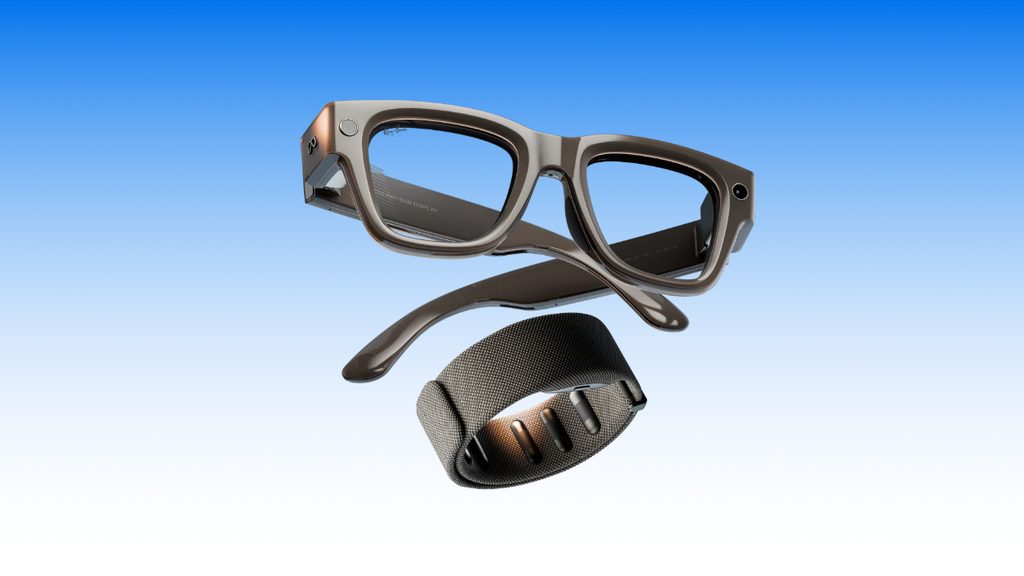
As basic grounding: this week was Meta’s annual Connect event. At it, the company released a diversifying set of new smart glasses (‘AI glasses’ seems to be the preferred nomenclature right now), with a new audio-only version eschewing the camera and trying to sidestep the growing unease people have with being constantly recorded.
But as important a category as smart glasses are becoming for fashion, with sales apparently up 125% year over year, that hardware played second fiddle at the event to Muse itself. That product launched just a couple of weeks ago, and is currently available in the United States only, which makes its ascendance in the App Store charts impressive as validation of ‘Openclaw for normal people’ as a winning strategy. We can only assume that the agenda for Meta Connect came together very late in the game, given that Muse (and Jolly, by extension) was all over the show, but it seems increasingly likely that Meta is early to productising the idea that chatting with a virtual friend is the interface of the future.
Why does any of this matter to fashion, though?
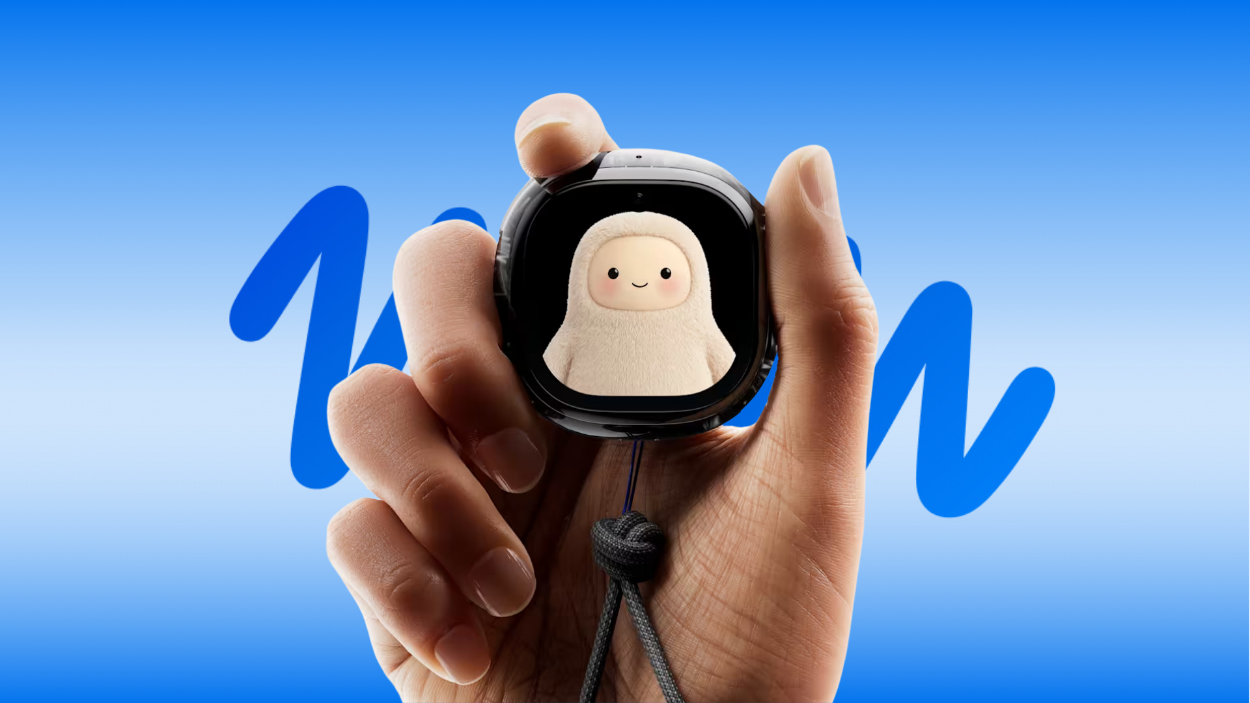
First: Jolly is not just the face of an app on your phone or desktop; he’s in your ear, if you happen to own a pair of Meta’s glasses, and before the holiday retail season he’s going to be waving at you from a bag charm with an integrated 5G modem, offering people a way to interact with a friendly AI agent without needing to use their phone at all.
Glasses are obviously a fashion item, and while Meta and EssilorLuxxotica currently control the supply there, there’s every reason to think that progressive miniaturisation, combined with additive manufacturing, could see smart glasses open up a new competitive frontier in eyewear.
That bag charm? If it takes off, expect to see an accessories / shell ecosystem for people’s Muses, along with attach points being designed into a new wave of bags. Think far enough back and iPod pockets and headphone wire grommets are the easiest analogues, but fashion has a long history of incorporating utility into mass market garments, and there’s potentially no better example of utility than the promised “personal superintelligence” that could be packed into a puck with a screen and a little guy in a fireman’s hat smiling out of it.
But the devices are just the tip of the spear here. Behind every customisable instantiation of Jolly is what Meta refers to as a secure Linux virtual machine, with a desktop-class browser, that the agent can use to complete tasks on the user’s behalf. The scope of those tasks is limited to what can be accomplished in a browser and with connectors to popular services like Gmail (although Muse desktop can do ‘computer use’ the same way that Claude Desktop and Codex can), but firmly within that scope is agentic shopping – something that Meta showcased across the Connect event, and that’s a major fixture of the Muse product page.
Muse will, reactively and proactively, buy things, hunt for deals, and a spectrum of other shopping-related tasks. Set it a goal to buy something when it hits a price threshold, and it will (at least in theory) take that action when the trigger is reached.
This, in The Interline’s opinion, matters because agentic shopping as it currently stands is both half-baked an unevenly distributed. As capable as frontier models like GPT-6 Astra and Claude Opus 5.5 clearly are, asking them to make a relatively mundane purchase can be an exercise in frustration. As an easy benchmark, this week The Interline asked Astra to order some more coffee beans for the office, which it duly delegated to a cheaper sub-agent and went about doing. It correctly identified the roastery we order from, found our last batches of beans from an email order confirmation, and went to re-order them – even going as far as to identify that one of the limited roasts we’d previously ordered was now out of stock, and then browsing the catalogue to find something close to that flavour profile.
Great! Except that it did all this in a cloud browser that it couldn’t then expose to the end user. And it couldn’t complete the checkout thanks to a login pop-up modal that the LLM couldn’t interact with, and neither could we. Attempts to recreate the same session and cart in a local browser also failed, because cloud projects can’t interact with local software in the same way as on-device projects.
This is a very basic example of the so-called jagged edge in AI, and it’s also representative of the pitfalls that users continue to encounter when they try delegating shopping tasks to AI. Some of which can be solved by giving an agent its own computer and allowing the user to provide logins (which is the approach that Grok Bot takes), since the whole loop can be self-contained. Some more of which can be addressed by building connectors directly with payment providers and retailers.
In the case of Muse, Meta is taking a kitchen-sink approach. The company has partnered with Stripe and Shopify to streamline the checkout process in the overwhelming number of stores that use those backends, and we have to imagine that services like Link and Paypal are on the way. And it’s also forged agreements with US retailers like GAP, Dick’s Sporting Goods, Walmart, and Sephora to allow Muse to transact directly on those stores.
None of this is fundamentally different to the similar partnerships, plugins, and “apps” that OpenAI has added to ChatGPT, but paired with the sheer accessibility, adorability, and (current) free-in-most-cases affordability, Muse is clearly poised to change, or at least accelerate things – provided Meta’s own brand doesn’t get in the way.

The first tangible way we expect that change to show up is in a new era of so-called ‘showrooming’. Under the traditional definition, showrooming is the practice of a customer going into a retail store to explore the range, and then using their phone to find either the same products at a lower price or in a size that’s not available in-store, or to identify close stylistic matches from competitive brands.
Showrooming has existed for a decade or more, but a study released this week found that AI has already kicked it into a higher gear. According to research conducted by MACH Alliance, AI already “influences” more than 40% of all in-store shopping, or 60%+ if the cohort is narrowed to just Generation Z shoppers. What ‘influence’ means in this context isn’t well-specified, but the natural assumption is that it means chatting to an AI about the product the person is looking at, either to use it as a sounding board for style advice or, depending on the capabilities of the agent, to have it find alternatives in a kind of showrooming-on-steroids.
The study found that nearly 18% of younger people have also performed this kind of in-store AI debating by interacting with a wearable, like a pair of smart glasses, so it’s a short hop to picturing a world where both the population-wide and the demographic-specific shares of people browsing in-store with an AI charm clipped to their bag increase.
And in that world, brands and retailers will find themselves rapidly needing to fast-track their GEO / AEO strategies. There is, after all, no worse time to find out that a competitor ranks more highly than you in LLM recommendations for a hero product category than the moment your target customer is already dwelling at your shelves.
The second way we expect this kind of change to become visible is in a new era of risk, although the definition of ‘risk’ is a matter of perspective.
This week a panel of old guard banks issued a report warning that agentic shopping opens up users to scams and fraud, and that enthusiasm for the technology is outpacing its safeguards.
According to Reuters reporting on the group statement, the top risks include “AI agents requesting customers’ card details and entering them directly into websites, or steering users towards payment methods that offer weaker protections”.
Some of this reads like existing institutions calling for a new frontier to be folded into existing regulations, but The Interline reads “weaker protections” in a behavioural sense; we have written and spoken multiple times about the idea of persuasive AI encouraging people to make purchases, and it takes very little imagination to see how a funny, yeti-looking mascot on a bag charm can make that kind of persuasion even more problematic.
Does fashion really want a world where young people can walk into their stores, chatting to an avatar in the palm of their hand, and then make a purchase using deferred payment credit?

And this is just looking at physical stores. This week also saw the next broadside in major marketplaces wanting to block agentic commerce as a rule. Amazon blocked Muse itself, using a different justification to the one it used for its previous (failed) attempt to block Perplexity from using browser automation to discover products and transact for shoppers.
The Interline does not expect these kinds of bans to last – especially if more intuitive takes on personal AI agents wind up being launched this coming week from OpenAI as part of that company’s DevDay. Friendly apps, fuzzy faces, and probably even more dedicated AI devices will fling the doors to universal agentic commerce open through critical mass.
But, finally, this change will serve as a reminder that, of all companies, it’s ironic that Meta is seemingly ahead of the agentic shopping game. While it’s true that any agentic system given sufficient access to personally identifiable information, and to personal services like email, calendar, and banking, could eventually make a mistake or expose the user to risk, the more insidious incentive is for the company already on the hook for billions in damages for knowingly providing harmful applications to… run the same playbook again.
And, just as was the case last time, that incentive comes from advertising. Meta makes its money by being the world’s biggest digital advertiser, and the company’s reputation certainly doesn’t assuage any fears that Muse could wind up recommending brands that advertise through the Meta programmatic ad stack over ones that don’t.
For all the criticisms levelled at OpenAI for the way that company has approached integrating ads into ChatGPT (something that went even further just last week with new tools for creating “advertiser-sponsored agents”) that lab does not own the machinery of online advertising already, which makes it a relatively low-risk custodian of agentic shopping.
Jolly, by comparison, might be cute. But whose payroll is he really on?
