
Hey. Welcome back to The Interline Podcast. I don’t know if this is going to surprise you or not. Probably not. But I’m someone who enjoys turning their life into structured data.
Some of that manifests itself in the way I approach files and folders. Everything I’ve ever worked on for my entire sixteen, going on seventeen-year history in this industry is meticulously organised, with a nested hierarchy and multiple layers of redundancy. Whereas the younger people I’ve worked with have a, let’s call it, faster and looser logic to the way they name and store things.
But it’s not just files. Anything I do, I like to have a kind of meta layer to it. Back when we had DVDs, I didn’t just have them displayed in a structured fashion. I did have that, to be clear. I also had an accompanying spreadsheet that catalogued all the films I owned, who they were directed by, who they were starring, and so on.
I’ve done the same for books in my time. I’ve done it for CDs, strength training, writing and reading. You name a real-world thing, and I have, at some point, created a spreadsheet or a database or several relational databases about it.
Partly, I think that’s just the way I’m wired. I know a few other people who are wired that way as well. But mostly, I do it because I think you can architect some cool things on top of that kind of data once you have it.
What you end up with is not just a dry catalogue. You get insights about yourself, about the things you own, the things you like, the relationships between those things. Those are insights you wouldn’t have had if you’d never done the quantification exercise to begin with.
I also see this kind of behaviour becoming more common as AI usage ticks upwards. I feel less weird every time I read an article or a blog post about this. The kind of always-on agents that Grace and I have spoken about on The Edit a few times this year get infinitely better if you overcome the mental-ethical hurdle and give them access to as much of your life as you’re comfortable providing.
In a very literal sense, if you’re already the kind of person who makes their life readable to machines as a matter of course, you’re the kind of person who’s not just predisposed to use AI, but also to get better results out of it. But the big barrier is getting people who aren’t like me, people who don’t already enjoy quantifying their life, to do that kind of exercise.
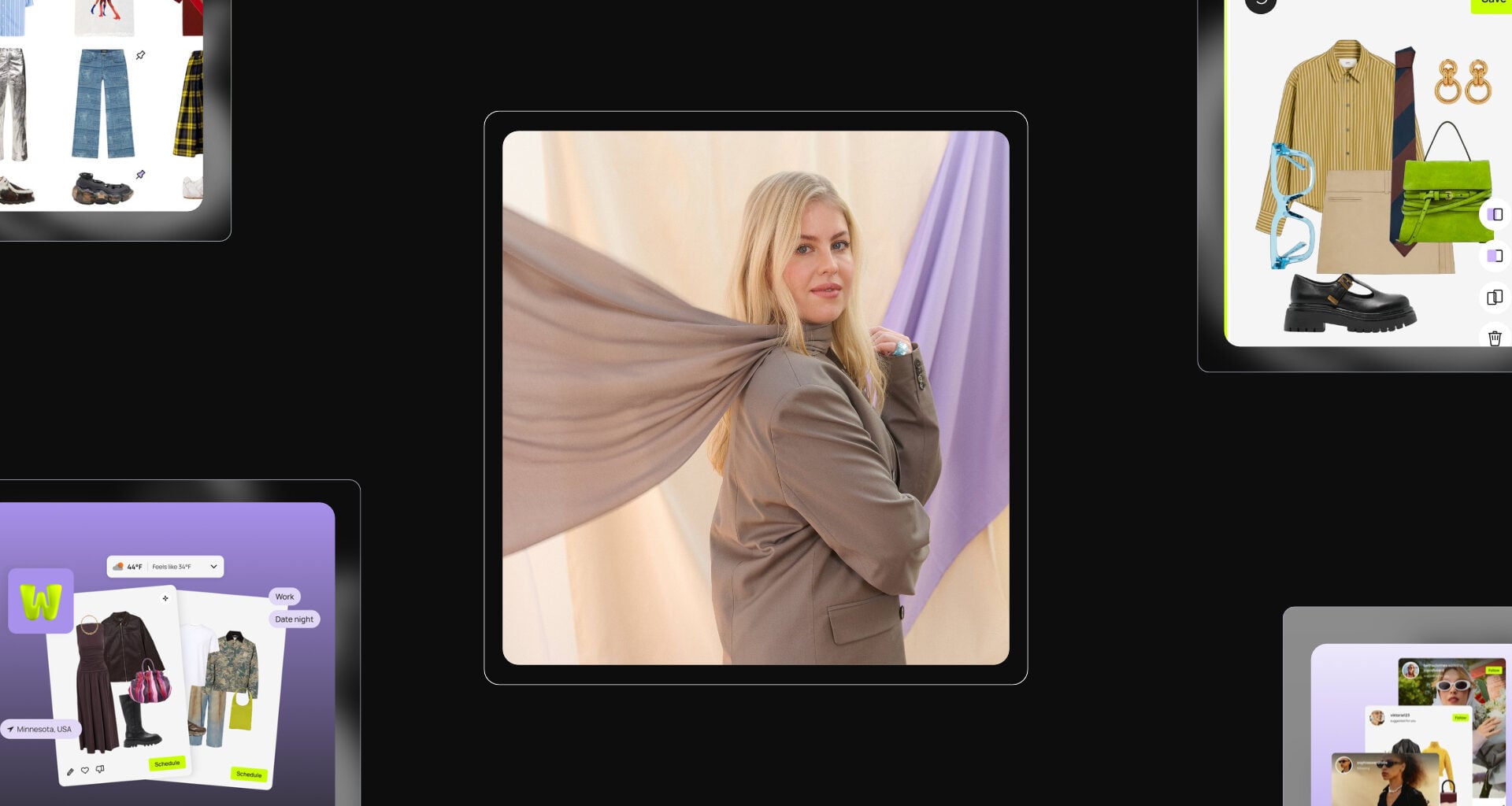
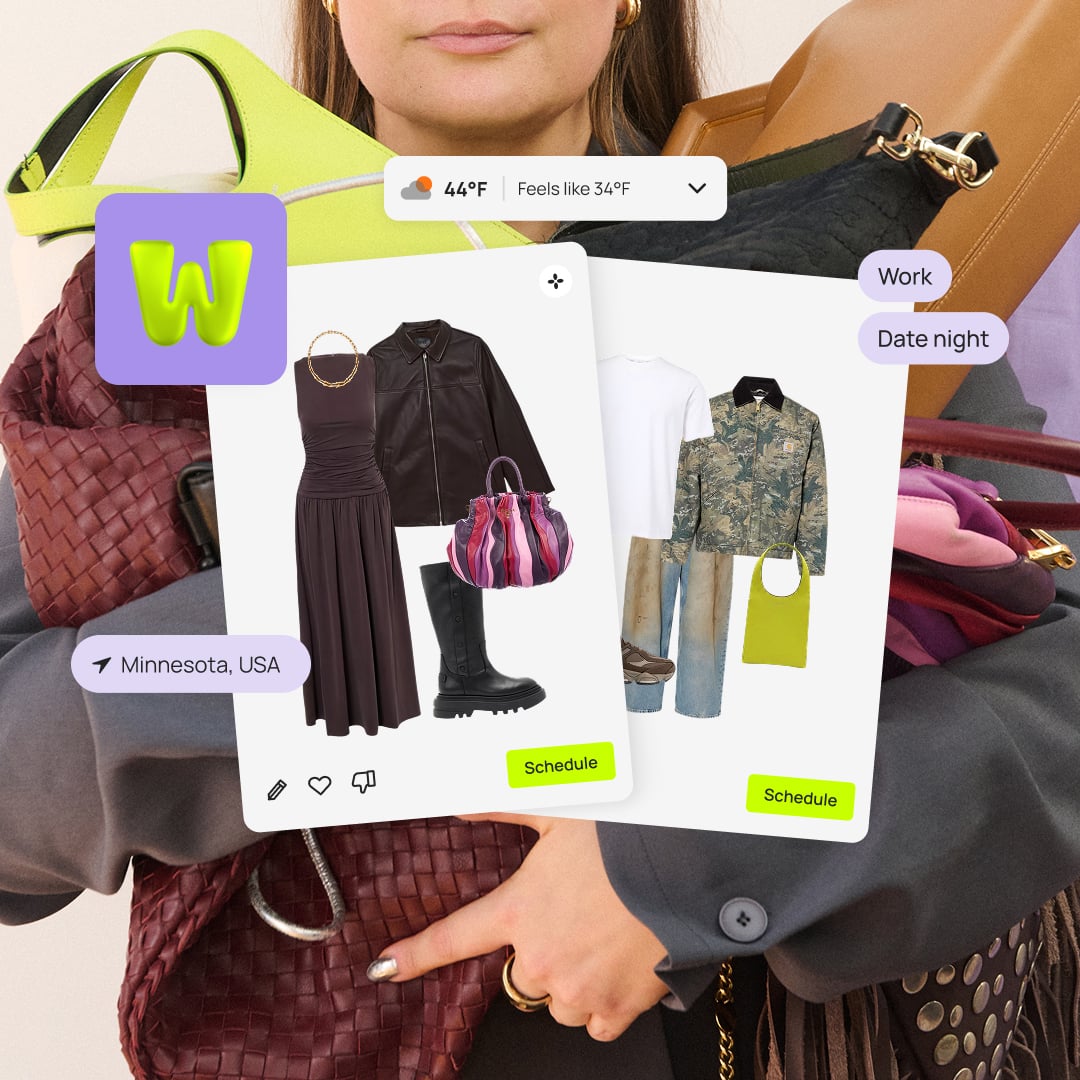
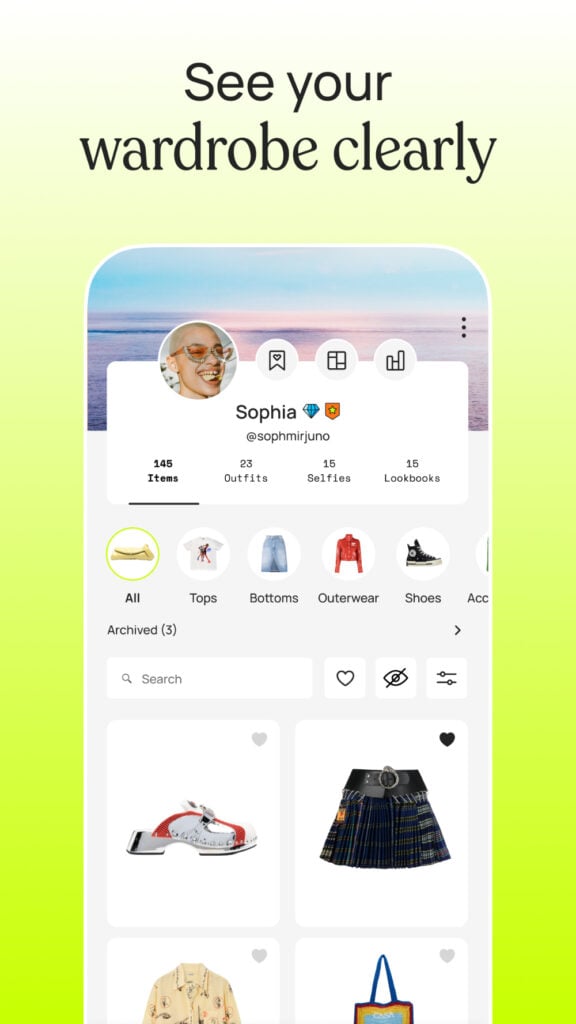
That’s a barrier today’s guest has been overcoming since before the current AI boom, though. Bianca Rangecroft is the CEO of Whering — W-H-E-R-I-N-G — which launched around the same time as The Interline in 2020, and which for most of that time has been a very consumer-facing application that helps people create, and I quote, “a digital wardrobe that helps you see what you own”. And to then, and I’m quoting again here, “get wardrobe insights, from cost per wear to the pieces you reach for most”.
Whering recently took investment from eBay Ventures and from Google’s AI Futures Fund. That might sound like an odd thing for those kinds of companies to be investing in, but Whering claims ten million people have got over that barrier I’ve just been talking about and are using the platform to not just build a static database of what they own, but to deliver on some of those “you can create compelling experiences once you have the data” things I mentioned earlier.
Also bear in mind that eBay are very keen on winning the fashion resale trophy after acquiring Depop and having a record Q3 largely catalysed by fashion resale. And remember that Google, in their typical style, did a kind of automated wardrobe-building experiment that pulled from your Google Photos to assemble a virtual wardrobe for you, and then I guess they kind of seemed to forget about it.
Behind all of that, though, is a central idea. You can have a B2C application that delivers value for end users, data nerds and non-data nerds alike, who want to understand what they own, what they wear and what they don’t. But the data that that usage and that community generates is also then intensely valuable to brands and retailers themselves, who right now understand what they sell and what comes back as returns, but have precious little visibility into how purchasers actually value their products.
I think we’re going to see a lot more of these kinds of consumer plays that create a lot of back-end data in the near future. People’s relationships with AI, with fashion brands and with resale are all evolving. So I think today’s is an important and timely discussion on that basis.
Bianca was also game for me grilling her on why this flywheel between wardrobe data and brand value might potentially not work out, which is something I always appreciate. I’ve said it before, but CEOs come on this show because they want to talk about their platforms and the context around them. Not all of them are ready to have alternate perspectives, let’s say, pitched their way. Bianca does a really good job of batting them back at me. So let’s get into it.
NB. The transcript below has been lightly edited.
Never miss an episode
Get notifications for new podcast episodes, plus our weekly news analysis, events, and more, delivered straight to your inbox.
Okay. Bianca Rangecroft, welcome to The Interline Podcast.
Hi, Ben. Thanks for having me.
Not at all. I’m glad we could make this one happen. I’ve had my eye on what you’re doing with Whering for a while, but this is the first time you and I have spoken at all. It’s always weird when you do the first thing as a formal interview, but I’m looking forward to this for a whole bunch of different reasons.
Likewise, and I love jumping in at the deep end.
Good. Alright. We start every one of these shows with a look at the guest’s day-to-day before we get into some of the bigger ideas. It’s always fun to talk to CEOs because everyone’s working pattern is different. Everyone’s priorities are different. I especially enjoy talking to CEOs who’ve come to fashion at a bit of an oblique angle, maybe where they’ve changed disciplines or industries. You’re one of those. You worked in banking, I believe, before you founded Whering in 2020.
We also launched The Interline in 2020, so maybe some other time we can swap some “was it a good idea to start a company at the height of COVID?” stories. Since then, you’ve scaled Whering in a pretty major way. This summer, you brought in $7 million, or five-ish million pounds in domestic money for us, from investors like eBay Ventures and Google’s AI Futures Fund. Whering now claims ten million users or thereabouts.
Give me an idea of what drew you to fashion and what the balance of your day-to-day looks like right now. Presumably you’re not raising any more money right this minute. Without wanting to give away my whole line of questioning, what got you here, what share of your time is spent on growing and serving the consumer audience, and what share is dedicated to the B2B side?
For sure. 2020 sounds like a very, very long time ago now. Definitely not raising more money as we speak, although we are absolutely gearing up to quite a major Series A in the coming months.
The origin story of Whering was actually quite interesting. As you said, I was working in banking in the City in London at Goldman Sachs, which was a really exciting environment at the time. I was spending a lot of time serving ultra-high-net-worths and some of the biggest family offices in the world, some of which had huge fashion tech positions already.
I was doing a lot of thinking when IPOs like Stitch Fix and Farfetch happened, and we were selling that equity story or trading in the stock, about the broader personalisation of the retail landscape, both in-store and online, with a skew quite severely towards online.
All the while, I was going through an introspective journey in my mid-twenties, thinking a lot about consumption, my buying patterns, how to build a wardrobe that would last or stand the test of time, and equating that to almost building wealth or building an asset class, in a way. Because of how much one invests, both in time and capital, in the way one dresses and the way one wants to show up in the world.
I started to think a lot about that as almost a data flywheel. I couldn’t see an accurate representation of what I owned, and therefore couldn’t leverage that intelligence in any way to help me make better shopping and buying decisions.
That’s where we started to think about what a digital wardrobe, personal styling app would eventually look like. How could we leverage that data flywheel to build style signals, both styling and sizing preferences, around individual customers to empower them when they show up online or in-store to make better purchasing decisions and therefore limit returns?
That was the genesis of Whering’s vision and why we wanted to start with this incredible B2C app, very much geared to Gen Z at the time. We’re now skewing more towards also millennial audiences, which we’re really excited about. And therefore build up over time an incredible and unprecedented dataset that we could leverage for a B2B offering, which is really the focus of the seed round we’ve raised this summer.
In terms of my time, this has changed a lot. I’m sure founders, if any are listening, go through this themselves. I started out as a jack of all trades, doing a lot of the stuff as a non-technical founder to get in-house models off the ground, to start to think about this data pipeline, to think from a consumer perspective about what user journey and customer problems we could solve. Especially through a fascinating time that you mentioned, during and post-COVID, and now into an AI era, which in a way we somewhat saw coming, which is super validating.
Today, most of my time is really spent on building our sales pipeline, thinking a lot about our go-to-markets in our top regions, which are organically the US, Latin America and continental Europe.
Okay. Is your time roughly evenly split between the B2B side and the B2C side, or are you indexing more towards the B2B side at the moment?
I think the skew is definitely going up that way. The B2C is still a major component. As with all consumer products, there is such a deep evolution that has to happen, both in terms of innovation, how you’re catching up with the market and staying in touch with the market.
But also just staying really close to customers, which is a huge part of my day-to-day on the B2C side, because that is also intrinsically linked to the B2C product. I’d say sort of 30/70, 60/40 is pretty much where that is right now and going towards.
Interesting to note, and also interesting to note that it’s not just the Gen Z cohort. I’m just about a millennial. I’m on the very upper bound between millennial and Gen X. I was born in 1982, so that dates me, for anyone who’s listening to this and has always wondered how old I might be.
But I do think the same thing as you. As a data nerd, somebody who is very keen on quantifying a lot of stuff and tracking things, it’s weird to me to think I’ve never tried to do that with the clothing I own. I can understand that sentiment you had, and I can understand the consumer drive towards that. I can understand the appeal, I guess, is what I’m driving at.
Absolutely. I think it’s crazy when we think about all the research we’ve done to date and what we do on a day-to-day basis, because this problem is felt so keenly across generations. That’s what makes this an incredible privilege, to be able to work on such a complex problem, but also that there are so many applications of this problem to different products across the user journey, whether it’s buying, styling, selling, etcetera.
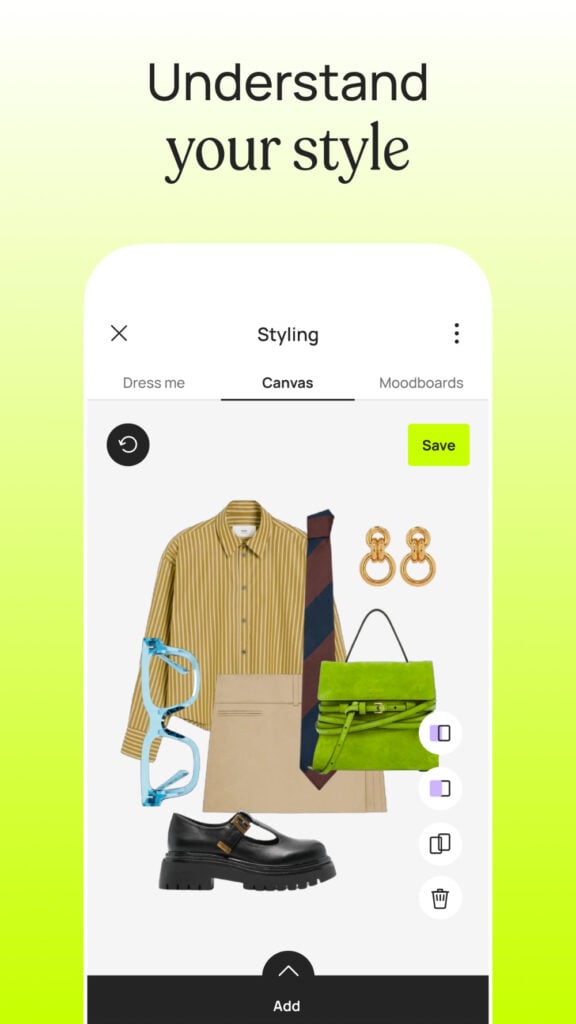
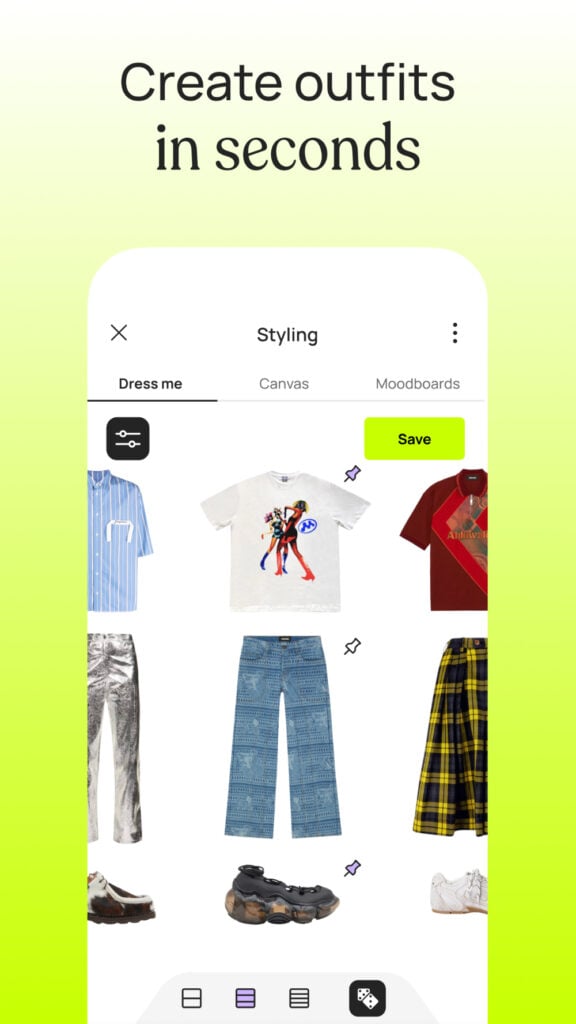
Okay. The second thing we ask a guest to do is define something. We’ve made some inroads on that now, but we’ll do it formally. I’m going to be a bit unfair. I’m going to ask you to define a term that I think I might have accidentally coined, or I’ve at least accidentally stolen it from somewhere without realising it, which is “wardrobe quantification”.
That’s the term I’ve used to refer to Whering in the past, when we’ve touched on it in our other show, The Edit with Grace, or when it’s come up with some of the initiatives Google were trying to pioneer in this space. On the surface, that seems like a straightforward thing. We’ve already established I didn’t do this for clothes. I did do it for books. I have a lot of books. I did catalogue them at one point. They are all now in boxes in the loft because I moved house a couple of times and I have kids.
But if somebody like me did that exercise and catalogued all their books, what they get is a neat database of what they own. You do it for wardrobes, closets. I don’t think Whering is the only game in town when it comes to wardrobe quantification, but certainly one of the better-known ones.
There’s a difference, I think, between that dry, dispassionate thing, where you’re quantifying something, tabulating it and building a database of it, and the personal, subjective, emotional component to it. Like a good bookshelf, a good wardrobe is very personal, complicated and multifaceted.
Tell me what you think it means to capture both of those sides: to get the objective details about the things that live in people’s drawers and lofts and on their hangers, but also how you turn that dry inventory-taking exercise into something that ten million users on your end obviously care a lot about.
It’s a beautiful question, and it’s something I remember was very in vogue in early 2024, with Vogue featuring us around what they called at the time “wardrobe tracking”. That became something that was incredibly interesting to our audiences across Gen Z and millennials.
If we think about the more emotional piece, wardrobe quantification or cataloguing, whatever you want to call it, is in essence a visual representation of our identity. It’s got fascinating outlets and ramifications once it’s been done, because it allows you to see into who you really are, what you’re actually wearing, what is serving you, what is maybe not serving you, where your wardrobe gaps exist, where your spend is skewed towards.
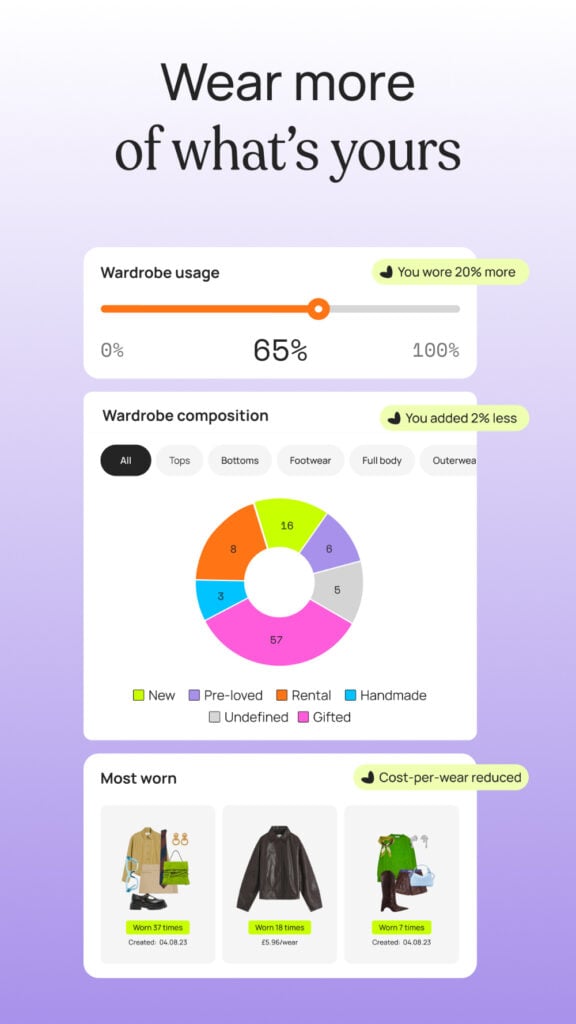
Do you have a preference for purchasing more top-end accessories versus staples? Or other sorts of analytics around things like cost per wear, ROI on purchases. It creates this incredible dashboard of: I can see and visualise my personal style. I get to understand how that evolves over time.
But there’s also this deeply satisfying, especially as an ex-banker, analytical and quantitative, real hard look at where you’re spending your money, how you’re using these things, and do I have too much or too little in different categories and across seasons? Which is really interesting, especially when you apply that to your lifestyle, to the seasons you actually live through based on where you spend most of your time in a geographical sense.
It’s a fascinating exercise that allows us to have a very clean and cold view of the actual numbers, the actual data. I think that has been incredibly huge or helpful, or both, for millions of users around the world because it’s helped them consume less but better. It’s helped them be more intentional with their spend.
On the emotional side, I think, and I know, we’ve helped a lot of people start to find their true style, start to feel more like themselves because they can experiment more because of this digital interface, because of AI styling capabilities, because of our community styling capabilities. That’s really beautiful and plays a huge role in, as I said at the beginning, the discovery and evolution of our style identity.
Even if you’re not a data nerd or a quant or somebody who spent a lot of time in finance, I feel like general cultural behaviour is trending a little more towards this data availability and data use, I think as a function of the amount that people use AI.
If you want to extract the maximum value out of a Muse or Instinct or ChatGPT dots, or any of these personal assistants, it’s all tied to how neatly your life can be compartmentalised into different databases. I think that’s been a fairly niche way of thinking about the world for a while, but it’s becoming more widespread.
Maybe this quantification stuff was a little ahead of the game, but I think society is moving back around to a mindset that probably dovetails into everything you’ve just described there.
Absolutely. I think it’s fascinating when we think about Stitch Fix and its heyday, and the prevalence of personal stylists, or just stylists in general, for the luxury top end of the market historically, versus how we can leverage data today. The democratisation, as you said, of these analytical and helpful tools, and how the new generation expects this data mining as a new reality.
Okay. You mentioned at the top that there’s a 60/40, 70/30 kind of split in terms of your attention when it comes to the business-to-business and business-to-consumer side of Whering. I want to try and zero in on the business-to-business stuff, just because that’s where our audience is at most of the time. I want to quiz you a little on what you see as the value of Whering for brands and retailers.
There’s a piece of research from WRAP, conducted in the UK in 2022, that says about a quarter of what people own hasn’t been worn in the past year. If you’ve got some more up-to-date statistics from your own data, I’d love to hear those as part of the answer.
But I also want to know what impact that has, not necessarily on the environment or the owner, because we’ve covered some of that already, but on the brands that create those things that don’t get worn. I think fashion gets really fixated on growth and conversions and basket sizes. It’s hard to look beyond that and get a feel for longer-term brand value and impact.
It’s not a great analogy, but when I was researching this episode, I put myself in the mindset of a company selling laptops or cars, for example. It would be a bad outcome for me if people kept buying my laptops or cars and seldom or never using them or driving them. It would give me a very lopsided picture of how successful my company was. I would see that I did a good job shifting new product. I wouldn’t see that I did a good job or otherwise of creating things people actually want to use.
Car makers, for instance, want their cars on the road so people can see them. Companies make consumer electronics to be used. Fashion brands want their clothes to be worn, but right now the only real way they have to understand that is to see if the consumer kept it and didn’t return it. Just because something wasn’t returned doesn’t mean it was ever valued.
Tell me how you look at this and what you think Whering’s proposition is for brands and retailers when it comes to helping them understand how the things they make are actually used and valued.
It’s a fascinating question and absolutely central to the vision we have for Whering. I think that is best crystallised as the following: we are building products that help our users show up whenever they are selling, styling or buying things. A big part of the work we wanted to do was help billions of people around the world make the most of what they own. That’s really core to our mission statement.
We can’t stop people continuing to purchase. We all do it. So we’re thinking about how we can build what we call “wardrobe intelligence” to help that customer make better decisions at those three user journey moments I’ve just described. Helping them show up where they’re already purchasing, when they’re styling things, when they want to resell things, in a more data-driven way.
For us, there are a lot of different moving parts that can be helpful to both brands and retailers. I’ll talk a little towards how we are prioritising some of these things and products we’re launching very soon, which I’m incredibly excited about.
The first part of this wardrobe intelligence and huge dataset is thinking about the life cycle of the products, as you just said. What happens post-purchase to an item from a Prada, from a Nike, from a Gucci, but also from fast fashion, which has largely lower utilisation on average, which we’ve seen through our stats?
The general view is that, as you said, the retailer or brand has no idea what happens to this piece later. Resellers capture some of that information. But again, there’s no platform that really connects all these data points to a user’s central user journey.
The first thing we’re thinking about is helping brands understand that product life cycle. Going deeper and broader than that is: how has this piece, or pieces from my brand, been styled? How has it, or they, been worn? How have they been resold, shared, repaired, mended, repurposed even? Which is absolutely fascinating.
There’s a whole host of data points that can be incredibly useful when it comes to understanding: was the sizing right? How and what kind of UGC has been created around this piece? What are the user’s styling preferences around this piece or pieces from my brand?
We can start to paint a really complex picture of that at a unit level, but also at an aggregate, anonymised level, including intelligence around my competitor brands and how they’re doing at a unit level or an aggregate, anonymised level. I think that is a first really exciting product.
The second thing that has been top of mind and brought inbound to us is thinking a lot about how, in the new marketing funnel and the age of AI, we get access to customers who actually want our products, who love our brand. Especially when we’re thinking about the lost monetary value when it comes to advertising, because you’re kind of spraying and praying oftentimes. A lot of the fine-tuning done to these algorithms does help, but is not perfect. There’s a lot of wasted CAC trying to acquire new users, even just at the consideration level.
We’re thinking about environments in which we can start to show users who want these products really exciting, interactive ways of engaging with a brand, with its items, with its tastemakers, stylists, influencers, etcetera.
Then the bigger vision, which I’m really excited about, is thinking of a way for us to leverage what’s happening already organically in-store and online, and all the time investment going into thinking about how we make, let’s just say, the e-commerce experience, for ease, a more personalised version of what we know it can be.
That’s thinking about how, at the point of purchase, we can start to leverage this wardrobe intelligence to help decrease returns, to help make sure users are actually buying outfits rather than pieces they don’t know how to style. Showing them how they fit within their wardrobe, how compatible they are, how many times we expect they’ll wear them, what price they could resell them for.
All these data points are really central to that user journey I explained starts at the B2C level and will eventually come and sit at the B2B level at the point of purchase.

Fine. You’ve mentioned a couple of things there: fewer returns, better insights, all the things that wardrobe intelligence unlocks at the point of purchase. I can see financial incentives there for the brands as well. You end up with fewer markdowns, find more intelligent ways to go after higher price points, build a better understanding of your consumer base so you can earn a larger share of maybe a smaller overall number of purchases. That’s fine. I see all of that.
The manifesto at Whering, though, is still built on the idea that fashion in general has been set up to make people want things. You mentioned that people are always going to want to buy more stuff. I get that. But this is an industry that’s kind of obsessed with growth.
What that looks like in practice is that most brands only have one business model. It’s a business model predicated on growth, on selling new products, introducing new products and shifting new products. They don’t have another business model.
If Whering helps me, the end user in my elder millennial cohort, realise I already own enough in one category or several, let’s call it suits for instance, and I don’t need to spend any more money, it’s a good outcome for me. It’s a less good outcome for a brand or the tailor that might be trying to sell me some new suits.
What do you say to a brand CFO or somebody else who might see everything you’re doing and go, “Sure, but the fundamental premise here is kind of inimical to the way we operate as a company, which is that we need to keep introducing new stuff and we need to keep selling that new stuff”? How do you resolve that tension?
Absolutely. I think there are really two parts of the value chain that our mission is focused around. The first is, you mentioned the WRAP study, we are aiming to double utilisation of items by 2030. So get you to wear everything you have at least twice.
That has a huge impact piece alone. It is really important because it makes sure that, at the consumption angle, the lens is always: how can I make sure I wear this piece, and how can I make sure I will love it?
That then feeds into the second point, which is thinking about how we leverage the circular economy. Obviously, there are so many companies talking about this. There’s so much growth we’ve seen on the resale side, on the rental side, etcetera.
For us, it’s really simple. We want to help you buy better in the first place. Maybe that’s increasing average order value. Maybe that’s decreasing returns by circa 20%. I am still buying new. The aim is to make sure I can wear those things I’ve purchased new at least twice.
Then it’s to say: how can we leverage this wardrobe intelligence and strategic partnerships with the likes of eBay to help you at a point where our intelligence says, “Hey, actually, either this piece is trending, you could make a little bit of money back on it because you’re not wearing it anymore, or you haven’t worn it in X months. Your style has evolved a little bit. Maybe you’ve had children. Maybe you’re going to find your first job after university.” Whatever those seismic shifts are in your world, here’s the time to resell.
We can do that for you really easily, without the friction and the barrier, doing all the pricing for you, all the listing stuff for you. We can keep that in circularity and leverage the community we’ve built with this idea that your next purchase, or the buyer for something you no longer need and want and use, is already in someone else’s wardrobe.
I think that’s how we view the circular system. It’s to say, fully understand that. Let’s try and optimise on the returns piece, on the AOV piece at a consumption level, benefiting the customer because everything is personalised. Everything actually suits their wardrobe and is a net positive. Helping them wear it and then helping them resell it in one clean user journey.
Fine. If I could just ask you a simpler version of that question again, it would be: do you think over time fashion as an industry is going to end up selling less new product?
I think there’ll be more creative ways of dealing with the output. There will certainly be changes at the different ends of the spectrum that will be positive. So to your point, yes, broadly, I agree.
I think there’ll be a focus on potentially higher quality at the luxury level, where exclusivity, experience, brand longevity and loyalty will all have to be heavily invested in to justify that.
I think the fast fashion side of things, whether that’s because of regulation, activism, generational changing views, will probably have to produce less, but try and think creatively about how they upsell nevertheless.
There’ll be shifting strategies to make the business models work. Hopefully, on a net basis, there will be less stuff created, and hopefully more circularity when it comes to actually moving that stuff from wardrobe to wardrobe.
I think, to be on your side for a second here, what you get from wardrobe intelligence is also the possibility to make sure the stuff you’re making is the right stuff. When you’re building assortments at the moment, doing merchandising, planning or forecasting, you’re approaching it not blind, but from a limited purview.
I can understand the single-brand visibility side here, where you could go, “I want to improve utilisation of the things I sell.” I think something like Whering also gives you visibility into gaps you could expand into that are logical fits for your brand.
If, for instance, you see that a particular style you make is being paired with something you don’t make, but that you could, there’s an argument there. There’s a category for you to go after. That’s suddenly really valuable, and that’s suddenly a level of assortment-building, line-building intelligence you’ve not had any other way.
Fine. I think generally I’m with you that we do need to make less stuff over time. A lot of what we make as an industry, though, is potentially misdirected, because you’re trying to fill slots you have defined rather than let the market define for you, or you’re working from a limited subset of visibility, a limited subset of data into how your products are used and what potential competitor or complementary products they get used with.
This is a long-winded way of me agreeing with you and saying I think there is a tangible opportunity here to create better assortments and better collections once you know not just the limits to utilisation, but also the gaps that exist in your categories as well.
Absolutely. I think the most interesting example we’ve been working on as of late, to your point, is thinking about how one can translate trend cycles from different regions to others.
For instance, in Latin America, thinking about how we can use the wardrobe intelligence and data we have around what’s happening in Europe: how brand pieces or styles or colours or any sort of trend is being utilised, is being received, and therefore how we translate that into a home market like LatAm.
Absolutely huge potential for us as a business to leverage what we have in terms of data for buying, merchandising and styling teams.
Perfect. Do you see those as your users? This is a question I’ve not directly asked you. When you have a B2C product, it’s very clear who your user is. You have a B2B product, you get to choose who your user is. You get to choose who you position it at.
If we think about the slightly longer-term business-to-business play here, who is the brand or retail persona that gets that value from Whering?
Absolutely. Many of these deals are in the works as we speak. But speaking more broadly, it’s thinking about our existing funnel. What are the top retailers, top brands that make up our wardrobe datasets right now in the different areas that are focal points for us right now, and then at Series A?
Inevitably, that will be the larger fast fashion retailers, because they make up such a large percentage of our Gen Z audience’s wardrobe right now. There will also be a lot of localised popular brands that are really top of mind for that segment of customer in their region.
Then there’ll be a lot of really interesting smaller, emerging designers that we want to start to bring into the fore, as a way to increase how we help our brands and designers localise and meet their audiences in their own geographical regions. That’s a super exciting thing we’re working on right now.
Fine. I think that’s very similar to some other interviews I’ve done this year. I interviewed the CEO of WGSN in the summertime, I think it was, and she and a few others have basically identified the same thing. There’s a much bigger audience for a lot of different technology solutions within a particular individual brand or designer or luxury house, or what have you, than there would have historically been.
Most people who work in fashion are technology users to a greater or lesser extent. The more data you put in front of them, the more visibility you give them into how the decisions they make are going to manifest in product outcomes, either in the first-hand or secondary market or in long-term utilisation, the better they are able to do their jobs.
Absolutely. To your previous point around merchandising, there is so much that can be done in this new digital realm of: I want to try this on before I buy it. This collection may not have been made yet, and yet we have an indication of demand.
We have an indication of, exactly as you said, how these pieces would be styled, how they’ll be tried on on real bodies with things like virtual try-on, which we’ve got in the app and will be central to the B2B experience we’re building.
Cool. I mentioned earlier that I’m the kind of person who has an alphabetised and detailed catalogue of the books that exist in their loft. I also mentioned that that’s maybe a growing behavioural pattern. I’m also the kind of person who starts productivity systems and databases and things, uses them for a while and then drops them. I don’t think I’m alone in this. Maybe this is an older millennial characteristic. I don’t know.
Do you worry about that from the Whering point of view? Obviously, the initial onboarding and the initial wardrobe quantification part is a one-time thing with long-term value, in the sense that you understand what is in your wardrobe and the goal is to get greater utilisation out of it.
But the network effects and the longer-term value of all that coming together rely on people continuing to update their wardrobe. It relies on communicating with one another. Whenever they buy something new or wear something old they haven’t worn in a while, it relies on them continuing to interact with the platform to keep that data up to date.
Do you think there’s a behavioural risk that people will treat this as a one-time thing and stop updating their wardrobe, so what you get is a snapshot rather than a living and evolving profile of how things are actually used?
It’s a great question. Luckily, we’re still around, six years. But it was a big part of the attention we put into the early build of the product, and was potentially a big worry right at the beginning, where the technology just wasn’t there to enable these recurring, habit-forming and entrenched behaviours so this becomes second nature.
It’s like checking the weather app. It’s like opening the news every single day, and it becomes this intrinsic part of your lifestyle.
We talked a little about the democratisation of access to your data, the ability to leverage your data for analysis via these big LLMs, which most of our users are inevitably using now on a weekly or day-to-day basis. This plays very positively into how easy it will be to onboard new users as time goes on.
What used to be a whole afternoon of taking physical pictures and getting the app to crop and tag them and create this database for you, that was then searchable, that you could then create your own outfits and lookbooks and wishlists and moodboards, is now something where a simple selfie of what you wear every day is automatically digitised, diarised. Outfits have been created. Lookbooks can be the output of just a simple click.
To your point about this data going stale, I think the impact is so huge and phenomenal post-digitisation that we see the lifetime value of users and that lock-in be, from our audience’s perspective, five years plus. These people joined when the app was just an MVP.
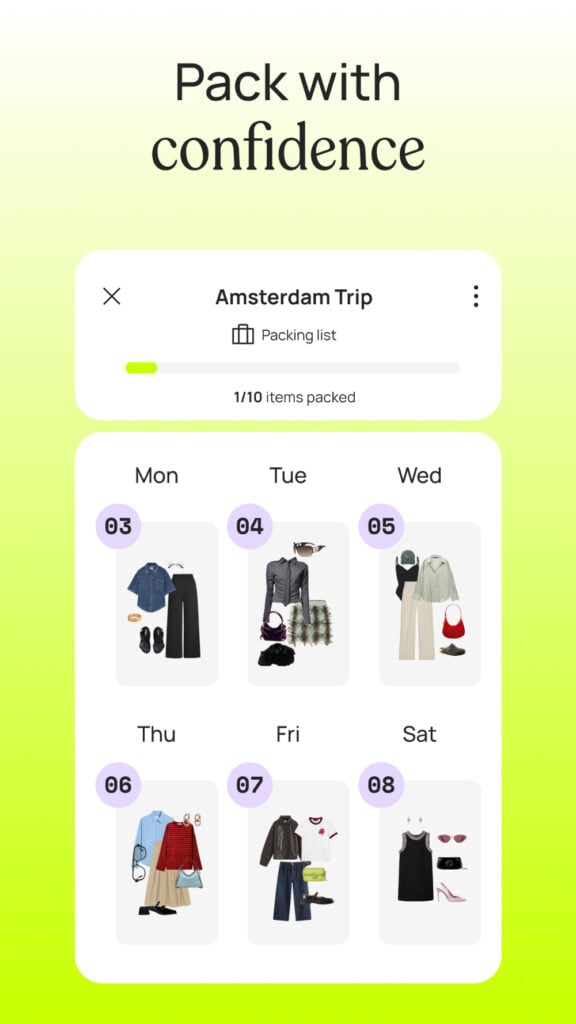
There is so much. What I mean by so much is there are three core user problems that are felt so keenly by such a wide array of men and women around the world that, as technology gets better, the friction to digitisation gets lower, and our ability to actually hit those problems on the head — i.e. can I help you get dressed every single day based on your mood, occasion, weather, and potentially a calendar invite or what you’re doing that day — gets infinitely better.
I think the lock-in there is real. That data moat is absolutely real and growing. With the utilisation of technology, that’s just going to become more and more prevalent.
My hypothesis is that, in the same way we’ve got apps that know everything about us, this will be the one touchpoint that knows everything about your wardrobe journey and your fashion journey. If we play our cards right, that’ll extend to your social interactions with friends around fashion.
I’m messaging my best friend on a Friday night: “Okay, what are we wearing? Here’s mine. Thoughts?” “Okay, we’re going on a trip together. What are we packing? Here’s mine. Thoughts?” I think that’s really powerful.
But yes, a huge amount of the effort we put in as a company is around that B2C experience, to make sure the B2B experience continues to show up as technology evolves and as customer expectations evolve, because that pace is becoming more and more rapid.
I would agree with that. I think AI plays a big factor in keeping systems up to date. Personally, professionally, this is something I see in my life, in the lives of the people I know, the people we work with.
How many CRM systems, just from a B2B point of view, are not up to date because somebody didn’t update them, versus how many could then be updated with a simple scheduled task in ChatGPT or Claude? Do you, or would you, consider doing a plug-in to ChatGPT or Claude on that basis?
It’s something we’re thinking about at the moment. When we think about it from a RICE framework perspective, it’s really about how we continue to own the most amount of data in a GDPR-compliant way that actually serves the customer at the B2C and B2B touchpoint. How can we derive value from that data for brands and retailers, again in a GDPR-compliant way? How does that feed the foundational models we’re building as a company?
I think the research we’re conducting right now will show very soon whether that works and makes sense in the short, medium and long term. If it unlocks consumer growth and makes this, as we said, an entrenched application you use on a weekly, if not daily basis, then that trade-off might make sense. But we’re in the middle of doing that now, so I actually don’t have a proper answer for you.
I would say the same thing. We’re also exploring how we think about The Interline being more of a source for AI-native readers and audiences, and we also don’t have a concrete answer for that right now.
I’ve talked to you a bunch about the data you capture on users and the value of that to the users, the potential value of that, anonymised and GDPR-compliant, to brands and so on. I want to drill a little into the mechanics of how much you understand about the products, where that data comes from and what happens with it afterwards.
I believe you partner with Pixyle to do attribute tagging, extraction from photos to power the user experience. Once that’s done, and a garment is automatically tagged from a photo, or I guess manually tagged as a fallback, how does it then get paired to the right item in a brand or retailer’s catalogue?
Longevity is the watchword here. When we’re dealing with pieces that are probably not on sale today, it’s not, I’m guessing, as simple as scraping an existing catalogue. There must be another way of doing it. Tell me how it all works on the back end.
For sure. We’ve actually now built our own in-house models to that effect. There are multiple ways this can work.
It can be that people are looking at their email receipts, uploading those data points as metadata into the items they’re uploading on Whering. It can be that we’re using your camera roll’s metadata to see when you wore this piece and building our own brand-recognition, computer vision algorithms, which help us determine brand, colour, category, anything from condition, etcetera, into that tagging system we build.
But we also look at people going into their top retailers’ or brands’ logins at an e-commerce level and starting to add in all their past purchases via our Chrome extension, which helps capture all that data automatically. We actually don’t do much scraping at an e-commerce level.
The future of this for us is going to be really through these B2B partnerships, where we can, via API partnerships, ingest the data directly from the retailer. Hopefully both historical and new, through what we call “connected accounts”, so we can help you onboard and build your digital wardrobe as quickly as possible.
There’s a whole layer that also integrates resale, because so much of our community is buying from a Vinted, Depop and eBay, and Vestiaire Collective. Doing the same there is also super helpful, and reconciling images of condition versus a newer image of that product, or an older image, sorry, of that product, if that makes sense.
It does. I think that’s inevitable. You have the self-attestation, self-evidence side of it, with people uploading purchase receipts and stuff, but you have to get to those brand partnerships. I think that’s logical.
The brand partnerships thing, though, does bring me to my penultimate question. You mentioned the social side of Whering earlier. You mentioned people texting one another, communicating and saying, “What are you wearing tonight? Here’s my wardrobe, here’s my wardrobe,” and so on. Not something I would use myself. I do have a tween daughter, and I can see that coming right down the pipe.
The thing people often say about social networks and social experiences and interactions, though, is that they’re fun until the brands and the advertisers come in. How do you see that playing out?
You have, or you’re going to have, these brand partnerships that make the onboarding more straightforward. What incentive is there for the brands to participate in the social side of stuff? Do you see those worlds being ring-fenced off from one another? Do you think there’s a world where brands are welcomed into the social side of Whering? Tell me how you think that plays out.
Of course. It’s a really interesting question because we’ve always wanted to delay the affiliate piece. It’s something we started with right at the beginning of Whering, focusing on pre-loved and sustainable brands only, with proven credentials through different parties like Good On You, who helped us verify some of those claims.
I think we’ve held off exactly to your point, because we wanted the social aspect not to be about consumption, but actually just about styling each other, being able to see in each other’s wardrobes, wishlists, moodboards. It was a lot more around styling than purchasing.
However, a lot of us in the community, and this is millions of users, want to help ourselves buy better in the first place and understand how potential purchases could fit within our wardrobe. But also see how we could leverage some of the brands’ imagery around styling, our friends’ imagery around styling, how they’re wearing certain pieces, from an inspiration perspective.
What we’ve seen is an amalgamation of these desires: I want to be inspired by really fun outfits made up of brands I love. I want to see what stylists and tastemakers are wearing from brands I love and want to either buy from or have similar pieces from. Some of these brands are heritage brands, with very similar items being produced season after season in a way that feels in line with the brand’s mission and visual statement.
What we’re thinking about now is a way that is not about advertising at all, but a way that feels really personalised to you and your wardrobe and your style preferences, to be able to interact with brands inside the app, but also at a level where you’re already purchasing, whether that’s in-store or online.
A lot of social interactions between brands and consumers are kind of shouting into the void and hoping you reach one another. Whereas if you inject that wardrobe intelligence layer between the two, what you hopefully end up with is more productive and beneficial interactions for everybody.
Absolutely. Personalised discovery, and a social-led discovery piece that feels really relevant to you. It’s also all about style and inspiration, and I think that’s so powerful.
Perfect. Final question. You mentioned Vestiaire Collective, Vinted and so on earlier. I don’t have exact figures for their user bases to hand. Whering isn’t quite the size of Vinted, but Vinted is not all fashion, obviously. Probably comparable in size to something more specialised like Vestiaire Collective.
When we think about the social element we were just talking about, the best recommendation for what I should wear, as you frame it, should ideally come from my own under-utilised wardrobe. Mid-term to longer-term, what if it came from someone else’s wardrobe?
There’s a social, a trading, a visibility piece to this. There’s also a “what if you just did a marketplace?” What if you did your own secondary marketplace here? That’s a different game to operating a consumer app, but we’ve already talked about new product introductions potentially scaling down over time and growth being hard to find.
The resale market then becomes a compelling one for not just a brand, but for intermediaries and providers like Whering to potentially get into. How do you see that potential trading, secondary-market side of things playing out?
It’s a fascinating question. We already see a huge volume of our users mentioning in their bios their resale handles on the platforms they resell the most through, which has been an incredible behaviour and has led us to think a lot about how we can integrate resale into the user journey. Currently, obviously, via our incredible partners like eBay.
In the future, there will be a huge amount of demand around: how can I go into your profile and see your resale folders? How can I buy from friends? How can I buy from stylists? How can I buy from tastemakers, or people who share my same style match or style persona? Which is what you’ve just said, and I love that.
I think we’re probably going to overlay the C2C, consumer-to-consumer angle on the rails or infrastructure of existing partners. The thought process here is that we’re leveraging that wardrobe intelligence piece: this item you want to resell, or that we’re suggesting you resell based on utilisation, cost per wear, ROI or what’s trending, direct it towards the partner of choice that makes sense for that item.
That’s where we’re going to see our positioning, certainly in the medium to short term.
In that scenario, would you take a cut of that transaction? What would be the value to you there?
Yep. Absolutely. From an integration perspective, we’re obviously going to leverage their infrastructure via partnership and start to examine what makes sense on a commissions basis.
But also, in the long term, thinking about how we’re creating this incredible pipeline of both demand and supply on the buyer and seller side, and how that can be of value to those players. We can reach an agreement that makes sense, potentially from a CAC perspective.
Perfect. Bianca, thanks very much for answering all my questions today. I went into this with knowledge of the wardrobe quantification space, but not having really thought for a while about just how much more there is to it than the consumer experience.
As this conversation has taught me, there’s still a lot to build here, there’s still a lot to grow out here. But clearly, the consumer passion, the consumer behaviour, is translating into an interesting proposition for brands and retailers over time as well.
Thank you so much for having me. It was such a pleasure to chat all things B2B and B2C.
It’s been a lot of fun. Thank you.
That’s the end of my talk with Bianca. It was a long one, so I’m going to get out of your way quickly now. The main thing I’d encourage you to leave with today is what I talked about at the top: that understanding that data really is everything.
We’ve been saying “big data” for a decade or more, but it’s hard to overstate just how hungry every industry is for new information right now.
I spoke to a founder a couple of months ago who created hardware and an accompanying software pipeline for 3D capture of footwear, for the purposes of creating 3D assets for use in e-commerce. That was going great. Clients then started asking them to digitise basically everything. Now they have a massive-scale global business scanning literally every kind of real-world object so the resulting data can be used for simulation and training of physical AI models.
That might sound miles away from what you’ve just heard me and Bianca talking about, but it’s fundamentally the same thing. Whether we’re talking about robotics or building assortments based on real intelligence gleaned from millions of wardrobes, there just is no shortcut to acquiring the data you need to do that effectively. And if you can deliver a delightful consumer experience along the way, it certainly sounds like that’s going to help as well.
I’ll be back with another interview next week. We have a few more before I take a well-earned break from speaking into microphones, on and off stage, for the holidays. Then I’ll be back in January for our third season, which I’m excited about. Lots to come from The Interline next year.
For now, thanks for listening, and I’ll talk to you again really soon.