
Originally released in The Interline’s AI Report 2026, this executive interview with 7Learnings is one of a 17-part series that sees The Interline quiz executives from companies who have either introduced new AI solutions or added meaningful new AI capabilities into their existing platforms.
For more exclusive interviews, stories and opinions from different industry perspectives, and real survey feedback from voices from every level of fashion, download The AI Report 2026.
We’re observing a big disconnect (in both our own fashion-only data and in wider benchmarks from other sources) between the increasing capability and reliability of AI, in both a general sense and in discrete applications, and the lack of trust that end users place in its outputs. What does trust in your specific applications of AI look like, and how do you achieve and measure it?
The user needs to be able to understand why a recommendation for a decision was made. At 7Learnings specifically, we use predictions to help with different decision options. We have additionally implemented a few measures to build trust in our solution:
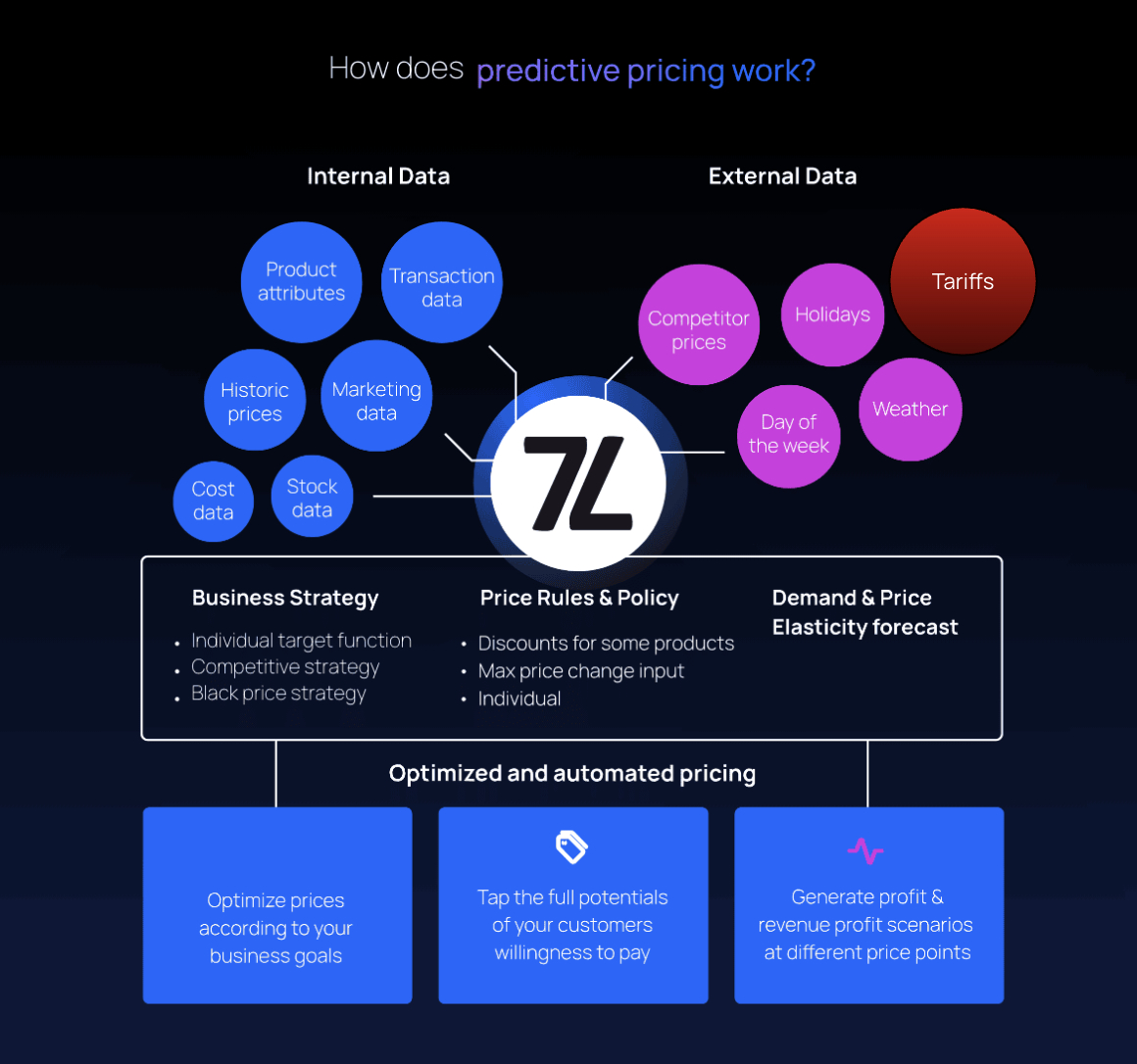
- Explainable AI: It is important for retail pricing optimization to avoid being a black box. As such, we explicitly show the drivers behind a recommendation, whether that’s competitor price elasticity, inventory runway, historical seasonality, or current marketing spend (important to note: it is almost always a combination of these and never one single metric).
- Override function: We track the human override rate. When a client first onboards, overrides might be higher as they test the solution. As the user feels safer letting the AI steer, we see the override rate drop substantially.
- A/B testing: We split product portfolios into 7Learnings-optimized and client-optimized control groups. The data consistently shows a double-digit lift in profitability for the AI group, and strong trust naturally follows this.
Fashion has spent the last decade or so wrestling with seasonality. Some companies have obviously been very successful with a “seasonless” model of constant drops, and others have tried to copy that model with varying degrees of success, but by and large the industry still targets fixed seasonal windows – and everything, from design to late-season markdown strategies – is worked up accordingly. Are you observing that change as a result of the roll-out of predictive AI? Is the typical garment lifecycle still the same, or are we going to see a shift in how companies approach calendars and lifecycles?
This is an area where predictive AI is already having a significant impact, both on the lifecycle pricing of fashion products and on how fashion companies order their stock.
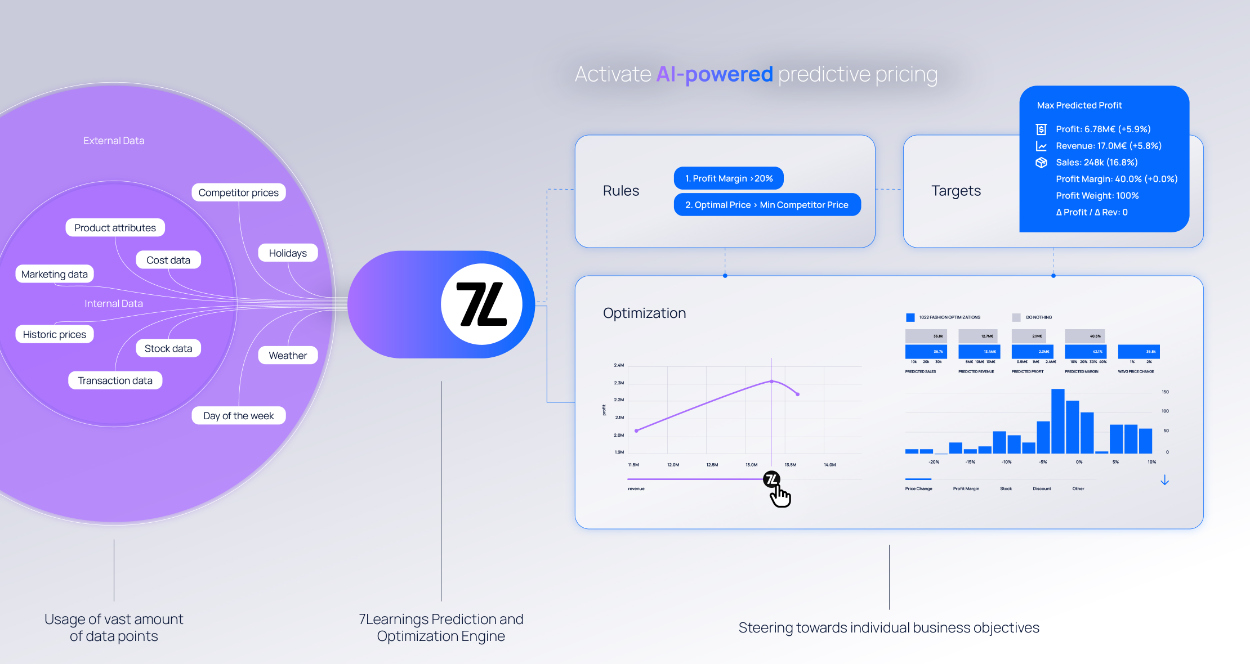
On the pricing side, AI is simplifying the task of managing tens of thousands of SKUs simultaneously, on multiple marketplaces, which is simply too complex for human efforts. A huge topic is markdowns; traditionally these are carried out late season and to entire categories, leading to a sub-optimal approach and a lot of missed revenue. Predictive AI works on the product level, identifying products that sell out faster, requiring no markdown, and lagging items that get optimized adjustments weeks before the traditional “sale season” begins. The benefit is two-fold: increased profitability via prices that are aligned with product elasticity, and reduced waste as items no longer sell-out too quickly or not at all.
On the ordering side, the AI optimizations will push for shorter ordering cycles. In practice, this means you don’t order for a 9-month period upfront, instead you order for the next 2 months and then test how the product is performing, after which you order more. With predictive AI, it is also possible to order the right products, in the right quantities, and at the right time, meaning significant improvements in sell-through rates and profitability.
Also important to note is that “Seasonless” products are not a solution, as the competition on basic items like black slim fit jeans is very strong. AI will on the contrary enable discovery of new niche articles through tracking of customer conversations with LLMs.
It’s not just brands and retailers that run on seasons; that same structure has also been central to the way material suppliers and manufacturers operate. What effects are you seeing when it comes to how AI is altering the sourcing and production cycle?
There is a clear trend toward local sourcing to enable fast lead times and piloting of new styles. The big role model is Zara from Inditex, which turns inventory 12 times per year in comparison to 3 times for H&M.
Over the last two years in particular, profitability per style has become fashion’s top priority. Some of that is obviously predetermined by decisions made during design and development, but the other two big (and heavy) levers the industry has available to pull, to try and increase profit, are performance-oriented marketing, and more intelligent pricing. You’re aiming to synchronise both of those things, using AI, so walk us through how that mandate emerged, and what it looks like to unify them at the product and process level?
The idea for 7Learnings actually came from my time as a pricing manager at Zalando. I could see a massive disconnect between pricing teams that would be adjusting markdowns to optimize margins, while completely independent marketing teams were pouring thousands of euros into Google Shopping ads and newsletters for the exact same products. This is still happening today, where teams are pulling these interdependent levers without communication and often actively working against one another’s goals.
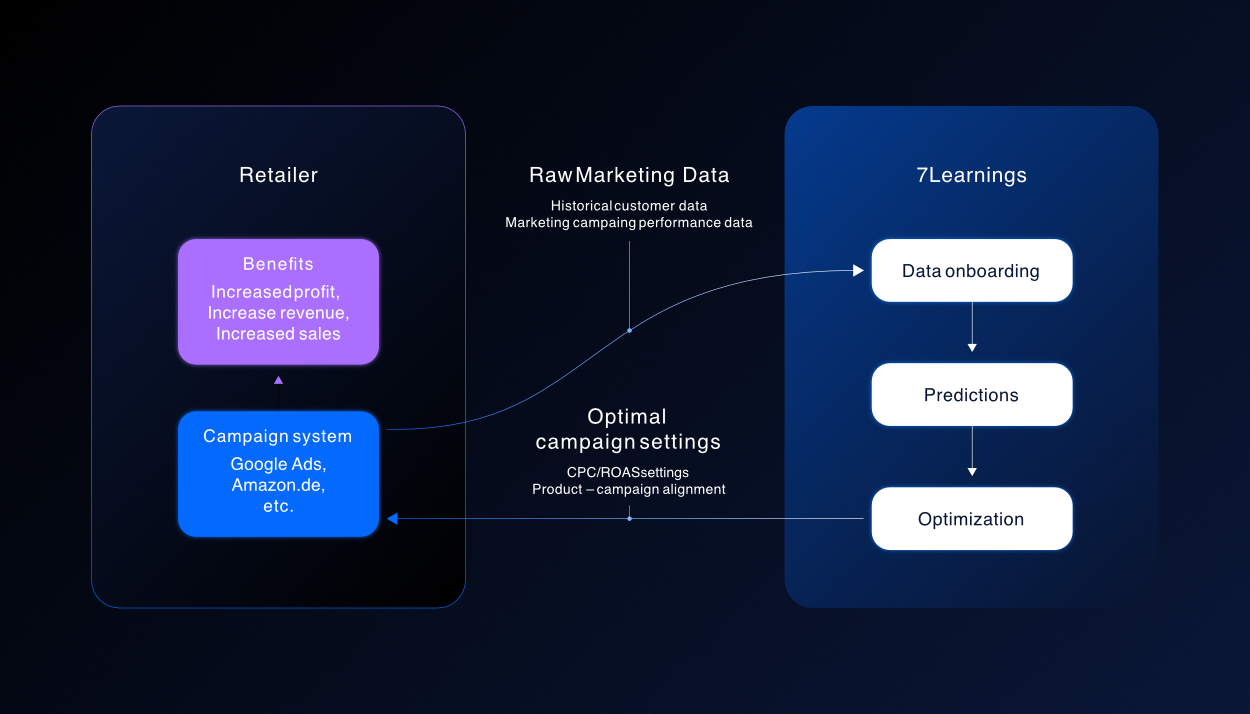
Pricing and marketing are entirely interdependent because they both dictate the conversion rate.
At 7Learnings we unify them at the product and process level. It relies on three core mechanisms:
- Conversion rate bridge: If the AI recommends a price change that increases conversion rate, marketing can afford to bid much more aggressively on ad channels (like Google Shopping) because every click is statistically more likely to result in a sale. Conversely, if conversion rate drops, the AI instantly instructs the marketing algorithms to lower ad bids so we don’t waste budget.
- Inventory-driven ad bidding: Marketing teams are often blindly drive traffic to high-revenue products regardless of stock levels. By taking a unified approach, if a style has high demand but low stock, the AI raises the price to capture premium margin and automatically cuts performance marketing spend to zero. Why pay for ad traffic on a product that is going to sell out anyway?
- Target-driven steering: Our approach removes the classic organizational silo where marketing chases ROAS (Return on Ad Spend) and merchandising chases Gross Margin. With target-driven steering, we give teams the ability to set a certain business goal (be it profit maximization, revenue maximization, etc.) and steer pricing and marketing choices jointly towards this goal.
As we can see from the data captured in this report’s survey, fashion professionals across the board are concerned about how AI could change their day-to-day roles, and the longer-term outlook of their entire disciplines and professions. You’ve run enough implementations, with sufficient time to reflect afterwards, to have a read on what this looks like for merchandisers and pricing analysts specifically. What are you seeing, and what can you infer for the future of those roles?
I’d say our solution brings back simplicity, and actually frees up time and space for pricing analysts or merchandisers to work more strategically. Rather than spending time trying to optimize prices across 100,000 SKUs, the time is instead spent defining high-level commercial guardrails, analyzing competitor positioning, and running scenario simulations (e.g., “What happens to our market share if we prioritize volume over margin this quarter?”)
Last year, we asked technology executives whether they predicted AI would become more obvious, as a primary interface paradigm, or whether it would disappear into the background in the way that vital but invisible platforms like AWS and Azure have done. This year’s data suggests that the answer is both: fashion professionals that use AI interact with it as both the engine and the steering wheel. But we also see that, for a lot of companies, both kinds of applications are still largely in the scoping or refined-pilot stage. What do you see being the trigger for deeper adoption and wider roll-out?
As more companies adopt AI to improve and automate their decision making, it’s simply going to become a case of survival. If more and more of your competitors are now optimizing thousands of SKUs in seconds, in a much more targeted manner, how can you hope to beat them?
We’re currently in an economy where supply chain issues and price sensitivity are increasing, and AI presents the most effective way to navigate these challenges, and improvements in integration mean that solutions such as ours can go live even within weeks (provided that data quality is sufficient). Optimizations for pricing and markdowns specifically are the most easy to implement and have the highest impact on business outcomes, so it’s really a simple choice.
