The Edit is our weekly show, where Social Editor Grace Robinson quizzes editor-in-chief Ben Hanson on some of the most significant fashion and technology stories from the past seven days.
This week on The Edit, Grace Robinson and Ben Hanson discuss robots on the runway at Vogue World, AI showrooming and shopping risks, the rise of smart glasses with and without cameras, Amazon’s block on Meta’s Muse agent, and the appeal of AI mascots and bag charms.
This show is available in video format, embedded above, as well as audio, on Apple Podcasts and Spotify.
For deeper interviews with brand and technology leaders, our prestige interview show releases on Thursdays everywhere you find podcasts – and will be coming to YouTube soon.
Subscribers to our mailing list will receive notifications for both shows.
Grace Robinson: Welcome to The Edit from The Interline, the show where we run a quickfire analysis on our pick of the most important fashion and beauty technology stories from the last seven days. I’m Grace, the social editor, and I’m joined by Ben, the editor-in-chief. And together, we have around twenty-five minutes to give you our analysis on the stories that we think really matter.
Ben Hanson: Hey, Grace. Good to see you. Fair warning: I am coasting through on very little sleep with a baby with a fever today, so I’m hopped up on espresso. Let’s see if that increases the pace that we get through these things.
What are runway robots supposed to tell us?
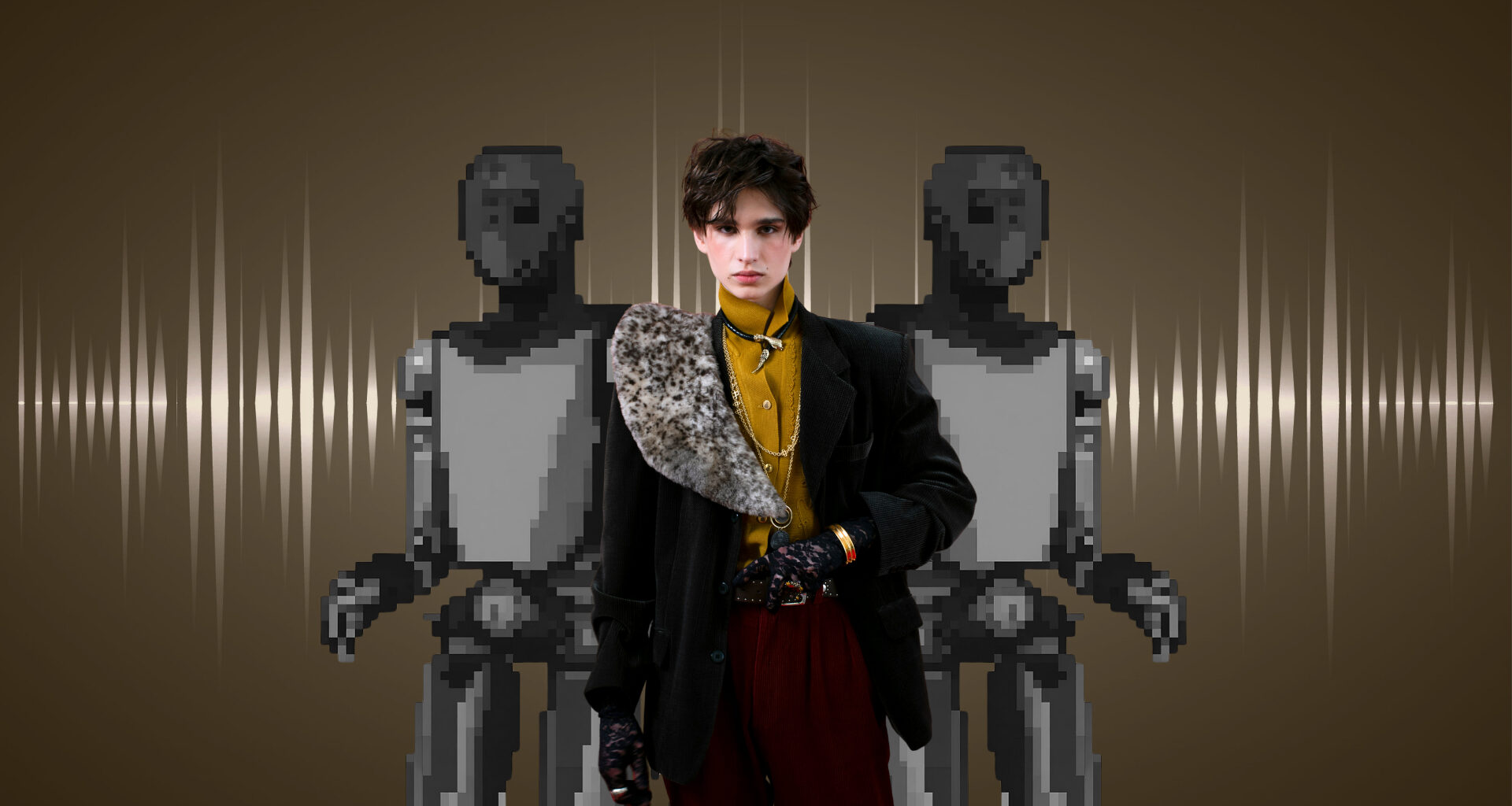
Grace Robinson: The first thing that we have to talk about is Vogue World. There was a lot of spectacle about Vogue World that took place in Milan, but probably the biggest news from this was the robots that were on the runway. The sections were split up into four, and one of them was focused on technology and the future of AI and how it comes into fashion.
During this section, humanoid robots from Unitree Robotics took the stage. But rather than them being the viral moment in itself, it was actually the reaction from the crowds that got people talking the most. Specifically, Alessandro Michele was staring at the robots with a very blank face, very unimpressed by the spectacle of them all.
And the creative director of Vogue World, Juan Costa Paz, said that this reaction was exactly what he intended to happen because the robots were quite clunky and simple. He said that this is actually showing that human creativity is very important, and hopefully it should be reassuring to people that robots aren’t going to come into fashion in a significant way right now.
Now I wanted to get your take on this story generally. Do you think it was a bit of a gimmick and just to garner hype and attention, or do you think something deeper is going on with the robotics on the runway?
Ben Hanson: So I’m going to bat it back to you just to start with because, as you know, I’m not in touch with two things. I very rarely do anything with runway shows. And two, I’m off social media personally, so I don’t have as much of a finger on the pulse for this kind of thing. How did it strike you? How do you feel about it?
Grace Robinson: I thought it was interesting because the robots themselves weren’t tied to fashion in any way. They weren’t wearing clothes. They weren’t even doing a model runway walk. They were just dancing around. So it did feel like the simplest way to integrate robots onto a runway. It got people talking, but I thought it could have been executed in more of a creative way. So I see why people were unimpressed by it, I will say.
Ben Hanson: Yeah. I think I would agree with most of that. I think if you want to get people talking about robotics, cheaping out is the worst possible way to do it. This justification that, okay, it’s like the early days of mobile phones where you had to carry a big battery pack with you and everything was tethered to it — I’m not sure I buy that.
I think what ended up happening here was somebody wanted to put some robots into a runway show, and they found the cheapest way to do it. I’ve seen these Unitree G1s before at, let’s just say, much lower-profile events. They’re not autonomous. They have human controllers for the most part and preprogrammed routines and things. They cost about $15,000 US to buy if you wanted to have one of these yourself. I think there were three or four of them. This is not a very expensive stunt in terms of what you could have put on at Vogue World. And given how beaten up the robots looked, they looked like they were leased from a company rather than being purchased.
This is a bugbear I have with when fashion, the establishment, tries to play around with technology and be provocative. They do it in the most blunt, boneheaded ways. Everybody remembers that, I think it was at that Coperni show, where they brought the Boston Dynamics Atlas, or whatever the robot dog is called, on stage. That was a little bit better, but maybe I’m too dumb and out of touch to know what the conversation this is supposed to provoke is. It just provokes cheapness to me.
If you want to have a real discussion about robotics in fashion, robotics in fashion is primarily upstream. It’s way away from the world of branding. It’s all in the world of production and automation, and that’s not really Vogue World’s specialism necessarily. I think if you want to be provocative about human creativity, there are actual places that you can do that, and they fit much more in software and in content creation than they fit in having a robot do a dance on a runway.
The part that frustrates me about this, as somebody who’s spent sixteen years or so covering technology for fashion, is that people outside or slightly adjacent to the industry think that this is what technology for fashion is. It’s taking a runway show and putting some robots in it and going, oh, look, there’s some robots. And it’s not that at all. Anybody who’s a reader of The Interline will be familiar with the fact that it’s a much deeper and more profound transformation to the way that the industry operates.
And even if you just think about the runway, if I think back to what you and I talked about last week with the — I forget the names of the designers, I apologise — using Google’s AI tools to previs their runway shows and things like that, that’s a much more interesting conversation about creativity.
So I understand the backlash to this. I’ve seen some articles out there that are like, this is a flashpoint about everybody being deeply upset about automation and AI and robotics and what have you. Again, I don’t buy that. I think there’s much more interesting flashpoints and much more salient ways to talk about a bunch of this stuff. So I don’t know. To me, it feels like a bad stunt that achieved a bad objective and hasn’t really got anybody talking about the meaningful stuff that it should have done.
AI showrooming brings a new challenge for retailers
Grace Robinson: Yes. I tend to agree with that. The next question, we’re moving on to AI shopping. We’ve spoken a lot about the rise of agentic shopping and AI shopping on previous weeks of The Edit. But this week, it feels like there’s even more developments in the space, which are really interesting.
The first thing is that there was a study from MACH Alliance, and they showed that AI wearables, something like Meta’s AI smart glasses, for instance, are starting to cause an increase in in-person shopping. And really interestingly, it’s more with younger consumers, so Gen Z shoppers.
Also, on a separate note, there’s been new conversation around the different issues that AI shopping could cause. Things like an AI agent walking a user or a shopper into different scams if they’re shopping online, or also sharing their personal banking details in places they shouldn’t, and all kinds of different security issues like this.
Clearly retailers need to start thinking about, firstly, how AI shopping fits into their in-store retail experience, and also how they can put up different protections and systems to avoid these kinds of scams. I wanted to get your take on these developments and also what you think fashion brands should be thinking about with all of this.
Ben Hanson: Yeah. Fine. So the understanding from this survey that MACH have put out is that AI influences something like forty-plus — 42%, I think it is — of in-store spending, which is equal to the way that it influences online spending, and it surpasses the way that it influences social media spending.
Now, “influences” is hard to define in this case. I don’t think it directly draws a line — it doesn’t mean transactions here. What it means is people are having a conversation, single-turn, multi-turn, whatever it is, with an AI agent that then has some bearing on what they buy and whether they buy.
Now it’s interesting. I think people assume that online, right? I think people assume that if you’re already at your computer, you are shopping through ecommerce stores. There are a million different ways you could have a chatbot open at any given time. It could be within the retailer’s storefront. It could be embedded into your browser. It could be in a dedicated desktop app. It could be on your phone and so on.
The interesting finding for this is that I think sixty-plus per cent of Gen Z apparently use AI to influence the way that they shop in-store. This is not surprising necessarily if you thread the different pieces together, but it’s something I hadn’t really thought about before.
Everyone’s used to the idea of, in retail at least, what you refer to as showrooming, where you go in and you look at stuff in a physical store, and then you pull out your phone and you find the cheapest place to buy it elsewhere. So what you’ve effectively done is just use the retail premises as a showroom, and you’ve gone and bought it somewhere else.
Now that hasn’t been a massive concern, I don’t think, for brands because they would say, okay, well, they’re doing web searches, they’re going on Amazon or something, they would have been doing that anyway, and we’re already optimising for those things. We’re already doing SEO and what have you, so it’s fine, generally speaking, if people use our retail premises as showrooms.
This is different, because I think people have not paid enough attention really to GEO, generative engine optimisation, AEO, that kind of stuff, on the assumption that it’s off to the side somewhere, that this kind of agentic shopping is a separate piece and a separate channel, and maybe it’s a small one, maybe it’s a growing one. What I think this shows is that they smush together.
So if you are a younger person, seemingly, and you go into a store, you’re whipping out ChatGPT or Claude at the same time, the same way you would have previously whipped out a browser or Amazon. How your brand and how your products show up in AI responses is very important for cross-channel shopping.
You’re somebody who does a lot of shopping, right? In your professional life, in your personal life, you buy a lot of stuff. I know you don’t buy all of it first-hand, but do you take AI in with you in those scenarios? Forget wearables. Do you take your phone in with you, and do you have — even if you’re just running a shopping list or ChatGPT or whatever it is — I’m keen to know because I don’t do much in-person shopping.
Grace Robinson: I would say day-to-day shopping, no. Not yet. But if I’m going to a very specific event — for instance, in summer I was going to a races event, and I wasn’t quite sure what exactly I needed to wear in terms of a dress code — I did use AI to help me with that, and I did use it while I was shopping in a dress shop.
It’s if there’s a bit of a knowledge gap of what I was trying to find. I can imagine if a lot of shoppers want more recommendations with what styles to wear, they could use AI more frequently. So I think people are only going to use it more and more.
Ben Hanson: Yeah. And I think the concerning behaviour for a retailer is less assembling an outfit and more, take a picture of this outfit and extract the essential attributes of it. So I’m browsing a mid-market premium store, and I’m looking at a jacket, and I just take a photo, upload it to ChatGPT and go, okay, I like this bit about this. I like this, but can you find me some alternatives? And that is the concerning new behaviour potentially.
And just to quickly reckon with the other bit that you mentioned, that concern over scams and potentially risky payment methods and things associated with agentic shopping. We’ll talk a little bit more about agentic shopping in general in a sec. I don’t think the payment side of things is especially problematic. All of the big players in ecommerce, your Stripes, your Shopifys, your Visas and so on, have all made pretty big plays for agentic stuff, so I think they’re pretty clear on the infrastructure being built out.
I think the risky part is the behavioural side of things, and I’ve banged on this drum for months. You’ve heard me do it here. This idea that these kinds of behavioural patterns lead people to making purchases that they wouldn’t make otherwise, and if those purchases end up through deferred-payment credit options or whatever else it is, it’s a different loop.
And I’m just picturing somebody standing in a store talking to ChatGPT about clothes that they can’t afford on a rack, and ending up with a conversation that goes, well, you know, why not treat yourself? That kind of thing. And I think that’s problematic in a bunch of ways that we’ll be reckoning with for a while. I’m less concerned about the banking stuff, and I’m more concerned about the behavioural stuff.
Do smart glasses need cameras?
Grace Robinson: Next we have to talk about Meta’s smart glasses because they’re in the headlines again. This week, Meta’s Connect took place, and they made a lot of announcements about general updates that are coming to their smart glasses. But some standouts were that Muse AI will now be in their smart glasses. Also, they’ll be releasing a new colourway of Kylie Jenner’s Starfire smart glasses. And they’ll also be doing another pop culture collaboration with the K-pop star Lisa from BLACKPINK.
Now with all of these announcements, there was still something that took centre stage above all of this. They’ve also revealed that they’re going to be doing new Ray-Ban Meta Audio glasses. These are their first AI glasses without any camera built into them. So this is obviously competing with the likes of Even Realities or Halliday, who already create smart glasses without cameras.
To me, it does feel like a bit of a response to all of the backlash that the camera glasses got. But apparently, these have been in the works for a while. I wanted to get your take on this. Do you think these glasses without the camera are going to take off? What do you make of it all?
Ben Hanson: So I have a tween daughter, so BLACKPINK branding is a very easy Trojan horse into this household. I’m not about to equip her with any smart glasses, but that might work. It’d probably be more effective if it was Jennie rather than Lisa.
The backlash against smart glasses with cameras in them is completely unsurprising if you’ve followed the history of Google Glass, and if you’ve followed the whole set of social norms and things that we had to develop around the fact that everybody has a camera in their pocket with a smartphone. None of this is dramatically new.
I think what is new is this idea that the surveillance side of it is hard to notice. There is a recording light on the Meta Ray-Bans that are equipped with a camera, but if somebody already has that recording light on before they start talking to you, you’re not really very likely to notice it flicking on.
I actually only really experienced this for the first time a couple of weeks ago when I stood in a crowd at a rooftop cookout event, and the guy next to me was filming the whole thing on his glasses. And again, I’m not on social media. This is a completely different world to me. Seems like all of a piece, but it does seem uniquely intrusive in a way.
I actually read a story this week about Londoners in particular pushing back against this, and venues in London starting to put, not bans necessarily in place, but starting to really give people the side-eye who are wearing Ray-Bans. You live in London. Have you seen this?
Grace Robinson: No, I haven’t, but amongst my friends, I know that people are talking more and more about how much they’re hating smart glasses with cameras, so it doesn’t surprise me at all.
Ben Hanson: No, but I do think the ubiquity is a big part of it, right? So that same research, I think, that we talked about earlier, there was a mention that global AI glasses in general, so camera and non-camera, shipped something like four million units in the first half of the year, which is up more than 100% on the same period in 2025. That’s before the launch of these new ones from Meta. So very clearly, people want these things.
And as a parent, there’s a part of me that’s like, I would like to have photos and videos, particularly with my youngest. When you have three and one of them is a baby, it’s really hard to capture as many pictures and videos as you want. And there is a part of me that’s like, would I give up some measure of privacy and join in this whole thing just to be able to easily record? I don’t know. Maybe.
The integration of the Muse AI into this is probably the more interesting area, and I know Muse is a focal point of the next couple of stories that we want to talk about as well. You can do all of that without the camera stuff, as we’ll discover. You can have meaningful AI interactions that are audio-only. And by all accounts, the speakers and stuff in the Meta Ray-Bans are pretty good to use as pure headphones from that point of view as well.
Smart glasses are not going anywhere, and I think from fashion’s point of view, this is where wearables are headed primarily. This seems like the major category that the industry needs to be reckoning with.
Now I don’t think it’s a coincidence that next week we have OpenAI’s DevDay, which is going to fall on the day that you and I publish this, so we won’t get to talk about it for a few days afterwards. But OpenAI in particular have really leaned into, in the last week, bridging the capabilities of ChatGPT Work, where it has access to plugins and files and all of the other stuff, and their live voice mode. So the push to have you be capable of doing more stuff with your voice, with AI, is pretty strong as well.
So I guess we’re going to see a fork here where the people who want the cameras get the cameras, the people who want the audio get the audio. But these are still fashion’s primary push into wearable technology and also AI’s primary push into fashion.
Why Amazon wants to keep AI shoppers at bay
Grace Robinson: Now, a few weeks ago, we spoke about the drama between Amazon and Perplexity, namely how Amazon wanted to ban external AI agents from directing shoppers to their services and their website. This week, we’ve seen that Amazon has now blocked Meta’s AI Muse from their website as well. Now any user who’s using Meta’s AI assistant Muse will get an error message if they try to buy Amazon goods.
Now I know on one side, this is Amazon wanting to push their own internal AI agents, but it also relates to a story that we previously spoke about, that Amazon is wanting to avoid any responsibility if something does go wrong with how these AI agents are shopping. I wanted to get your take on this. Where do you think Amazon is coming from, and what do you think brands should be thinking about?
Ben Hanson: Yeah. Fine. So the previous one was, as you mentioned, the ban on Perplexity, which ended up being overturned in a legal case. So Amazon now does need to allow Perplexity to scrape and access and automate their website front end. They tried to go after Perplexity under the — I forget the name of it — but an ancient statute that covers computer crime. Whereas this one now, they’re claiming, is just a plain violation of their conditions of use and terms of service, which customers have agreed to. So trying to place blame on customers in a way for automating this side of stuff.
Now I think they’re probably right to be a little bit fearful of AI transacting because the recourse for you as a consumer, if an AI makes a purchase that it didn’t intend to, is probably not to Perplexity or to OpenAI. You might be able to file a complaint with them, but they would say, okay, well, you directed your agent to go do this, this was the goal, and it fulfilled that goal. What’s the problem?
The issue is on Amazon’s end, and it’s twofold as I see it. One is Amazon has a very, very generous returns policy, particularly for people who shop there for a long time. Anyone who’s had an Amazon account for twenty years or thereabouts will have an experience of being sent two of something and trying to return it, and them just going, nah, keep it. Honestly, it’s more effort to us to get it back than it is to just leave it with you.
Now that’s fine for human shopping because those kinds of mistakes don’t occur all that often. You start to throw automated and agentic shopping into the mix there, I think that clashes with that generous returns policy.
The other part is, as we’ve talked about before, Amazon is very keen on its own private labels. Amazon is very keen on putting those ahead of the competition in search and so on. It would be very straightforward for me right now to just open up OpenAI Codex, ChatGPT Work, whatever it’s called, and say, go buy me some AA batteries from Amazon, but avoid Amazon’s own brand. That would be very straightforward because there are lists out there that would allow them to do that.
I think the other part is that this is all kind of unstructured, right? None of this is part of a formal partnership. This is very much agentic shopping by way of brute-force browser automation, essentially. And if you think about what Meta actually announced at their Connect event, where they did talk about the smart glasses, but they also talked about Muse AI, they have official shopping partnerships with a bunch of folks in the US. There’s Best Buy, there’s Dick’s Sporting Goods, there’s Gap, there’s Walmart, there’s Sephora. There’s a bunch of these kinds of companies that have signed formal agreements.
I don’t know that Amazon is necessarily going for one of those things or if they would prefer to just keep all of this to themselves. But I think there is clearly a desire amongst online retailers and marketplaces to avoid this kind of loose, unstructured, free-roaming, agentic, automated shopping side of things, and I’m not sure I necessarily blame them.
I think the edges are still rough enough for some of this. You have agents that get mixed up between cloud browsers and local browsers and all this kind of thing. It’s still not seamless, and if something isn’t seamless and it goes bad, as I mentioned, people’s natural recourse is not to the AI provider, it’s to the retailer. So I get it. Kind of anticompetitive, as an open-web advocate, not something I agree with. If I just put my sympathy-for-the-retailer hat on, I do get it.
Can a cute mascot make AI feel less sinister?
Grace Robinson: Now a few weeks ago, we were disappointed that we couldn’t dedicate a whole section to Crocs’ new mascot. But the final story this week, it seems that we will be able to dedicate a full section to a new mascot. This time, it’s from Meta.
We know that the popularity of Meta’s new AI Muse has grown so rapidly since it was launched earlier this month. For example, I think just in the first twelve days, it had about 2.8 million installs globally according to Apptopia.
Now up until now, Muse has been faceless, but at Connect, Meta announced that it’s now going to be faced by a new cute mascot called Jolly. Essentially, if you’ve not seen it, it’s a small, fuzzy, rounded, cute, beige character with a very simple but cute face. And I do think that in the future, Jolly is going to be customisable. Also, Meta has released these keychains so you can take Jolly with you wherever you go and interact with it.
This does feel to me like Meta is trying to tap into this new trend of younger consumers wanting technology to be less cold and sinister. So they’re giving it this cute mascot and also putting it in a keychain, which we know has been very popular with the bag charm trend and the rise of the Labubu charms as well.
I wanted to get your take on, do you think this kind of gimmick is going to have staying power? Do you think it’s going to make people have better associations with AI technology, or do you think people are going to see through this and get quite sick of it?
Ben Hanson: One thing to be clear on, the charm is not available yet. It’s supposed to be available ahead of the holidays. The statistics around Muse are pretty impressive, so I think you’re right to call that global downloads. It’s only really available in the US, so as soon as they extend it geographically, I suspect it will explode.
Now there’s one angle on that, which is that’s also what they said about Threads. And again, I don’t use social media in my personal life. I’ve never met anybody who’s like, here, let me send you this link to something on Threads. That’s one of those products that has a massive user base, but seems to have relatively little cultural relevance. I don’t think that will be the case here.
This seems like a pretty decent play, and it seems like a pretty decent play because all these kind of agentic features that they’re promising with Muse, which has a remote Linux virtual machine that it can do stuff on your behalf, they’re all very friendly, they’re all very approachable. And they’ve previously only been accessible to people who feel like really getting into the weeds of these things. Who uses Hermes Agent or OpenClaw or what have you is not the same target audience for this. The target audience for this is everyday people who want AI to be able to do stuff on their behalf.
Now, ChatGPT does a lot of this as is, but again, a fairly blank slate, anyone who’s spent any time with that. Whereas Muse is more proactive and more opinionated about the stuff that it can and should do for you. Putting a friendly face on it, it does make a difference.
So to be clear, I’m in favour of mascots. We both wanted to cover that Crocs story. You’re talking to a guy who, when I use the Codex app, the ChatGPT Codex app, I have what they call the pet turned on, which is just a little dude in the bottom right of your screen, keeping you apprised of what your agents are doing. And I have a tween girl in the house, as we mentioned with the BLACKPINK story earlier. Bag charms, still big, and cute mascots, still big.
Combine those two things in a standalone device, which is what the Muse Charm is supposed to be. So it has 5G connectivity and stuff. It doesn’t have a camera, but you can get stuff done. You can talk to it. You can have it be a proactive help.
There’s a dystopian angle to all of this, of course, which is Meta as a company, as we talked about recently, has been fined billions of dollars for knowingly putting platforms in front of younger folks that cause harms, and keeping the extent of those harms not secret, but kind of de-emphasising the research that they were doing there. Putting a smiley face and a cute mascot on top of the kind of agentic shopping stuff that we talked about, where Meta is also the biggest advertising player in the programmatic ad stack — with my older person’s cynic’s hat on, that feels risky. And that’s something I think we’ll hear some more about over time.
But to draw a line under all of this, The Interline is in favour of mascots.