
Originally released in The Interline’s AI Report 2026, this executive interview with CLO Virtual Fashion is one of a 17-part series that sees The Interline quiz executives from companies who have either introduced new AI solutions or added meaningful new AI capabilities into their existing platforms.
For more exclusive interviews, stories and opinions from different industry perspectives, and real survey feedback from voices from every level of fashion, download The AI Report 2026.
We’re observing a big disconnect (in both our own fashion-only data and in wider benchmarks from other sources) between the increasing capability and reliability of AI, in both a general sense and in discrete applications, and the lack of trust that end users place in its outputs. What does trust in your specific applications of AI look like, and how do you achieve and measure it?
In many ways, the trust gap doesn’t surprise me. For us here at CLO, it comes down to one simple but important question: does the output match the user’s intent? Does it meet their everyday needs to do their job? Pattern and 3D generation are still in early stages, and even image generation, as far as it’s come, still faces real adoption hurdles in professional and industrial workflows. Controllability and output quality are metrics that are critical for us. And there are some focus areas to help us get there.
The first is moving people beyond ‘prompt and pray.’ General-purpose image models lack precise control, so designers end up in this loop of tweaking the text prompt over and over, hoping the AI tool eventually guesses right. That unpredictability is a barrier to trust. Our approach is grounded in the customer’s actual libraries: their patterns, their fabrics, their trims. Anchoring it in real, manufacturable data that they own raises the visual quality, but the more important part is that what you see on screen is something that can actually be produced. For decision-makers, that’s the difference between a nice rendering and an asset the team can use.
The second piece is reducing the reliance on text prompts altogether. We’ve built AI-enabled workflows where the 3D data acts as the central axis of control. Rather than trying to describe a complex garment in words, you’re working from data that’s already been precisely defined in the 3D environment. You combine that with one simple prompt, and the system generates a high-quality 2D image that reflects the designer’s exact intent on the first attempt, not the tenth.
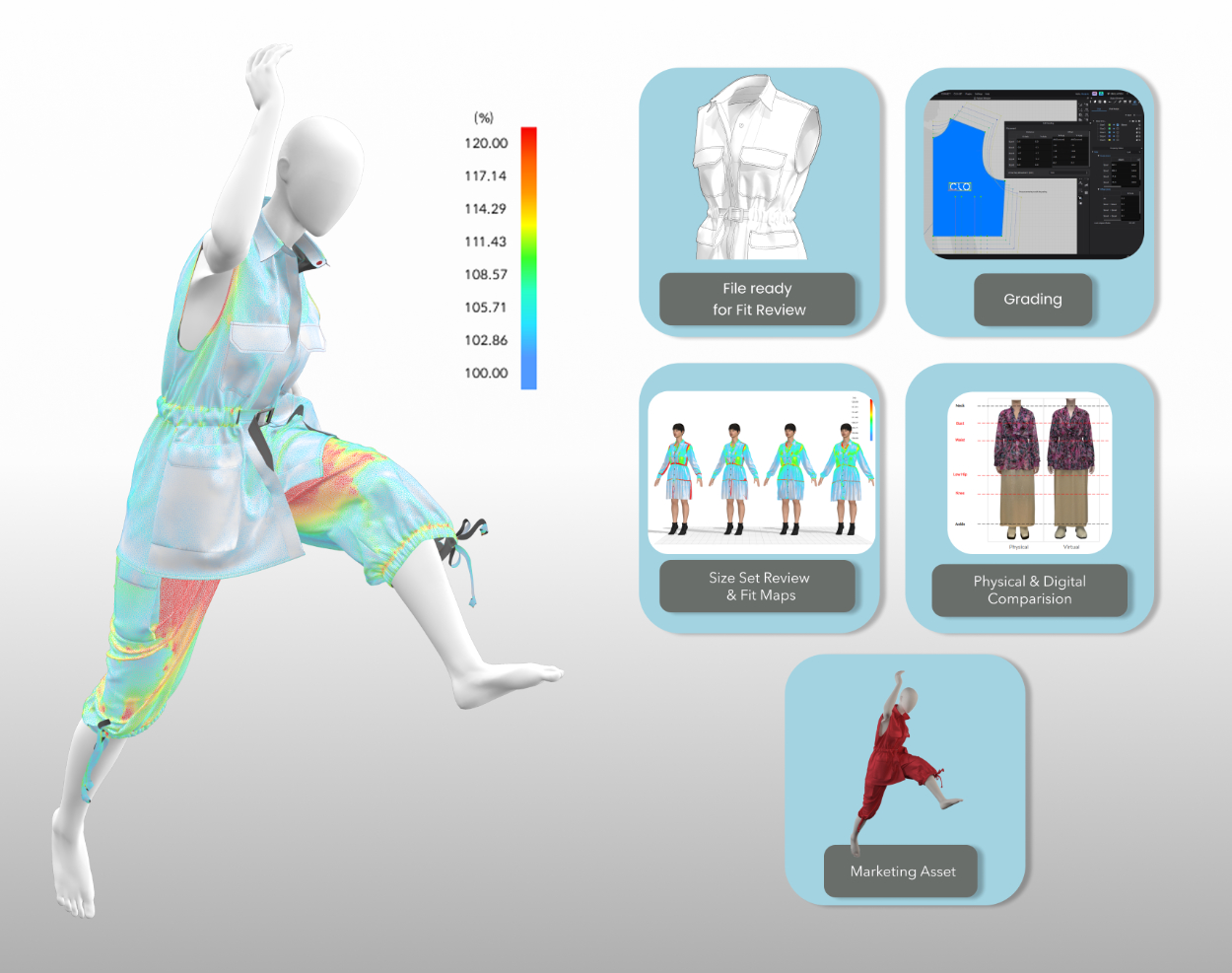
And that first attempt is how we measure success. We’re less focused on a benchmark score than on whether brands, vendors and designers get the right result the first time, whether they come back, whether they stop fighting the tool. When AI clearly understands your 3D data and operates in an environment you control, trust then follows.
On the opposite end of the spectrum to end user trust and adoption is internal deployment and uptake. You’ve committed to turning CLO into an AI-native company, and you’re on-record as saying that AI will allow you to build the things your customers want faster and cheaper. CLO has been in business for the best part of twenty years, so you’re far from a startup, and you’re also deeply embedded into the fashion technology ecosystem. What does it actually look like for a company of your maturity, with roots that deep, to find a new way to operate and build?
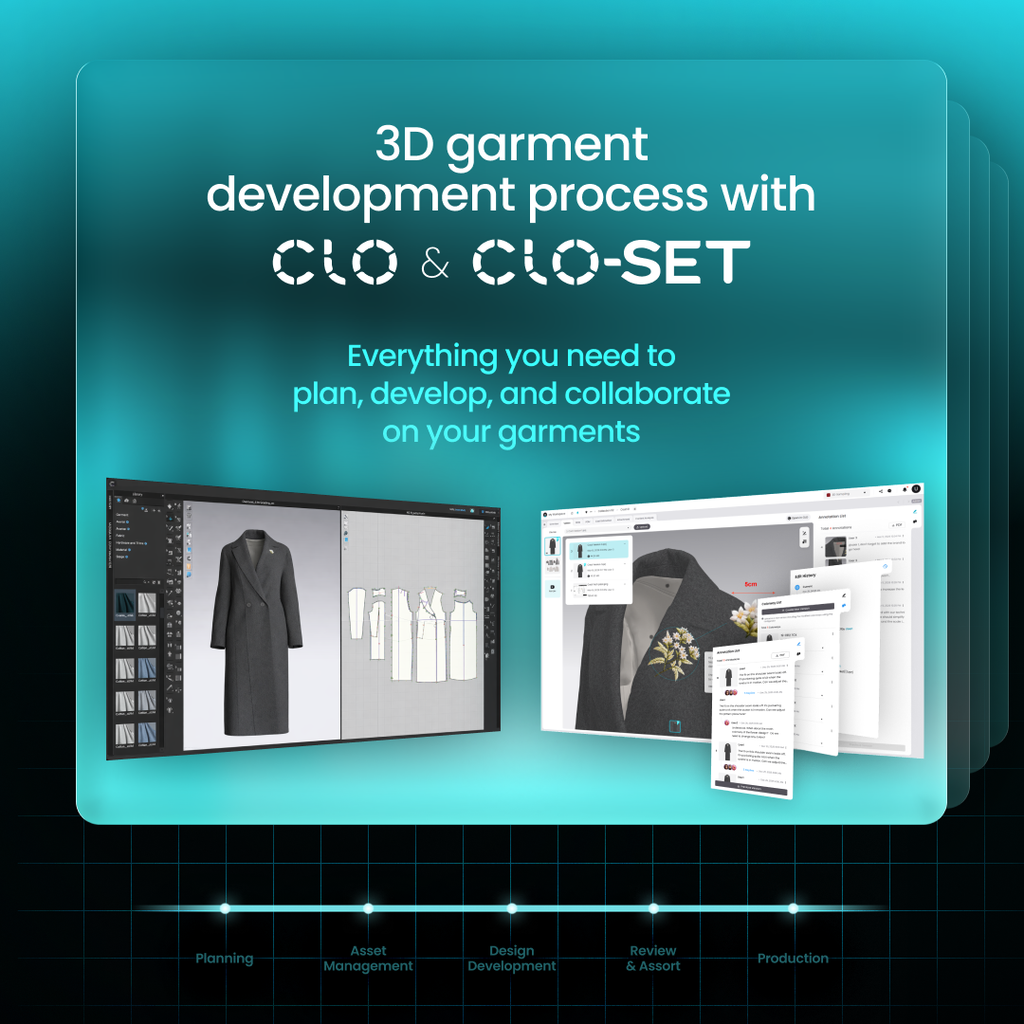
It’s true we’ve been at this for almost twenty years, but I don’t think of us as a legacy company. From day one, our DNA has been about building things the fashion industry hadn’t seen before. CLO, our core 3D software, and CLO-SET, our cloud collaboration platform, were both new and unprecedented when we started. There was no playbook. We had to break new ground to make them work.
So our development process has never really sat still. We had to keep changing in order to build and scale new technology that will help the industry. That’s why for us, moving to an AI-native way of working isn’t a sudden pivot, or some disruption to our culture. It’s a natural extension of the path we’ve been on for two decades. Finding a new way to operate and build is, honestly, just how we’ve always worked.
What’s different this time is the scope. Becoming AI-native, contrary to what people tend to assume, isn’t an engineering project. We’re trying to integrate it across every part of the company. We’re rethinking our workflows not just in software development but in consulting, education, marketing, the whole organization. The goal is for everyone to be operating with the same forward-looking approach, rather than having one team race ahead while the rest work the old way.
And the reason behind all of it is pretty simple: our customer base is global, it’s incredibly diverse, and the needs keep expanding. An AI-native approach allows us to be effective in continuing to deliver the kind of solutions they’re asking for, and to do it faster and more efficiently than we could before. That’s really what’s driving the whole shift for CLO.

You’ve spoken before about the difference between visually representing something and having an accurate and complete simulation of that thing, all its constituent parts, and the relationship between those parts. The analogy CLO has used is the difference between a menu and a recipe. This, from our perspective, remains the primary distinction between AI and 3D, in the sense that both can depict something, but only one – 3D – is set up to try and capture it, and to become a reference frame or a source of truth. It’s also, though, fair to say that the vision for a complete “digital twin” hasn’t been fully realised. It’s clear you see 3D as the right container for the ‘recipe,’ but do you think it’s capable of filling that role today, or is that something the technology needs to evolve into?
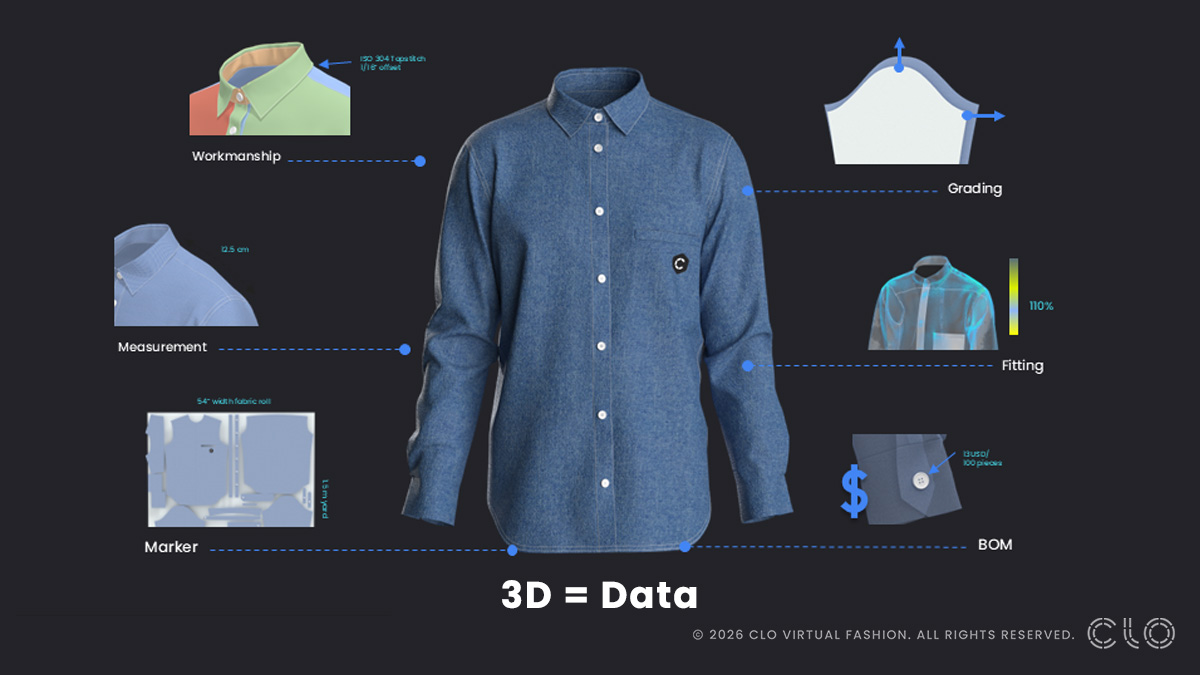
3D has come a long way toward being a complete container for the recipe, and we’re still pushing to make it a true single source of truth (SSoT) for the industry. To get from a visual representation to an actual engineered simulation, we’ve invested heavily in capturing the real physical reality of a garment. And we’ve hit some real milestones: advanced pattern CAD, our own proprietary devices that measure fabric properties with a lot of precision, the simulation accuracy itself, photorealistic rendering. So the picture you’re looking at has real physics and real measurement underneath it.
But visual accuracy alone was never going to be enough. For 3D to truly be the source of truth, every single thing made with CLO has to be production-ready data: every pattern piece, every fabric spec, every trim. That’s our bar. Not ‘does it look right,’ but ‘can the factory make it?’
So to answer the question directly, I think 3D is extremely close but there are specific places where it still needs to evolve. We’re working to get every small detail to translate cleanly into manufacturing data. A couple of pieces are genuinely still missing from that pipeline. Manufacturing processes like complex seam treatments and bonding are areas that still need work. Physical trims are another. Intricate hardware such as velcro, magnets, cords, buckles, require deeper data integration before it’s truly production-ready.
In short, the container is real and it’s already doing the job to a large extent. But as we close out these last gaps, 3D technology fully becomes what it was always meant to be: the complete recipe, the definitive source of truth across the entire product lifecycle.

Between 3D and the fastest-maturing category of generative AI (image generation and editing) we’ve seen a massive widening of the beginning of the product funnel. Whichever avenue a company chooses, it’s easier than ever to bring an idea to life – and to present it to people who can make decisions based on it – without physically making anything. It seems, though, that explosion of early-stage potential is then creating a serious bottleneck when products do need to be engineered and manufactured. The processes downstream of design are therefore under a lot of pressure, as well as running on sets of very entrenched systems and platforms, and creating challenges in data quality and quantity. Your vision is to use AI to “exponentially speed up” these downstream workflows. How?
The explosion of early-stage ideation that generative AI has unlocked is, to be honest, incredible. But all that creative potential means nothing if you can’t actually turn those concepts into physical products. So when we talk about exponentially speeding up the downstream side, our focus is building the technology that converts those highly creative assets into actionable, manufacturable data.
The way we’re bridging that gap involves a few connected pieces. The first is AI-driven BOM generation. We’re building technology that can look at a design image and automatically pull out what it needs to build a bill of materials. The key part: it isn’t starting from scratch or inventing things. It identifies and pulls the right patterns, fabrics, and trims straight from the customer’s own asset libraries to match the visual concept. So you’re grounded in real, usable components from the very first step.
Then, once you’ve got a BOM or a quick tech pack, you need to actually visualize and engineer it. We’re investing heavily in bringing parts of CLO directly into the browser. It means you can generate 3D garments straight from that BOM or tech pack data, right on the web; no heavy install, no friction. The jump from data to a real 3D asset becomes almost instant, and it’s accessible to a lot more people in the chain.
And because all that product data is accurately linked and structured from the very beginning, we can then generate comprehensive tech packs automatically. That’s the part that eliminates hours of manual data entry, which is exactly what tends to bog down sample-making and production for vendors and manufacturers.
So the vision isn’t really about making any one task faster. It’s about making the whole handoff seamless, from ideation to development to production. When you take the manual friction out from between those stages, you relieve the pressure on those entrenched downstream systems and you accelerate the entire product lifecycle. That’s how we turn the front-end explosion from a bottleneck into actual momentum.
Where do you see the role of AI agents in the typical product journey? You’ve referenced the desire to create a “System of Action” that can drive work forward in the product lifecycle, and that can play host to agents driven by natural language strategic goals such as “secure a 30% margin for this season,” and capable of parsing different scenarios for booking capacity, generating tech packs and BOMs, and then presenting the user with different options to review. That seems like something that requires a much more interconnected technology and data estate than is typical today. What do you believe it’s going to take to get to where this feels like a realistic outcome?
Everyone wants to talk about the agents, but the truly critical factor is the data those agents are going to run on. The quality, how well it’s structured, whether it’s even available. So for CLO it comes down to two things: building a real data foundation, and unifying where people actually work.
When it comes to the former, there’s master data: the complete digitization of the core physical items, so your garments, patterns, fabrics, trims. And then there’s operational data, which is everything generated on top of those items across a season: planning sheets, BOMs, tech packs, purchase orders. You need both. The physical reality and the paper trail, basically, and today a lot of that second layer still lives in disconnected files.
The second pillar is the harder cultural problem, and it’s the one I’d point to as the biggest hurdle in our industry, which is the gap between doing the work and entering the data. The handoff is where it breaks down. CLO is building a System of Action (“SOA”) for the fashion industry. The idea is that the work itself happens inside a central platform – CLO-SET – so the data isn’t something you stop and enter afterward. It gets generated organically, as a byproduct of just doing the work.
It’s that foundation that is critical. Once the work and the data are genuinely one and the same, then the agents become realistic. It can take a goal like “secure a 30% margin this season,” run the scenarios, weigh the capacity booking, generate the BOMs and tech packs, and hand you back real options. This is only possible because it’s sitting on data that’s clean and connected. The agents are the visible part. The foundation is what actually makes them work.
Last year, we asked technology executives whether they predicted AI would become more obvious, as a primary interface paradigm, or whether it would disappear into the background in the way that vital but invisible platforms like AWS and Azure have done. This year’s data suggests that the answer is both: fashion professionals that use AI interact with it as both the engine and the steering wheel. But we also see that, for a lot of companies, both kinds of applications are still largely in the scoping or refined-pilot stage. What do you see being the trigger for deeper adoption and wider roll-out?
To get at that, I think you first have to demystify AI a little. At the end of the day it’s a tool. A powerful one, and it can absolutely drive innovation as both the engine (the backend processing) and the steering wheel, the interface people actually touch. Both are real.
But here’s the practical reality. It doesn’t matter how powerful the engine gets if nobody wants to (or can!) drive the car. If people don’t adopt the system, data doesn’t accumulate. And if the data isn’t building up naturally, then the end-to-end digitalization that companies say they want simply can’t happen. It all stalls in the same place.
So when you ask what the trigger is, I don’t think it’s some sudden leap in backend AI capability. At the moment, it feels like it’s more about perfecting the steering wheel. It’s making the individual functions so seamless and intuitive that designers just reach for them in their daily work, without being told to. When the workflow is frictionless – and that’s what things like our web software and automated tech pack generation are really about – the data accumulates on its own. And once that data is flowing, even at today’s level of AI maturity, you get an enormous amount of innovation. You don’t need to wait for the next model.
So the real catalyst for wider rollout won’t be some ‘AI-only’ solution. It’ll be the comprehensive improvement of individual workflows, using the right mix of all the technology available. AI where it fits, and everything else where it fits better. Make the work itself effortless, and the bigger innovation and the wider adoption follow on their own. That’s the part I’m most convinced of.