
Key Takeaways
- Agentic commerce is one of retail’s next big bets, but a proliferation of different, intersecting surfaces, and further agent bans, are creating a confusing landscape.
- By opening up the mainstay Creative Cloud solutions to third party agent access via MCP, Adobe is making a familiar bet on the post-interface technology era, at the same time as airing generative experiments that dispense with any notion that what we see is a photograph.
If you’ve been reading The Interline this year, you’ll have seen us talk about the post-image era, the decline of trust in photography as a ground truth, and the tense relationships being forged between the companies making “personal agents” and the retailers they’re attempting to buy from.
This week, all these different pieces – and more – came full circle, in a way that’s both intoxicating for creative and commercial professionals who are fully bought-in to the idea of generative imaging workflows and agentic commerce, and also dizzying (and not in a good way) for more casual observers, consumers, and creative professionals.
The easiest of the stories to explain is, ironically, set to potentially be the most confusing and circular in practice. Towards the start of the month, Zalando announced that it was launching a shopping agent. “Nothing remarkable about that,” you might be thinking. After all, almost every brand and retailer has been experimenting with preparing their storefronts for a predicted influx of AI agents browsing on behalf of human buyers. And other retailers have prepped or deployed their own on-page assistants designed to pair visitors with products in a way that starts to approach the industry’s holy grail of personalisation.
The complicating factor here is that Zalando’s agent doesn’t just browse the Zalando catalogue. According to the announcement, and reporting conducted afterwards, the service is designed to also shop (and, from next year, to conduct full checkouts) other retailers’ storefronts.
It’s not immediately clear what the business model here is, since AI agents are notoriously not cheap to run, requiring not just inference from a reasonably capable model, but also a ‘dedicated’ (realistically, shared and containerised) cloud computer of their own. But there’s at least a chance that the European retail giant sees an opportunity to adopt a similar model to Meta’s Muse, which is currently unmonetised, but which is intended to eventually become self-sustaining, and potentially profitable, by taking a cut of all transactions it has a hand in steering.
For Zalando, then, this initiative has the potential to become a revenue stream rather than what most retailers seem to see personal agents as today: a cost to be embraced, tolerated, or minimised.

But stepping aside from the potential business justification, it’s difficult not to see this move as a testament to just how convoluted and self-devouring the AI-native eCommerce infrastructure is becoming. In a very literal sense, we are approaching a scenario where a consumer can have an AI agent search and buy for them, with the knowledge that the agent is incentivised to maximise transaction volumes, or they can open a retailer’s app they already use and have it… shop at other retailers? Perhaps The Interline is getting old, but this seems straightforwardly confusing.
And this is in addition to the proliferation of other personal agents and shopping apps, including the early movers who have invested heavily in building out platforms and partnerships, only to now see what was a fairly well-defined space drift progressively out of focus.
As a case in point: eBay this week drew its own line in the sand and blocked what appears to be all autonomous shopping agents, including Muse. And when we stack this next to the transaction-focused commercial model we’ve just described, it’s not difficult to see why they’d take this step. Retailers have a well-documented desire for as much transaction volume as possible to flow through their baskets.
To complicate things further, while it’s been the case for months that brands have been able to create ‘experiences’ inside of ChatGPT, these have so far been fairly isolated initiatives that linked out to the brands’ own storefronts to complete a sale. And to take another hard turn, this gap between users seeing a product in ChatGPT and being able to buy it came about because… OpenAI trialled and then abandoned an in-app cart and checkout that was intended to generate revenue by, you guessed it, taking a cut of transactions completed end to end in the AI application.
It’s a cliché to say that there are no new ideas in technology, just better-recycled ones. But that aphorism has some special relevance in this week’s next turn: the introduction of business profiles within OpenAI’s app. These are technically available to any business, but the announcement makes it explicit that their primary value is for eCommerce companies, giving them “a new way to answer questions and help people explore their offerings”. Businesses can also sponsor those agents, integrating them into the nascent ChatGPT ad ecosystem.
In isolation, this seems like a relatively innocuous evolution of Google’s long-running business profiles. In context, it’s yet another agentic surface for consumers to potentially interact with, and for brands and retailers to make sure is on-model, and is properly grounded in an up-to-date catalogue. OpenAI is promising to provide new tools for visibility and tracking as part of this programme, but obviously these tools will only apply to visibility that runs within ChatGPT’s own walls, rather than across the potentially vast landscape of other agentic applications.
Again: The Interline may be falling behind the times as a consumer, but this seems like a lot of potential avenues to go down for agentic shopping. And, probably more importantly, it seems like a further example of the AI ecosystem starting to swallow its own tail.
Before you read on...
Our weekly news analysis will always be available to read here at The Interline, but you can get it (along with notifications for new podcast episodes, events, and more) in your inbox by signing up to our mailing list.
But if the commercial applications of AI come across as confusing this week, they have nothing on the wild frontier of photo manipulation and generation.

This week was Adobe’s annual MAX conference, and it represented the boldest (or, depending on your perspective) most bizarre take on how heavy a hand agentic AI is going to have on the tiller of art, illustration, photography, and content creation.
The most predictable of the announcements was that the biggest hitters in the Creative Cloud (Photoshop, Illustrator, Premiere and After Effects) would be opening up to MCP access for third party agents like Claude, ChatGPT, Gemini, and so on.
This, by itself, isn’t especially surprising. In a podcast interview this summer, Weber Wong, the CEO of generative creative workspace FLORA, made a strong case for the fact that creative professionals are increasingly happy to collaborate with agents, using natural language, rather than sticking to traditional desktop tools for everything. And, to Adobe’s credit, the approach described this week is designed to ensure that the work agents do – either completely new generations, or edits to existing works – remains non-destructive and reversible, since they’re performed as layer edits.
But again, this is a story we have to place in context. Adobe’s tools have long been the de facto standard for both embedded and freelance creatives, and while there’s little doubt that some of those professionals will see this as the next logical step in their evolving toolset, the unavoidable reality is that this also opens up the same capabilities to professionals who would previously not have taken on image work, illustrations, layouts and so on.
And the essential background to this reminder is an update, published this week to coincide with Anthropic’s launch of the new Fable 5.2 model, to the Scale Labs Remote Labor Index, which assesses “the capability of AI agents to perform real-world, economically valuable remote work”. That definition includes video, CAD, and graphic design work, and the latest scoring shows that Fable 5.2 has doubled the previous high watermark – scoring more than 40 points on what is, lest we forget, an index of how soon freelance and remote workers can be replaced.
Adobe is keen to point out that its approach to AI, especially as embodied in Firefly, is about empowering what it refers to as “every creator”. But it’s important for fashion in particular to reckon with two uncomfortable questions: whether that wider spread of creators is diluting the pool of work, and consequently the pool of talent for existing professionals, and what, exactly, those new creators are going to be making with AI, and whether or not it runs the risk of straying so far from what we consider traditional art, or photography, that it becomes something else entirely.
And that’s more than just a thought exercise. MAX has become famous as much for the “Sneaks” that the Adobe team shows at the event as it has the marquee product announcements, and this 2026 edition pushed the presentation of those experiments even further, to extents that are truly stretching the definition of photography.
The first Sneak our team wanted to analyse this week was Project Sight Span, which, to quote Adobe’s own reference page, “transforms a single image into a fully interactive, navigable world. Creators can step inside, explore freely, frame shots beyond the original image, and render new images or camera-controlled videos.”
This is technologically fascinating. The Interline has had some well-documented opinions on so-called ‘world models,’ but it’s important that we remark on just how much innovation is packed into this idea of taking a static visual and then not just slightly reframing it (which readers might have experimented with if they use a generative workspace, or have even tried the feature on a Siri AI-capable iPhone) but shooting a fundamentally different part of it, from a completely different angle.


This is also, if it becomes a generally-available feature, potentially a watershed moment for the level of trust that shoppers are able to place in campaign imagery, or photography in general. As interesting as the quick-3D-modelling approach applied here is, the reality is that every new output from a pipeline that involves “stepping into” a flat image and pointing a lens in a different direction is, by definition, synthetic. This is not content magically extracted from slightly out of frame; this is new, generated content inspired by the original work.
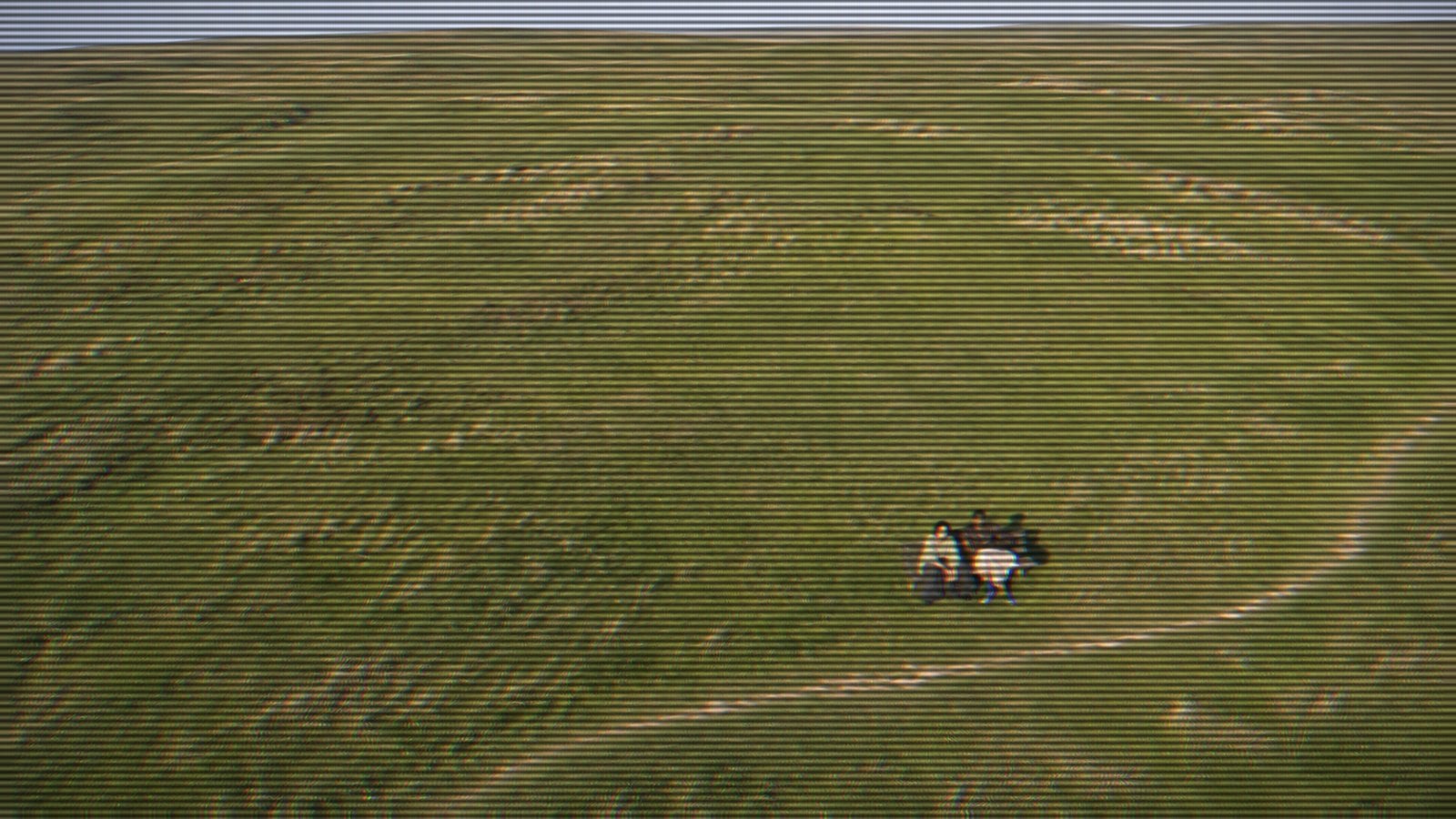
Combine this with the other Sneak that the team picked to look at, Project Hands On, and that notion of self-referential unreality goes even further. Hands On, to quote Adobe’s announcement, would, if it becomes generally available, allow users to “edit an image by working on it directly. Project Hands On analyzes what’s in the image and builds controls right on the canvas, such as control points on a mug’s handle, so you can reshape details by dragging instead of rewriting a text prompt.”
It’s not hard to see the potential for fashion here. A physical shoot where a garment didn’t drape quite right can be fixed in post using non-specialist tools. A generated photo can be adjusted by manipulating it directly on the canvas. Again, though, while the demos, and the technology behind them, are extremely impressive, it’s essential to remember that these tools are generating new content, not performing what we traditionally think of as “edits”.

To end, we invite readers to think about a campaign, put together by a creative agency (in house or external). That campaign could have been shot the traditional way, or it could have been built with generative tools. Either way, it has so far represented a relatively fixed deployable. Now imagine anyone from your marketing department being able to reframe it, to shoot it from the opposite side (with topography and scenery inferred). Then picture that deliverable making its way into a social campaign where it gets reframed again.
We don’t need to think too far ahead for this to become a quagmire for creative teams, as well as further erosion of opportunity for creative professionals. And neither do we need to cast our minds too far forward to see the commercial side of things (especially agentic commerce) working its way into the same kinds of knots.
In The Interline’s opinion, fashion now has a potentially destructive cycle on its hands, and one that will require companies to take a step back and ask what they’re creating, who they’re creating it for, and how much it matters if both creative and commercial functions end up in a downward spiral.