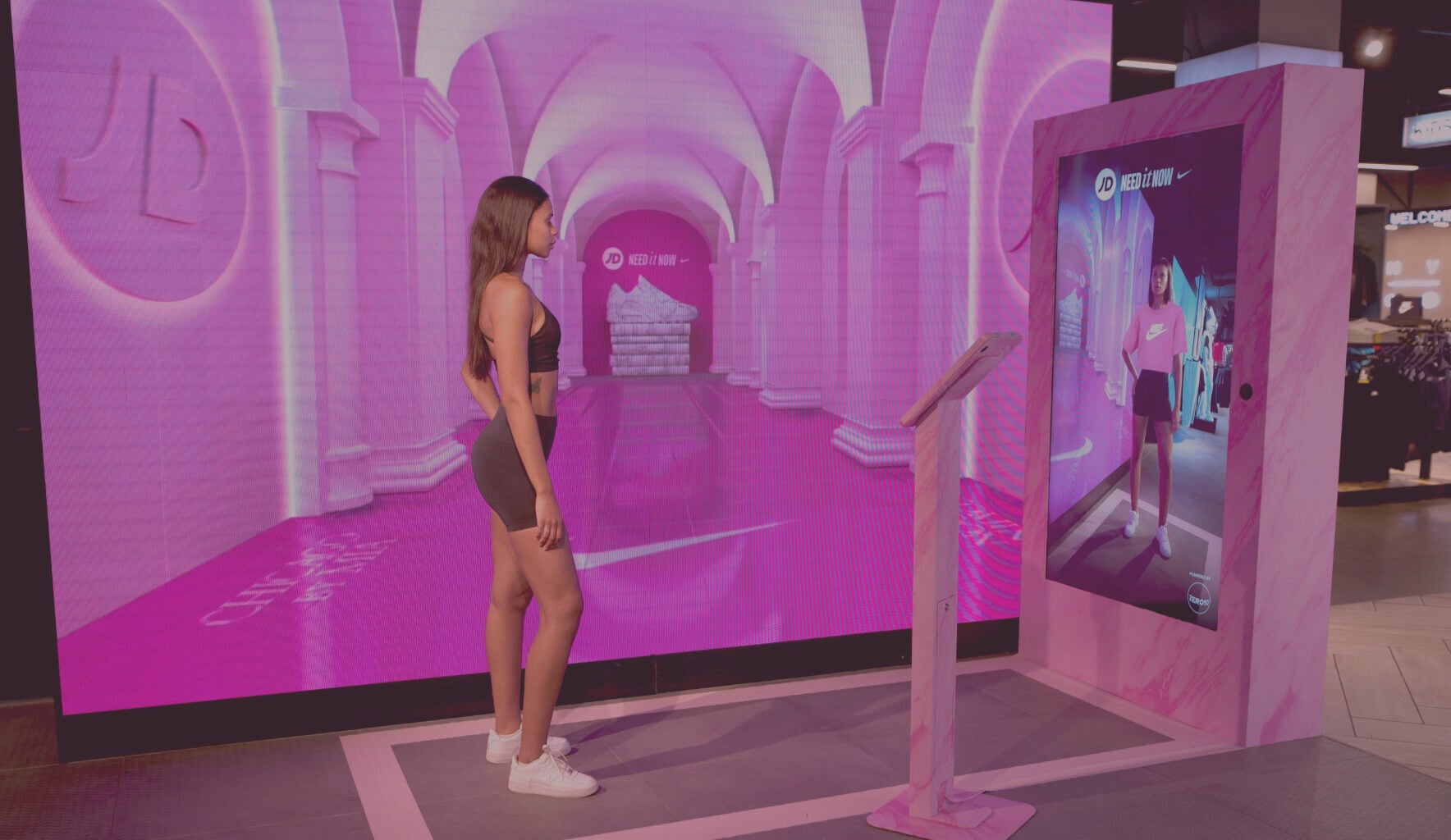
[Header Image provided by ZERO10]

Our third podcast episode for 2024 is now available. This time around, Emma spoke with Maxim Raykhrud, Chief Product Officer at ZERO10. The company offers real-time, augmented reality try-on experiences designed to empower brands to engage their audiences. Through their own research, ZERO10 has discovered that storefronts that incorporate augmented reality (AR) try-on experiences have heightened consumer engagement compared to traditional video advertising, and significantly higher store traffic. This makes virtual try-on not just a potential way to reduce returns, but also a broader play into acquiring and captivating consumers.

But for all that potential, virtual try-on is still a contested space. So in the conversation with Maxim, Emma covers the challenges virtual try-on faces in believability and accuracy; concerns over privacy, data protection, and compliance; and how the ZERO10 is thinking about its AI developments, and what that could mean for the broader fashion industry.
Listen to the full 35-minute show below (or by following The Interline Podcast through your podcast / audio app of choice) and read on for some additional details.

Key talking points from Emma and Maxim’s conversation:

  • Defining virtual try-on and AR, and what they should accomplish in order to be a success.
  • Where the fashion industry is on the journey to market readiness and more widespread consumer adoption of AR virtual try-on.
  • What shoppers want AR virtual try-on to deliver, and how close technology is to being able to offer it.
  • How big of a technical challenge visualising clothing is for AR virtual try-on, in terms of creating virtual try-on experiences that are both accurate and visually compelling.
  • The barriers around privacy, data protection, and compliance that need to be considered when body-mapping virtual try on apparel, and who is responsible from a brand/technology vendor perspective when it comes to data governance.
  • How brands and retailers should be thinking about AR and virtual try-on to deliver a deeper, longer-term return on investment.
  • The case for integrating AI into virtual try-on, and how far it could move the needle on wider adoption of AR try-on.
  • Whether virtual try-on is a new endpoint in the digital product creation (DPC) ecosystem, and what it looks like to get digital assets from 3D design tools and into AR experiences.
  • The impact that AR and AI could have on the next generation of creatives.
Image provided by zero10

Catch up and follow the show:

Use these embedded players to listen to the latest episode of The Interline Podcast on Apple Podcasts or Spotify, to catch up on episodes from our past, or to follow the show on those popular platforms so you’re notified when future episodes release.

The Interline Podcast is also available on most other podcast platforms – simply search for us in your listening app of choice. And look for our next episode very soon.


You May Also Like
BNPL Meets Repair, An AI-Shaped Holiday, Tech ROI Analysis, And In-Store VTO
Read More: BNPL Meets Repair, An AI-Shaped Holiday, Tech ROI Analysis, And In-Store VTO

BNPL Meets Repair, An AI-Shaped Holiday, Tech ROI Analysis, And In-Store VTO

This week, Grace Robinson and Ben Hanson discuss Klarna’s repair partnership with Save Your Wardrobe, Adobe’s holiday shopping forecasts for AI and buy now, pay later, a16z’s findings on consumer and business AI adoption, L’Oréal’s market value and beauty’s relationship with technology, and Tesco’s in-store virtual try-on trial.
How Much Will Fashion Let AI Decide?
Read More: How Much Will Fashion Let AI Decide?

How Much Will Fashion Let AI Decide?

Our data shows that fashion’s use of AI is outpacing its willingness to trust it with important choices. But technology vendors see a clear progression from assisting to automating decision-making, paired with a move away from traditional interfaces. What is fashion comfortable letting AI decide today, and how fast is that frontier likely to move?
Robots On The Runway, AI ‘Showrooming,’ Smart Glasses, And Muse Agent’s Mascot
Read More: Robots On The Runway, AI ‘Showrooming,’ Smart Glasses, And Muse Agent’s Mascot

Robots On The Runway, AI ‘Showrooming,’ Smart Glasses, And Muse Agent’s Mascot

This week on The Edit, Grace Robinson and Ben Hanson discuss robots on the runway at Vogue World, AI showrooming and shopping risks, the rise of smart glasses with and without cameras, Amazon's block on Meta's Muse agent, and the appeal of AI mascots and bag charms.
The Future Of Fashion’s Social Strategies
Read More: The Future Of Fashion’s Social Strategies

The Future Of Fashion’s Social Strategies

Social media and influencer marketing have made big marks on fashion - and vice versa - but strategies are changing as a result of both synthetic content and the tech-led evolution of creators into something more closely resembling traditional media. What’s next for brand marketing?
The Case For Making Wearable Medical Technology More Visible
Read More: The Case For Making Wearable Medical Technology More Visible

The Case For Making Wearable Medical Technology More Visible

Deafmetal Founder Jenni Ahtiainen, who designs jewellery and safety accessories for hearing devices, shares a different vantage point on the relationship between wearable medical technology and self-expression, and what overcoming the stigma attached to hearing loss can tell us about a much bigger emerging category.
Fashion’s Ongoing Dance With Deferred Payment Credit
Read More: Fashion’s Ongoing Dance With Deferred Payment Credit

Fashion’s Ongoing Dance With Deferred Payment Credit

Fintech platforms have become increasingly tied to brands' and retailers' pursuit of growth in customers, ABV, and GMV. But with new guardrails applied to buy-now-pay-later, and the cost of living rising, could card-linked instalments be different enough to change things?