Fashion websites have had a fairly fixed form for a long time. A/B testing, which is typically managed within the confines of existing structures, wireframes, and elements, can put different content into the frames that appear to different consumers, with different profiles, but they represent a relatively crude toolset compared to the idea of composable, pageless websites developed by a spin-out team from within Brunello Cucinelli: Solomei AI.
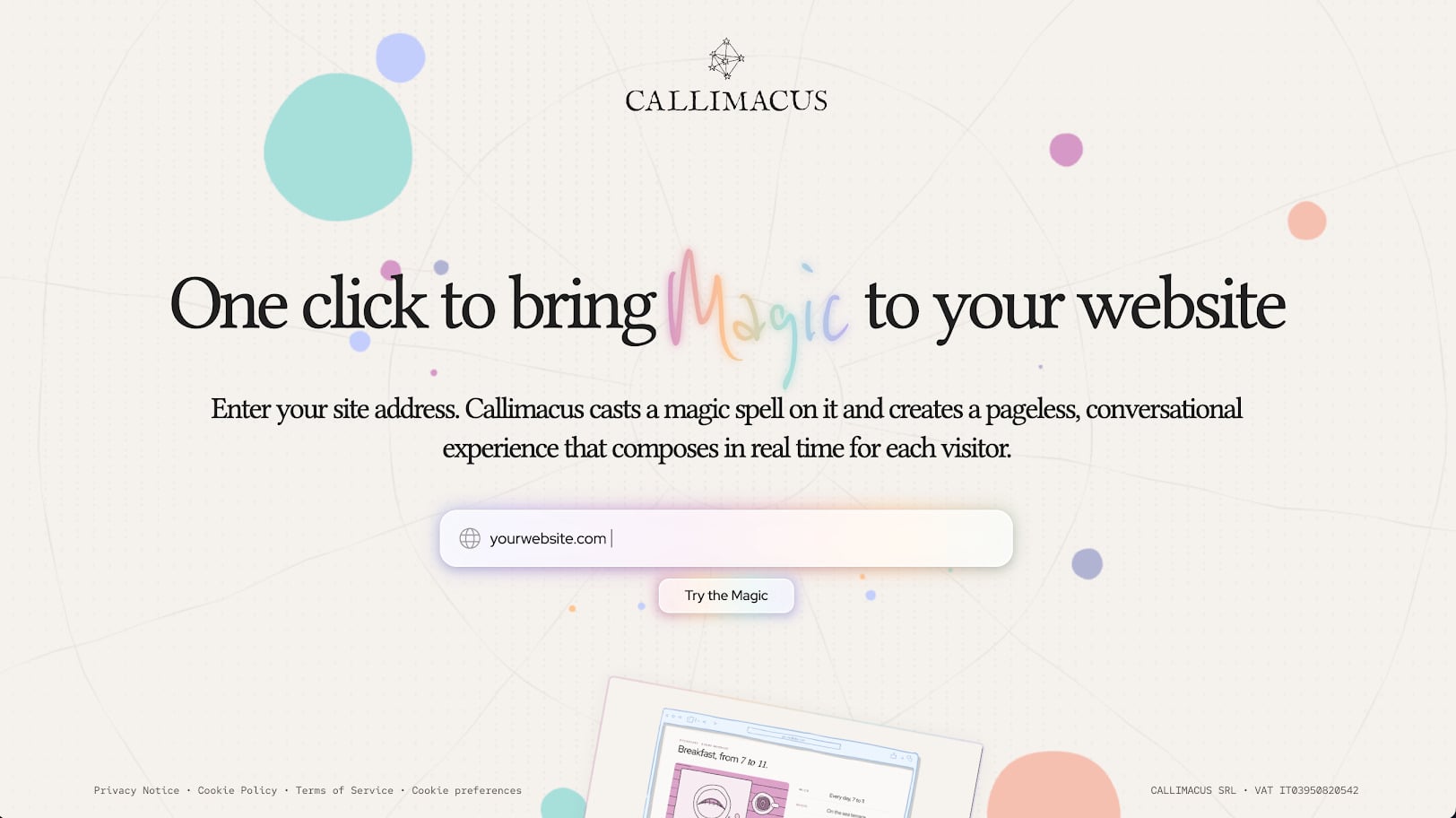
Now, with Magic, announced on 24 November, that composable framework (Callimacus) is being packaged up into a form that’s easier for brands to try: a platform that uses AI to compose the entire experience at run-time, based on the visitor’s intent.
In that announcement, the company says users can enter an existing website address and receive a new, pageless preview within hours, which they can share, tweak, or adapt through a natural language interface. The initial trial is free; purchasing a plan then allows the user to publish the new pageless version to their own domain or, more likely, subdomain. The release names Salesforce Commerce Cloud, Shopify and WordPress among the platforms it can connect to – one of whom was also an investor in the funding round that Solomei AI announced this summer.
The underlying idea will be familiar to long-time listeners of The Interline Podcast, who might have heard our March interview with Francesco Bottigliero, Head of Humanistic Technology at Brunello Cucinelli, and CEO at Solomei AI. In that conversation (which we encourage readers to go back and revisit) he illustrated the approach with the example of someone browsing for a gift. A site might initially favour videos and editorial about craftsmanship, then shift towards product options as their behaviour suggested they were closer to buying. He also emphasised that the imagery and video in the Brunello Cucinelli implementation were prepared in advance; AI then composed the experience from those assets, rather than generating things de novo.
In March, Bottigliero described a product team supported by system integrators and creative partners handling customer projects, making Callimacus a bespoke deployment. Today, with the announcement of Magic, the ambition is evidently to give fashion teams a way to evaluate a different presentation of their own material before committing to a wider implementation.
The Interline has been clear and consistent in its belief that software in general will soon go down this composable route, which makes this week’s announcement interesting for more than just its immediate pitch for a different way of thinking about fashion’s websites.