BOSTON and SYDNEY — March 5, 2026 — Bamboo Rose today highlighted its ongoing partnership with iconic Australian brand R.M.Williams, a long-standing customer of Bamboo Rose Plan, formerly Foresight Retail and now part of the TotalPLM™ platform. R.M.Williams is live on Item Planning and is progressing toward Merchandise Financial Planning, with additional capabilities planned through 2026.
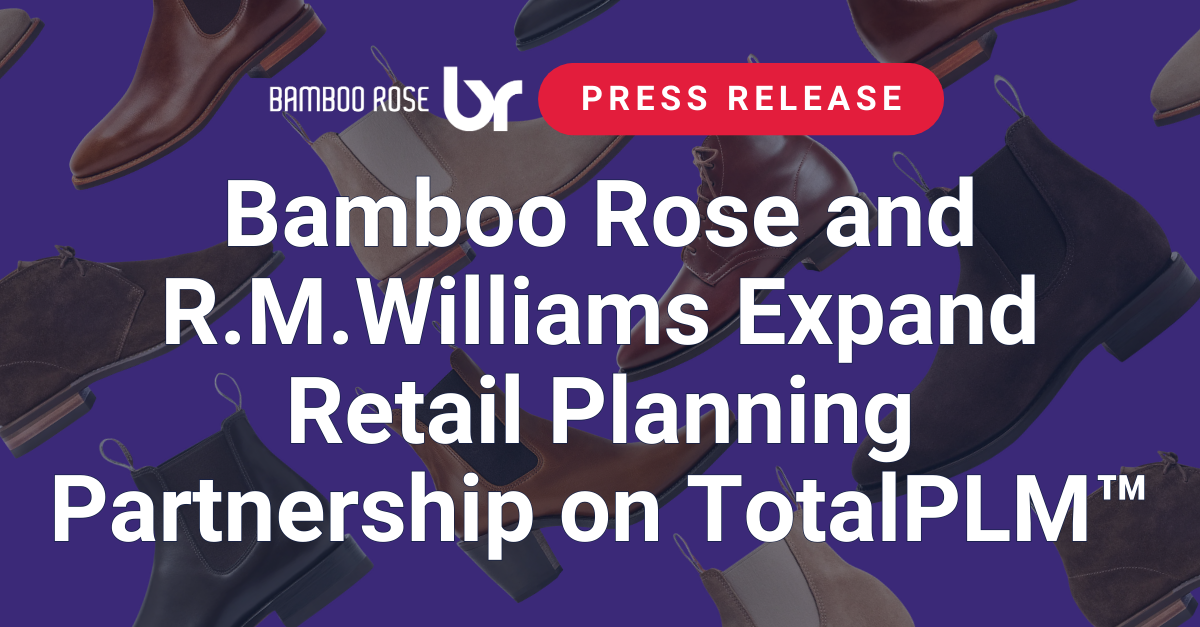
Through Bamboo Rose Plan, R.M.Williams is strengthening planning across both locally manufactured core products, including its celebrated Made-in-Australia boots, and purchased goods. This enables more connected and responsive decision-making across the assortment.
“R.M.Williams has been a valued partner, and it’s exciting to see the momentum they’re building with Bamboo Rose Plan within TotalPLM,” said Gary Lalli, planning product strategist at Bamboo Rose. “Their team is using planning to support a powerful Australian manufacturing story while creating a foundation for future growth and emerging AI capabilities.”
“Partnering with Bamboo Rose is helping us modernize the way we plan and make decisions across the business,” said Peter Ratcliffe, head of technology at R.M.Williams. “By bringing planning into a more connected, data-driven environment, we’re building a stronger foundation for innovation and scalable growth while supporting the unique needs of our locally made and purchased ranges.”
Together, Bamboo Rose and R.M.Williams will continue to expand the partnership to support the brand’s long-term growth, operational agility, and commitment to delivering exceptional products to customers in Australia and around the world.
About R.M.Williams
Founded in 1932, R.M.Williams is one of Australia’s most iconic footwear and apparel brands, known for premium craftsmanship and locally made boots. The brand continues to innovate while honoring its Australian heritage.
About Bamboo Rose
Bamboo Rose is a global leader in enterprise retail technology solutions. TotalPLM™ is the most comprehensive Product Lifecycle Management (PLM) platform, integrating Planning and Merchandising, Creative Collaboration, Product Development, Sourcing, Supplier Relationship Management, Purchase Order Management, and Global Trade Management — all powered by AI-fueled Decision Intelligence. Built for scalability and agility, the Bamboo Rose platform helps retailers and brands optimize operations, drive margin growth, and meet evolving industry demands. Learn more at bamboorose.com or follow us on LinkedIn.
Learn more about Bamboo Rose Plan.