
Kay Takeaways:
- Major brands and retailers are heavily investing in AI for product discovery and transactions (e.g., Nike, Amazon, Debenhams), despite consumer data showing low current adoption rates (only 6% of shoppers want to use chatbots to find new brands or products).
- A parallel market of non-partner AI platforms is emerging, which relies on high-volume, automated scraping of retail websites to aggregate catalogues and track pricing data, bypassing brand control.
- Brands now have incentives to restrict open access to their SKU-level data, as companies in other sectors have done this week, to prevent intermediary platforms creating a competitive edge.
Summarise and debate with AI:
Take the content and context of this article into a new, private debate with your AI chatbot of choice, as a prompt for your own thinking. (Requires an active account for ChatGPT or Claude. The Interline has no visibility into your conversations. AI can make mistakes.)
Right now, AI ranks surprisingly low on the ladder of surfaces that consumers turn to for discovering brands and finding fresh products. But tech companies across the size spectrum are making big bets on that changing.
Compared to traditional channels, a survey shows that only 6% of US clothing shoppers would open a general-purpose chatbot, or interact with a chat applet on a retailer’s website, if they were hunting for a new brand or style today. The same YouGov data, released this week, puts in-store browsing, brand websites, and word of mouth at between 40% and 60%, making them comfortably, still, the primary routes to exposure and purchase.
(Interestingly, influencer recommendations sit at just 7%, which tells us as much about the rate of trust-decline in that market as it does about the penetration of AI.)

Brands themselves, and their technology providers, clearly feel differently. Another survey dataset released this week – this one from DHL, as part of its 2026 eCommerce Trends Report – shows that 72% of sellers either currently use AI to “forecast future trends predict shopper needs” or would consider using it for that purpose. And when it comes to using or aiming to use AI for personalisation, the industry’s lever du jour for increasing engagement and conversions, that combined stat stands at 83%.
In that delta between what the market currently wants, and what brands and technology companies believe it’s going to want, business is brewing – and brand and retail businesses are investing ahead of actual adoption. Although, as we may soon see, they are also potentially investing on the assumption that “public data” will remain public, even if other incentives are working in the opposite direction.
Before you read on...
Our weekly news analysis will always be available to read here at The Interline, but you can get it (along with notifications for new podcast episodes, events, and more) in your inbox by signing up to our mailing list.
This week alone, lesser-known companies (at least here in the West) and household names alike made significant bets on AI playing a larger role in both discovery and transactions. Musinsa, the multi-market retailer of Korean fashion, announced that it would be deploying AI to scrape worldwide trends and then pair those to existing products. While Amazon took a slightly approach to the same problem, which Musinsa referred to as “pre-emptive curation,” by allowing customers to conduct a natural language search that isn’t directly paired to their existing catalogue, but that instead generates images of what it believes the user is looking for, and then matches those images to the closest analogue that does exist in the Amazon warehouse.

And this was also the week that Debenhams Group (the trading name of Boohoo Group, which owns that eponymous brands and others) announced an “end to end” AI shopping flow, in partnership with tech company Hey Savi, with payments handled by Paypal. The joint press release refers to this as the “UK’s first agentic commerce experience,” which seems like a dubious designation, but nevertheless it reflects confidence from one of the country’s best-known brands groups that AI is here to stay in the search and checkout.
Lest we assume this is a regionalised trend, we only need to look a couple of weeks back to see Nike announcing its own partnership with Google, which will allow shoppers to find and buy products directly inside the Gemini app and inside Google’s AI Mode for search. And this is, of course, the same company that famously pulled away from selling through Amazon between 2019 and 2025 – a decision that was widely attributed to a loss of control over the relationship with the consumer, and erosion of brand value and storytelling ability. If you’re looking for a testimonial to back up the idea that big brands believe AI in shopping is here to stay, this is about as noteworthy as they’re going to come.
But beyond the partnership press releases, where the engagement between the brand and the AI model or application provider can be more carefully managed, there’s an equally large potential market emerging. And that market is being defined by AI that is resolutely outside the control of the brands.
The splashiest of those announcements, this week, was the launch of The Mall. A new startup, profiled in Techcrunch and other tech-industry trade press, The Mall is billed as “universal feed” for online shopping. Or, more accurately, it’s a place for active shoppers to aggregate the brands they’re interested in (curating their own “mall” in other words) and to link what would otherwise be browser tabs, pinned newsletter, or notes, directly to brand websites and other channels.
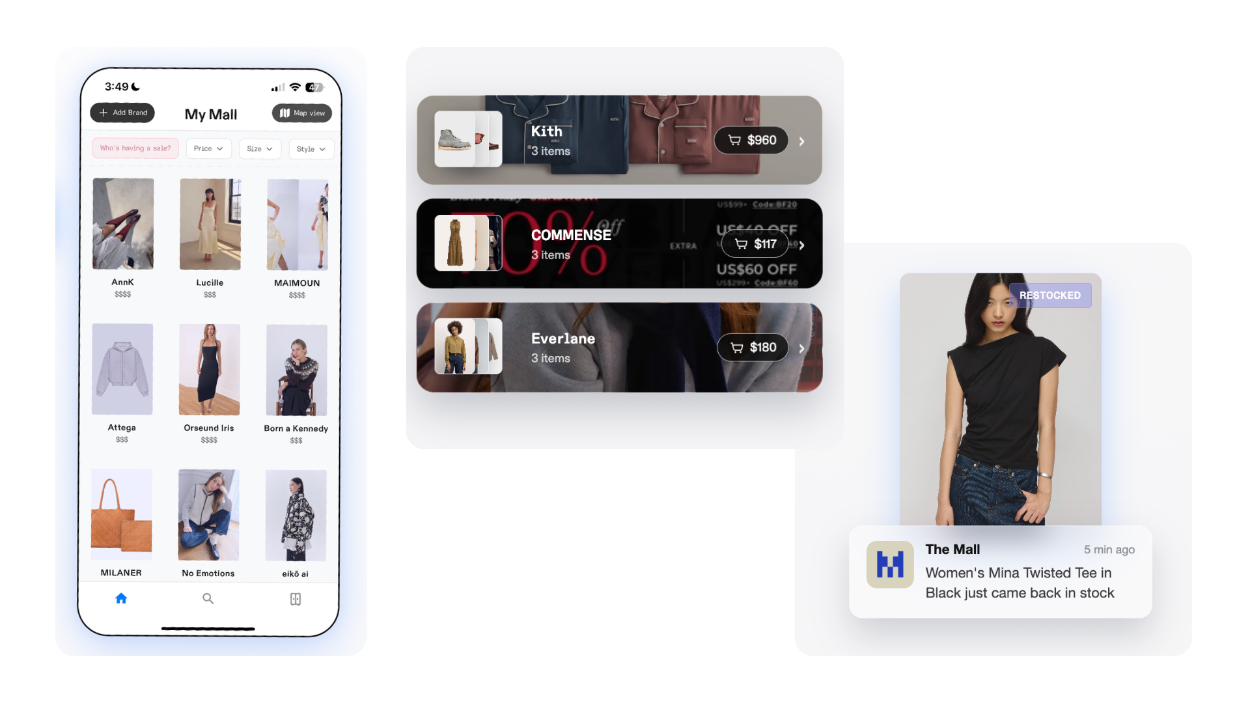
While The Mall is not, on the surface, an AI product, the functionality it advertises relies on the same approach that every other non-partner, multi-brand AI shopping application does: high volume and high velocity scraping. To quote the Techcrunch profile: “Instead of partnering with brands or using APIs, The Mall uses technology to scrape retail websites, pulling in entire catalogs, and tracking product and pricing information within its own app. This scraping is frequent enough to keep an eye out for sales, restocks, drops, and other promotions, which it then alerts users to via push notifications.”
Unsurprisingly, this is the same way that Hey Savi – the company behind the aforementioned Debenhams Group announcement – seems to work. They promise to search more than 10,000 brands, starting from a single photo upload. And while scraping doesn’t get a mention on the company’s homepage, the likelihood of them having forged more than ten thousand brand or retail partnerships is slim.
Scraping, to be clear, is not illegal, even if it is somewhat illicit. It relies on automated bot traffic to explore site maps and individual pages on an ongoing basis, and to then notify by exception – flagging up with something, like a new product introduction or a discount, changes.
The same kind of traffic automation is, notably, behind most agentic browsing. When a service like Claude or ChatGPT interacts with a website on a user’s behalf, it’s doing so rather than calling on any API or MCP tools that website might have.
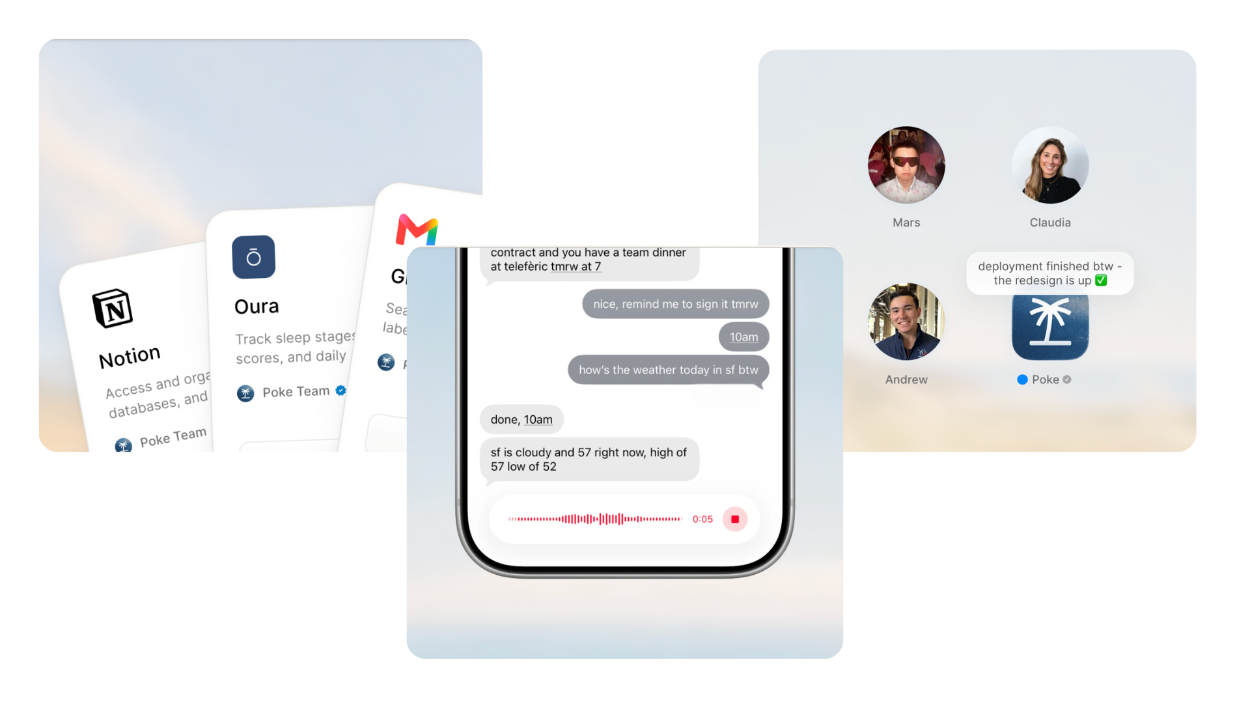
And if predictions for next week’s WWDC conference from Apple are to believed, then we’re likely to see this kind of behaviour become more normalised – a trend that seems to have started with this week’s announcement that AI agent service Poke had become “the first and only AI product to be verified” on Apple Messages. That announcement showed the agent being called in a group iMessage to coordinate a calendar and make a restaurant booking, but it’s a very short hop to having the same kind of agentic behaviour applied to discovering and ordering apparel or footwear.
But just because bot-browsing is becoming legitimised by startup launches and OS integrations does not mean that fashion brands and retailers should see it as inevitable or favourable – because companies in other sectors certainly aren’t.
This week, for instance, Strava (the workout-tracking app that was itself at the centre of a different data flare-up when runners in the UK military were inadvertently exposing the layouts of secret bases by uploading their GPS coordinates) announced that it would be restricting a lot of traffic to authenticated users. And at the same time, publishers gained some traction this week in their aim to be able opt out of the adversarial scraping and AI-training arrangements that Google’s AI overviews have foisted on them.

Threading these trends together, it feels like a relatively sure bet that fashion brands and retailers will take similar steps. It’s no coincidence that some of the world’s biggest managed hosting providers are now opening their research books to reveal just how much internet traffic is now bots and automated crawlers and scrapers, and then introducing turnkey tools designed to allow companies to easily rate-limit, challenge, or straight-up block that kind of traffic.
As was the case with traditional search, it’s unlikely that any brands serious about storytelling and selling online will set out to block Google’s traffic, because the stakes of not being part of AI search are simply too high. But for start-ups, scale-ups, and push-pull relationships like the ones that fashion brands have had with marketplaces, the question is why companies would allow so much value to continue to accrue to platforms that are endlessly scraping content, monetising userbases on top of it, and then throwing a bone the brand’s way with a nominal chance of a referral transaction on the other end.
If that sounds alarmist, consider what Amazon – a company infamous for creating own-brand versions of products it stocks – can do with the data it gets from that generative visual search we cited earlier. The user experience is one part of the puzzle, but the ability to turn multi-brand knowledge into a private-label competitive edge is an example of how quickly publicly-available data can be turned against the company that made it available in the first place.
Which does not exactly create an incentive for that data to remain out there to scrape.
