Welcome back to The Interline Podcast.
Today, I’m going to let you in on a trade secret. Do you want to know the question that I get asked the most often? It’s actually nothing to do with fashion technology. It is: “where are you based in London?” And the answer is usually a surprise for people, which is, we’re not. The Interline might be read worldwide, but we are a UK company. We’re just not based in the capital.
Now, I get why people make that assumption. London is a world fashion capital. It’s a technology hub. It’s one of just a few places I think it makes sense to put on a serious European event alongside Paris, Berlin, Milan and so on. And to be clear, before I make any enemies, I like London. It’s got a well-earned reputation for being where the money is, where the history is and where the culture is in the UK. But England’s second city, Manchester, has seen a pretty precipitous rise up all three of those rankings in the last decade. And Manchester is both The Interline’s hometown and mine.
I might not have been born here. I was actually born in Bristol on the south coast of England. But I’ve spent the majority of my life living and working in and around Manchester, which makes it especially interesting to me to see the city’s economic and cultural growth manifest itself in a new and different and more introspective relevance on the fashion circuit.
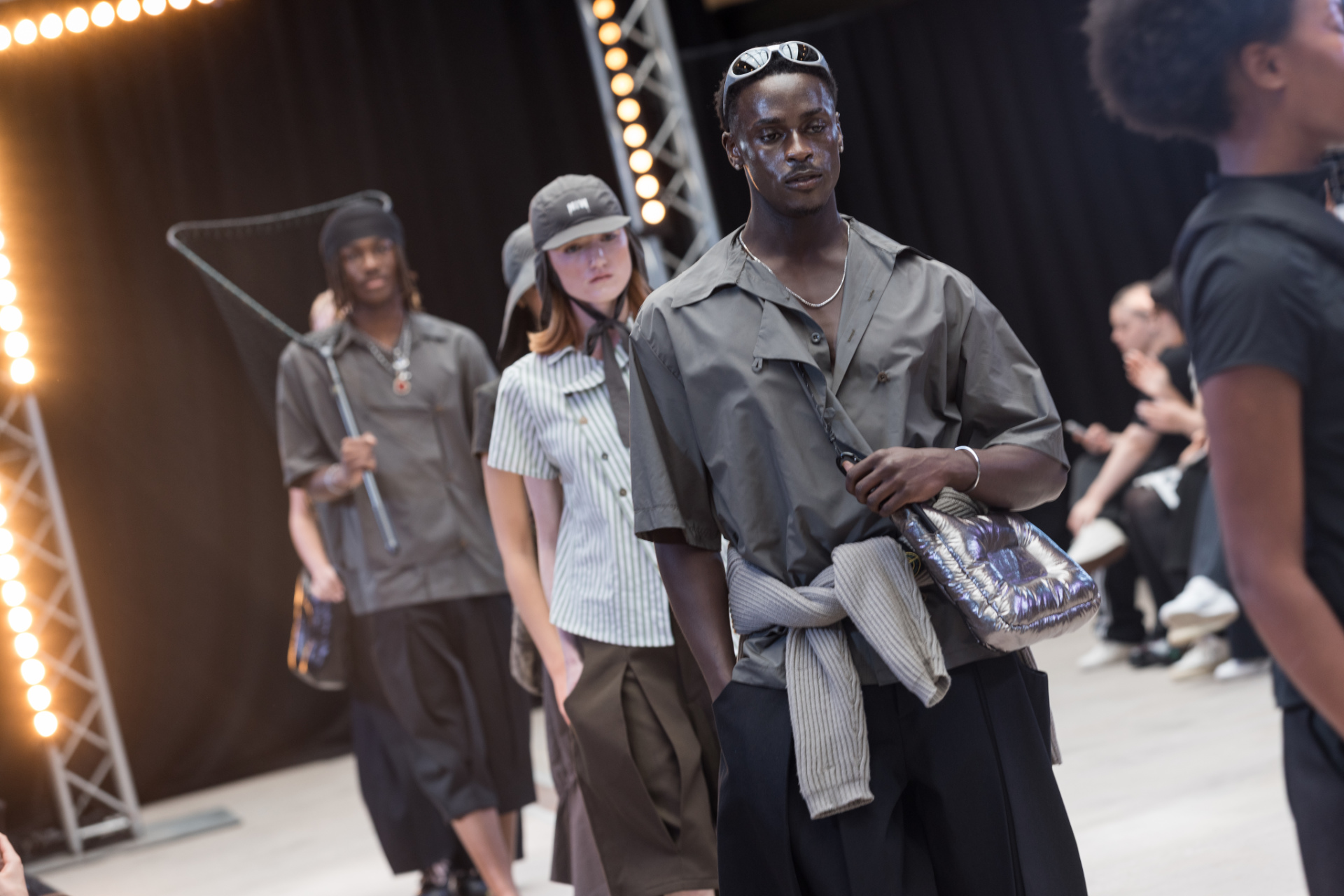
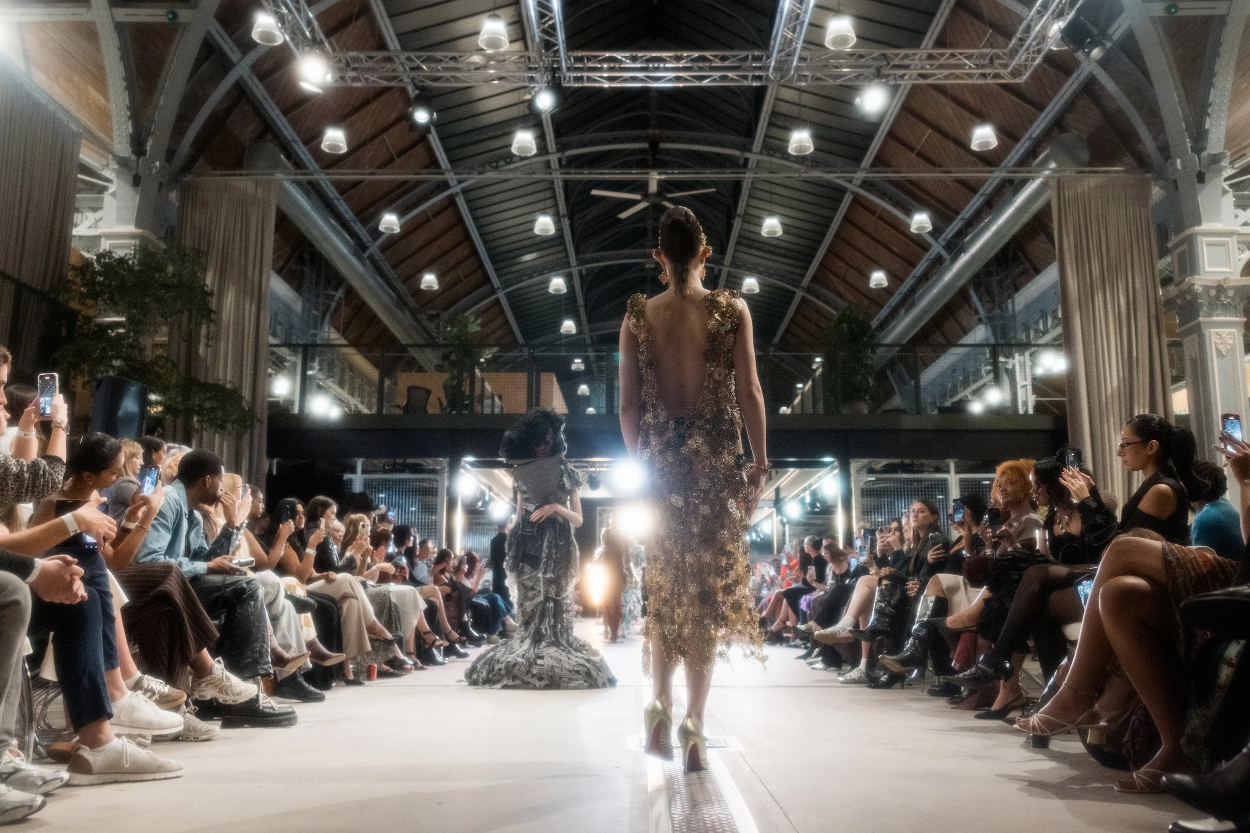
In 2023, Chanel hosted its Métiers d’art show here, which was a bit of a watershed moment. And this September saw the relaunch of Manchester Fashion Week after a decade-long hiatus, which now has an ambition to become a global Fashion Week fixture within the next five years or so.
Now, I couldn’t attend the show this year, so I did the next best thing. I brought its executive producer, Gemma Gratton, onto the show so I could quiz her on not just the city’s momentum, but how Manchester’s industrial legacy and its growing tech clout across education and industry are contributing to making such a strong case for looking beyond London when it comes to understanding the UK’s role in the fashion and fashion technology scenes.
NB. The transcript below has been lightly edited.
So, Gemma, first thing first. As a Manchester native, I’m going to start us with an admission of bias right up front. So this is a city that’s come a long way in my lifetime. I’m 43 and I’ve been in and around the city centre most of my life. I’ve moved away from it several times. I’ve lived in the centre for a decade and I always end up back in Manchester’s orbit. You might not be able to hear it in my accent – and I might not follow football – but Manchester is a city that’s pretty close to my heart. It’s also where The Interline is based. So, start by telling us a bit about what your own Manchester journey looks like.
Well, first of all, thank you for having me on the show, Ben. And as you can tell just off the bat, I am a true Manchester native. My accent has not faded a little bit. And, like yourself, I’ve been and come back over a 10-year period travelling and something has always drawn me back to Manchester. I too have seen it change dramatically over decades and so many. things have come and been built and changed in the city and there’s just a real special essence, I would say, here in Manchester.
Certainly we’ve got our rich history here, The Suffragettes, there’s been a lot of movements that have come from the city, a lot of innovation. We’ve been a cultural catalyst for many things in Manchester and, like yourself, there’s just something that has always drawn me back here and yeah. Since returning at 22, it’s been quite a journey – resettling and grounding my roots back here in Manchester. But I absolutely love it. There’s something certainly very magical about our city.
And what prompted you to resurrect Manchester Fashion Week? Because if I understand correctly, prior to this September, it had been on a 10 year hiatus, maybe a little bit longer. Aside from the fact that the thing that’s on the tip of everybody’s tongue is that everyone here knows that Chanel hosted a show here a little while ago. Apart from that, what else has changed about the city itself or what else is consistent about the city or the fashion community? What is it that triggered this need to or made it make sense to revive Manchester Fashion Week after that 10-year gap?
So in my career personally, the year prior to the Chanel fashion show, Fila did a collaboration here with Haider Ackerman at Mayfield Depot, which was just an incredible production. And I was a producer on that show and being exposed to that level of production, that caliber, was a real eye opener. And understanding how a real runway is meant to look – just the intricacies and everything, back of house, how you get it looking so streamlined and flawless. And then obviously there was the Chanel show the year after. And I think from then Manchester is just thriving with talent and creatives. And there’s so many pockets all over the city of various creatives, designers.
Back in 2020, I set up the Manchester Fashion Movement along with Alison Carlin and Camilla Young. I co-founded that with them back then. There were just these pockets of creatives across the city that were really wanting to be part of this movement and the sustainability around fashion. Like I said, we have been this cultural catalyst and I think Manchester, we excelled so much in the fashion industry that we shipped everything Eastern Block post industrial revolution. And then we continued moving so quickly that we became this epicentre of fast fashion. And to bring Manchester Fashion Week back this year in particular. I’m a big fan of Vivienne Westwood as well. She made a statement back in 2010 that, if we don’t do something by 2030, there’s going to be catastrophic events happening through the fashion industry. And it just seemed the right time.
We’ve got five years to 2030. I think if any city globally is to shout out about the inadequacies in the industry and to take responsibility and to really encourage change, it feels right to come from Manchester. It started here and certainly, because we are housing some of the biggest fashion brands or we have housed them here in Manchester, it just seems our responsibility really to face up to that and start making a change.
And where does that start? It starts with the fast fashion brands, but it’s also about uplifting the talent and the creatives that are already in the city. And that was what Manchester Fashion Week was about this year. Most fashion weeks, the big four – you’ve got Paris, New York, London, and Milan – they all do autumn/winter in February time, and then they do spring/summer in September time. And we really want to stick just to doing one fashion week. And we thought, September is the best time of year doing that because it kicks start going into the following year. And we really want to have quite strong messaging around future proofing and regenerative fashion.
So it just seemed the right time to do it this year. And I think there’s a lot of buzz around fashion in the city right now.
Cool. And I think for people who aren’t from Manchester and maybe haven’t visited, it’s a weird place. It reminds me the most of a city in the US. It reminds me most of Boston, I think, because both of those have complicated industrial legacies, let’s put it that way. The heritage that’s very much built on a trade that was booming and that shaped the city, but which has a legacy that is kind of overdue to be reckoned with a little bit. In Manchester’s case, it’s cotton. In Manchester’s case, the cotton trade was behind a lot of the industry, a lot of the architecture, a lot of the infrastructure in the city. And it really does shape the way that the city developed and the identity that it has now.
Again, for people who are not from here, the bee is a symbol of Manchester. It’s our transport network and everything else. Just because of the buzz and the industry. That’s where it comes from, as a symbol for industry. So it’s hard to overstate. You mentioned this is where a lot of fashion started. This is where a lot of mass industrial revolution and things started. It’s actually very true. And that’s what makes it a weird place to kind of talk about in fashion because there is that complicated heritage. There is the thing you have to go backwards and forwards about saying mass scale fashion has its roots here. Mass scale fashion is now something that is a problem to be reckoned with as much as it is something to be celebrated.
Yes. I think what’s important as well, Ben, is that, again, just taking responsibility and acknowledgement and, we can’t change our past, but we can change our future. And I think that’s what, for Manchester Fashion Week, we want to do. We can’t turn a blind eye to what’s going on. And like you say, what the city has been built on. Things are still happening in the industry, which are really shameful and things need to be addressed, need to be acknowledged, need to change, there needs to be some level of transparency or something within supply chains and processes. I think we can talk about industry and we can talk about citizens and both need a cultural shift. We are a nation of consumers, we’ve been marketed to as a nation of consumers, so we’re so far removed from the production and the manufacturing of how things are made. And we just see this image on a phone or online or wherever that may be.
People are addicted to shopping now. And I think it’s bringing you that awareness, but it’s got to start with industry. Brands particularly are looking at how they can start. We don’t know the answer yet, but there are definitely things happening. One of the things that we had at Manchester Fashion Week this year was the Fashion Tech and Innovation Day. One of the amazing brands that has come from Manchester that is really making quite big moves within the industry is a brand called Circuit. And, that’s kind of a full life cycle AI program. Because you can’t throw anything away. Where is ‘away’? Waste is only waste if you waste it and it’s got to go somewhere. And unfortunately a lot of our clothes, when they’re finished with, are going to charity shops and they’re getting overfilled because people are over consuming and then clothing is washing up on beaches in Ghana and in landfills.
It’s just time to take notice and take responsibility. And coming back to Manchester because we have been a catalyst of that and we’ve excelled in that way with fast fashion is, how do we really tap into our own homegrown brands and start to see them making some drastic changes within their supply chains? And then how that can ripple out? I think as soon as one person does it and exemplifies it, then it does ripple out. But when we speak about fast fashion – your well-known household names like Shein and Temu – that’s ultra fast fashion now. It’s a completely different business model. And, it’s like, how do we really rein that in?
Yeah, and just to go down that road a little bit further, it sounds as though, I think when you were kicking this back off, when you were redeveloping Manchester Fashion Week, you were maybe offered some engagement and some sponsorship from fast fashion companies, particularly the kinds that are based here. And I think you turned those down to focus on having a clearer set of values from the start. I think you’ve done a good job of articulating what those values were. How did you approach that decision though? Because what you have is, as you’ve mentioned, a very complicated legacy in the fashion industry and a very difficult moment for mass market, fast and ultra fast fashion in particular. What you also have as a Fashion Week is a need to be able to do it and fund it and then be able to do it again afterwards. It’s a difficult balancing act. So tell me how you approach the decision making matrix for that?
From the get go, we really had a strong focus on what our ‘why’ was. And, you know, I’m a real advocate for fashion and sustainability. I’ve done events back in 2019 with Fashion Revolution. And I feel that you’ve got to stay aligned with your values. And we could have done with more sponsorship money, we could have done with more support. But I think in the future and as we grow this Fashion Week and hopefully turn it into a legacy, we really want to create a shift in the industry and be a movement as such. And ultimately, we want to align with brands that share the same values as our own; if we’re going to just kind of agree to money from a brand that’s doing the complete opposite and not to what our beliefs and values are, then it kind of goes against what we’re actually doing and the whole intent behind it.
So, myself and Hayley Shaw, who is also the other half of Manchester Fashion Week, we’ve been very stern with our values and who we want to be involved with. There’s certain brands that we have in mind that we want to be involved in the future. And I think we’ve got to really set this solid foundation. We can’t be giving away to little bits of money here. We’ve got a real intent, we’ve got a real purpose-driven event that we want to build on year on year.
To be honest with you, Ben, it wasn’t actually a difficult decision. I think we got about four or five emails banging the door down and we just said, no, it’s not the right time unless you can go away and you can show that you’ve done X, Y and Z then maybe we’ll give you a platform in five years time. It’s that kind of approach. And I think until we start to see drastic changes within some of the brands, then we can’t give them a platform. And I think just to go back to what you said before as well, is that fashion is about design, creativity. We had emerging designers on the catwalk this year and some of their designs are exquisite, unbelievable, beautiful. And I think fast fashion brands, they’re not designers, they’re copying a lot of the designers, so it kind of goes against what a Fashion Week is actually about because they’re draining the creativity from the real creatives and not really coming up with their own as such.
And I think if we, in the future, want to get the bigger brands on board with us, it’s important for us to really just to stay true to our own truth, our own values and not to disrespect the industry. Cause I think it can be quite disrespectful when things are copied.
And then we think about the other cohort of people who were banging on your door. That’s the technology side of things, I think. And, you mentioned it before, it was interesting to see you dedicated a whole day of the three day program at your September show to tech and innovation. What was the catalyst behind that choice? How much experience in industry did you have with technology versus how much of that emerged from the designers, the organisers, that tell me where the roots of tech and innovation at Manchester Fashion Week took?
So back in 2017, I went to Berlin Fashion Week and that was kind of around the time I’d started out in fashion, because I had my own ladies tailor suit brand. I went to Berlin Fashion Week and I did a lot of research there. I sat in the green rooms, I was listening to different brand leaders. There was the founder of Fasia, the founder of Beaumont. Textile Echanges. There were so many different people and it was just fascinating to listen to. And when I was walking through Berlin Fashion Week, there were these augmented reality mirrors. There was different fashion tech there and they had this big board of fashion tech and it really grasped my attention and inspired me to start to really look at the intricacies of fashion tech and what that looks like. And the more that I’ve kind of worked through the industry in terms of having my own brand and then doing sustainable consulting for other brands, it was just understanding the amount of waste that’s created through sampling.
I was working with one of the universities here in Manchester, Bolton University, and we went to this factory in Cheetham Hill – a lot of textiles are around Cheatham Hill in Manchester – and there were so many samples wasted and, you know, even samples where they just have a square cut out of the middle of the garments, they couldn’t be copied or reused. And I feel like, the more I’ve learned about fashion tech, like the 3D prototyping for example. We have this amazing brand, it’s called Voxello, where you go online and you look at a product online, the colour or the texture isn’t quite as it is, so that when you actually receive the product, it’s not like what it looked like online. Whereas with Voxello, it’s to a T. And think understanding these brands and meeting these different people, it just really seemed to make sense.
And I think ultimately the future of fashion is tech. I feel like I’ve been going to quite a lot of events and talks and a lot of people speaking about AI and tech and what that’s going to look like and how people are going to lose their jobs. But I think ultimately when it comes to sampling and streamlining, a lot of the processes and procedures and also for waste, it just seems to be that we are moving in that direction. I think we need to work with it and celebrate it rather than be against it. And there’s just so many different tools and products out there now, which are really supporting the industry.
And I think we want to be able to create a platform for these brands that are actually making a difference in the industry, because I don’t think many Fashion Weeks do that. Certainly next year we’ve got really big plans of having labs and different things where they can be quite immersive and interactive as well. My inspiration was initially from being in Berlin Fashion Week and then obviously Manchester is the fastest growing tech city outside of Europe right now. And there’s just so much innovation coming from the city. So I think it’s only right for us to celebrate it and to really, you know, create a platform for the brands that are really developing some real change makers in the industry.
Yeah, we’re a tech publication. We try not to be blithe tech evangelists. Broadly speaking, we do agree that the future of fashion is pretty reliant on smart use of technology. There’s some nuance where AI is concerned in particular, but, generally the trajectory is pretty clear, I think. You kind of hinted at this, but there’s an interesting parallel, I reckon, between Manchester’s industrial heritage and the technology pipeline that’s coming from here. You mentioned it being the fastest growing tech city outside of Europe. Some of that is startups and tech companies. A lot of it is education as well. It’s where the next generation of talent is coming from.
Tell me how you approached working with the city’s universities for the September event and give me an idea of how that attitude to technology and innovation manifests itself in designers, the kinds of folks you have actually showing at the event, but also how it manifests itself in education and in this next generation of talent. Because if you end up with a sustainable Fashion Week, something that you continue to do year over year, the cohort of designers will year over year become more digital native. They’ll become more technology savvy. I’m interested to get your perspective on how you see that evolving and what it looks like today.
I guess first and foremost with the universities, going back to Manchester Fashion Week not being here for 10 years, I think because it’s not been done in this way before when we initially approached the universities, a few of them just had a little bit of a measured approach, which we completely respected because I think they got their fingers burned a couple of times with our predecessors. We put our call out for volunteers for Fashion Week and we got 25 students from the University of Manchester. And they was incredible. They were so professional, they were so helpful. They were from different areas in the fashion courses in the university. And I think what was really inspiring for them was, they were able to sit in on the talks, they were able to listen to the talks as well as them helping out and hosting in different ways.
Certainly in MMU [Manchester Metropolitan University] we’ve got the robotics lab now in the fashion department. I’m yet to visit there. I’m actually due to go next Friday, which I’m really excited about. But, I think ultimately, if students don’t have that, if they’re not digitally native right now, while they don’t have that literacy, in AI, I think they will struggle getting into the industry because things are moving so rapidly. And students are now needing to be keeping up to date with technology and the new ways of doing things so it’s not about taking away the artisan and the heritage craftsmanship that we know, but them really having backing with technology, which is something that is in all of the curriculums in the university is super important.
I’m not too clued up on it, being completely honest, but I was with one of the lecturers earlier this week from the University of Manchester and she was showing how there’s an element of AI and technology in every single fashion course because, that’s how to keep the students up to date and how they’re moving into the industry. And I think what we want to do with Manchester Fashion Week is we’re connecting with the brands and we’re connecting with the universities and we want to be able to bridge that gap for future talent, for social mobility, so getting students ready to go straight into industry and just see more opportunities that are in and around Manchester because there’s just so much and I think the students can really bring this new age, this new kind of way of thinking to some of the heritage brands that are probably stuck in their own ways in the city.
All right. So you mentioned it a couple of times and I mentioned the nuance involved in it. And here at The Interline, we’re finishing our DPC Report this year and then we’ll be rolling into next year where AI is our first report topic in the springtime. Specifically, what’s your take on generative AI? Because I think the purpose of the Fashion Week is to empower, spotlight and curate creativity. But it’s also a bit of a unique moment right now in that what it looks like to ‘create’ is under a lot of scrutiny. People are worried that specialist skills will get re-prioritised. So the kinds of people who go to Fashion Weeks who really value the creative side of fashion worry that they might be de-emphasised and just end up letting AI do the inspiration and the design and them curating the output.
Do you think designers, or in your experience are designer’s, hostile to AI, receptive to it, thinking like generative and creatively or something in between? And would you or do you currently have a policy on somebody bringing a design to life at Fashion Week that began with AI or that was AI generated?
No, I think it’s actually really interesting, the AI take on things. I guess at first, from a design perspective, there’s an amazing professor from the Royal College of Arts in London, Matthew Drinkwater, and he’s shown us this amazing program that the students have worked on and he was explaining about the AI with the students. And basically a student would put in their design, but then AI would then give, you know, so many different versions of that design that they’ve initiated in the program. And then out of all those different takes of what the AI has come up with, they can take one out and might be something a little bit enhanced and improved.
So it’s just a really tricky matter. I think the whole AI and design, as long as it’s your own personal design and that can be proven, and then you’re using AI to enhance that, then I don’t think there is an issue personally, but I think when you kind of take in a design from another designer and you’re putting it into an AI program and then you want it to change, I think then that’s when there is a problem. And then when it comes to kind of the whole AI fashion, it’s a whole another universe really, isn’t it, Ben? Because we’re speaking to the Institute of Digital Fashion and there’s the whole metaverse and Adidas have come up with all these designs in the metaverse and Decentraland and it’s something that is growing. And people can buy these AI outfits and put them on themselves, even though it’s not a tangible garment, and then post themselves in these garments. it seems pretty wacky and out there, but it is a thing. I don’t know how much it’s gonna kind of take off in the future. But I guess it’s just that exploration, isn’t it, of technology and fashion and just seeing what works, what doesn’t work.
Again, if we’re going to look at the metaverse and NFTs, NFTs were meant to be the next big thing. And I don’t know where they’ve gone. And if they will pick back up again. And, NFTs are to do with fashion as well, because it’s the NFT garments. It’s fascinating. And I really want to learn more about that side of fashion.
Well, I think as a Fashion Week founder, having an open attitude to stuff is probably the right way because I think there will be some pretty polarised opinions on AI for design and on the ethics of that, but I think it’s also fair to say it’s not something you can ignore. The way that we tend to frame it, the way I personally think about it is, so I come at it from a writing angle rather than a fashion design angle. If you know the story you want to tell and you use AI to help tell that story because you don’t have the experience or you’re a little bit concerned about your technical chops or whatever, that’s fine. You have my blessing to do that. If you want to just prompt an article into being and then publish it on the web or send it off to somebody, more power to you. But I don’t think that’s going to translate into success. And I think that probably you can extrapolate that into design as well, which is to say: you need to have an understanding of design, you need to have cultural awareness. There’s a lot of curation and skill that goes into picking good output from bad output. And I think a Fashion Week is the right place to have this sort of dialogue, to be honest.
I think as well, a big standout word for me is authenticity when it comes to creativity and it’s being authentic to what’s coming from your own heart and your own head. Obviously we’re inspired and influenced through past designs and past designers – that’s how we come up with creations because it’s what’s been done before. But how can we really build and make it better and put our own twist on it? But it’s got to come from ourselves. I think certainly when it comes to design, we can’t be relying on AI for design, but only to enhance.
Looking ahead then, to next year’s Manchester Fashion Week, in 2026, what would you personally like to see added or expanded next year? If this year’s [the 2025 edition] was evidence that it makes sense to bring Fashion Week back to the city, what do you think is going to define the next year?
So we’ve actually got the dates booked for next year already, which is super exciting. And we’re going to start later in the day because, upon reflection, there were a few things that we wanted to change. But I think what would be really interesting for us is, we still want to have a day dedicated to innovation and fashion tech.
And I think now that we’ve got our first one under the belt and that proof of concept, it would be moreso expanding that day into doing workshops and labs and immersive, interactive things. One of the things that we are quite fascinated in is 3D printing and I know CUPRA have just done a 3D printed shoe which reduces waste, there’s zero waste that is made to order.
So we’d like to have things where we’re bringing the technology and the machinery to a Fashion Week, for people to really just see it. Cause I think ultimately, even when it comes to fabrics, when you see the seed, the yarn, the fabric, and then the product, it’s just breaking that down for people’s brains to acknowledge where things come from and how they’re made. It’s really important.
We want to do more of an exhibition, showing where fabrics have come from, showing how the technology works, being interactive where people can get stuck in and have a go at something. We’ve been offered a 3D body scanner, which tells you your exact size, because obviously a lot of size charts are completely different. We’re getting into the crux of fashion and technology and then looking at how that’s advancing into the future and getting the tech on board, which is really kind of making big moves in the future.
Again, we want to be bringing real emerging designers onto the runway. We’ve got some amazing initiatives that we’re going to be launching throughout the year and then they’ll be showcased at Fashion Week in 2026. So we’ve got quite a lot of things already in the pipeline and underway, which is all moving fairly quickly. So it’s just super exciting, Ben.
Definitely the time is now for Manchester Fashion Week and certainly our messaging, our overarching theme is regenerative fashion and what that looks like from design to end of life, and where is end of life? What does that look like for a product? And that’s what we really want to focus on. And also just to add, fashion isn’t just clothing; if you look at most Fashion Weeks it’s runways, it’s all garments and clothing, whereas we really want to include footwear and accessories. Footwear has a massive impact. I think the footwear industry is 70% emissions and 30% waste per pair of shoes. And we just want to be an innovation hub. We want to put a spotlight on things that aren’t being addressed or looked at, but then being very solution led where we’re kind of highlighting the problem, but we’re also providing solutions and technology and alternatives that are trying to address the issues that are currently in the fashion landscape.
It’s really a very exciting Manchester Fashion Week lined up for next year. So stay tuned.
And from a technology point of view, final question. What do you expect or want to see from technology and fashion over the next 12 months? If I put you on the spot and I asked for a tech topic that you want to see being debated on stage at Manchester Fashion Week in 2026, what would it be?
I think the hot topic right now is the DPPs [digital product passports] and what that looks like and how that will be rolled out in the UK. Because these regulations are kicking off in ‘27 in the EU, but it’s not mandatory just yet in the UK. And I think it would be really interesting to put a real emphasis on that and to maybe just kind of demand policy and demand these to start taking place here in the UK also.
So I guess from a policy side, that’d be the DPPs – that’s something that we are going to kind of look at. But also on another side of technology, one thing that we want to do is invite people just in industry. This year we did host a number of public facing events and we still want to do that again. This next year, we’re going to have a number of satellite events that are going to be directly public facing. And one of the topics that I’m really keen on bringing is the influencer culture and what that looks like – because that’s technology in itself, isn’t it? Because people are holding these devices in their hands and, we’re completely, constantly sold to all the time. It’s constantly in our faces and we’re now getting conditioned by that. What’s interesting for me is the human psychology around consumerism and, how we can maybe tap into that – through maybe TikTok or Snapchat or another platform that looks into that.
So, that would be my two angles, I guess, with technology.
Perfect, well I look forward to seeing one, both of those debated on stage next year. For now though, Gemma, thanks so much for joining me and best of luck with scaling Fashion Week.
Thank you so much, Ben. Thanks for having me on the show.
It’s been a pleasure.
Thank you.
And that brings us to the end of my time with Gemma. As you can tell, she’s definitely got me beat on the Mancunian accent stakes. But, critically, I hope you can also tell that she feels strongly that technology really does need to be a key part of the decision-making matrix when it comes to determining how and where to really look at, debate, and analyse the future of fashion.
I do hope to be able to attend Manchester Fashion Week next year, and you’re also going to hear me talk about a bunch of other industry events as we get into planning and firming up where The Interline is going to be and where I’m personally going to be throughout 2026. In the meantime, though, we’ve got a ton more episodes coming up and most of them have a much more international flavour than this one. So for now, thanks for listening, and I’ll talk to you again soon.
