
This article was originally published in The Interline’s DPC Report 2026. To read other opinion pieces, exclusive editorials, and detailed profiles and interviews with key vendors, download the full DPC Report 2026 completely free of charge and ungated.
The digital gold rush vs. the factory floor
The fashion industry is living through a digital gold rush. From C-suites to showrooms, everyone is talking about 3D, DPC, and AI as if they were talismans of transformation. Yet from the supplier side, the view is more pragmatic. Behind every bold presentation lies a maze of disconnected pilots, unaligned data, and technologies that dazzle in theory but struggle to survive production realities, where success is measured in rework, cycle time, and cost. At Makalot, we see both the promise and the friction every day. The truth is not controversial but remains under-acknowledged: the success or failure of digital transformation across the global supply chain depends on whether suppliers can integrate it effectively into their workflows. Tools create value only when they meet the high bars set for real garments, real constraints, and real deadlines. That is why the supplier’s role is not merely to execute, but to filter—not to chase the hype, but to determine which elements of digital transformation will meet expectations.
Two kinds of digital demand
Every brand approaches digitisation differently, but our experience as a global supply chain partner experience has led us to group them into two different personas: the All-In Architect & the Innovation-Driven Explorer.
The All-In Architect. Typically large wholesalers, these partners treat 3D as a single source of truth and push us for end-to-end digitisation with continuous data flow. From their vantage point, DPC is not just a 3D object but a convertible, extensible visual language: 3D files carry through from proto to colour sampling, fitting, and into PP (Pre-Production) sample, ideally culminating in a 3D tech pack that streamlines PLM communication.
Companies that fit into this bucket have scaled their 3D initiatives to include enterprise-wide digital fabric and trim libraries, 3D quality and process standardisation, structured talent training, and integrating a 3D DAM with their existing PLM.
The outcomes they’re looking for are quantifiable and repeatable: sample reduction (e.g., virtual-proto-only for first rounds; for colour runs, keep one physical sample for construction review and shift the rest to 3D; use digital twins as the baseline for next-season development), sustainability gains from reduced materials and sample shipments, faster decision cycles driven by standardised workflows and information transparency, and shorter ramp-up through asset re-use that improves team reusability and efficiency.
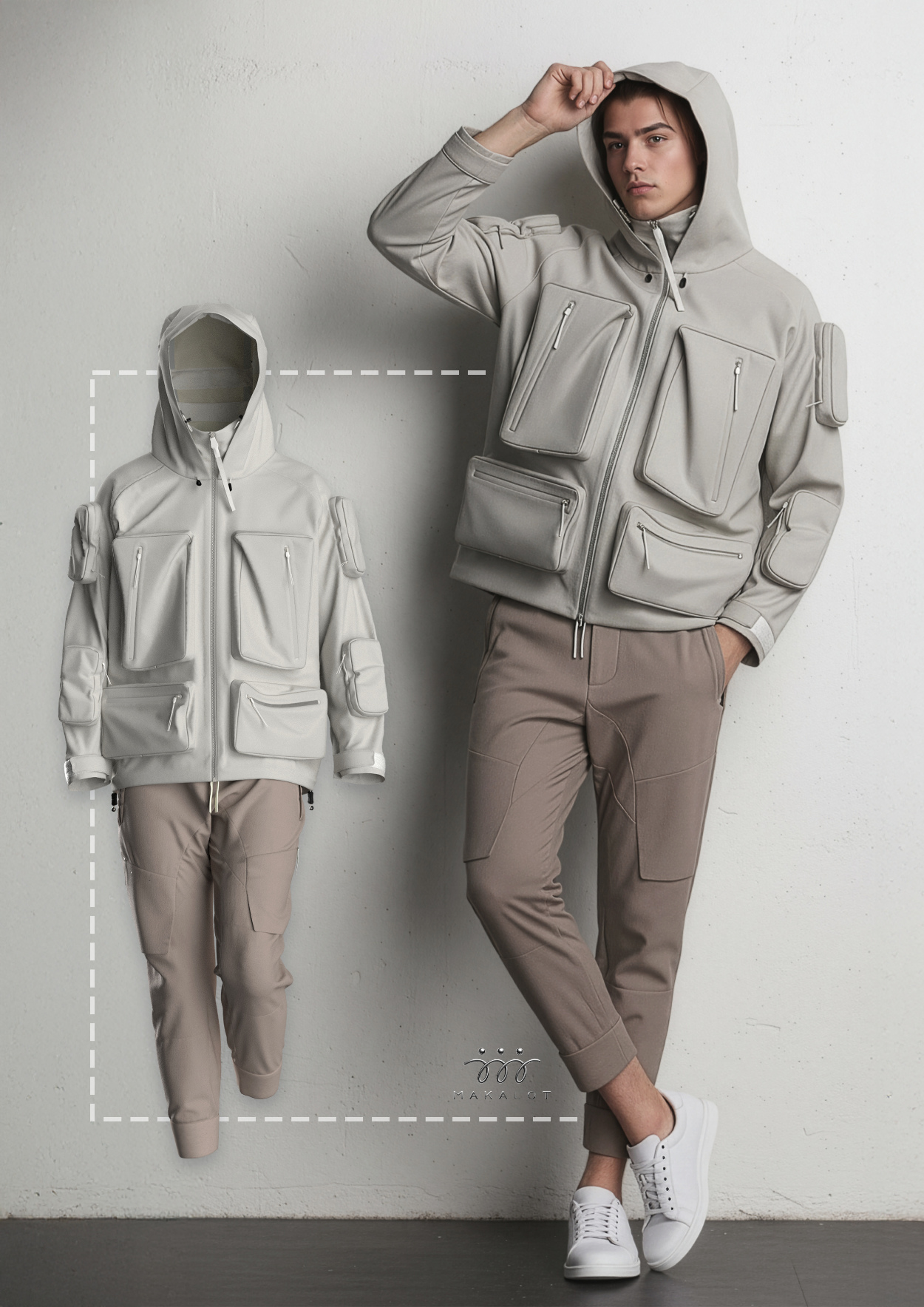
But as persuasive as this vision is, there are practical constraints that these companies find themselves clashing with.
From a systems standpoint, 3D is not a PLM: it does not natively carry structured data such as BOM (Bill of Material), POM (Point of Measurement), colour, or construction details, nor does it support true co-authoring. When these limits meet high licence costs, steep skill requirements, and weak auditability, even the most all-in teams quickly end up with isolated 3D data silos, despite their best intentions.
In fitting, avatars cannot reproduce or assess comfort or hand feel, so expert fit-model feedback remains essential. At the same time, 3D still struggles to represent production-grade internals and stitch order with reliable fidelity. Fully digitising the “inside” of a garment often takes longer than sewing one precise physical sample, and even requires making that physical sample first before “copying” it into 3D.
These are people and brands that are organised around a big picture strategy for digital product creation that’s measurable, ambitious, and that, a lot of the time, exceeds the capabilities of the technology ecosystem. And what these companies find is that 3D is a powerful process optimiser, but not a magic wand that can overturn an entire workflow.
The Innovation-Driven Explorer. These cross-functional teams typically run a top-down playbook: first aligning real process needs with concrete pain points, then pursuing multiple parallel prototypes and using POCs to determine what actually works. Their workflows and roadmaps get iterated onseasonally, they absorb new technology in an agile way, and their flexibility drives them to extended-value opportunities such as extending DPC into virtual showrooms and in-store interactive experiences, and applying AI to trend forecasting and marketing.
As compelling as this kind of multi-frontier approach is from the perspective of pure innovation, the frictions and potential pitfalls are also clear: pilots often get terminated before measurable outcomes can appear; data structures and process governance are not solidified within most organisations, making assets hard to reuse; and internal gates are misaligned, creating a many-horses, many-drivers execution problem. Even so, exploration is valuable. Used well, new tools can deliver real process improvements: for example, API/plug-in automation that strengthens 3D quality and data consistency while reducing human error.
To translate this energy onto the production line, three conditions matter:
- First, suppliers must keep pace on capabilities, upgrading tools, infrastructure, and skills so the line can actually run what the pilots require.
- Second, communication loops must be real, frequent, and bilateral, so requirements, data, and versions close the loop.
- Third, supplier processes must be agile in operation, with change control, version governance, and fast SOP updates that absorb tool and standard changes without chaos.
Without these, where we arrive at a broken chain: the front wagon races ahead while the back end fails to evolve.
A supplier-led filter: from hype to industrialisation
The answer as to which of these is the right philosophy is not either/or. To continue advancing the cause of DPC, the industry needs both: let All-In Architects build a measurable, scalable digital backbone while Explorers keep the metabolism high and stretch the boundaries. However, they each demand different supplier mindsets.
It might be framed this way in a lot of conversations, but the supplier’s job is not to say yes to everything, or to build out endless digital capabilities on the off-chance that they might be advantageous – it is to distinguish what can be industrialised from what is merely digital theatre.
To do this, at Makalot, we evaluate every digital initiative through two effective filters:
- Filter 1: Does it solve a real problem? Real means reducing total physical samples, lifting first-time approval rates, or creating a shared visual language across teams and partners. False problems are what we call un-industrial-grade beauty, perfect renders that cannot be converted into pattern pieces, stitch order, or machine-readable specs. Or over-investment at the wrong stage, like polishing textures and lighting before a silhouette is even approved.
- Filter 2: Is it ready for industrialisation? In our world that means scalability, reliability, cost-effectiveness, and above all, data interoperability. If a 3D system locks data in a proprietary ecosystem, it becomes a digital island. Beauty without data flow is dead weight.
These filters turn abstract enthusiasm into operational choices – what to scale now, what to park, what to retire – and give brands and suppliers a shared language that replaces aesthetic debate with clarity on throughput, quality, and risk.
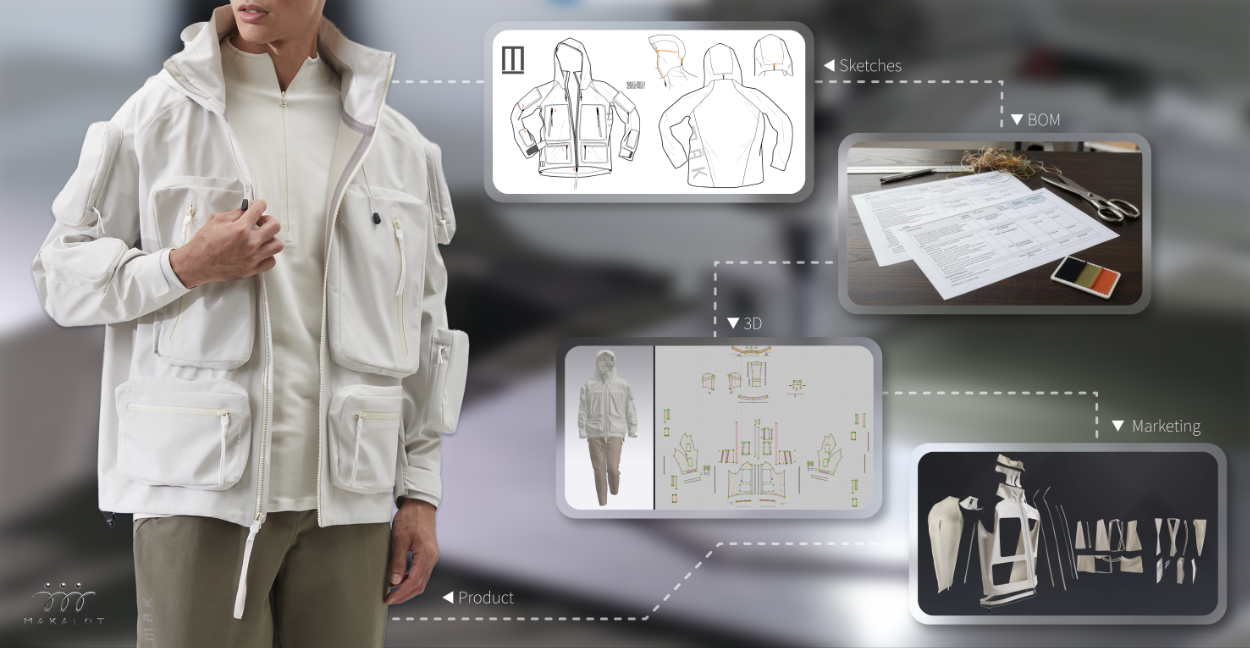
This is why I believe suppliers have to take the lead. Most successful brands excel at creativity, merchandising, and marketing, not manufacturing technology. The responsibility for industrial innovation – turning technology initiatives into practical, producible reality – falls to those closest to materials, processes, variability, and scale. Suppliers must research deeper, move faster, and think further ahead, so when a brand asks whether something can be done, we already know how to do it reliably, or where it should not be forced.
Our principle, as strategic partners who have dedicated years to understanding and integrating the tools and technologies that make sense, is to face a changing world with an unchanging foundation: systems and standards built to adapt, grounded in data interoperability, open standards, and robust API layers. We see this as readiness, not rigidity, and it creates the conditions for value to compound across seasons and categories.
From order-taker to integrator
3D was never meant to replace physical craft; inner structures, stitch order, hand feel, and durability still have to be verified on the floor. Its real value is leverage: a compact, editable, easily delivered visual language that locks silhouette and intent early, maintains a shared cross-functional context mid-stream, and, over time, settles into a reusable asset library. In other words, 3D is the visual anchor of a staged, reuse-oriented workflow.
Meanwhile, AI’s disruptive power is definitely upon us, and its most useful forms are often the invisible ones: demand sensing, quality control, automation, anomaly detection. As for the dazzling side, generative AI, it only becomes production-grade when pixels can write back into structured data, such as BOM, yardage estimation, or GSD. Otherwise it remains an inspiration wall, not a cutting plan. And from an industrialisation perspective, it’s clear which of these will stand up to scrutiny.
With any DPC strategy, whether it’s restricted to just 3D, or whether it also incorporates AI, the real watershed is not which tools you purchase, but whether design is truly connected to the line: with clean, consistent identifiers that let 3D serve as a visual key rather than the database, and with AI strengthening judgment and integration.
For suppliers, this isn’t a spectator topic; it is a supply-side industrial revolution: upgrading 3D from a “virtual sample” to a manufacturable digital twin that enterprise systems can read, write, trace, and estimate, and shifting the role from order-taker to digital manufacturing partner—operating data flows, producing insights, and co-optimising with brands. For those still watching, now is the window to invest in process redesign and cross-disciplinary digital talent. The future’s speed, flexibility, and sustainability will belong to teams, and to partnerships, that understand how to convert creativity and innovation into manufacturing with the least friction.
