Despite achieving strong results in isolated areas, most 3D strategies in fashion are still made up of a patchwork of tools, and piecemeal processes that still struggle to centralise on a single shared asset that can do everything, start to finish. But within team sports – one of the fastest-growing categories of customisable products – both world-defining brands and startups have successfully deployed Embodee Enterprise, an end-to-end platform that runs from configurator to final production, and their results could now be ready to extrapolate to other custom-product categories across fashion.
End-to-end 3D has been one of fashion’s digital north stars for a long time. Here at The Interline, we’ve previously referred to it as the “holy grail” of digital product creation. A future state where the 3D asset captures every element of the product, and serves as a single, central reference frame for every potential creative and commercial decision. And a level of maturity where that same immutable asset directly drives each stage of the product journey, from pattern simulation to personalisation and production.
But, as readers of our DPC Reports will know, “future” is very much the operative word where full-spectrum, concept to production 3D is concerned. While the most high-impact, headline-grabbing 3D strategies can look complete and comprehensive from the outside, the digital product creation status quo is still defined by high-functioning but disconnected pockets of progress. Individual areas, like line review, or fit, or consumer-facing visualisation, are places where 3D has successfully transformed a single workflow, but with limited impact on the processes and the people on either side of it.
What this looks like in practice will be familiar to anyone who’s played an active role in a digital product creation initiative. High-value usage of 3D in design and development, the output of which is then down-converted to flat images or 2D technical specifications when it needs to be shared. Or an interactive, immersive 3D configurator deployed on an eCommerce storefront, that then requires manual work behind the scenes to turn each order into something the factory can actually manufacture.
There is, to put it bluntly, a lot of 3D out there in mass market fashion. But while that 3D has been successfully additive to the product journey in numerous ways, it rarely truly defines or connects the workflow into a coherent operational whole.
If the promise of 3D is that “what you see is what you get,” then that promise has only been realised in specific narrow slices of the process, and as a result, true end-to-end testimonials are in short supply. This is the gap that Embodee Enterprise was designed to close.
This fragmentation is not due to a lack of ambition on the part of fashion brands, but rather down to the fact that, for product categories where new styles need to constantly be created from fresh materials and patterns every cycle. This work is handled by a small team of specialised users, and the extended technology ecosystem to serve the wider set of use cases that would make up a true end-to-end workflow is made up of tools with varying degrees of maturity and market-readiness.
As a result, the typical digital product creation technology stack has grown through accretion, over time, and integration and interoperability have needed to be layered on top of those pipelines, rather than being architected in from the outset.
To find real evidence of the practical value of end-to-end 3D, then, we need to look beyond apparel as a catch-all category, and identify a market segment that’s sufficiently well-defined to be captured in a single technology deployment – with a platform like Embodee Enterprise – that can serve the needs of consumers, brands, and manufacturers. And that sector should also have enough growth potential to demonstrate the scalability and universal applicability of solutions and assets.
Team sports as a lighthouse for end-to-end 3D in customisable products and beyond.
As it happens, team sports (and the slightly-extended category of fixed-pattern, customisable products) could be ready to provide precisely that kind of case study, with some of the world’s biggest brands and SMEs alike already taking advantage of the same underlying, universal, technology to achieve end-to-end 3D.
And team sports is also, conveniently, a market primed to explode:
- if we confine ourselves to custom sports jerseys and kits alone (products where the pattern and sizing is fixed, but shoppers have the ability to customise names, numbers, and other elements and embellishments that don’t alter the garment itself) then this segment was worth more than $5 billion in 2024, and is predicted to be double that size by 2033.
- The audience for team sports is also becoming more diverse and demanding over time. Starting from an initial pool of coaches and players placing one-off orders with specialist suppliers, today more than 55% of custom jersey sales are made through online stores, in small batches or unit-of-one print runs, with orders placed by sports fans, brand devotees, varsity brand managers, and more.
And the team sports model is also well-positioned to serve as a playbook for sectors beyond its immediate walls. The same principles that are driving that growth also hook into the wider market for personalised and customised products, where the value of 3D (in real end-to-end fashion) is measured not just in samples saved, but in how successfully the eCommerce storefront and configuration engine can be connected to the mechanics of production to deliver individualised engagement with the finished product to match. And, ultimately, to help improve conversion rates – and thus sales.
But as well-suited as the team sports market is for end-to-end 3D, that level of connectivity is definitely not the norm today, and the delta between the current status quo and the state of the art was the inspiration behind the development of Embodee Enterprise.
While web-native product configurators often look impressive, allowing shoppers to customise logos, lettering, stitching, component colours and potentially more, behind the front-end experience is often a patchwork of manual processes, needed to translate the new product recipe into something producible, or to validate artwork placement, and other variables.
While a brand might sell thousands of custom jerseys, if every order requires a human to manually export a file, translate a colour code, or re-key an order into a manufacturing system, that overhead quickly eats into the target of turnkey value from customisation.
And although pre-validated, component-based configuration engines provide more certainty when it comes to mapping the results of online customisation to real production, these are typically constrained in scope, and fall short of the kind of asset management that’s needed to take those same assets into other use cases and applications.
How Embodee has proven out the vision for end-to-end 3D
All three of those are challenges that Embodee’s Enterprise platform, which is built for exactly these kinds of end-to-end customisation use cases, is designed to address. Unlike lightweight viewers or heavy design tools, Embodee Enterprise is designed, from day one, as the bridge between the creative intent and the industrial output.
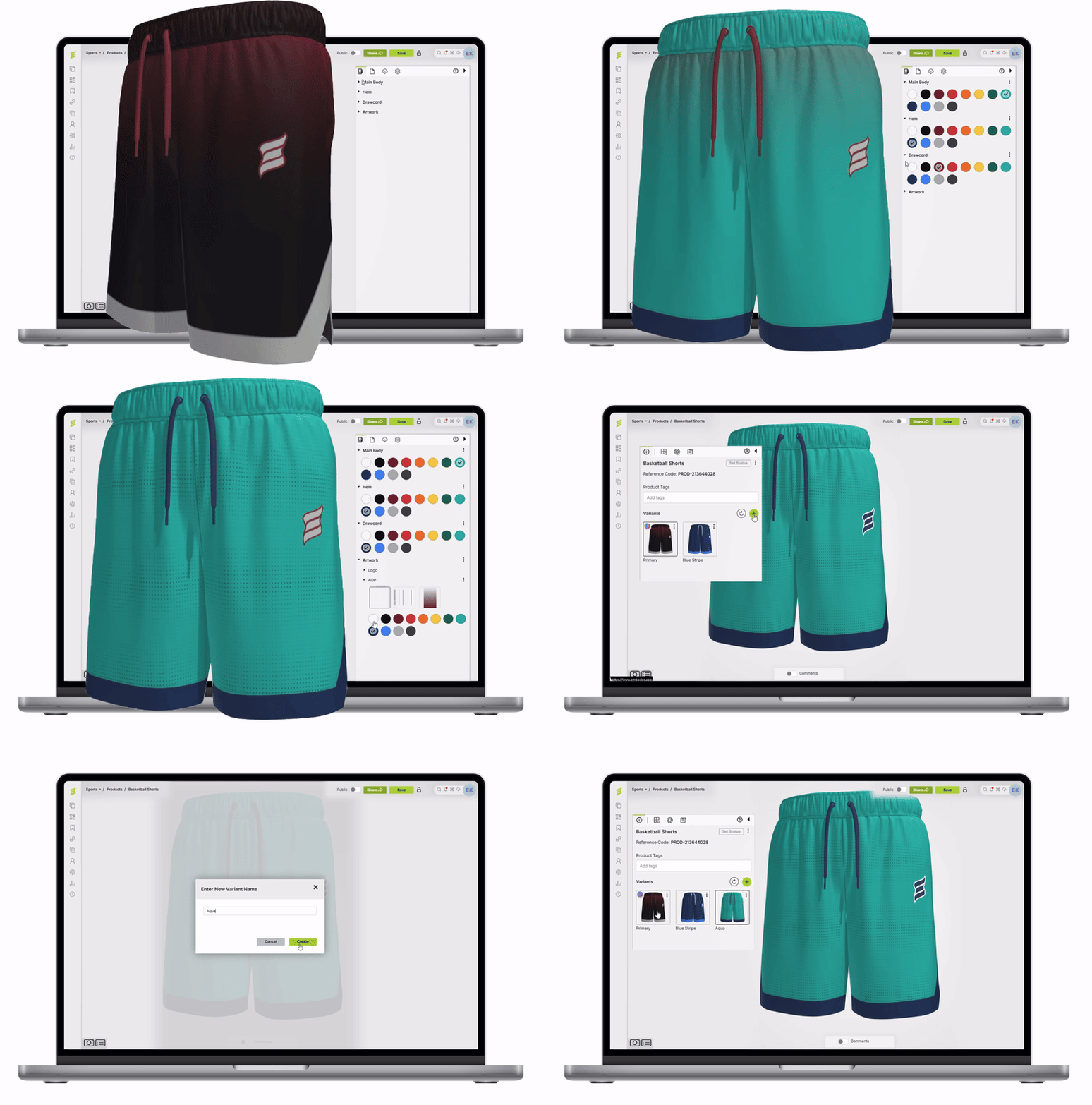
But the product market fit, where comprehensive 3D and team sports is concerned, also runs much deeper than it does in mass market fashion – at least today – but in a way that provides a roadmap for transformation that the wider industry could follow:
- In team sports and customised products, for example, the incentives for brands and their production partners – both of whom are key users for Embodee Enterprise – align. Unlike mass market fashion, where 3D users are typically designing new styles and silhouettes, choosing new materials each season, and starting essentially from scratch with every new collection, team sports has a much better-defined scope and a fixed pattern. As a result, there are fewer barriers to creating value from a 3D asset that can follow the product through its full lifecycle, delivering a practical end-to-end value proposition.
- More than perhaps any other category, the degree of customisation required by team sports requires tools and workflows that can manage extensive libraries of different embellishments, like live dynamic text and artwork. A close link between visualising these elements in 3D, and then sending them to manufacturing, can give users a more straightforward and trustworthy way to validate bespoke designs – confidence that matters a great deal when team orders can cost tens of thousands of dollars.
- And unlike mass market fashion workflows, where 3D teams have heavily centralised ownership of asset creation (which places hard limits on how successfully those initiatives can scale), the ideal user of a full, end-to-end customisation platform like Embodee Enterprise could also be a manufacturer, an eCommerce team member, a buyer, or a range of other personas – none of whom need to take on the overhead of designing 3D files from scratch, since the platform offers smooth imports from CLO, Browzwear, Blender, and other mainstays of the existing DPC tool stack, as well as simple setup for rules and customisation options.
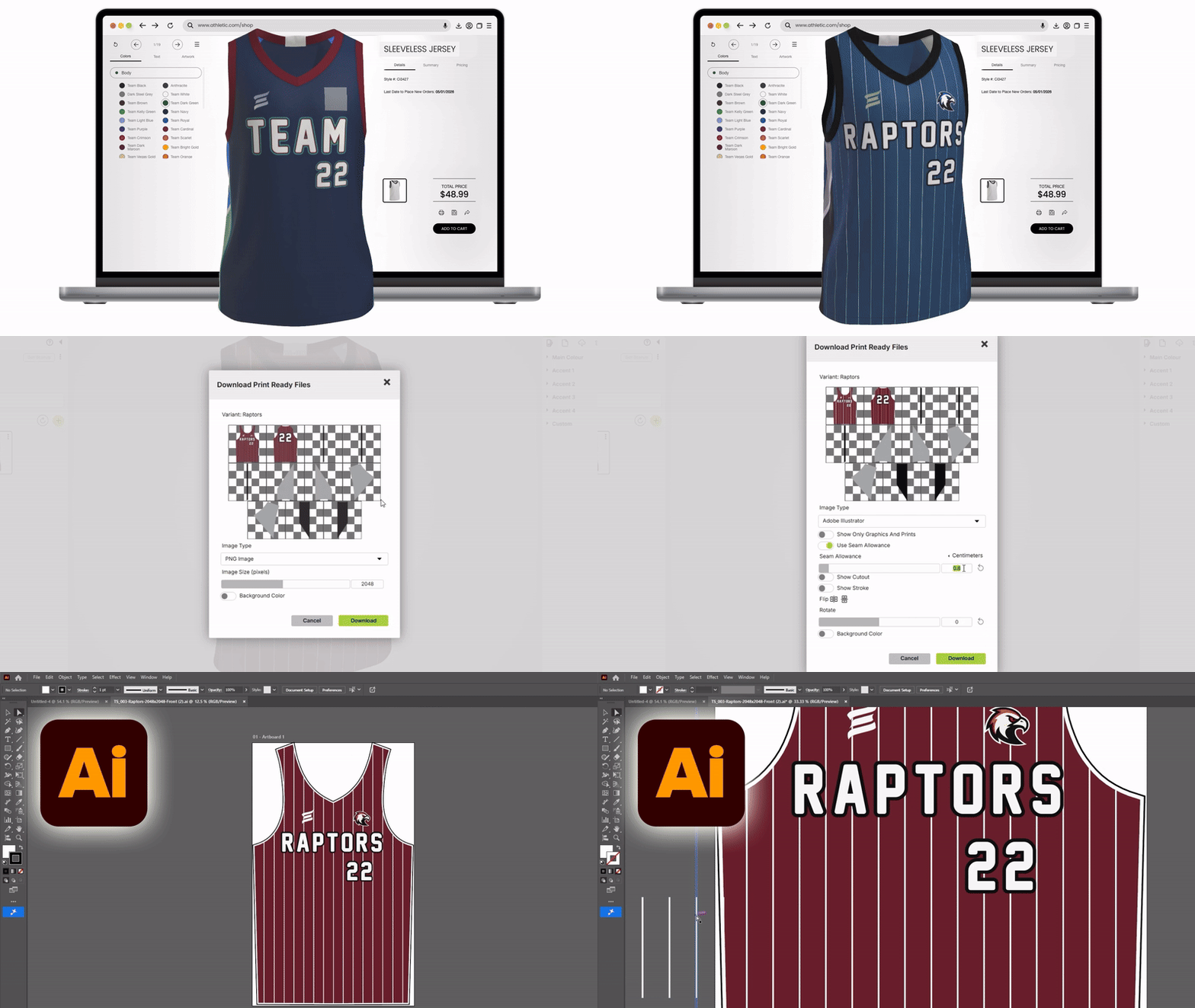
Those different user types are also well catered-for in Embodee Enterprise when it comes to the building blocks needed to run the full workflow: collaborative boards that allow different job functions to collaborate on collections, and changes; easy integrations with eCommerce platforms, including Shopify; and a direct pathway for an intuitive, appealing product configurator to provide vector-based, print-ready files directly to manufacturing systems and printers.
In practice, this serves to eliminate extensive manual work and rework at critical stages of the big enterprise product lifecycle – enabling companies to scale their output without adding operational overheads or needing to onboard new team members. Where, today, a team sport order placed via a product configurator might require a dedicated team, working over several days, to convert the request to be manufacturing-ready, Embodee’s approach can pare that stage of the journey down to hours or, in many cases, full, zero-touch automation.
But just because there’s a product – market fit for team sports and end-to-end 3D, this doesn’t mean that any solution will be able to deliver the same value – especially when we consider the diversity and scale delta between sportswear giants (some of the biggest brands in the world) and startups. To really deliver on the vision for end-to-end, a platform has to be elastic enough to cover both extremes of the spectrum.
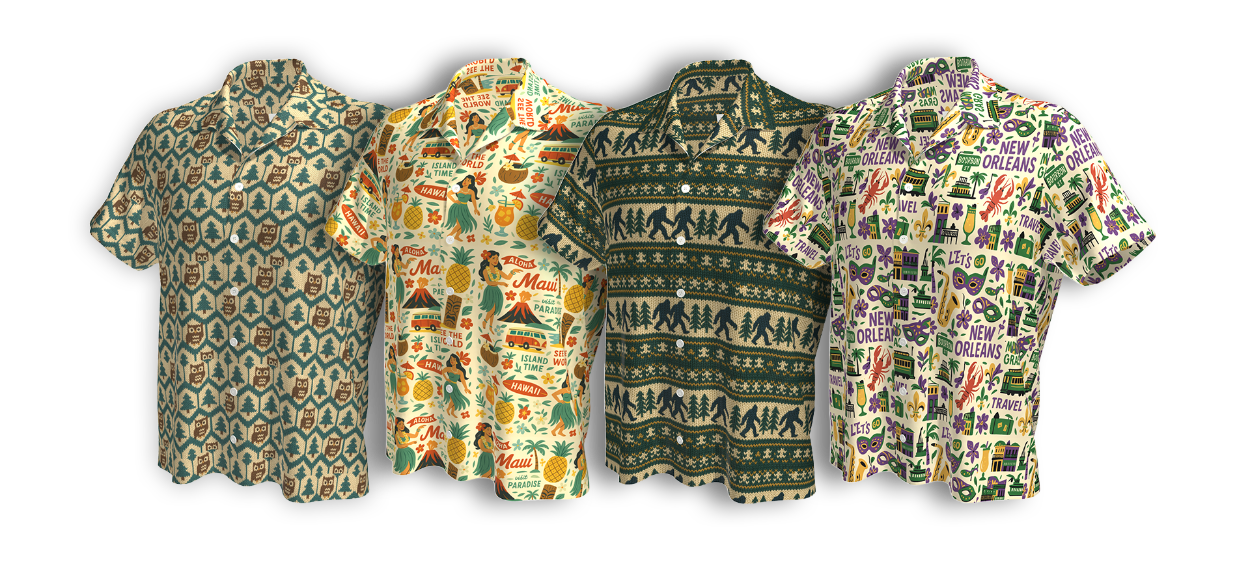
As it stands, team sports and custom products are key verticals not only for some of the world’s biggest brands – where throughput and error rates are key decision-making factors that have led major sportswear brands to adopt Embodee Enterprise – but also micro-operations such as RoboArt Labs, which uses the platform end-to-end capabilities to support a customisation model that also incorporates AI-generated artwork.
Between those two extremes, of course, sit a large group of businesses where reductions in product development time, improved conversion rates and order accuracy, topline growth, reduced costs, and faster time to market are all strategic objectives. And within that group, the benefits of an achievable approach to end-to-end 3D are in reach for essentially everyone.
Today, across the full spectrum of fashion, there is a prevailing sense that the bold vision for end-to-end 3D has slipped out of the industry’s grasp. And there’s a growing unease that, while consumer or partner-facing 3D use cases can create differentiated experiences, and 3D authoring tools provide pattern accuracy for the specialist teams – actually connecting the two into a single operational workflow has become impossible.
But when we look at specialist market segments where the conditions to enable end-to-end collaboration and decision-making based on 3D assets are present, and where purpose-built solutions like Embodee Enterprise are proven to deliver comprehensive workflows, that value can be realised in a way that creates a multi-faceted return on investment, across speed, accuracy and cost, and can be applied to not just customisable products in general, but fashion as a whole.
As the wider fashion industry stares down the challenges of 2026, and as investment in digital product creation comes under heightened scrutiny, the “jersey model”, which has allowed one of Embodee’s sportswear partners to cut lead times from days to hours, might just be one that fashion in general should try on.