In partnership with DeSL, The Interline talks to Workwear Outfitters about how the unique forces driving the digitalisation of the workwear sector – as well as surprising array of elements it shares with the broader fashion sector – created a strong business case for adopting PLM as a universal source of truth across teams, brands, and business units.
Workwear has always been judged first and foremost by how it fares out in the field. That field might be a literal one, with crop furrows underfoot, or it could be an operating theatre, an oil rig, a high-end kitchen, a remote logging operation, a truck cab, an urban construction site, a law enforcement beat, or any number of other high-pressure, demanding use cases.
In those settings, the bar for function and form, durability and comfort, is set higher than any other clothing segment, outside of perhaps extreme performance gear. But while workwear reputations are built on apparel that can survive the shift, the sector is far from insulated against the forces that are now buffeting and steering the wider fashion industry: digital transformation, shifting wearer demographics and market diversity, supply chain risk exposure, and historic upstream environmental and ethical scrutiny.
And as easy as it might be to think of the workwear market as captive and predictable – the people who keep the world turning will always need on-the-job clothing, after all – the reality is that a lot of the same complexity and speed that define multi-brand operations in mass market fashion also drive the operating models of workwear giants like Workwear Outfitters.
All of which means that solutions that have been stress-tested in the wider fashion sector can deliver similar results in workwear – as well as providing capabilities and tools that workwear companies are uniquely set up to take advantage of.
This cross-pollination of platforms is something Workwear Outfitters (WWOF) has now proven out, at scale, across a broad and diverse portfolio.
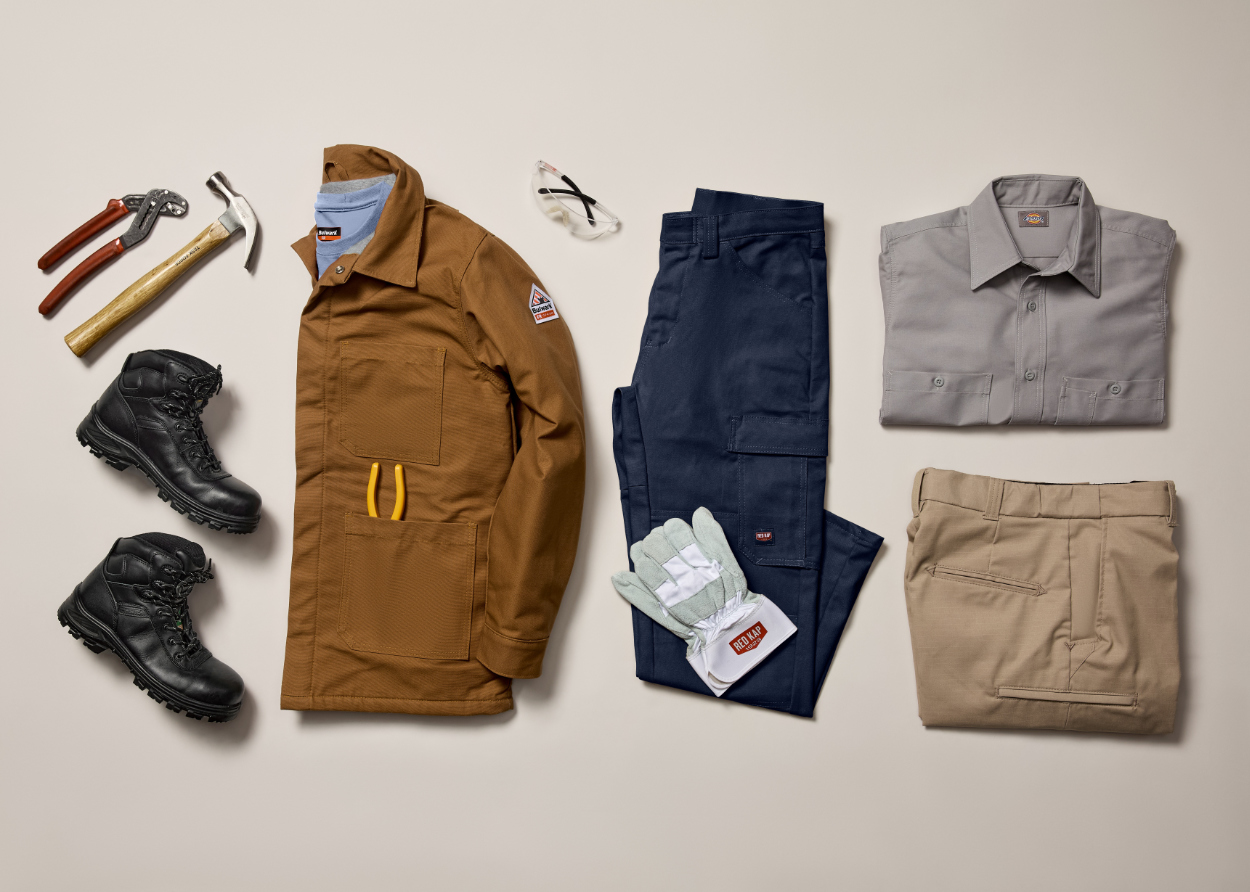
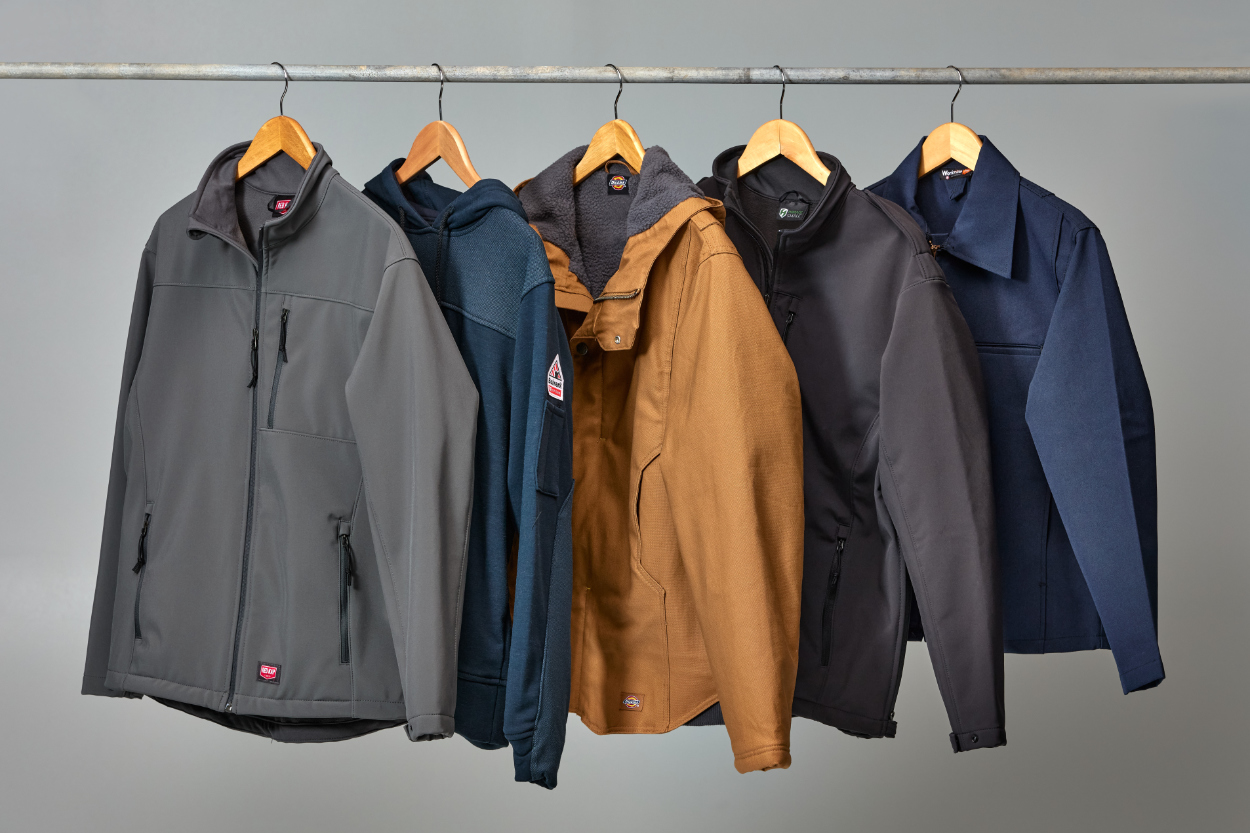
The Nashville-headquartered, global group operates eleven brands – including Red Kap, Bulwark, and Workwrite, and holds an exclusive license for Dickies apparel in B2B channels – each with their own assortments and uniquely compressed go-to-market cycles, and it employs close to 6,000 people at twelve production sites.
Within that brand and product mix, WWOF also balances three different but integrated business units: licensing agreements with trusted partners; manufacturing, with exacting standards of hands-on quality control; and own-brand product development, which serves as a test kitchen, allowing the company’s designers and engineers to experiment with new styles and new methods to find the places where, as Jennifer Rowe, Vice President of Merchandising, Design and Innovation, puts it, “timeless quality meets tomorrow’s technology”.
That blend of intricacy, speed, sustainability, and volume, across different verticals, has positioned WWOF to become a first-choice partner for a wide spectrum of customers – from the largest names in heavy industry, to SMEs across the full spectrum of hospitality.
But the same combination also served to create a fragmented operating environment that, over time, began to erode the company’s ability to capitalise on opportunities. “Our teams were struggling with outdated systems that made collaboration tough, and slowed down product launches,” Rowe explains. “Everyone wanted to innovate faster, to collaborate more easily, and to respond more quickly to customer feedback, but legacy systems made it hard for us to share information, track progress, or adapt to supply chain changes. It was clear something had to give!”
Rather than attempt to transform each brand, or each business unit, along parallel tracks, the WWOF team took a decision that will be familiar to many of our fashion readers: implementing a single, unified product lifecycle management (PLM) platform, from DeSL, that was designed to replace legacy systems and unstructured data, to break down siloes of information, and to provide process and workflow standardisation across the entire portfolio.
“After being held back by clunky tools and fragmented data, the dream was seamless collaboration and agile product development,” Rowe says. “Because the pain points were common – communication bottlenecks, difficulty tracking products through development, and a lack of real-time visibility – we knew that a single platform could bring everyone together and unlock new efficiencies.”
As compelling as that one-touchpoint vision was, WWOF recognised that a universal roll-out would require too much process and technical transformation all at once. To offset that risk, the team prioritised the brands that it deemed had the most acute need for modernisation – taking account of their different cultures, calendars, and everyday complexities – before moving on to the next cohort.
From that base, WWOF worked with DeSL to identify the areas where the platform would provide the most visible short-term results, demonstrating the day-to-day value of digital transformation to real end users, and then allowing those use cases to provide evidence and momentum for the next stage.
With a user manifesto that Rowe describes as “less manual work, more creativity, and a stronger competitive edge,” WWOF took steps to make sure that the input of cross-functional teams shaped this staggered deployment strategy, and through the nomination of “super users” and a “train the trainer” model, the staged go-live was able to safely steer a high-velocity, high-variety business towards measurable results in a meaningful timeframe.
And those results are now being quantified using metrics that will resonate with not just workwear peers, but fashion companies of all shapes and sizes.
“The most tangible difference is that we now have a single source of truth that acts as a universal source of data for the entire organisation,” Rowe says. “This foundation allows other systems to push and pull data from a central location, it eliminates the need to rekey information across platforms, it accelerates our workflows, and it frees up our teams to focus on value-added activities rather than manual data entry and reconciliation.”
As a concrete example: WWOF’s teams have shifted from expecting to manually re-enter data into different solutions to being able to update fields and attributes once, and having those changes “cascade seamlessly into downstream systems—ensuring accuracy, speed, and consistency across the entire product lifecycle,” as Rowe puts it.
And that mindset shift was also instrumental in advertising the benefits of PLM to teams across the extended product journey. “Now, our Merchandise, Product Development, and Global Materials Supply teams are teaming up as partners right on the platform,” Rowe explains. “We’re sharing specifications, timelines, and feedback instantly, instead of everyone waiting around for that one email. The result? Way more transparency and fewer mistakes.”
To serve the needs of extended teams, though, every technology deployment is defined by (or limited by) its ability to integrate with the tools that those teams use, day in and day out. And many of the challenges that have driven uptake of digital product creation (DPC) tools in mass market fashion are felt even more acutely in workwear, where technical performance, sizing, and fit are all critical, a single source of truth would not be complete without incorporating 3D-native workflows.
To move towards achieving this, the WWOF and DeSL teams plan to deliver a seamless integration between Browzwear and the PLM platform. “Bringing those two solutions together is something we envision as a key enabler,” Rowe adds, “because it will support our Designers in visualising products in 3D, using actual production materials stored in PLM, and then making comments, requesting changes, collaborating, and sharing concepts with colleagues and partners – all in a single, connected environment.”
And the same attitude towards interoperability and extensibility is also behind the vision to extend the “single source of truth” into other functions.
“We designed this implementation with future costing capabilities in mind,” Rowe tells us. “The same groundwork that provides one source of truth in design and development can also provide the foundation for data-driven, real-time, scalable scenario planning. These features aren’t active today, but they represent the kind of continuous improvement that will help us to transform the way we make decisions, and to build smarter, faster, and more resilient ways of working, in the near future.”
Rowe and her team also see this combination of data consolidation and capability extension as a way to fortify the business against workforce volatility, which has become a key challenge for fashion at large – especially in instances where a brand’s technology environment has been built up through accretion, from individual employees’ memory, homegrown macros, and disconnected spreadsheets.
“Standardisation has already led to faster onboarding, and more consistent use of the system,” Rowe notes. “For the future, having one single source of truth is going to reduce the disruption of associate turnover, and expedite the onboarding of new talent without needing to delay our development timelines.”
And new talent is likely to be needed if the workwear sector meets its growth predictions: combined with uniforms, the sector is expected to be worth close to $200 billion by 2035. The opportunity to capitalise on that growth, from WWOF’s point of view, is also clear: institutional customers are increasingly framing workwear not as a disposable asset but as a way to contribute to worker satisfaction, as measured through comfort, inclusive sizing, and style.
But with shifting regulatory pressures – particularly in fire safety and other high-risk areas that are likely to prove more resistant to industrial automation – the bar for data transparency, disclosure, and compliance will also continue to rise at the same time.
In that environment, the WWOF team sees its PLM go-live as just the starting point of a transformation journey, but one that provides the best possible foundation.
“This new digital backbone sets WWOF up for ongoing success,” Rowe concludes. “From here onwards, product development will be faster and more agile, collaboration will span teams and partners, and growth will be fuelled by data-driven insights. Our future is bright, bold, and built on a foundation of innovation!”