As fashion, beauty, and luxury emerge from another holiday season defined primarily by growth and scale targets, the aftermath serves as a reminder that moving high volumes of product during seasonal spikes will have less of an impact on overall margin and profitability than investing in technology and process innovation. This is especially true then that technology is part of a modular, intelligent and interconnected ecosystem that can run from connected manufacturing to merchandising and marketplace strategy.
To analyse the difference in outlook between seasonal, output-focused optimisation to year-round, outcome-driven transformation, The Interline partnered with Lectra, the technology company behind garment creation and engineering,manufacturing, marketing and traceability solutions software as a service (SaaS) that are all connected to the central collaboration hub, Kubix Link PLM.
With the busiest shopping days of 2025 behind it, fashion should be taking stock. Results will always vary brand-by-brand, segment-by-segment, but this year the picture painted by analysts and insiders for the holiday was a particularly polarised one.
And the most recent rollercoaster also served as a reminder that, while holiday-specific optimisation is important for customer satisfaction and meeting short-term targets, seasonal outcomes are actually most heavily determined by actions taken, and processes digitised and transformed, during the other eleven months of the year. This is especially true if that time is spent consolidating and identifying the value of fashion data, interrogating outdated processes, onboarding upstream partners, and connecting different parts of the technology estate, both software and hardware, to arrive at a centralised source of action and intelligence.
To qualify that connection between year-round transformation and seasonal success, it’s important to understand the latest set of peak shopping context. According to Salesforce’s Black Friday 2025 data, spending across all consumer shopping categories in the United States was up 5% year-over-year (or 7% when global markets are also taken into account). Data from Adobe tells a similarly optimistic story: retail spending was predicted to pass $250 billion (USD), representing a 5% increase over the same November 1st to December 31st period in 2024. And with more than $130 billion of that spending packed into the month of November alone, and $26 billion spent across just two days, on Black Friday and Cyber Monday, the concentration of cross-channel sales in a short window is heavier than ever.

Of that expanding pie, apparel also remains one of the most important podium categories, with Adobe placing it in the top three areas for discretionary spending (alongside consumer electronics and furniture) and estimating that it drove in excess of $47 billion in sales over the 2025 holiday period: an increase of more than 4% compared to 2024, giving it a market share of close to 20% of all online retail based on that quarter-trillion assumption.
These are all encouraging signs on the surface, so retail and brand businesses would be forgiven for breathing a sigh of relief. The temptation, once peak shopping periods end, is always to see the more predictable quarters that follow as a reprieve, a chance to fall back to steadier patterns, and an opportunity to recoup and then refocus on increasing sales volumes next year.
But as Lectra – our partners for this story – wrote in their industry-capturing whitepaper in the summer of 2025, fashion’s longstanding focus on output has hidden the need for a more fundamental transformation of the way the industry operates. And the most successful companies, whether they’re specialised in a single category or spread across the entire globe, have used the year-round opportunity for transformation to reorient their business models around strategic outcomes. This, in turn, has given those companies the edge during both seasonal spikes and more static whole-year trading.
Because behind the latest group of glossy holiday metrics were a set of quieter indicators suggesting that growth and scale, while they make for good headlines, will deliver diminished returns compared to investments in improving per-style profitability and margin.
For example: post-season Salesforce data reveals that a lot of the additional spending is not, in fact, coming from new volume, and consumers are only increasing their order volumes by a single percentage point. Instead, the bulk of the additional gross money-in was a result of higher retail prices, which are pegged as being more than 6% up, on average, when compared to the 2024 holiday season.

At least some of this higher spending, then, is what we might define as “inescapable inflation,” where retail prices have risen in line with one another. And this is underlined by Adobe data suggesting that the use of buy-now, pay-later platforms was up 9% this year, with deferred spending (either by necessity or by choice) accounting for a total of more than $10 billion between 1st November and 1st December.
As the same Lectra whitepaper explained in mid-2025, topline demographic growth is difficult to come by in mature consumption markets, and the addition of an affordability crisis in major markets like the United States, with an erosive effect on spending power, makes this even harder.
There is, in other words, not much of a larger pot for brands and retailers to reach into in mainstay markets, and the disposable income that consumers have in those markets is being squeezed. In that context, raising prices might feel inevitable (Business Of Fashion predicts more than 30% price increases in apparel and leather goods due to the imposition of tariffs) there is, in reality, a cap on what an overstretched market can tolerate.
At the same time, the majority of brands selling to consumers – especially in the US – have seen at least some of their input costs increase, especially in global sourcing and production. As a consequence, any increase in seasonal revenue is likely to be tempered by a rise in the cost of goods sold.
To counter, fashion retailers and brands have limited short-term options. By the time seasonal peak trading windows begin, the target margin for any given product has been set in stone for months, meaning that the levers that can be pulled to help move inventory are, realistically, confined to marketing and markdowns. And while apparel, according to the latest holiday data, was actually the least-discounted of the top three spending categories during the 2025 holiday season, average markdowns across the final week of November were still between 22% and 25%.

Some markdowns, of course, are planned even if others are reactive and catalysed by quick fluctuations. But all of them serve to put extreme pressure on profit margins, as well as providing brand and retail businesses with extremely limited headroom to maximise those margins as products approach the point of sale – not just during peak seasonal windows, but all year-round.
So if the holidays remind us that fashion usually has the bluntest tools at its disposal when peak demand occurs, what other, sharper, options could the industry deploy?
If we restrict our focus, for the moment, to refining where and how products appear, there is actually more growth, expansion, and position-optimisation runway that the top-level statistics suggest. It just requires a more proactive, data-backed, and systematic approach than broad-brush sales and markdowns – and one that remains open to exploring the potential and the pitfalls of different channels.
Without fundamentally altering the way a given product is designed, engineered, or made, fashion businesses looking ahead at the 2026 holiday season can already start to take advantage of marketing solutions like Lectra’s Neteven (which aims to simplify marketplace operations, optimise brand visibility, and accelerate digital growth) to capitalise on channels beyond their own direct routes to consumers, and beyond established retail partnerships.
While marketplaces like Amazon do have the potential to create even further price pressure when peak demand occurs – the company’s “biggest Thanksgiving holiday shopping event” boasted prices that were, on average 14% lower than other leading retailers – they, and other alternative channels, also represent a broader route to market. Shopify’s 2025 holiday data revealing that its merchants (with clothing and activewear being key categories) moved 27% more this season compared to 2024. And new data suggests that TikTok Shop accounted for more than half a billion US dollars in sales over the same holiday period.
By making use of a dedicated solution – one that’s also connected to the rest of their tech estate – fashion brands can identify and capitalise on opportunities to find new consumers, or maximise the lifetime value and loyalty of existing ones, across new markets in both mature and emerging regions.
But finding ways to broaden and deepen the purely transactional side of eCommerce is not the sole opportunity available for fashion businesses when it comes to extracting maximum sell-through potential from existing products, during regular trading or peak season.
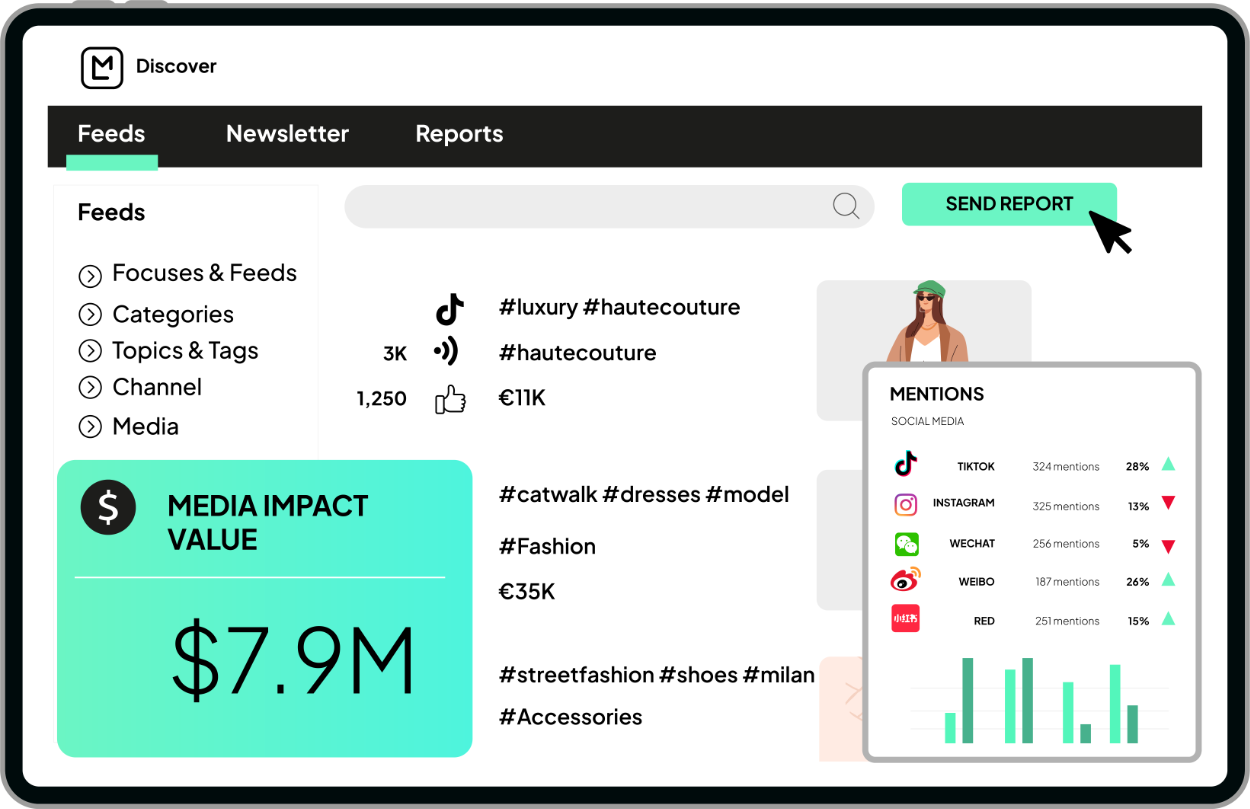
With the help of solutions like Lectra’s Launchmetrics, fashion can put in place the right frameworks to understand how a brand is performing, and then adjust content, marketing, and communications strategies to streamline and transform where and how they engage potential shoppers.
These metrics are likely to prove especially relevant during holiday sales cycles. Holiday 2025 data showed that the majority of spending (close to 53%) came from mobile devices, for the first time. And while social media remains a key referrer to eCommerce platforms, the revelation from the 2025 season is just how quickly generative AI applications like ChatGPT have changed the dynamics of brand presence and product discovery; ahead of Black Friday, predictions were that traffic from AI sources to retail websites would jump 520% year over year, but the reality is that it increased more than 750%.
In practical terms, this means a much wider array of potential touchpoints between consumers and retailers – across both existing channels, like mobile, and entirely new ones. For fashion businesses looking to make sure their values and their products are communicated to the right demographics, in the right places, in 2026, brand performance monitoring that covers all of those channels could provide an uplift.
And, across that wider spectrum of touchpoints, consumers are also shopping with a conscience. The regulatory framework for sustainability and end-to-end product transparency may still be uncertain, but consumers in the USA and the UK in particular are showing evidence of prioritising spending on more durable, more sustainable, higher-quality products as well as on brands that can demonstrate more sustainable and ethical practices.
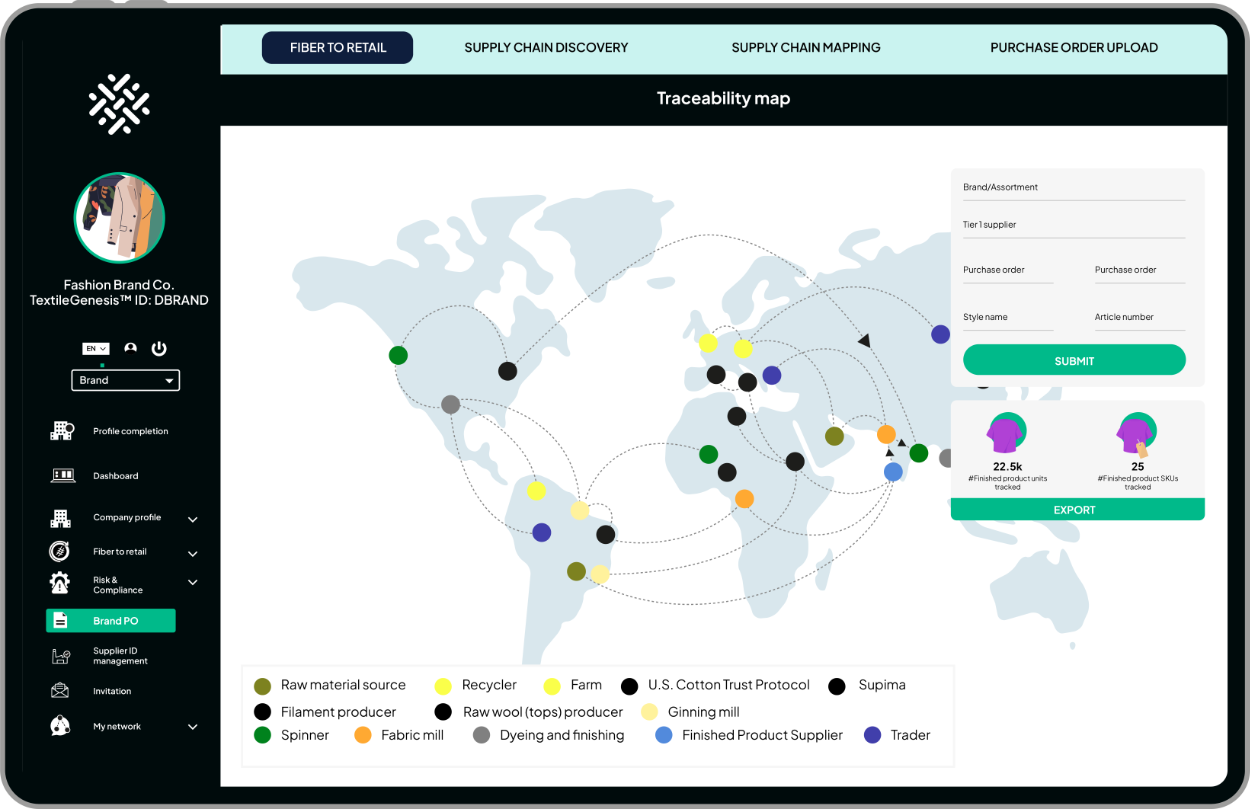
Practically speaking, demonstrating nebulous metrics like “sustainability” and “ethics” can be a fraught exercise in the age of greenwashing criticism and advertising regulations, which makes scientific, data-centric traceability an essential foundation for fashion companies that want to be able to convey a sustainability narrative across channels. While there are a range of closed-book methodologies and frameworks for architecting traceability backwards, from finished products to the sources of their materials and components, a more grounded and compliant approach to market differentiation through transparency could come for companies that invest in an innovative fibre-forward solution like Lectra’s TextileGenesis, which promises a more “radical” vision for transparency.
Of course, competitor brands will also be targeting many of the same potential consumers, whether they are more sustainability-minded, part of the fast-growing AI-native consumer cohort, or price-sensitive. And while discounting is more sporadic and unpredictable in the quieter moments of the year, as the holiday 2026 ramp-up begins again, companies that have invested in competitive analysis tools like Retviews – also from Lectra – will have the edge when it comes to having full-spectrum visibility into competitor promotions and communications, that can be folded into both reactive, in-season decisions and future collection development.
Whether these solutions are taken separately or together – and all are part of a coherent and integrated portfolio of Lectra solutions – they can optimise brand positioning, ensure that products can be discovered and purchased across the right range of channels, and improve sell-through prices and other key seasonal and year-round metrics by telling a coherent, compliant narrative. All of which matters a great deal when fashion brands are considered where to invest time and effort over the next eleven months, to make sure they can maximise the potential of products once they reach the market.
But a more profound kind of optimisation can also be happening at an industrial and operational level, in manufacturing. By leaning into solutions like Lectra’s new Valia Fashion which harnesses the full power of Industry 4.0 technologies, fashion companies can connect the data from manufacturable orders directly into sourcing and production, creating products from the outset with faster time to market, increased end-to-end transparency and accountability, and greater durability and quality.

Beyond seasonal peaks in demand, when having the right products in the right channels matters the most, the production workflow is also the architect behind essential year-round metrics that contribute to margin and profitability: the agility to shift between mass production and more reactive, shorter-runs, the ability to optimise costs and reduce material waste, and much more.
Fundamentally, though, each of these different pieces is part of a much wider transformation drive that might manifest itself every winter, but that requires teams, partners, executives – every decision-maker in the fashion journey – to align themselves to a vision.
This alignment is difficult to achieve when successes in isolated areas, like marketplace strategy, markdown optimisations, or manufacturing efficiencies, are not rolled up, communicated, and centralised to a single location that multi-functional teams can use as a source of truth.
For both seasonal and year-round transformation to really take effect, everyone in fashion needs to be able to turn a common solution that houses up-to-date product data, market and competitive insights, sustainability information, manufacturing indicators and plenty more. This kind of collaborative layer has been the promise of PLM for many years, but connectivity and integration between third-party tools and even the largest product lifecycle management systems is not always easy.
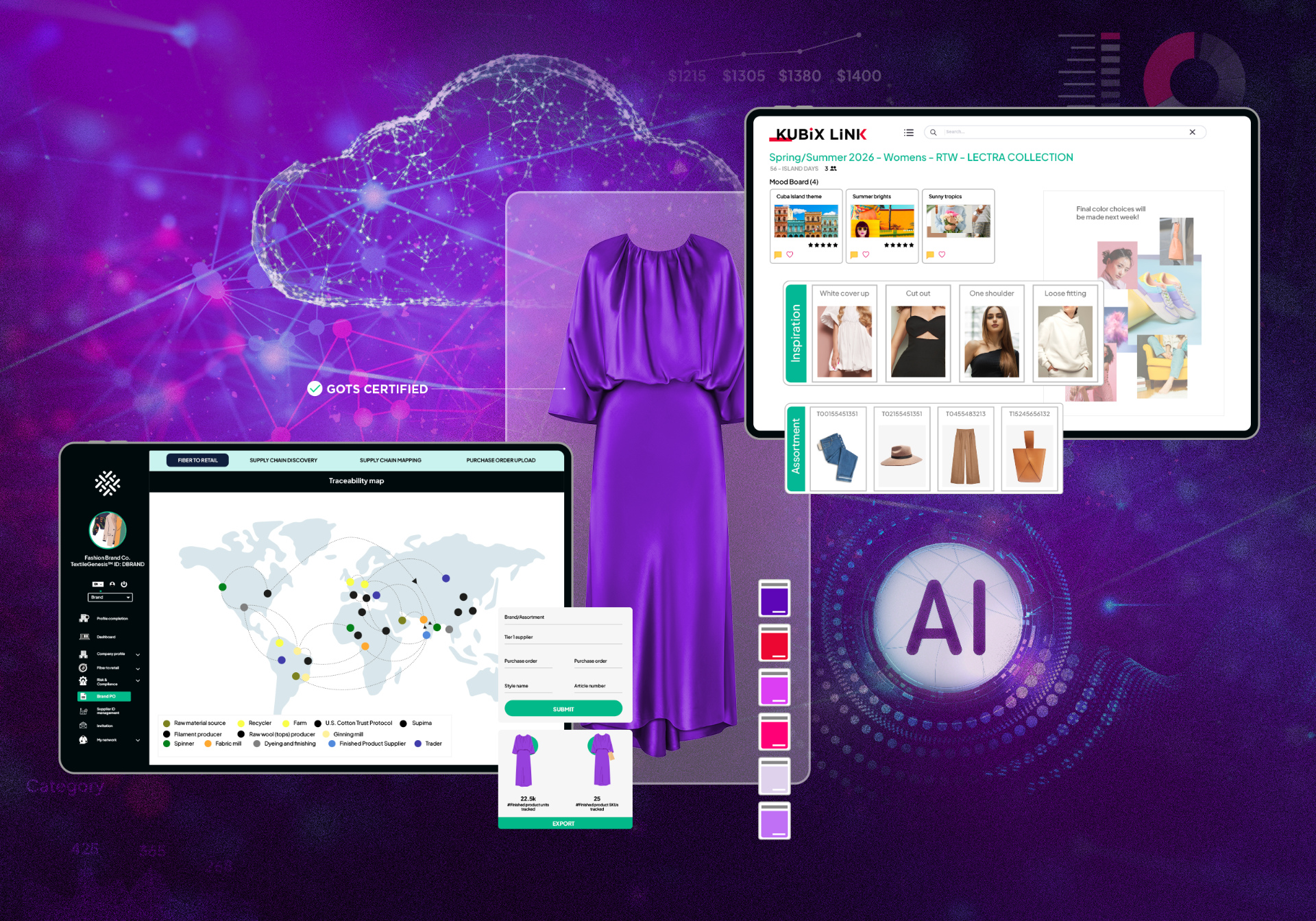
This is something that Lectra have prioritised with Kubix Link PLM, a collaboration solution that sits at the centre of all the different solutions and market needs that get exposed through holiday stress-tests, but that also form the foundations for a much deeper re-evaluation of how the fashion market has changed in the last decade, and how pivotal a moment fashion now needs to meet.
As that sentence suggests, having a strategic vision to transform everything from design and manufacturing to marketing and brand positioning is a positive step, but the achievability of changing everything about your business in the next nine to ten months – before peak shopping seasons begin again – is probably unrealistic. This is where the importance of connectivity and modularity come in: each of these areas has the potential to improve any fashion business’s outlook for the coming year in ways that are measurable in isolation, but that can also hook into a wider vision for change.
Because where any fashion business started this year from should, of course, have been driven by the most immediate set of indicators, from the holiday season. But as it becomes clearer with each season peak, the benefits of eventually changing not just how well you can shift product in a seasonal window, but how you design, make, and position it to optimise profitability, will compound over the course of this year, 2027, and beyond.