
Key Takeaways:
- OpenAI this week launched ChatGPT Voice, built on the full-duplex GPT-Live model, with a consumer-first rollout and a charm-offensive trailer. A deeper look reveals this as the B2C push of an eventual B2B deployment strategy, with conversation and personality being the most persuasive tools yet to be pointed at the conversion metrics brands and retailers care about.
- Meta also released Muse Image, a model within spitting distance of the state of the art from OpenAI and Google. That model shipped across Instagram, WhatsApp and Facebook with the ability to generate images of other people’s likenesses via a simple @-mention, on an opt-out basis. The outcry was loud enough that mainstream publications ran guides to opting out.
- Technology companies seem committed to asking forgiveness rather than permission, but fashion brands should pause before aligning themselves with the same forward momentum.
Summarise and debate with AI:
Take the content and context of this article into a new, private debate with your AI chatbot of choice, as a prompt for your own thinking. (Requires an active account for ChatGPT or Claude. The Interline has no visibility into your conversations. AI can make mistakes.)
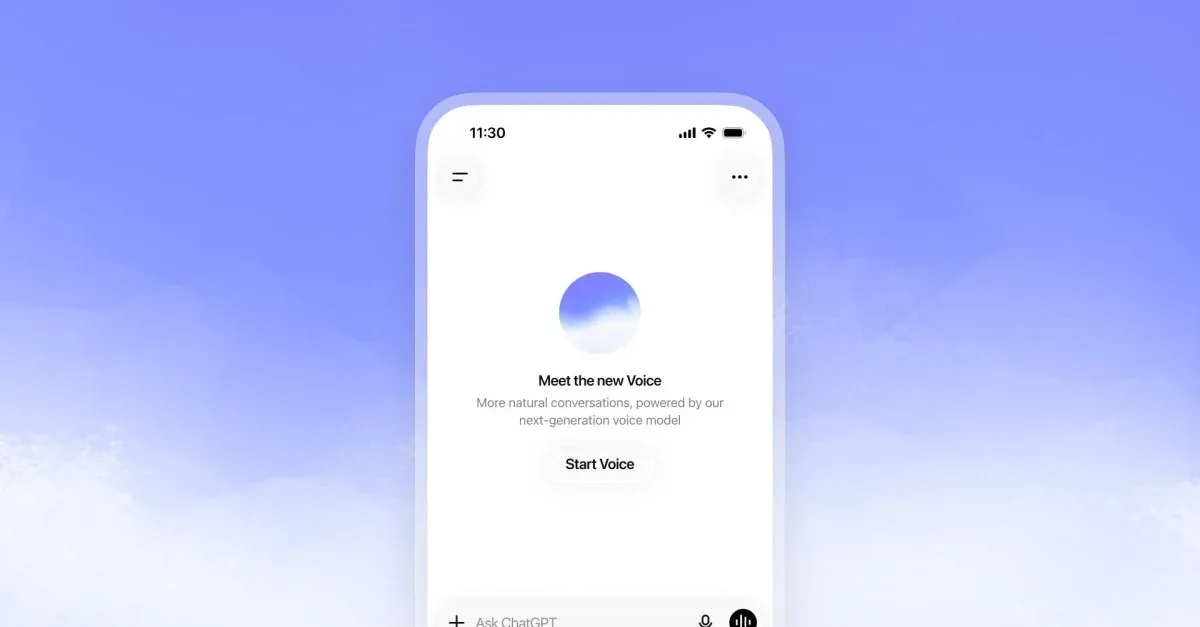
Yesterday, OpenAI announced the next turn in voice interactions with ChatGPT, which is itself at the forefront of native back-and-forth conversations with language models. What used to be called “voice mode” is now just “Voice,” and is powered by the new GPT-Live model, which has undergone an architecture shift from turn-by-turn conversation sequencing to “full duplex” – meaning the model can listen and output simultaneously.
The launch is consumer-first. Customers on all of OpenAI’s paid tiers (Plus, Go, and Max) automatically receive the new voice interface on the full-fat model, while users on its free tier will interact with GPT-Live-Mini, a smaller and cheaper version. API access for developers will come at a later date.
We mention this staged rollout because the launch of ChatGPT Voice is one of several instances packed into this week of AI companies pushing at the frontiers of how people use AI with the implied objective of shaping consumer behaviour for enterprises to then capitalise on.
This sounds, we realise, paranoid. But humour us, because while it’s beginning to seem increasingly likely that AI will have a measurable impact on society, it seems equally like that that impact will be hard-won, by technology companies testing people’s boundaries and then apologising afterwards. The social media pattern, in other words.
Before you read on...
Our weekly news analysis will always be available to read here at The Interline, but you can get it (along with notifications for new podcast episodes, events, and more) in your inbox by signing up to our mailing list.
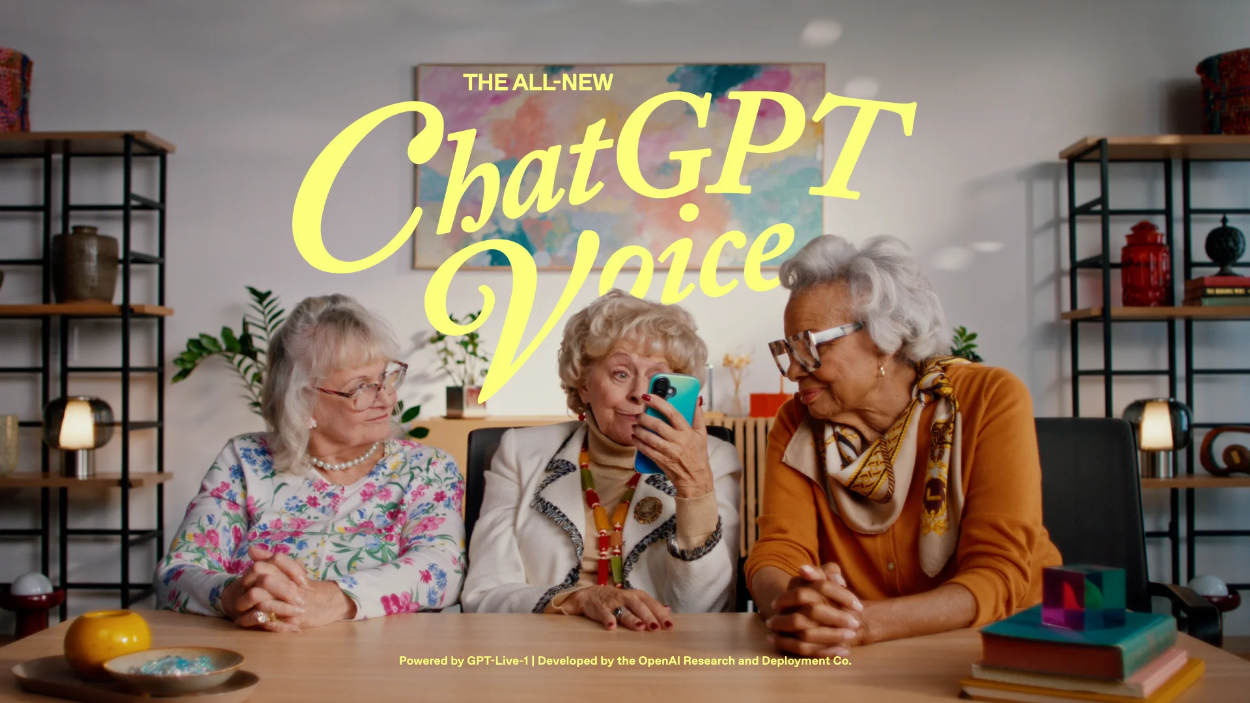
Consider this: the breezy launch trailer for ChatGPT voice is clearly aimed at making “talking to AI” seem like universal behaviour. If a trio of stylish, brashy grandmas can have an AI assistant that supports, jibes with, and advocates for them, then what’s stopping you?!
Then consider who made that trailer. The video is credited to “the OpenAI Research & Deployment Co,” part of which regular readers will recognise as belonging to The OpenAI Deployment Company (the management consulting and advisory arm of the business, newly acqui-hired and scaled), and the portmanteau of which is now the mantra attached to the OpenAI website, although it’s not the official company name.
That might feel like a pointless distinction, but what does deployment have to do with a fun consumer app? What part of three seniors chatting to an LLM about everyday tasks is the preserve of a company that’s increasingly chasing enterprise dollars – as evidenced by the launch this week of ChatGPT Work as the wholesale replacement for both the ChatGPT desktop app and the Codex agentic IDE?
The Interline contends that the lighthearted video, and the consumer-first launch, are conscious parts of a B2B deployment strategy that needs a behavioural shift in the B2C market before it can really take root.
The launch video shows ChatGPT Voice providing what the company calls “visual answers at a glance”. And while these are confined to weather forecasts and World Cup scores, the foundation is now laid for voice interactions to start surfacing the sort of brand discovery and first-stage shopping mini-apps we’ve seen from the likes of ASOS.

To put it as bluntly as possible: for brands and retailers to obtain value from making their experiences available to voice-first users, those users need to become accustomed to using voice to discover brands, buy products, and, eventually, to check out.
And within the launch trailer there are factors working both for and against that kind of uptake.
In favour: as well as pioneering the new voice model itself, OpenAI has also significantly upgraded the core LLMs it can draw on. Until recently, ChatGPT voice mode was restricted to using an older model in the GPT family (a 4-series model) while text interactions had advanced to 5.5. Now, ChatGPT Voice can connect to frontier models, the full surface of agentic capabilities theoretically become available for voice interactions, even if this strays right into the blurry space that led Amazon to eventually put screens on Echo devices.
Against: the cost of running these models is not negligible. While API pricing for GPT-Live isn’t public at the time of this analysis, it is not free (hence it being restricted to paid memberships), and the LLMs and agents it then refers apps and plugins to are well-documented as carrying similar pricing to other frontier models. Put it this way: it might feel useful to have a conversation with an AI about what to wear, but are you willing to pay for peak usage credits to make it happen?
However these variables shake out, it seems clear at this early stage that AI companies are about to tap into arguably the most powerful tools for persuasion we have (conversation and personality) and they are inevitably going to point them at conversion and engagement metrics – as well as at the success criteria of advertising partners.
The Interline has written before about the leap from personalisation to what we called “prescriptive retail,” where AI clienteling tips over into harder sales tactics. If that felt like a potential risk with text chat, then more believable voice chat elevates that concern even further. Our prediction is still that we will see complaints from users who felt railroaded into making a purchase in the near future. Which is obviously a much lower-order risk than “AI psychosis”, but it represents a harm nonetheless – one that fashion may not want to be associated with.
And speaking of AI harms, this was also the week that Meta launched its new image-generation model Muse Image. By all accounts, the model is somewhere within spitting distance of similar native image models from OpenAI and Google, but with the obvious difference of being made available (instantly in some cases; staggered in others) across Meta’s vast, multi-billion user surfaces: Instagram, Facebook, WhatsApp, Messenger, and the programmatic ad stack.
What makes a second model launch worthy of analysis? As part of adding Muse Image to Instagram, Meta gave users the ability to @-mention individuals from across Instagram, and to generate images that use their likeness. This, like the programmatic content generation we covered last week, is being done on an opt-out basis – which prompted enough outcry that mainstream publications like the New York Times published guides showing users how to take that opt-out action.

This approach to deployment is rooted, in The Interline’s opinion, in a different place than OpenAI’s desire to deploy new innovations in the direction of end users first, to shape behaviour. Instead, Meta appears to be running the “ask for forgiveness, not for permission” playbook that big tech companies have relied on through some of the biggest social transitions – such as digitising all the world’s books.
It is, after all, no coincidence that WhatsApp is adding support for usernames (rather than being reliant on phone numbers) just as the ability to borrow people’s likenesses with a simple mention rolls out.
But that playbook is not one that fashion has successfully run before. And as tempting as it may be for brands to jump straight to the frontlines of voice interactions and likeness-appropriation, it seems prudent for them to first ask themselves whether they want to be a party to seeking forgiveness, or whether they’d prefer to wait for the permissions to be properly set.