
Released in The Interline’s AI Report 2024, this executive interview with Hyland’s is one of a fourteen-part series that sees The Interline quiz executives from companies who have either introduced new AI solutions or added meaningful new AI capabilities into their existing platforms.
For more on artificial intelligence in fashion, download the full AI Report 2023 completely free of charge and ungated.
Key Takeaways:
- AI can significantly augment human analysis and decision-making processes, particularly in areas that are resource-intensive or inefficient. However, it is important to note that AI is not a magic solution and should be integrated thoughtfully into operations.
- One of the major barriers to adopting AI at scale is the difficulty in making a sound business case and justifying the investment required. The effectiveness of AI is often measured through subjective metrics, and many organisations are still in the experimental phase.
- Effective governance, compliance, and ethical standards must be established from the outset when integrating AI solutions. This includes understanding data sources, maintaining quality control, and ensuring human oversight to uphold brand authenticity and ethical standards.
What’s your working definition of AI? Does it differ from the public understanding, which is currently dominated by large language models and generative text-to-image models? And how does that definition manifest itself in your solution(s)?
Our working definition of AI is a set of services to augment human analysis, decision making and help mitigate skilled resources from performing repetitive tasks. Our definition doesn’t differ from most of the public opinion other than our acknowledgement that these services are not “magic.” They don’t just work autonomously and can’t be seen only as a convenience answer to staff shortages and the opportunity to skip foundational steps in advancing operational strategies.
Our view of AI use cases can be categorized in (3) main segments: data enrichment and content classification; content creation and creative inspiration; information discovery and analysis recommendations (contextual insights and AI-generated advice). Large language models (LLMs) can be a component across each of these segments, but we also find clients benefit from leveraging custom-trained and multimodal models that are vectored not just on text but a wide variety of inputs including images and audio.

As a vendor, we are bringing offerings to market that leverage a combination of LLMs and custom trained models to maximize the use and reuse of converted prompts for content enrichment and process management.
One of the first obstacles for any AI initiative is making a sound business case and justifying the investment required. Where AI is concerned, that investment is both upfront capital (for setup, sponsorship, training and more) and ongoing operational expenditures across compute, governance, monitoring, optimisation, safety and more. Where do you believe the cost of all this will sit? Should the fashion businesses be building dedicated AI teams, or do you believe we are at the point of having turnkey AI applications that can be deployed by existing teams without that bespoke support?
When it comes to citing the value of AI, we hear a lot about soft metrics. We’re told that the majority of Fortune 500 companies, for instance, have employees using the major cloud-based language models to improve productivity and efficiency – but we don’t get the same level of insight into how this supports those companies’ strategic objectives. How do you believe fashion brands can deploy AI in a way that’s locked into both corporate strategy and a measurable ROI?
The soft ROI / KPI metrics can be attributed to the minimized adoption of AI services across an enterprise. The truth is that most organizations are at the very forefront of introducing these practices into their production operations. The measurement of effectiveness or performance is subjective and not completely tangible in many situations.
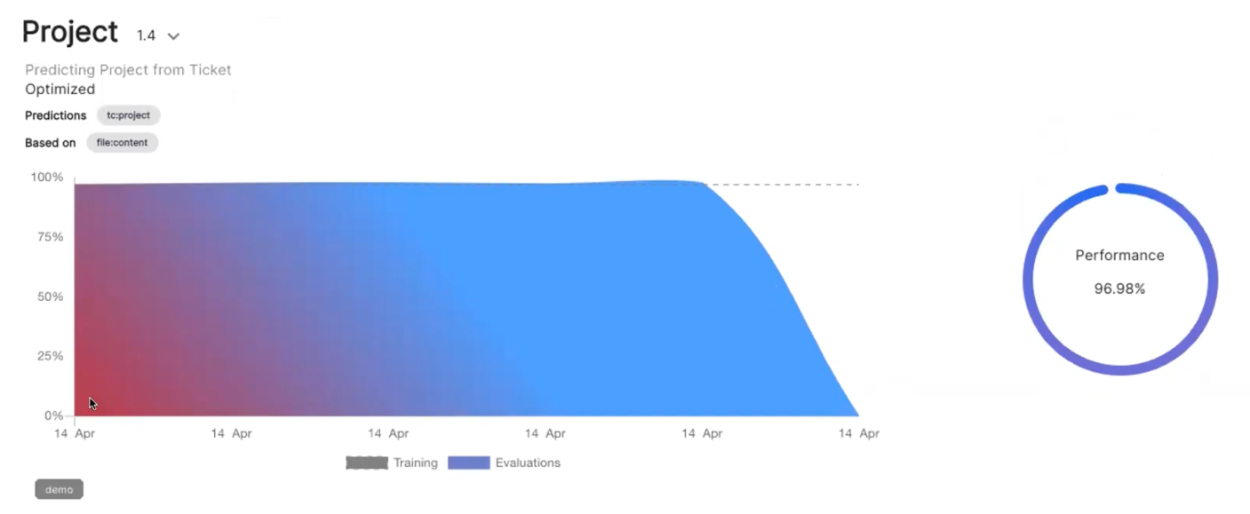
Fashion brands can deploy AI services that map to both corporate strategies and measurable ROI by taking a deliberate approach to the application of AI. Start the experimentation in the areas of the business that are most inefficient or are the most resource intensive. Leveraging technology to perform and augment those activities will inevitably provide cost savings and begin to produce benefits that can be quantified in justification summaries that align to the broader corporate objectives.
That being said, we think this is a major hurdle to the current adoption of AI services at scale. Many AI project explorations do not have a “sound” business case initially. The fashion industry has a history of experimentation. The development of AI does not introduce a change to that perspective. Unfortunately, we are not a point of having turnkey-AI applications that have proven value across multiple lines of business. The KPIs or ROI metrics for AI are circumstantial and organizationally dependent, so stewardship will and should be varied from organization to organization.
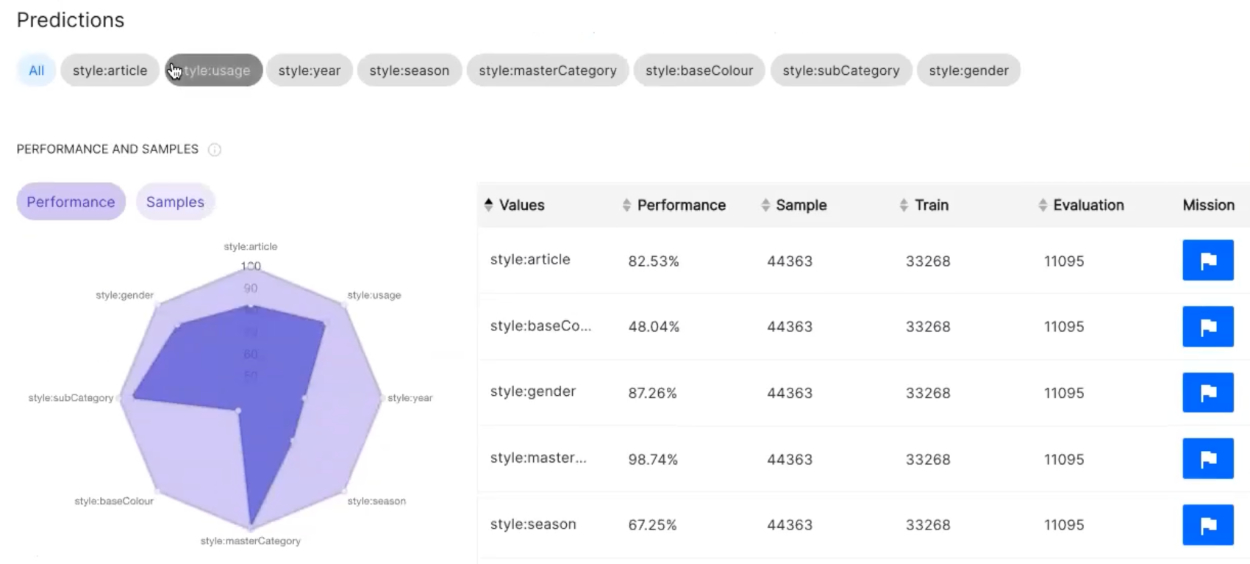
There’s also the opposite side to consider: people might reasonably argue that, especially with generative AI being such a new class of technology, it’s going to take time and experimentation to find the real use cases, and that hard metrics might be difficult to come by. And for many organisations there is also a very real time imperative; everyone is afraid of being left behind if AI proves to be as transformative as some people think it might, and if they fail to put together a coherent AI strategy here and now. Is there a balance to be found between fashion’s desire to experiment and the need to prioritise budgets in a difficult economic environment?
The value vs. time & budget argument is completely justified. The maturity state of these AI services is not at a point where the adoption and /or the application of the AI services is obvious. There is a definite balance between being prepared and planning for what’s next vs. simply playing the “me-too” game and chasing the latest trend without substantiation of its impact on your corporate objectives and market share ambitions. The crawl->walk -> run methodology remains the practical approach despite the promise of skipping foundational steps because of advancements in compute and processing intelligence.
Anyone would struggle to say the adoption of AI isn’t inevitable. However, the speed of adoption and the prioritization of budget needs to be reasoned beyond the aspiration to remain relevant. The use of any technology should be measured based on expected outcomes not because your peers are using it too.
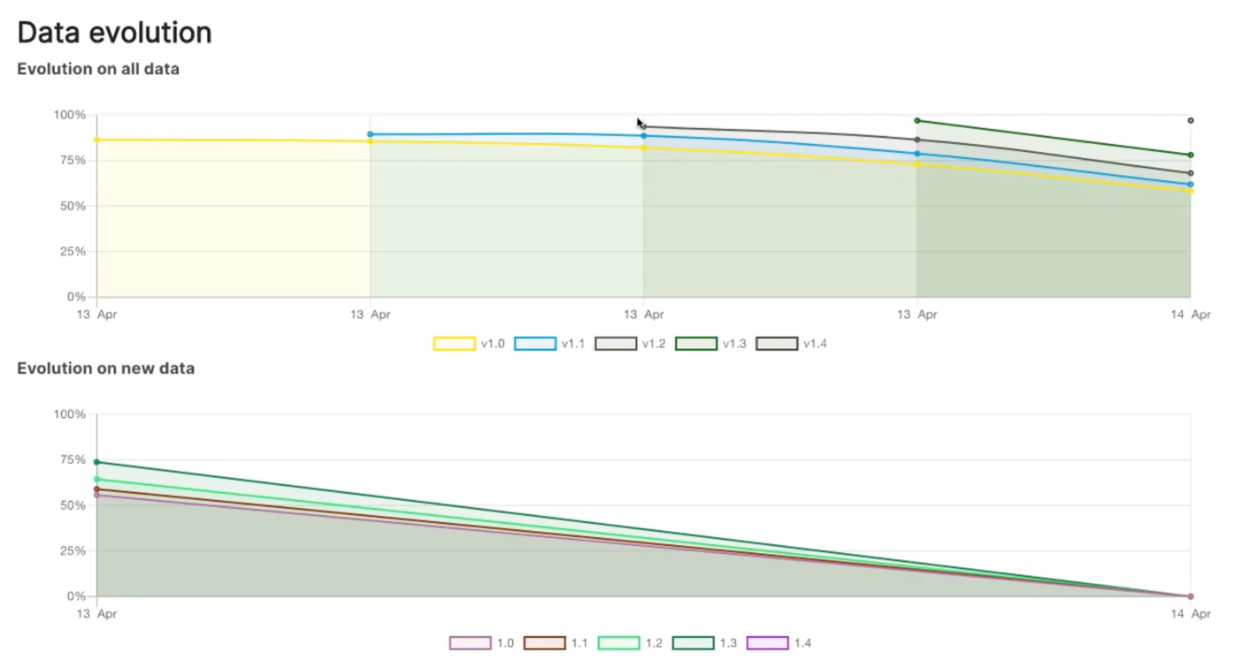
What do you see as being the key legal, ethical, and governance concerns that readers need to understand and get ahead of? People are familiar with some of the potential legal risks and ingrained biases of using off-the-shelf generative models for images, for example, but there are also models that are copyright-compliant or trained on more diverse datasets, so it is not necessarily as simple as swearing off pretrained models entirely. So, what is the right approach to understanding and tackling these considerations? And how can brands put the right governance frameworks in place to allow people to interrogate the output of AI models and improve them once they are in place?
We believe organizations should experiment but plan for success. What that means is that governance and compliance should be contemplated upfront and not after the fact. Understanding data sources and having process safeguards in place as the models are promoted into production is critical. Part of those safeguards is maintaining quality control standards and ensuring human oversight at designated points in the workflow.
Organizations need to appreciate the adoption of AI services is not fundamentally different than adopting any other enterprise technology. Onboarding these services requires dedicated staff, project sponsorship and training & change management protocols.
Besides regulatory compliance and ethical standards, there are other judgement considerations that need to be contemplated before completely outsourcing tasks and decisions to machines. Authenticity is a big one for fashion brands. How confident are you that a machine can properly make decisions that reflect your brand standards and the authenticity of your brand voice and product vision?

What do you see as the near-term future of AI – both within your solution(s) and in general? Do you believe it will be a transformative class of technologies the way people expect?
The future of AI is extremely exciting and it will absolutely be a transformative class of technologies. The promise of benefits is tremendous even if a small percentage of those promises can only be recognized in the short term. Organizations need to look not at the “if” but the “how” and begin experimentation with iteration as the new normal.
The ability to process huge volumes of data and create relationship correlations between those diverse data points is game changing. Humans are not equipped to do that on their own, but a co-existence between human and non-human intelligence will persist regardless of the technology advancements that follow.
There is a fear that people will lose their jobs with the adoption of AI. There is a possibility that AI will replace the need for certain job functions, but there will always be a need for a “human in the loop.”