Key Takeaways:
- The “vibe coding” movement hasn’t had a proper case study in fashion to date, but the CEO of Larroudé’s journey to self-build solutions to a lack of integration between the brand’s tools reveals how embedded the idea of “dynamic software” is already becoming.
- In a new partnership, Doordash will deliver Urban Outfitters’ products across the US. But what seems, at first blush, like a potential new channel for quickfire distribution could also be a new frontier for defining disposability.
- The leading “digital disruptor” brands, Shein and Temu, are pursuing one another for antitrust and copyright claims pertaining to fashion, but the deeper point at issue is upstream monopolisation and a near-future where AI accelerates ‘inspiration’ to a real-time art.
Summarise and debate with AI:
Take the content and context of this article into a new, private debate with your AI chatbot of choice, as a prompt for your own thinking. (Requires an active account for ChatGPT or Claude. The Interline has no visibility into your conversations. AI can make mistakes.)
A uniquely complete brand case study for self-coded systems integration.
This week, Google hosted a precursor to its annual I/O event, called the Android Show. Typically, smartphone ecosystem events are far outside the purview of the The Interline, but the latest additions to the world’s most widely-distributed mobile OS provided an easy peek into a technology trend that we now also have a comprehensive, fashion-specific case study for: self-built bridges between disciplines, data, and applications.
Amongst the various additions to the Android operating system unveiled this week, a couple stand out: agentic AI that promises to perform multi-step tasks, across applications, eliminating “busywork,” and AI that allows phone owners to design their own widgets, rather than being reliant on developers to create visualisations that are relevant for their use cases.
And there are two unifying ideas behind these things. First, the acknowledgement that hand-offs between applications, even in our personal lives, are a burden that most people would happily delegate. Second, that the first idea that occurs to almost everyone, when they’re given the reins of a “vibe coding” tool, is to build an individualised dashboard or view that rolls up a very idiosyncratic set of information from disconnected applications and presents it in a common location.

And where consumer tech behaviour leads, enterprise tech behaviour tends to follow.
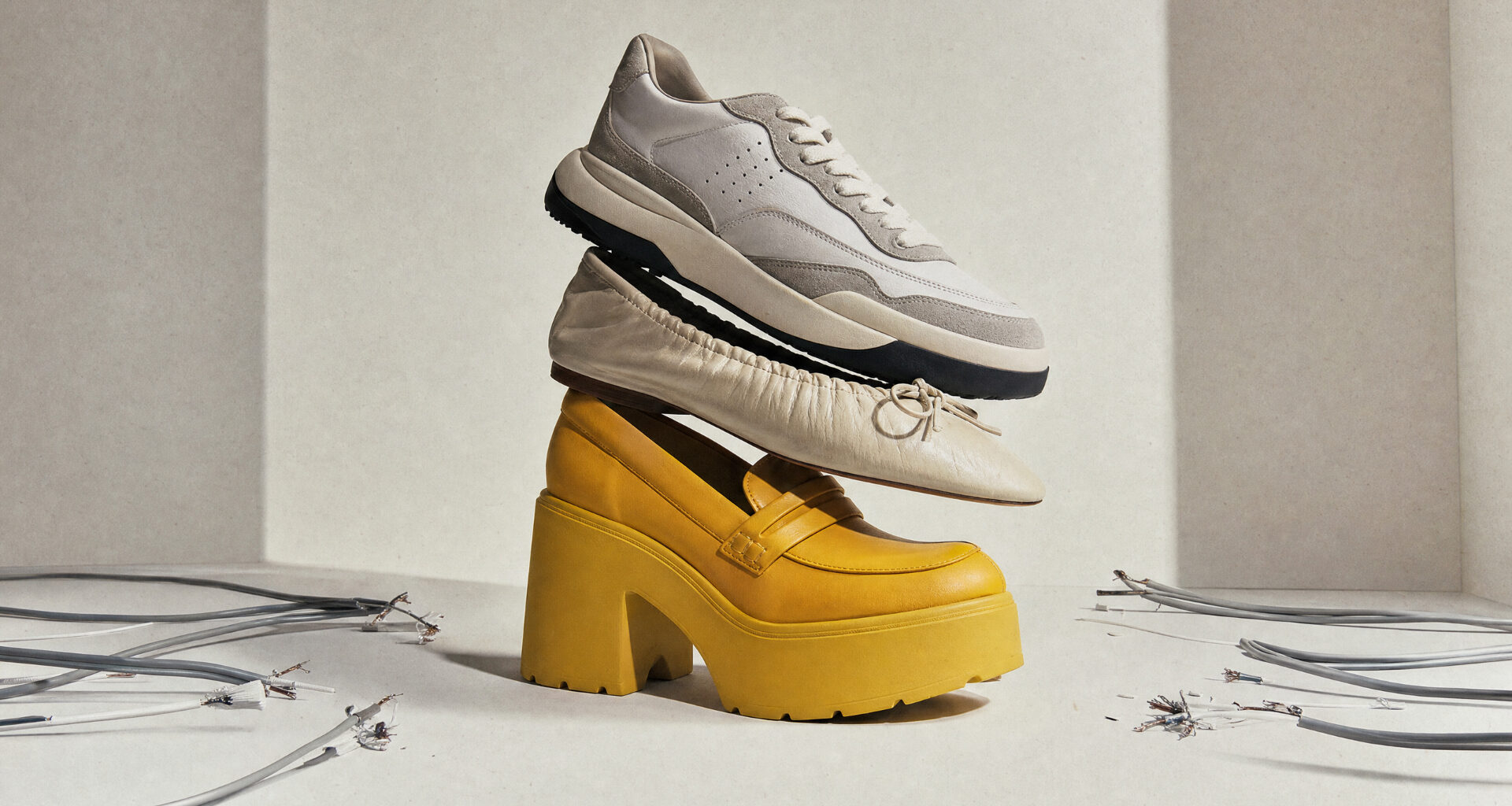
Observe: one brand CEO, Ricardo Larroudé (of the eponymous Larroudé designer shoe company) took both of those briefs seriously this week, as reported on by Glossy. He made extensive use of agentic AI coding tools and models (the article doesn’t specify which, but presumably Claude Code and Codex featured) to link together parts of his company’s technology estate that did not integrate with one another, and then used the same systems to try and architect greater visibility Larroudé’s extended product journey.
We’ve already seen companies, big and small, talk about making use of generative AI to reduce the burden placed on a small pool of developers, or to address narrow challenges, because despite wider and deeper technology adoption, fashion brands are still not tech companies. But this story represents a uniquely complete, end-to-end snapshot of how a brand owner can set out to connect systems, aggregate data, and build a more complete picture of their business by self-building with the help of AI.
The pain points identified in the case study, which is worth reading, will feel familiar to many of The Interline’s readers. Larroudé’s product lifecycle systems were not talking to one another: what happened downstream was difficult to anchor in what had happened upstream, and hierarchies, labels, taxonomies, and data schemas between systems weren’t lining up. So Larroudé, the man, started to fill the gaps in the design-to-ecommerce tech estate for himself, spending, at peak, $20,000 on database queries and LLM tokens.
Without knowing the full picture of what platforms and solutions Larroudé (the brand) is using, it’s difficult to guess how many of them would have had native connectors – especially where Shopify is concerned – but nevertheless Larroudé’s frustration isn’t uncommon. Based on The Interline’s own anecdotal evidence, most brands wish the fragmented pieces of their technology stack were better-connected, and most also still devote a lot of manual time and effort to porting and reconciling data.
The size of the brand, though, is usually predictive of how effectively it can pressure its technology partners (who often have commercial justifications not to integrate with solutions that might intrude on the footprint of theirs) to either open up API or MCP calls to move data between systems, or to build custom integrations to bridge the air between popular tools.

As the case study points out, Larroudé is not a large company, which limits the clout they can wield on customer advisory boards, or the influence they can exert on roadmaps. The operative phrase here is old but valid: the squeaky wheel gets the grease. In these cases, the grease is the political capital and the reputation to steer a roadmap towards integration, and the wheel is the company that adds the most ARR to the tech vendors’ bottom lines.
This is a cynical view, of course, born out of The Interline’s collective experience of observing these kinds of dynamics play out. But it’s also a view that’s been behind the explosive growth of data warehouses, data clouds, and similar products we used to refer to as a middleware. Snowflake, Databricks, et al have grown on the back of the realisation that systems integrity is such a heterogeneous problem, saddled with so much baggage that’s unique to each company, that being the man in the middle can be intensely profitable, as well as being useful to the end customer.
Before you read on...
Our weekly news analysis will always be available to read here at The Interline, but you can get it (along with notifications for new podcast episodes, events, and more) in your inbox by signing up to our mailing list.
So it shouldn’t come as a surprise that a large share of the quoted tens of thousands that Larroudé spent on his build-out went towards Google’s BigQuery AI data platform.
As is the case with all person or company-specific AI self-build projects, it’s difficult for an external observer to quantify return on investment or long-term stability, but the fear with any home-grown solutions is that it follows the well-worn path of heavily customised software, and becomes a brittle link in the chain that requires costly maintenance. And that fear is underlined in cases where the person doing the building is, by their own admission, not a software engineer, and will be reliant on probabilistic systems to maintain things in the long run.
Another concern, from The Interline’s point of view, would be that this kind of self-build could be standing on shaky long-term financial footing. While the cost of the initial build is behind Larroudé, that ongoing agentic maintenance, and presumably a hefty monthly token consumption budget at runtime, could quickly demand deeper pockets if the cost of tokens rises the way observers expect.
In spite of those concerns, though, Larroudé (the man) is quoted in the Glossy case study saying something that feels extremely relevant to our readers across footwear, apparel, accessories, and beauty:
“I reduced staff tremendously, and I only kept the ones that can work agentically […] I don’t like using the word AI. It’s like luxury for me. I don’t like that word. I like the word agentic, which means dynamic software. I’m keeping the people that can transition to working with dynamic software.”
Implicit in this quote is an idea we’ve covered in interviews before – that software will become, in the near future, more reactive and responsive to industry shifts. And implicit in that, matryoshka style, is a different frontier in the “AI replacing jobs” debate – one that affects a very different tranche of talent to the ones potentially threatened by image generation models. Today, as Larroudé suggests, the ability to build software is secondary to the domain expertise required to “program” a company, department, or function, and the confidence to then let the software catch up under your direction, rather than leaving that job to the open market.
Does near-instant fashion delivery mean a more disposable attitude to clothing?
While brands are pushing and pulling on the shape of software for their own purposes, this week also saw some news that brought fashion and a different slice of the tech-enabled service economy closer together.
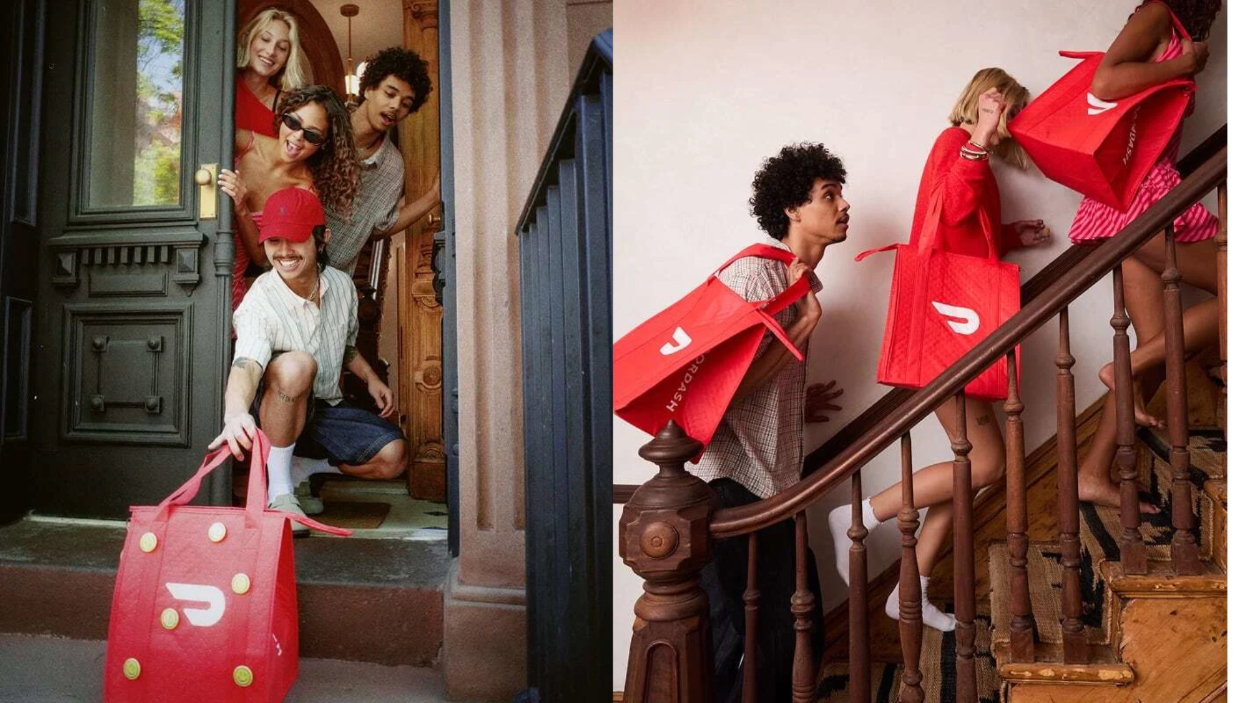
On Wednesday, Urban Outfitters announced a partnership with Doordash that will see the retailer’s products (presumably a curated selection of them, but the announcement is light on details, as well as including a very odd placeholder) become available for short-horizon delivery through Doordash, across the United States.
Doordash has, like Uber Eats and alternatives in the UK and Europe (Deliveroo, most prominently) become synonymous with two trends: the rise of gig economy, or the much less rosy-sounding “atypical work” as it’s officially referred to here in the UK; and the behavioural shift, amongst younger people, towards ordering food and groceries online, which apparently more than 60% of Gen Z consumers routinely do.
It’s far beyond the scope of our weekly newsletter to dissect whether or not delivery services are a net negative for society, but the evidence is fairly clear that they have both supported the rapid expansion of a new channel to customers, which now supports an entire hidden strata of “ghost kitchens”, and have contributed to a complicated set of feelings about the products that get delivered.
By scaling-up demand, these services have also been shown to feed into short-term, high-interest loans from BNPL providers, and those platforms are also playing a role in a mounting debt crisis amongst younger consumers.
So, as appealing as it sounds for retailers and brands to seize on a chance to show up where their customers are, this is a channel that should be approached with some sensitivity, since having it turn up at your door an hour after ordering has the potential to deepen the framing of fashion as a disposable entity.
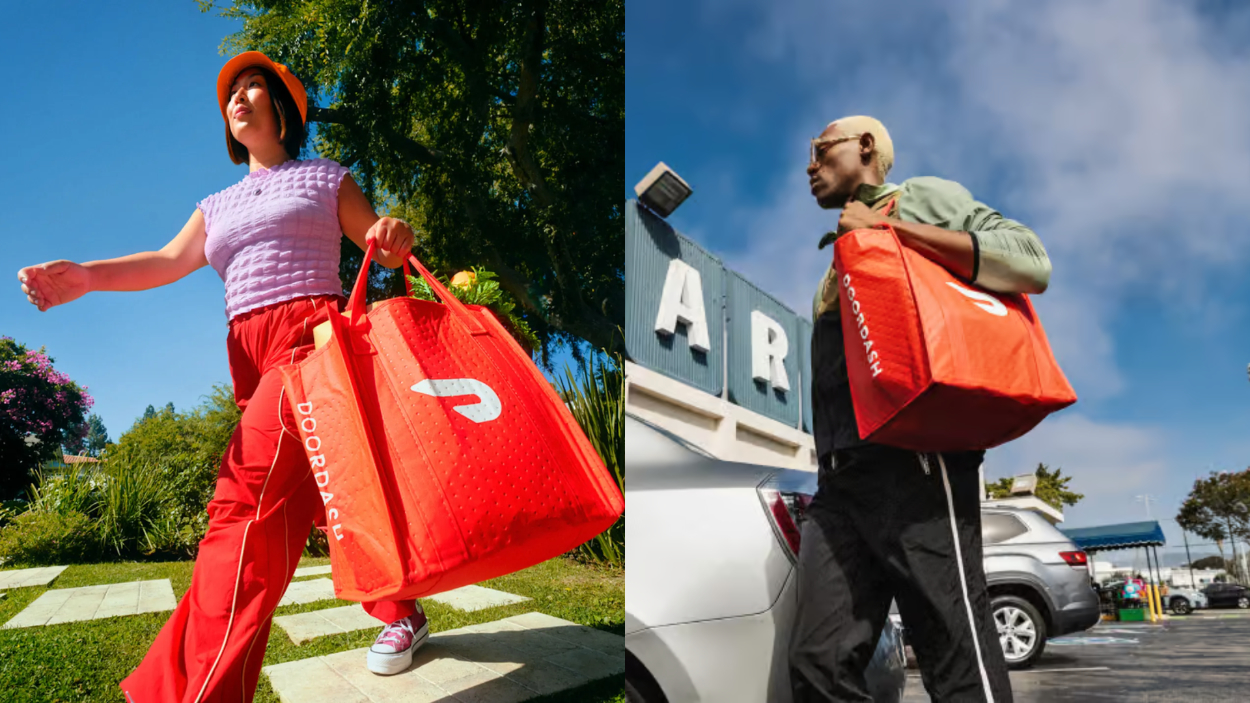
The Interline is also very keen to explore the logistics behind this arrangement. Backend process orchestration and logistics are some of the least-acknowledged areas of innovation (see our recent podcast interview about Decathlon’s distribution strategy and infrastructure in an under-discussed market), and there are some unanswered questions at play here. Is inventory held in the clothing equivalent of ghost kitchens? Are riders collecting from stores? Are distribution centre agreements at the core of the offer?
And there’s also one final idea that this announcement brings back to the fore: the spectre, from another recent podcast interview, of fashion retail becoming a single, vast, undifferentiated mall, where shoppers buy through a small handful of superapps that are, themselves, now under the yoke of robotic process automation at the operating system level, as Google reminded us this week.
Perhaps the next turn will come when consumers can dispatch a rider to pick up their ultra-fast-fashion haul from the customs office. And whether you see that as a triumph of technology and opportunity, or a supreme dilution of the buying and selling experience, is going to depend on where you stand.
The big disruptors continue to fight over fast fashion.
Finally this week, the two most commonly-cited “overseas digital disruptors” are continuing to litigate against one another.
After pursuing each other last autumn on antitrust grounds, Shein began proceedings against Temu here in the UK this week, with the former accusing the latter of “industrial scale” copyright infringement specific to fashion.
It goes without saying that The Interline doesn’t expect our European readers to shed a lot of tears over this latest round between the two ultra fast fashion giants, since EU countries (most notably France) have taken a series of different stabs at reining in both companies through policy over the last year or so.
As we’ve documented before, the team here does not believe that demand can be regulated away. As long as cost of living remains high, and as long as consumers (in at least some demographics) see fashion as a disposable good – see above – then companies will continue to make cheap, throwaway clothing however they can.
The point at issue in this instance, though, is how that cycle operates.
With this case, Shein is accusing Temu of quite literally taking thousands of photos of garments from its listings, putting them up on its own storefront as a way of kickstarting its fashion ambitions, and then making the products afterwards, when demand hits a threshold.
In return – in a segment of the case that isn’t due to be heard until next year – Temu is accusing Shein of squatting on manufacturing capacity by anchoring suppliers to exclusivity contracts that ringfence their production and prevent competitors from gaining a foothold.
Time will tell how these different claims get resolved, but these claims also feel like the thin end of a wedge that will, very quickly, become more about how effectively these companies can use AI to create the huge influx of new styles they need, and whether that AI will find its inspiration from the wider brand market as well as from these two head-to-head competitors.