
Every year is decisive and divisive in its own way, and when people spend their time immersed in technology, every December is a rush to figure out which new products, trends, and ideas they were shown in the previous twelve months might find their momentum the following year.
Here at The Interline we try not to spend too much time looking backwards, but before we break for the year our team always takes a retrospective look at the top stories from January to December (defined by number of readers), and we share our condensed thoughts on how they’ve aged, what they mean, and whether our in-house thoughts about them have evolved.
Since we are not a paywalled publication and we don’t have user logins, we can’t provide any kind of personalised “wrapped” for the year. Hopefully that’s a trade-off our audience is happy to make. Instead, with these annual rearviews, our aim is to inject a little bit of the same energy into a whole-audience retrospective, diving into the stories that resonated the most with you each month.
January – The DPC Report 2024
It feels like cheating to have four downloadable reports dominating different months of the year, but the download figures don’t lie! Even though we released the DPC Report 2024 in December ‘24, the second explosion of engagement with it came after the holidays, at the start of 2025. This is the reason we renumbered the just-released DPC Report 2026, since it felt a little bit silly for so many people to start reading something at the start of one year when it carried the previous year’s date.

In practice, downloading a copy of the fully-free-to-read DPC Report 2026 is the best way for anyone to re-evaluate what we, our friends and partners, and our brand authors wrote in last year’s edition, and to judge it with a year’s hindsight. But in a broad sense, our team is aligned on the key carry-over from the 2024 report being the way that 3D designers and agencies continue to push the boundaries of their craft forwards, and how that advancement is still challenging the technology sector, and the brand ecosystem, to respond. In other fields, it’s certainly true that unique creative work is produced outside the “studio system,” but when it comes to digital product creation for fashion, those individual creators are also the people stress-testing and pioneering new technology pipelines and approaches that then become integrated into the internal tech estate.
February – Enabling Innovation: Hugo Boss’s Training Approach To Digital Creation
This first-hand perspective from inside the campus of one of the industry’s most enduringly interesting premium brands was, it has to be said, also taken from the pages of the DPC Report 2024, but it quickly became a popular piece of standalone content as well. Part of that popularity, of course, comes from the brand name, but the primary reason, we believe, is that stories like this one offer a unique glimpse behind the scenes at what pioneers and household names are really doing with technology when they commit to and invest in them over the long term. (We have three of them, from Patagonia, ASOS, and ThruDark in the DPC Report 2026, just in case this one piqued your interest!)
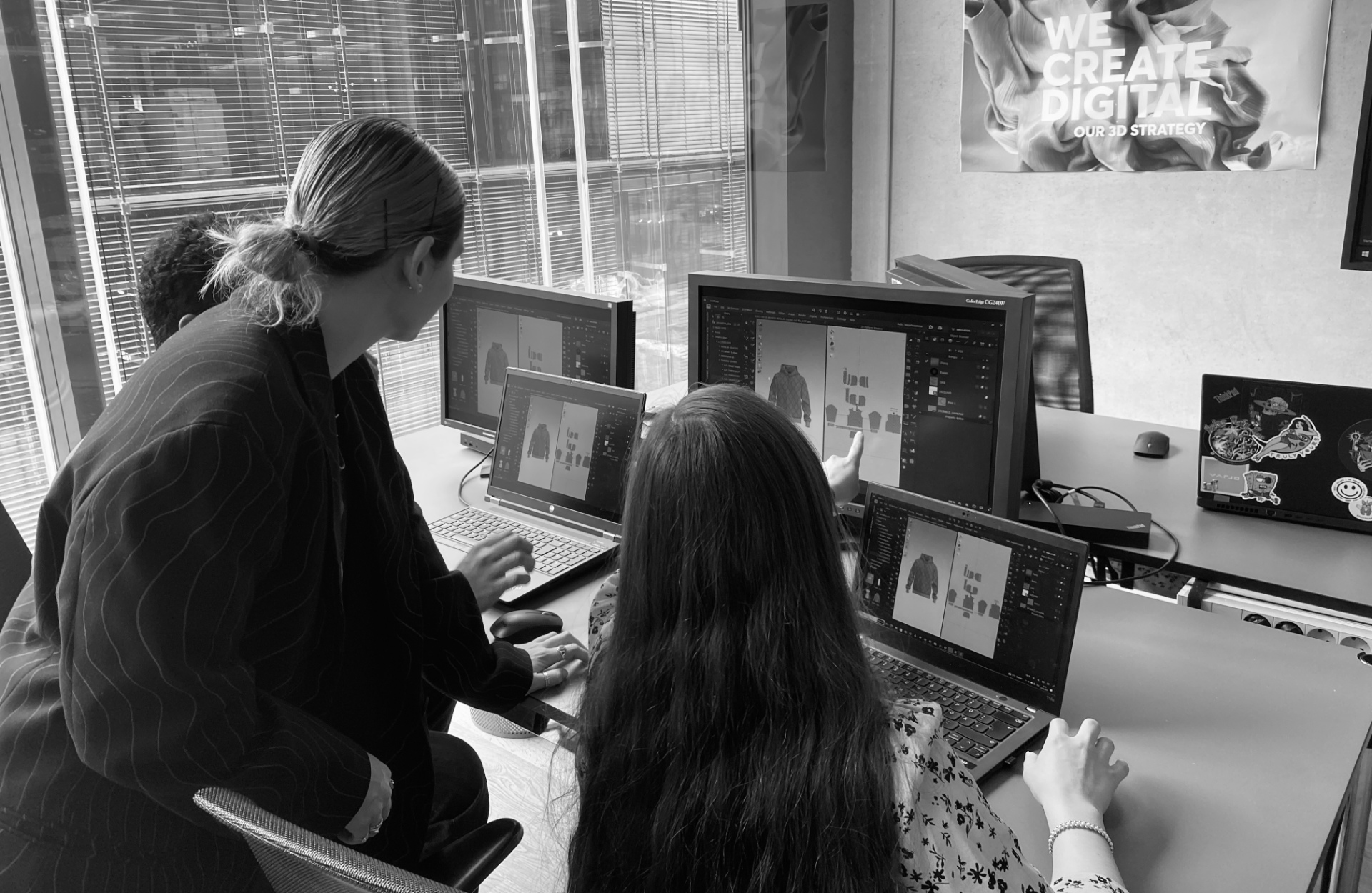
As for the content of the article itself, everyone at The Interline continues to agree that digital product creation (or any technology-centric transformation, for that matter) needs, in order to succeed, to both engage end users with a strategic vision, and to have the flexibility to update that vision as the needs and opinions of end users crystallise over time. When we consider the cultural polarisation that exists around AI, for instance, this feels like a continually timely message: technology serves creative, commercial, and technical teams, not the other way around, and their engagement will be what secures or undermines adoption.
March – Generative 3D Modelling Is Cool. Is It The Right Fit For Fashion?
The timing here is certainly interesting! Just last week, we released a brand-new collaboration with Threedium, which includes an up-to-the-minute refresh of the capabilities of generative models for outputting believable, fit-for-purpose 3D assets for different use cases. And the quick answer to whether or not the state of the art has improved between March and December 2025 is a resounding yes.
But there’s also more nuance to the original take – that generative 3D was better calibrated for other industries’ challenges and use cases than it was for fashion’s – that means our analysis can’t be quite as simple as “things are better now”.

It’s certainly true that, if a brand or retailers’ objective is to take a physical product and obtain a visual 3D representation of it, ready for use across consumer and partner-facing channels, then AI models can generate good-quality 3D objects from as little as a single photograph. It’s also the case that this content-focused ecosystem is a big growth area for fashion, since 3D use cases for web, AI applications, and other channels are on the rise. So there’s a clear fit between the emerging capabilities of generative 3D and the potential uses for them.
When it comes to prototyping, design, development, engineering and other use cases, though, there’s still likely to be a lot of testing, development, and refinement to be done in 2026, before fashion professionals will put the same level of trust into AI-generated 3D models that they currently invest in human-made 3D models. Whether they trust 3D in general? That’s a different, and evolving, matter with varying degrees of confidence across different companies.
April – AI Ownership And The Legality Of Generative Inspiration
This is one story where both the technical state of the art and the cultural and contractual frontiers have moved in a major way since we originally jotted down our analysis.
A lot of people – perhaps rightly – are tired of talking about the copyright status of AI outputs. And the legal frameworks for AI inputs, i.e. training data, are currently being forged through litigation. At the time we wrote this original piece, it was extremely unclear who owned what, where AI workloads were concerned, and the prevailing assumption was that the world would eventually land on a sliding scale of human authorship being the determining factor in whether a work was copyrightable or not.

In a technical sense, quite a bit has changed between April and year-end. Generative models, for image and video in particular, have progressed pretty dramatically, and as a result it’s become much more routine to see recognisable people, properties, and brands being inserted into increasingly photoreal outputs.
Tied to that: people’s attitudes and tolerances have also evolved. Without wanting to sound too fatalistic about things, a lot of folks (and a growing amount of rightsholders) seem to have basically given up caring, reasoning – probably rightly – that the biggest AI companies are, for the moment at least, immune from the law.
And it’s not just activists reaching that conclusion. The biggest – and normally most litigious – IP holders in the world, Disney and major record labels, have shown that they’re happy to trade some money and equity and effectively call an amnesty.
To date, we’re not seeing the same thing happening with fashion brands, which is something that continues to vex The Interline. It remains, for visible purposes, open-season for bringing recognisable fashion and footwear brands into generated images and videos created in the major cloud-based platforms, and unless the next turn, into generative 3D, puts a fire underneath the leading consumer brands, this doesn’t seem likely to change.
May – Rebooting Bangladesh: Inside The Automation Wave Redefining A Global Textile Powerhouse
Every supply chain conversation is a push and pull between risk and efficiency, with those two sliders evolving based on external factors. Heavily consolidated manufacturing is cost and time-efficient, since skills, capabilities, and capacity are centralised and relatively easy to plan and book, but risk-prone by dint of having small quantities of points of failure. More distributed sourcing and production is a more agile model, and one that can potentially generate higher profitability per unit, but a much harder one to optimise.

Earlier this year, when this op-ed was written, the expectation was that manufacturing would be slowly migrating away from previous nexuses, as tariffs and other variables made heavy consolidation into more of a burden. In practice, we’ve seen a much more muted response: while supply chain diversification is happening, the major manufacturing regions have worked to secure their positions by investing in technology and automation.
And as we wrote recently, the “world’s factory” is not going to let that designation go without a fight – especially at a time when China is being handed a mandate to dominate a range of markets.
June – The AI Report 2025
This summer, it wouldn’t have taken an oracle to guess that an AI Report would prove popular, but our monthly traffic reports have taken the entire team by surprise every month between June and today.

On the day you read this year-end review, close to a thousand people will download a copy of The AI Report 2025, because this happens every day. We made infrastructure investments to increase our bandwidth and backend headroom in June, expecting the peak CDN utilisation prompted by this report to die down a month or so later. We’ve since had to invest more, so we can continue to serve the ongoing interest in the AI Report 2025 at the same time as accommodating bandwidth spikes for other reports.
All of which sounds like a lot of boring behind-the-scenes information, but should, our team believes, give every reader pause. The degree of interest in AI, this year, was like nothing else we have seen in our near-six-years of operation, and there’s likely to be a point of realisation in the coming year that AI has the potential to demolish all traditional definitions of “software” as well as breaking down the demarcation lines that have existed between the footprints of existing solutions.
July – Resale Is Rising, But Product Data Could Determine What It’s Really Worth
Five months later, resale is still on the rise. For a bunch of intermeshed economic, technological, and cultural reasons, owners like having a comparatively ecofriendly off-ramp for styles they don’t want any more, and shoppers like finding deals on pre-loved.

What remains in flux is where the lines are going to be drawn between third parties facilitating those practices (and owning the resulting channel) and brands wanting to retain ownership of them. The forces at work aren’t exactly the same, but The Interline will not be surprised to see brands’ ambitions to ‘own’ resale rising, falling, and rising again the same way that priorities between owned, direct-to-consumer, channels and marketplaces have waxed and waned over the last couple of years.
The arguments are all the same: third parties will handle the infrastructure and the logistics, but the brands will pay the price in ceding ground; first parties will largely produce more scope-limited platforms, but the consumer relationship will remain intact. The push and pull here is set to continue into 2026 and well beyond.
August – From Authenticating Users To AI Coding – The Fast-Evolving Responsibilities Of Running A Digital Brand
As a technology publication for the fashion industry, we tend to take the position that running a fashion brand requires both some baseline familiarity with technology and an open attitude to engaging with the solutions that resonate with you as the brand grows.

This story remains a compelling reminder that, as the method of engagement with consumers and the toolchain for creating software and experiences both evolve, even the smallest brands will inherit new, all-digital governance and security responsibilities as well.
The Interline will continue to document this evolving frontier in the coming year, but over the holidays we encourage our readers to also follow pure-play technology publications to stay up to date on threats, expectations, and solutions. The more digital your brand, the less excuse you have for not engaging with digital best practices and concerns.
September – The Real-Time Roadmap
In sectors outside of fashion, real-time 3D is already a cornerstone of technology strategies, with a selection of behind-the-scenes use cases, and a set of extremely visible consumer-facing ones.
While fashion has been fixated for a long time on the idea of videogame collaborations, it’s been much harder to gauge how apparel, footwear, accessories, and beauty brands have been making use of real-time engines and tools for in-house applications.

Not much has changed here, since The Interline collaborated with Epic Games to publish The Real-Time Roadmap, in late summer of 2025. That free-to-read report was intended to dispel the idea that real-time 3D is just for videogames, and that fashion brands should be trying to find their way into that world through commercial partnerships with game studios and publishers, and instead zeroes in on the real, practical applications and business cases for using real-time tools across the product journey.
For anyone considering what the future of in-house 3D and the long-term outlook for customer engagement and experiences are likely to be, The Real-Time Roadmap remains essential reading.
October – From Counterfeits To Tariffs – Fashion’s Supply Chain Under Strain
It remains a truism that fashion media over-indexes on what’s happening at the brand and consumer end of the value chain. The Interline has also, at one time or another, been guilty of placing too much emphasis on technology for brand applications, and too little on the changes that are being felt upstream, and on the tools that are being used to tackle them.
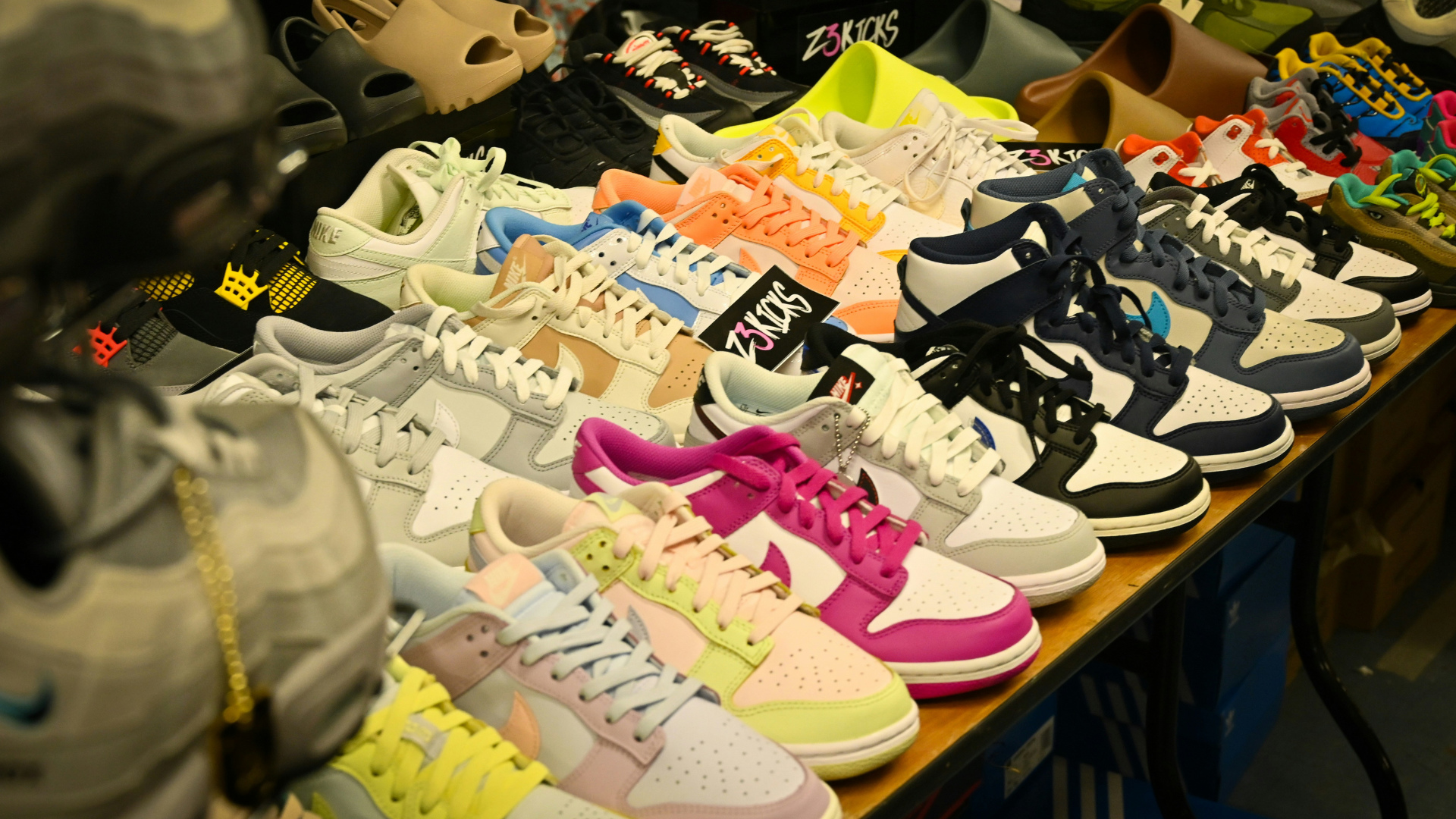
There’s little about this analysis, from October, that has dated, and our team will be carrying forward a mandate to spend more time covering supplier perspectives in 2026. As our new DPC Report 2026 showcases, upstream companies are the best-equipped to distinguish real, industrialisation-ready technology from experiments.
November – Testing The Boundaries Of Agentic AI
As recent as this November analysis is, by the time you read this post, there’s a chance that the frontiers of what constitutes “agentic AI” have moved again. Unless they’ve undergone a fundamental, architectural overhaul, though, the end result is likely to feel similar: a patchwork of promises that AI will shop for us, undertake non-supervised research on our behalf, and so on, with limited results.

As we reach the end of 2025, it’s clear that the “let an AI model click through a website for you” era of agentic software has a very short shelf-life, but the recent transfer of the Model Context Protocol to the Linux Foundation – making a widely-adopted standard now genuinely viable for companies that had previously feared they were contributing to competitors’ moats – could break this impasse, by allowing AI models to access a menu of codified tools and datapoints when they arrive at a retailer’s eCommerce site, tapping directly into the backend, rather than flailing around on the frontend.
December – DPC Report 2026
It says a lot about the continued interest in 3D and digital product creation that our 2026 edition of The DPC Report ascended to the top of our traffic reports for the whole month in just a couple of days. But it did.
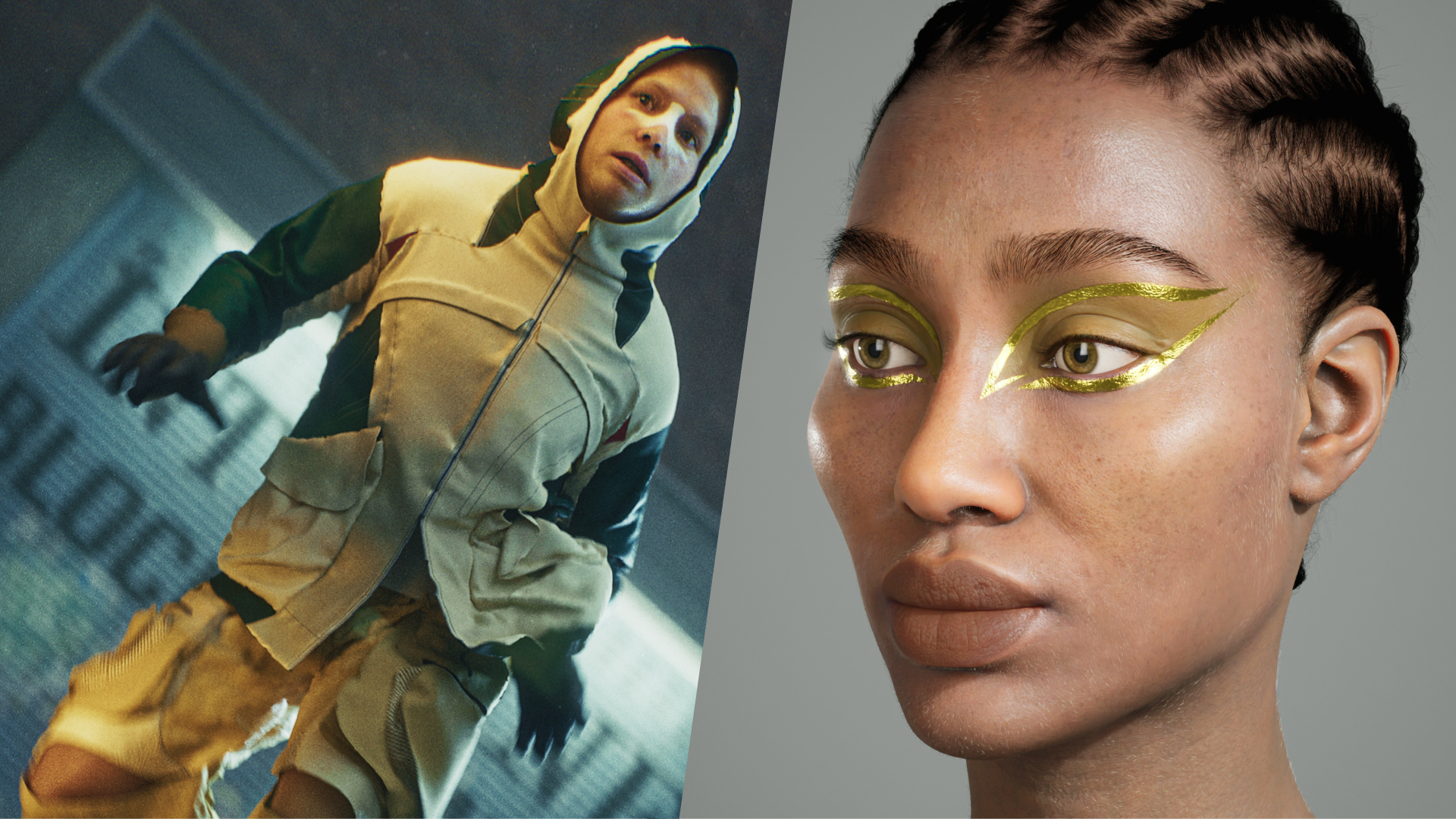
We’d obviously encourage readers to download a copy of that report for themselves, since the content is as timely as it’ll ever be at the end of 2025, but our team’s initial impression is that interest in 3D is still coming from the committed and pioneering DPC community, but that increased attention is flowing 3D’s way thanks to AI – not just from casual observers who seem to want to observe one technology replacing the other, but from insiders who see the numerous crossovers between the two strands.
There’s a lot in play all of a sudden, in a technology segment that’s felt pretty well-defined for years, so we expect a lot of the seeds that have been planted by the authors, interviewees, and executives in this year’s report to shoot up in 2026. 3D is certainly not going to be alone in wrestling with category-compression and solution-redefinition in the coming year, but it could be one of the most visible for our readers.
This rearview concludes the new content being published by The Interline in 2025. The team will return at the start of January 2026 with a look-forward at the technology trends defining the coming year, new podcast episodes, regular headline analysis, and plenty more.
