This article was originally published in The Interline’s DPC Report 2026. To read other opinion pieces, exclusive editorials, and detailed profiles and interviews with key vendors, download the full DPC Report 2026 completely free of charge and ungated.
At Patagonia, we are in business to save our home planet. Our fundamental belief is that we’re all part of nature, and every decision we make is in the context of the environmental crisis challenging humanity. We work to reduce our impact, share solutions, and embrace regenerative practices. This commitment shapes every decision we make, including how we approach 3D digital product creation.
For us, 3D digital product creation is more than a technological advancement. It’s a strategic tool to reduce the environmental impact of the product creation process. By rethinking traditional processes, 3D is helping us reshape the entire product lifecycle, from initial concept to final consumer experience.
Building A Different Path For A Different Purpose
While many brands adopt 3D primarily for marketing, sell-in, or other revenue-driven initiatives, Patagonia has intentionally taken a different approach. From the start, our focus has been on leveraging 3D to create efficiencies and minimise environmental impact throughout the product lifecycle.
For digital garments to be sustainable, we identified the need for a scalable and seasonally-integrated infrastructure. This means standards and processes that meet the unique needs of Patagonia, and libraries that we can iterate on each season as technology changes and the business needs grow.
It also means prioritising skill development for our product creation teams and fostering a close collaboration with our finished goods suppliers. This allows us to deliver the highest quality digital product that is not only embedded in our seasonal process but can be trusted by our cross functional partners – not because it just looks like the product in question, but because it’s a true representation of what we produce. Our goal is not pretty images, but accurate garments.
This deliberate approach to the way we’ve deployed 3D digital product creation has required more time (we have nearly told this story through The Interline several times before!), but we firmly believe it’s been worth it in the long run. By laying out a strong foundation instead of solely pursuing visual accuracy, we’ve created a scalable, sustainable framework for 3D adoption that we were able to effectively align with our values and our communities.
From Reluctance To Responsible Adoption
Patagonia’s history of innovation has always centred on product quality, sustainability, and pioneering performance – not chasing the latest tech trend. For years, we approached digital tools cautiously, prioritising craftsmanship and environmental responsibility. We wouldn’t say we were late to digital product creation, but neither were we the first.
But a big part of being a mission-driven company is recognising that, when the world is changing, so must we. Embracing technology isn’t about abandoning our roots; it’s about amplifying them using tools that are carefully-chosen and sensibly and sensitively deployed.
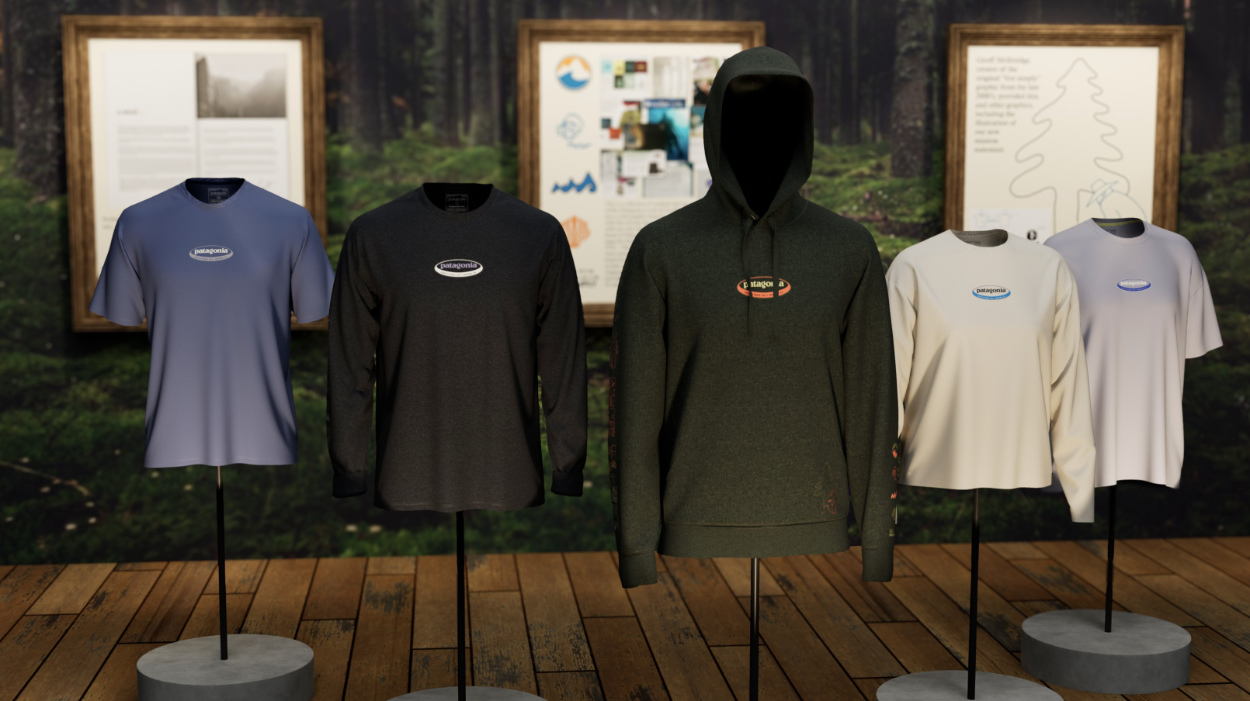
We have the experience to know, first-hand, that when used with intention, digital tools can free us from wasteful processes, measurably accelerate responsible decision-making, and keep people where they belong – outdoors, not behind a desk. We still take the time to understand the effects of our technology, and to make sure we are optimising our processes and taking advantage of new ideas when they meet our standards, but it now becomes a catalyst for connection with nature, not a barrier to it.
Learning The Hard Way (And Laughing About It)
We’ll admit it – when we first stepped into the world of DPC, we weren’t exactly crushing it. Let’s just say we had a few “character-building” moments. To create compelling visuals and products, we had to learn from other industries, including the VFX space – the same space that powers blockbuster movies with massive teams and specialised roles. At first glance, we thought to ourselves, surely those sectors will be so massively far ahead of our ambition that we’ll be hopelessly behind the curve?
But one thing we’ve learned, when it comes to DPC, and 3D in general, is that everyone is approaching things their own way, building their own workflows and workarounds. From the outside, the way the movie industry or the automotive industry tackled 3D looked seamless. On the inside? We quickly realized that tool integration and file formats weren’t as dialled-in as we imagined they’d be. And we also learned that people who work in 3D are usually very candid about where and why their vision for end-to-end digital working wasn’t being realised.
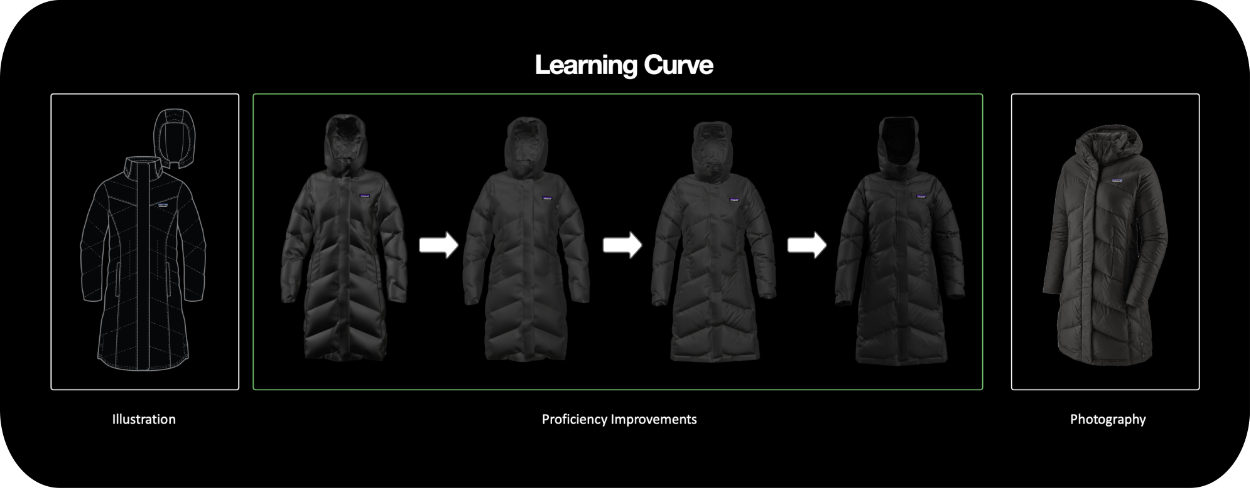
So there we were, adapting tools originally designed for cinematic worlds, to fit the realities of apparel, including small, agile teams working at scale – where product accuracy, speed and precision matter much more than the Hollywood-polished visual sheen. It was humbling, but it also taught us how to innovate under pressure and build processes that work for Patagonia, not a movie set.
People And Process Focused Transformation
When you’ve been through the work the way we have, and you’ve emerged the other side with a clear-eyed alignment between digital product creation and business direction, everyone wants to know your secret sauce. What did Patagonia do to make DPC work, not just for our internal teams, but for the commitment we’ve made to people and planet?
Here’s the truth: it doesn’t exist. DPC success isn’t about shortcuts; it’s about consistency, perseverance, and people. You want to go fast? Go alone. You want to go far? Go together.
We know the key challenges that anyone building out a digital product creation strategy will encounter. Without leadership alignment and sponsorship, progress will stall. Without change agents embedded across teams, the whole thing will feel like an uphill climb. True success will come when top-down alignment meets a focused, intentional approach to tools – combined with time and trust in the process. There’s real transformation to be had, but everyone has to trust and believe in it.
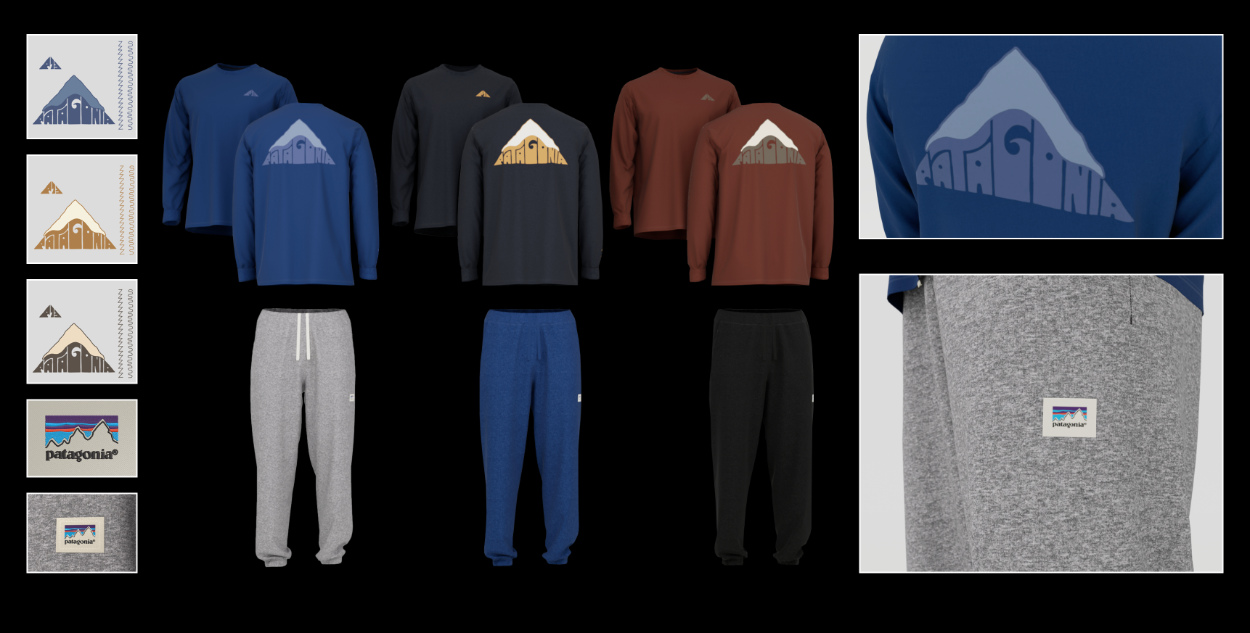
And here’s another truth: sometimes 3D is the solution, and sometimes it’s the problem. Technology doesn’t live in isolation – it’s woven into processes. When things feel broken, it’s rarely just the tool; it’s often the way the process is designed around it. Re-examining workflows can uncover hidden friction points and unlock opportunities for improvement, which sometimes get made in the processes around a solution, but sometimes they do require directed development of the tools themselves.
At Patagonia, we’ve also learned that success isn’t about forcing 3D everywhere. It’s about asking the right questions, refining the processes, and ensuring every application serves our mission and the planet by putting the benefits of 3D in the places they make the most sense.
Looking Ahead / Leaning In
Beyond product creation, we are now expanding the use of 3D assets to meet visualisation and storytelling needs across the business. Thanks to our talented team of 3D experts, and the proof points we have in place at the foundational level of garment accuracy, we now have a strong infrastructure and cutting-edge tools that give us the expanded benefit of enabling state-of-the-art product renders for a variety of internal applications.
Through streamlined digital workflows and accelerated decision-making, we’re now enhancing efficiency and agility across teams. With in-depth exploration of DPC tools and a focus on upskilling, our technical capabilities are advancing rapidly, enabling us to craft best-in-class products while using fewer resources, minimising environmental impact, and enriching the global experience for both our internal teams and our customers.
For Patagonia, this whole initiative really is about more than just a shift in tools. It’s a company with a clear, time-tested mission figuring out how to take bold steps to work smarter and more sustainability, turning technology to our advance when it comes to accomplishing our goals.
Looking ahead, Patagonia is going to continue to explore emerging technologies that align with our core values – inside DPC and beyond. Our focus is going to continue to drive our decision-making frameworks, and we’ll always strive to adopt innovations that reduce environmental impact, improve workflow efficiency, and deliver meaningful product experiences to our communities.
At Patagonia, technology is never an end in and of itself. We have spent a lot of time understanding, testing, and refining what digital product creation should be, and we’ve landed on the conclusion that it’s an important way of making sure that we’re creating products and supporting communities that help protect the planet we all share.
Our commitment is to use technology as a force for good, ensuring that every advancement strengthens our mission rather than distracts from it. Your mission might not be exactly the same as ours, but that central philosophy should be something you can take away and apply to your 3D strategies as well.