
Released in The Interline’s DPC Report 2026, this executive interview is one of an eight-part series that sees The Interline quiz executives from major DPC companies on the evolution of 3D and digital product creation tools and workflows, and ask their opinions on what the future holds for the the extended possibilities of digital assets.
For more on digital product creation in fashion, download the full DPC Report 2026 completely free of charge and ungated.
For a while now the broad shape and scope of 3D and DPC strategies have been generally accepted, but now companies are asking some fundamental questions about how far those initiatives should stretch. Some see a clear opportunity to take them further. Others potentially see arguments for either ringfencing them where they stand, or possibly even scaling them back. Technology footprints will always morph over time, but this feels like a deviation from the standard. What’s your perspective?
What we have seen is less a sharp deviation from the standard and more a natural ebb and flow. Companies push forward when conditions are right and pull back when the ecosystem, the economy, or their internal structures make it difficult to keep momentum.
A few forces tend to show up at once. First, digital transformations of this scale are extremely hard to execute end to end. Teams often try to build the airplane as they fly it, but if processes, skills, and technologies are not ready in the right sequence, the whole effort becomes fragile. Second, in fashion and footwear especially, the technology stack for DPC has not matured at the same speed as the ambition. And third, many companies went through significant financial and organizational contraction over the past few years, which paused or eliminated innovation initiatives and reshuffled teams who were key to 3D workflows.
When all of that converges, a pullback can look like a strategic shift, but we see it as more of a recalibration. Companies focus on the places where the return is clearest, refine proof of concept work, build capacity back up, and wait for the surrounding ecosystem to mature. As skills develop, tools improve, and economic pressure lightens, we believe we’ll see the pendulum swing forward again.
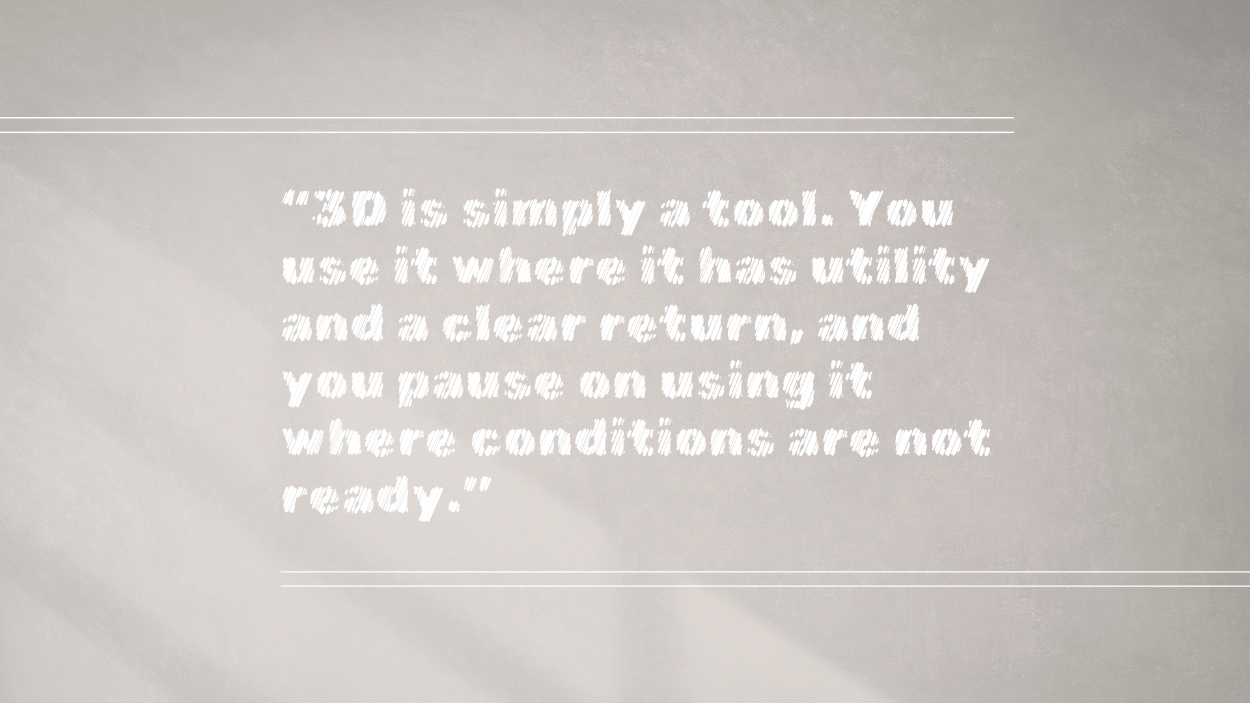
Rather than asking whether 3D should stretch further or be ringfenced, the more useful framing is to remember that 3D is simply a tool. You use it where it has utility and a clear return, and you pause on using it where conditions are not ready. Over time, as ROI increases, teams get more skilled, technologies become better integrated, and the broader environment strengthens, the relevance of 3D as a tool will naturally grow.
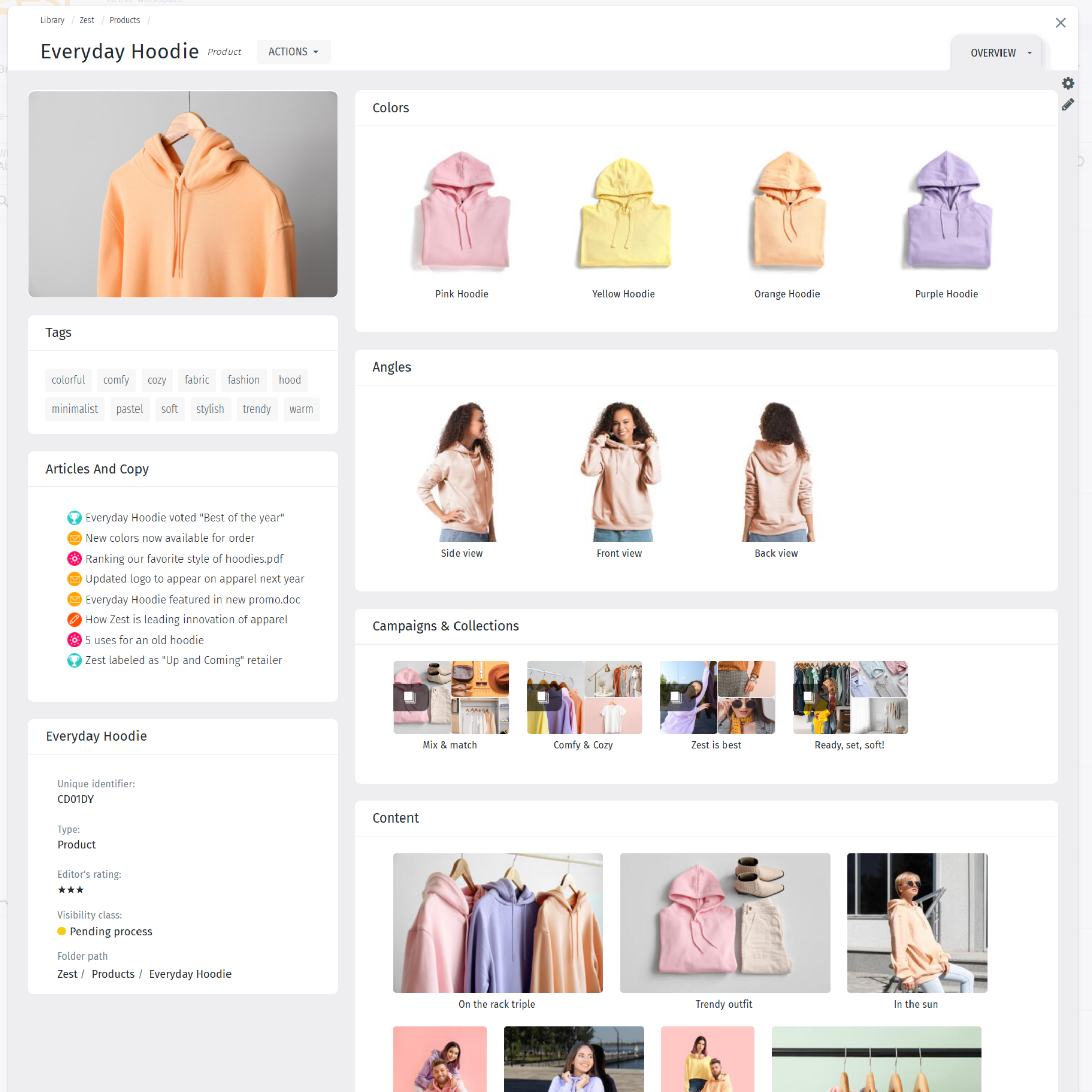
The shape and scope of digital asset management (DAM) can feel hard to pin down – especially when there are so many different permutations of what constitutes an “asset,” and so many demographics that can make use of them. What’s your clearest working definition of DAM? And what are fashion and beauty companies using it for?
You are right that DAM can feel slippery. As DAM has evolved and the capabilities of tech platforms have increased, DAM as both a practice and a technology has become very adaptable and can take many different shapes. Here’s a definition I’ll offer:
DAM is the practice of organizing, storing, and managing digital files such as images, videos, documents, and other media so they can be easily accessed, retrieved, distributed, etc.
A few things in that definition are worth drilling down on further:
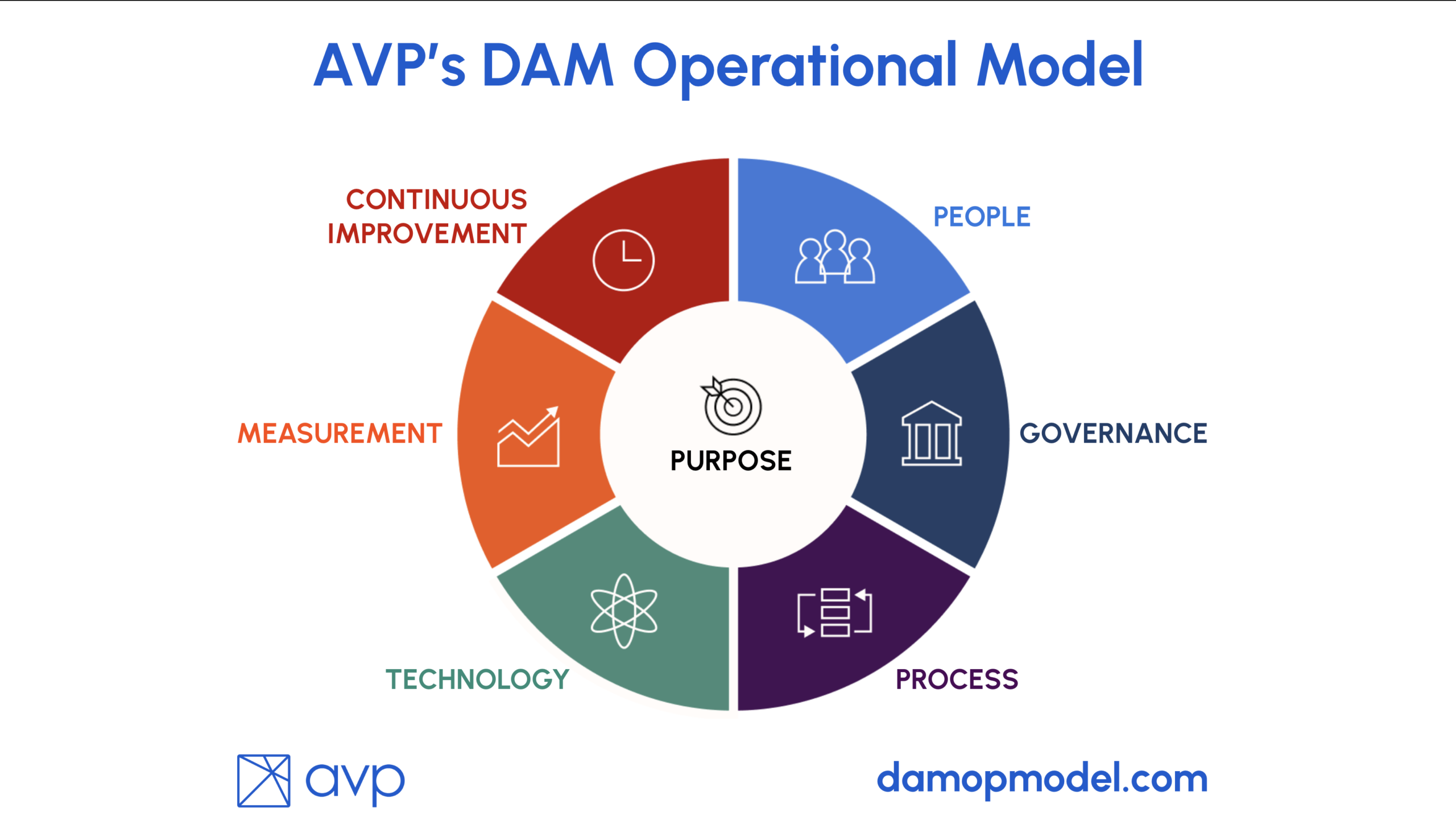
- We talk about DAM as a practice, not just a piece of software. A DAM system is a tool that supports the practice, but you can “do DAM” with a wide variety of systems, including ones that don’t have the DAM label, if you otherwise have the right governance, structure, and processes in place. The real question is how well it is working, not what the tool is called. For a deeper dive into this, take a look at our Operational Model for DAM Success.
- The word “asset” is deliberately broad and necessitates the attribution of value. It can mean images, video, documents, design files, and more. Each department, business unit, and organization has to define which of these has enough value to be treated as an asset in its context. And which of these are important and valuable enough at the enterprise level to be treated as enterprise assets. Note that an asset doesn’t just have value when you say it does. It has to have the metadata, governance, and utility around it in order for you to leverage its value and for it to be an actual asset to your organization.
- The word “management” hides a lot of complexity. Managing assets can include version control, metadata and tagging, rights and usage information, transformations into different formats, workflow, approvals, delivery to downstream channels and partners, and more. The definition is simple. The implementation is where things get complicated. And this relates to both technological capabilities as well as human endeavors (e.g., governance). Again, check out our DAM Operational Model linked to above for more information.
Historically, in fashion and beauty, DAM as a formal practice has mostly lived on the marketing side. In fact, many people to this day think of DAM as being the sole domain of marketing, which couldn’t be further from the truth.
We’re starting to see a DAM evolution within fashion and beauty companies who are looking across the entire product lifecycle and realizing just how many of the files they are working with are, in fact, assets. And they face the same core challenges, such as inability to find things, having to navigate multiple siloed storage locations, engaging in rework to recreate assets they can’t find, duplication of assets across silos, version control challenges, poor collaboration capabilities, lack of interoperability, security issues, and so on. Anywhere you find a set of problems that looks like this revolving around things that have been identified as assets, digital asset management is the solution.
When we pair that definition with the ambitions that our readers have for digital product creation, it’s clear there’s a fit purely on the basis that working in 3D involves the creation of a lot of different assets – from meshes and materials to components and final-pixel renders. Starting from that fundamental level, where do you believe digital asset management slots into the DPC technology and process ecosystem?
DAM sits at the connective layer of DPC. It can serve as a backbone, a federation point across multiple platforms, or a set of good practices applied in several systems. The architecture varies, but the role is consistent: it fills the gaps that surrounding systems do not solve well.
Design tools are excellent at creating assets but not at managing them. PLM and PIM systems are excellent at managing product and commerce data but are not designed for rich visual assets. And 3D tools have strong internal libraries but often operate in proprietary formats that are hard to connect across brands, teams, and seasons. DAM bridges these gaps. It ensures that assets are versioned, searchable, governed, reusable, and available to downstream teams when they need them.
This matters because the promises of DPC, like faster time to market, better collaboration, and improved margins, depend on more than 3D alone. Many of the pain points companies face in DPC stem from poor digital asset management. Teams cannot find what they need, cannot reuse what already exists, or cannot collaborate easily across functions. DAM helps deliver on the promises of DPC by providing the structure that the process and the technology need in order to work well.
That structure also helps unify DAM practices within an organization. Most companies today have multiple small, informal DAMS living in SharePoint, design tool libraries, or departmental file shares. Formalizing the practice brings order, shared governance, and consistency. It also creates the libraries that 3D workflows rely on most. Meshes, materials, trims, and components are reusable by nature. When they are easy to find and trust, 3D becomes faster, cleaner, and more reliable.
DAM also enhances the value of PLM and PIM. Those systems rely on accurate visual assets at specific milestones. When DAM handles the asset side effectively, PLM and PIM can shine at what they do best.
Finally, DAM is not about saving everything. For one-off outputs, like final pixel renders with no future reuse, there may be little reason to store them long term. But when you need a library of reusable assets, DAM becomes essential.
In short, DAM is the connective tissue that enables DPC to function as a real ecosystem rather than a set of disconnected tools.
The conversation around 3D often over-indexes on the marketing assets: polished renders and other content designed to showcase finished products to consumer or retail buyers. The reality is much more cross-functional and multi-domain, and a lot of the real, differentiated value of working in 3D lies upstream. Is this same trend of talking about one use case, but being able to observe much broader enterprise impact, visible in DAM as well?
Yes, absolutely. DAM has long been seen as a marketing tool, even though the value is much broader. That is similar to how 3D is often discussed primarily in terms of final renders, even though its most differentiated value lives upstream.
In both cases, the most mature use case gets the most attention, but the most strategic value appears when the practice expands across the lifecycle. In fashion and beauty, upstream design files, construction details, 3D prototypes, and 3D components and working tools are all valuable assets. They support collaboration, reduce rework, inform decision making, and accelerate downstream work.
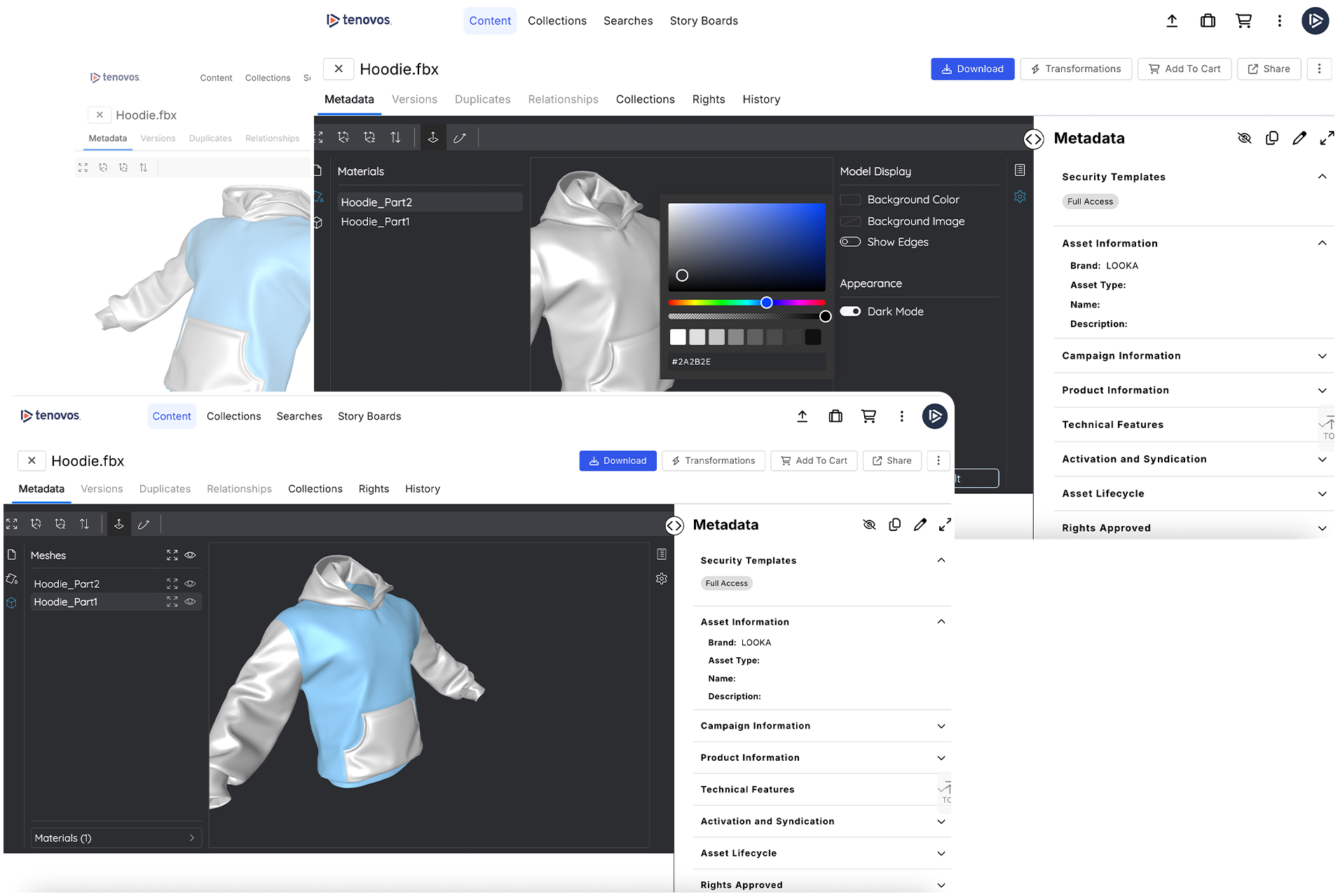
The broader enterprise impact becomes visible as soon as teams start looking beyond the end of the process. Once companies see the volume of assets created upstream, and the amount of friction caused by storing them in scattered repositories, the case for treating them as enterprise assets becomes clear.
The trend in DAM mirrors the trend in DPC: a shift from thinking about a single use case to understanding how visual assets shape the entire lifecycle.
Where are fashion and beauty companies most likely to be able to point to a return on investment from digital asset management today? What’s the current matrix that companies use to make decisions about what to adopt, and where to deploy it? And how do you see those factors changing in the future?
There is no universal ROI formula because every company’s workflows, budgets, teams, and structures differ. What we do see is a recurring problem set. Wherever those problems appear and digital assets are involved, when you solve them through stronger DAM practice, you see ROI. The problems usually look like this: people cannot find what they need, reusable assets are being recreated, files are duplicated in uncontrolled ways, teams are not confident in versions, and security of assets is at risk.
When companies fix that, value tends to show up in several places.
- Asset reuse and reduced rework: Teams stop recreating things they already have. That applies to marketing images, but also to 3D meshes, materials, trims, and components. Reusable assets behave like a library. When the library works, time and money stop leaking out of the process.
- Marketing productivity and templating: For marketing teams, templating is a major efficiency lever. Once assets are clean and governed, modern tools can generate high-volume, on-brand marketing output quickly, without recreating every variation from scratch.
- Faster, less painful DPC and 3D workflows: One of the biggest hidden costs in DPC is the time spent finding and gathering assets. Teams often spend weeks tracking down every 3D file for every style and colorway to create seasonal renders for all regions. With DAM, those assets are already organized. You can request renders directly from a central library instead of hunting across teams.
- Preserving and leveraging intellectual property: Without DAM, organizational memory lives in people’s heads, personal drives, SharePoint folders, and cryptic naming structures. Turnover, restructuring, or simple oversight can make important work disappear. Treating assets as enterprise assets preserves IP and makes it usable for new teams and new use cases.
- Reducing duplication, storage bloat, and risk: Every special project creates new copies in new locations. Storage costs rise, and exposure increases because no one knows where all the files live. DAM consolidates this and restores control.
- Vendor collaboration, security, and leak protection: Fashion and beauty depend on a large network of suppliers. Effective DAM provides functions like tight access control, embargo management, and audit trails that SharePoint alone simply does not offer. That reduces the risk of leaks, mis-ships, and competitive exposure.
As for the matrix companies use, few start with a perfect framework. Most use a “matrix” that looks something like identifying where there are assets that are truly worth managing as assets, evaluating where pain around managing those assets is the highest, and seeing where there is a strong enough business case to justify the investment.
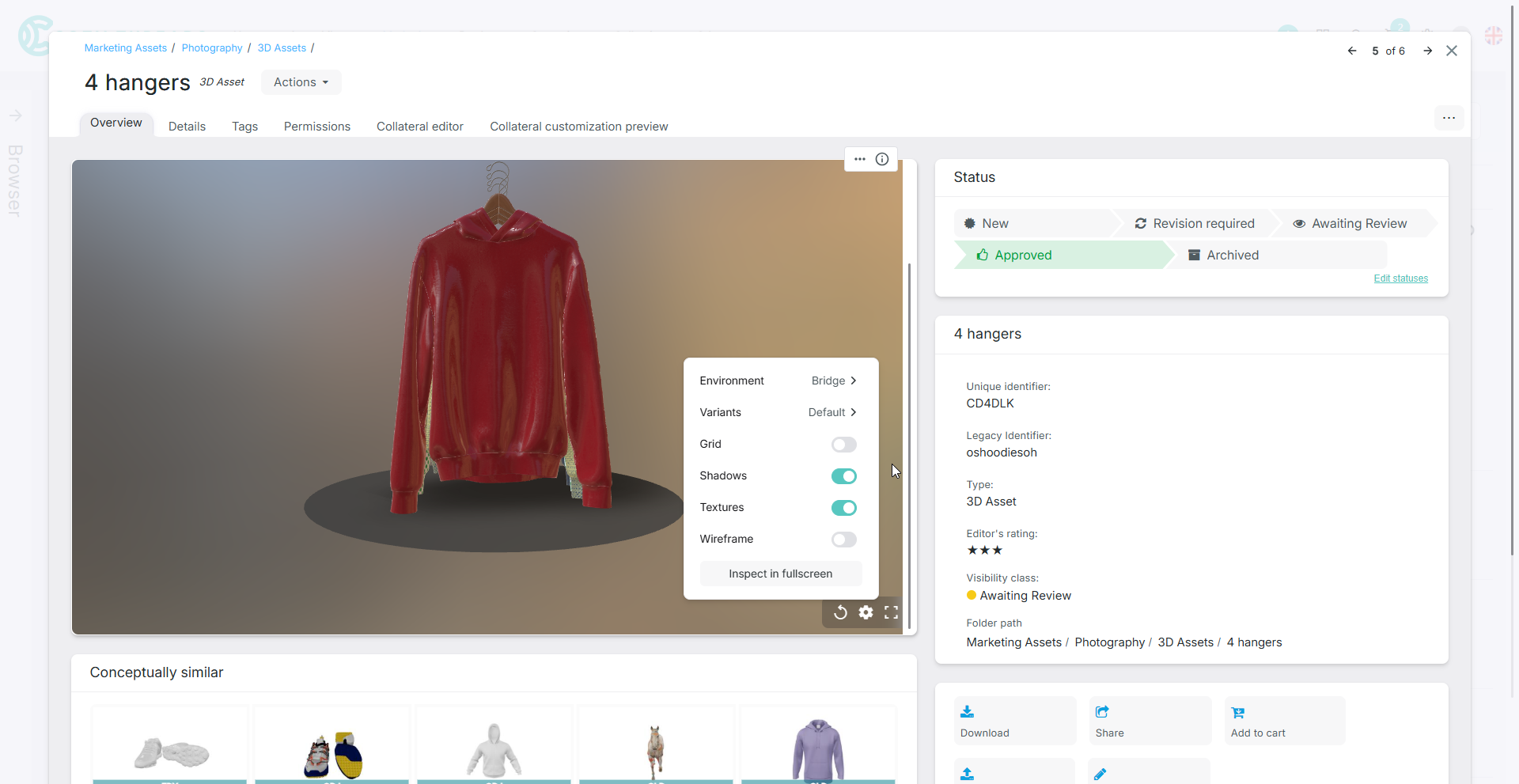
Over time, the matrix will evolve as DAM becomes more embedded in product creation. The most important shift is this: companies are beginning to recognize that files worth managing as assets deserve DAM. The clearer that becomes, the more strategic the ROI becomes.
What’s the most useful question that companies can ask themselves, right now, to better understand what they want to accomplish next with 3D – whether that’s driven by their own ambitions, or by changes in the market?
Don’t ask: “where should we use 3D next?”. Ask: “where in our product creation lifecycle do we have real pain or opportunity, and what tools in our toolbox, including 3D, will be most useful for solving those problems and seizing those opportunities given our current readiness and ecosystem?” The answer may or may not be 3D. But it may be activities and initiatives that allow you to be able to better leverage 3D when the time is right.
Companies are learning where 3D genuinely delivers value and where it does not. It does not make sense everywhere, and starting in the wrong place can create delays rather than improvements. The right starting point is the point of friction. Is the challenge in design, prototyping, sampling, sharing with partners, or creating sales visuals? Once you know where the bottleneck is, you can ask whether 3D is the right tool for that job.
Readiness also matters. 3D workflows depend on robust asset libraries: materials, components, blocks, white models, and other foundational assets. Companies that have invested in building that library have a head start. Those who are just getting started may need to digitize their core components before 3D can operate efficiently.
Market forces matter too. Upstream and downstream partners may influence your direction if they begin to rely on 3D for their own workflows. Retailers, distributors, and suppliers may set expectations that create a pull toward more 3D adoption.
Finally, companies should consider how 3D fits into the broader digital supply chain. 2D assets support 3D. PLM and PIM need consistent visuals. AI models require clean, structured data and large volumes of assets to train against. In other words, the next step with 3D may actually be strengthening the foundations around it so that when the ecosystem leaps forward, you are prepared to take advantage of it.
