
Released in The Interline’s DPC Report 2026, this executive interview is one of an eight-part series that sees The Interline quiz executives from major DPC companies on the evolution of 3D and digital product creation tools and workflows, and ask their opinions on what the future holds for the the extended possibilities of digital assets.
For more on digital product creation in fashion, download the full DPC Report 2026 completely free of charge and ungated.
For a while now the broad shape and scope of 3D and DPC strategies have been generally accepted, but now companies are asking some fundamental questions about how far those initiatives should stretch. Some see a clear opportunity to take them further. Others potentially see arguments for either ringfencing them where they stand, or possibly even scaling them back. Technology footprints will always morph over time, but this feels like a deviation from the standard. What’s your perspective as a company with a central role in the 3D ecosystem?
At YKK, we view 3D and Digital Product Creation (DPC) as integral components to the future of fashion and manufacturing. While some companies debate whether to scale back or ringfence these initiatives, we believe the opportunity lies in expanding them thoughtfully. This approach is rooted in our CYCLE OF GOODNESS® philosophy: “No one prospers without rendering benefit to others”. By advancing 3D and DPC, we create value not only for YKK but for brands, technology partners, and ultimately consumers.
The industry is moving toward a more connected, digital-first workflow and trims are an integral part of that ecosystem. YKK’s role is to ensure trims and fastening solutions are seamlessly integrated into that workflow. Rather than seeing this as a deviation, we see it as an evolution—one that enhances collaboration with technology partners and brands, speeds up development, and aligns with YKK’s sustainability goals. The focus should be on aligning technology with business values and customer needs, not on chasing every new technology or capability.
Broadly speaking, what does digitalisation mean to you? Obviously offering 3D representations of your trims is the most visible piece of it, but there’s almost certainly a wider transformation at work. How has your business changed as brand customers’ expectations, tools, and workflows have evolved to become more digital over time?
Digitalisation for YKK goes far beyond offering 3D representations of trims. It’s about rethinking the way we connect and collaborate with customers and partners, and how we deliver value while reinforcing our core fastening business. As brands adopt digital workflows into their design and development processes, we’ve evolved from being a physical component supplier to a digital collaborator.
Through our Digital as a Service approach, we provide tools and platforms such as YKK Digital Showroom, YKK Trim Creator, and virtual presentations, enabling brand and designers to design, customize and visualize trims instantly. This shift also involves integrating with 3D fashion design software to ensure our digital assets are accessible, accurate and ready for virtual prototyping and sampling processes.
Importantly, YKK will continue to innovate, integrate new technologies and refining processes to meet the changing needs of brands, customers, and consumers. Digitalisation is not a one-time shift for YKK, it is an ongoing journey that strengthens our ability to deliver at greater speed and more sustainably, based on our CYCLE OF GOODNESS® philosophy.
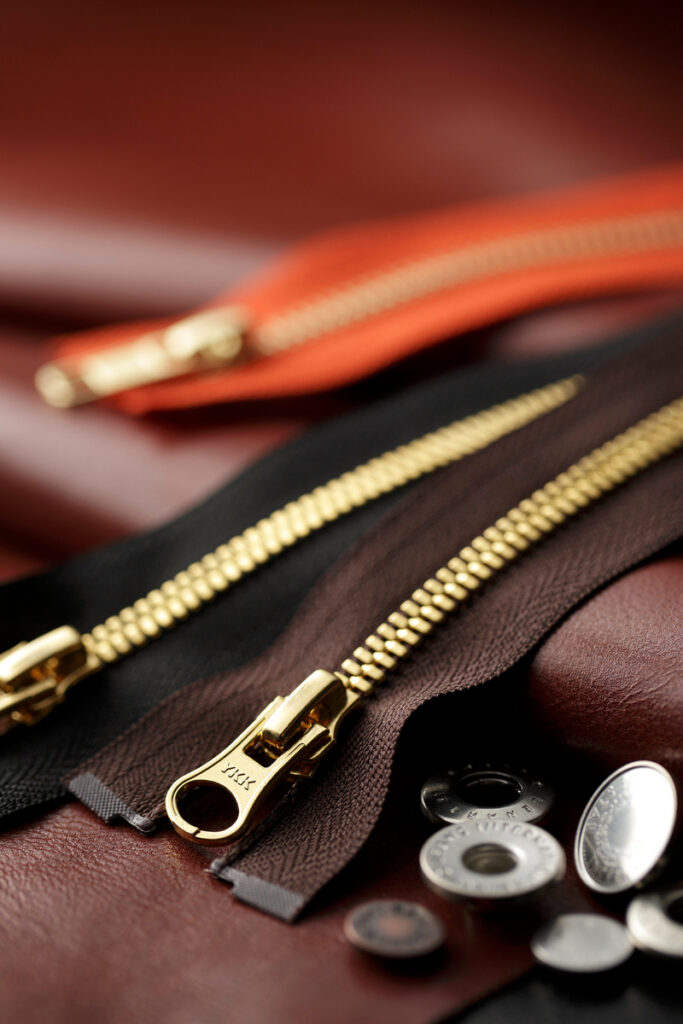
YKK: EXCELLA®
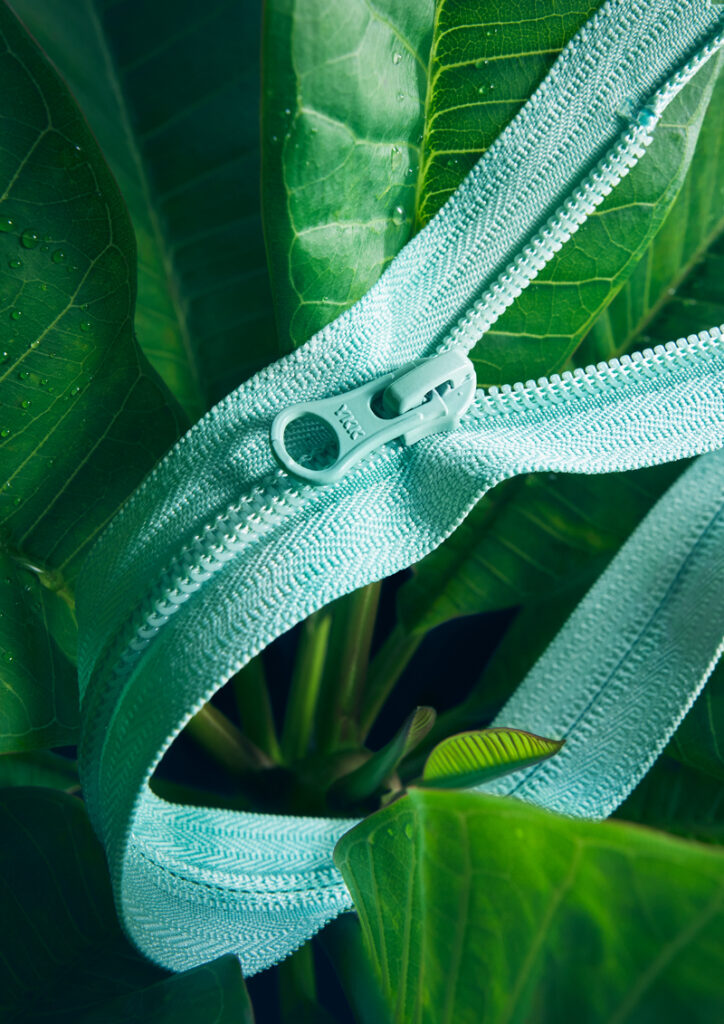
YKK: NATULON®
What role do you see YKK playing in the digital product creation ecosystem today, and how do you expect that role, and your partnerships with both brands and 3D technology providers, to evolve over the next few years?
Today, YKK serves as a bridge between brands and technology providers, ensuring that trims are not an afterthought but a core part of digital design. We offer high-quality, interoperable 3D assets of our fastening products and partner with leading 3D fashion design software companies to make our digital assets accessible and accurate.
The Global Marketing Group (GMG) has been instrumental in driving this role by leading the charge in digital collaborations and customer engagements. Looking ahead, we expect our role to deepen through expanded partnerships, enhanced interoperability, real-time customization, and sustainability-driven data sharing.
We also look forward to integration with emerging technologies such as AI-driven insights and other design aspects such as digital color matching into our processes. Our goal is to help brands achieve speed, improve design flexibility, and meet environmental targets—all while maintaining the quality and reliability that YKK is known for.
A key promise of DPC has always been to streamline product creation and to shorten the distance between idea and reality. When it comes to trims, there’s a very real possibility to take a lengthy, iterative process and to make it faster and more flexible by transposing it to 3D. How does this manifest in your YKK Digital Showroom and online trim creator/configurator?
One of the greatest advantages of Digital Product Creation is its ability to compress timelines and reduce complexity. The YKK Digital Showroom and online YKK Trim Creator are practical expressions of our DPC strategy and exemplify how 3D accelerates product development.
Traditionally, trim selection involved multiple physical samples, back-and-forth communications and long lead times. Now, brands and designers can explore our entire catalog virtually, easily access and customize finishes, and visualize trims in context—all before a single physical sample is produced. This not only shortens timelines but also empowers creative freedom, enabling brands to iterate quickly, efficiently and confidently.
Another DPC promise was to move the needle on sustainability – not just by reducing the number of iterative samples required to get a product approved, but to optimise the entire lifecycle. How has 3D / DPC become part of YKK’s overall sustainability strategy?
Sustainability is a core pillar of YKK’s corporate philosophy, and 3D/DPC plays a critical role in advancing that commitment. By reducing the need for physical samples, we cut down on material waste and carbon emissions associated with shipping prototypes. Beyond sampling, digital workflows also allow for better forecasting, inventory management and minimizing overproduction. Besides reducing physical samples, the impact goes much deeper and optimizes the entire product lifecycle from design to production.
These efforts align with our commitment as ONE YKK to contribute to a sustainable society. Every innovation, from eco-friendly materials and processes to digital solutions, helps us progress toward YKK’s Sustainability Vision 2050 while supporting brands in achieving their own sustainability goals. Through collaboration across YKK’s global teams and partners, we ensure that technology and sustainability move forward hand in hand, creating value for all our stakeholders.
What’s the most useful question that companies can ask themselves, right now, to better understand what they want to accomplish next with 3D – whether that’s driven by their own ambitions, or by changes in the market?
The most useful question is: “What tangible value do we want to unlock through 3D—speed, sustainability, creativity, or all of the above?”
Understanding this helps companies prioritize investments and partnerships. 3D is not just a tool; it’s a strategic enabler. Whether the goal is reducing time-to-market, meeting environmental targets, enhancing design flexibility or unlocking new digital experiences for consumers, the clarity on desired business outcomes ensures that digital initiatives deliver measurable impact. It is about aligning digital initiatives with business goals and market realities. Each ambition requires different levels of investment, integration and cultural change.
