Hey, and welcome back to The Interline Podcast.
When’s the last time you thought about design as an operational challenge? Not in the sense of finding the right talent, setting the right brief, buying the right software and so on, but in the sense of consciously building workflows, cultures and toolsets that run reliably and that can repeatably translate the creative spark into target product outcomes, whether those outcomes are performance, quality, fit, style, or any combination of them all.
That kind of framing, that sort of operationalisation of design has become massively important to design and development over the last few years in particular. And getting it right is also one of the main things that distinguishes companies that experiment with innovations like 3D and AI for design and companies that make design innovation a central part of the way they work, whether those companies are inside apparel and footwear or outside.
Today’s guest spends basically every day thinking about design operations. As a lifetime leader in digital design and design innovation, Bo Lupo has led global teams across different product categories in building systems and processes that empower teams, streamline work, and elevate creative output.
From his decades with Nike to today, Bo has built an enviable vantage point on the changing nature of design that I think is more relevant than ever, as brands of all shapes and sizes are rethinking and reprioritising where technology and design interact. I really enjoyed this one. I think you will too.
So over to my chat with Bo.
Never miss an episode
Get notifications for new podcast episodes, plus our weekly news analysis, events, and more, delivered straight to your inbox.
NB. The transcript below has been lightly edited.
Okay, Bo Lupo, welcome to The Interline Podcast.
Yeah, thanks for having me.
Not at all, very much our pleasure. Let’s start with a little bit of an overview of your career if you don’t mind, because there’s a bunch of different touchstones that you’ve been through that I think are gonna be instructive to the rest of the discussion. And just generally, you’ve worked on some really cool and exciting things over the course of your career, and it’d be good to get a potted overview of them.
Yeah, happy to do that.
I spent 28 years in footwear and apparel at Nike actually. And I started as a footwear designer. I studied industrial design in school and all the things that went along with that, including 3D design tools way back when they actually had them. But that’s kind of where I got my start. And it brought me into that whole design, product creation process in footwear and apparel, what that hands-on product creation looked like, from beginning, sketched through concept and development all the way to merchandising and ultimately to the consumer. You know, solving problems for the consumer, mostly performance product I worked on.
Because of the 3D acumen that I brought with me I was asked to participate in a lot of the 3D pilots that were going on early for Nike. And that was cool and exciting at the time. I always had an interest in, I think, technology in general. And so it was kind of a natural fit for me. But then as time went on, you go from the actual boots on the ground individual contributor designer into the design director mode. And there, my first time leading a team, again, another pilot pops up where we’re going to take a look at using 3D tools within footwear in a more serious way. Like what can we actually do with this technology, and kind of feed the development process with it?
And so I took it on myself to get my whole design team up and running on 3D tools. There was a little bit of sponsorship, of course, behind that with the broader organisation. There were a couple different technologies we were looking at. But I was able to do that and I think it was a little bit easier for me, only because I kind of knew, from being deep in the 3D area for a little while in my career, what to expect from them and what not to expect from them. And then how do you get designers kind of involved and interested in that from where they were starting from?
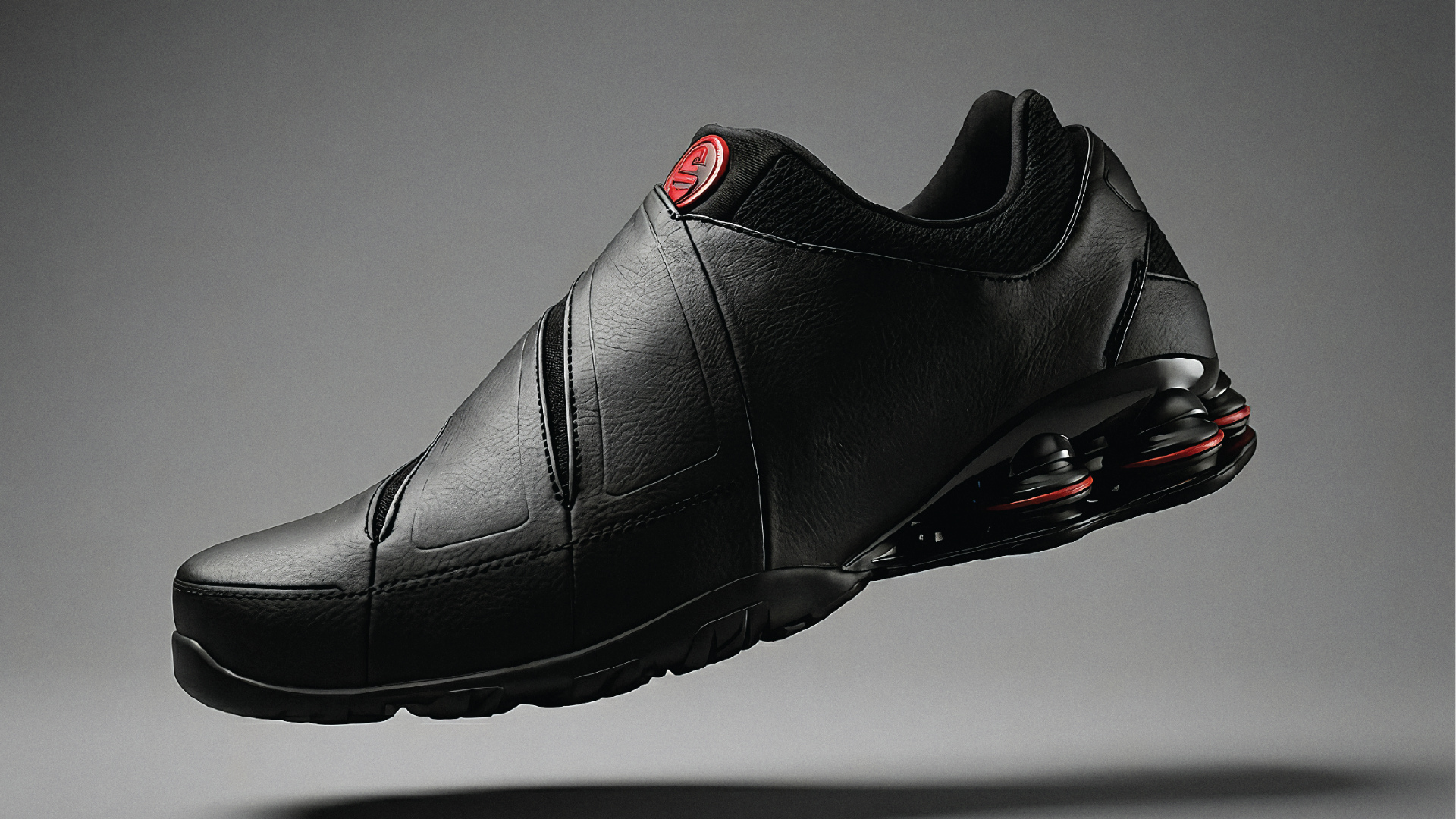
That ultimately turned out to be pretty successful. We were able to deliver the first fully 3D design review, rendered images, the whole bit. So that was pretty cool. Got a lot of excitement going for that.
But ultimately what that did was it kind of set me up on this journey throughout the rest of my career at Nike as kind of this digital product creation design leader that I moved throughout the organisation to just kind of help move things along. So from design director to design ops, where it was more about, okay, how do you take that work that we did in that one category and work with development leadership in scaling it? So, can we do it across all footwear categories on all styles and all product types? And that was pretty eye opening for me. But again, being able to use just that whole process of understanding what the problem was we’re trying to solve, partnering with development, understanding the tools and technology, what they were good at, what they weren’t good at.
We did a lot of process mapping. We did a little prototyping here and there, but I would say we made an attempt to do it fully at scale and it lasted for a little while, but ultimately it fizzled out, probably for some good reasons. But that was definitely a great experience for me to just understand what it takes to really do something at scale, especially at a company the size of Nike.
And then design ops – I moved into an official digital product creation role. So we were starting to bring in experts, 3D experts, 3D design experts specifically to help augment the process because again, trying to get the broader design teams up and running on some of these tools was a bit of a lift. And we felt we needed a little horsepower behind that. So as we were bringing in these experts, we felt like we needed a strategy for this. We need someone to help understand how these other roles integrate with the traditional design roles. What’s a plan to get this whole thing up and running? So I became kind of like that de facto 3D studio leader.
And that started to become a footwear and apparel conversation because, again, at the time there was a small 3D apparel team. They were doing a lot of poking around trying to figure out how these tools might influence the overall process. But it kind of made sense to have me lead both at the time.
So we’re going to talk about design ops later. Some of the embedding stuff that you’re talking about there, right? I think that brings me onto something I wanted to ask you, which was when you’ve got a notoriously sort of hands on community, like hands on design community, like shoe dogs in the footwear case, going through, what you’ve described as a pretty comprehensive digital transformation. I’m guessing there’s the turning point where it became clear to you and the people around you that the 3D stuff more broadly, you know, everything you’ve just described, it wasn’t just a passing trend. It wasn’t something you were going to experiment with and then the company was going to move on and the world was going to move on. It actually represented a kind of fundamental sort of axiomatic change to what it meant to design product, whether that’s footwear or apparel.
When did that tipping point come for you? Because I think that that for me feels like the simplest way to distill that whole embedding and implementing and industrialising journey – is that that moment where you go, this isn’t just a slightly different, interesting side project. This is actually a different way to design.
Yeah, that’s a great point, because I think that there was that point, for sure. I’ll describe it to you, but I just think that observation is pretty spot on. I think the 3D part within design, especially the way I was taught it in school, is kind of this traditional, you design something in 2D, then you kind of flush it out and build it in 3D, and then you go ahead and you start making the physical prototype. And that’s kind how we approached it. And those early stages, those ones that I just kind of walked you through. ⁓ And the adoption was patchy, right? Because the tools were imperfect, the workflow wasn’t integrated, there was little to no integrations.
And we really couldn’t quantify the upside. And one of the things you definitely couldn’t really quantify to design was, can you answer the question, why is this important for me as a designer to adopt and to make part of my workflow? And I think most of the industry is still kind of treating 3D as a downstream step and not a design tool. And when we really started to question that, you know, why digital, why 3D and why in design? I know in other industries, it’s part of it, but for us, it doesn’t make sense. But it was when we asked the question, well, what about leveraging the computing power and earlier stages of design to actually help us explore ideas that we just couldn’t do? And what if we could use actual data to help drive those idea explorations? And so that reframe was kind of the beginning of that shift in the mindset for designers.
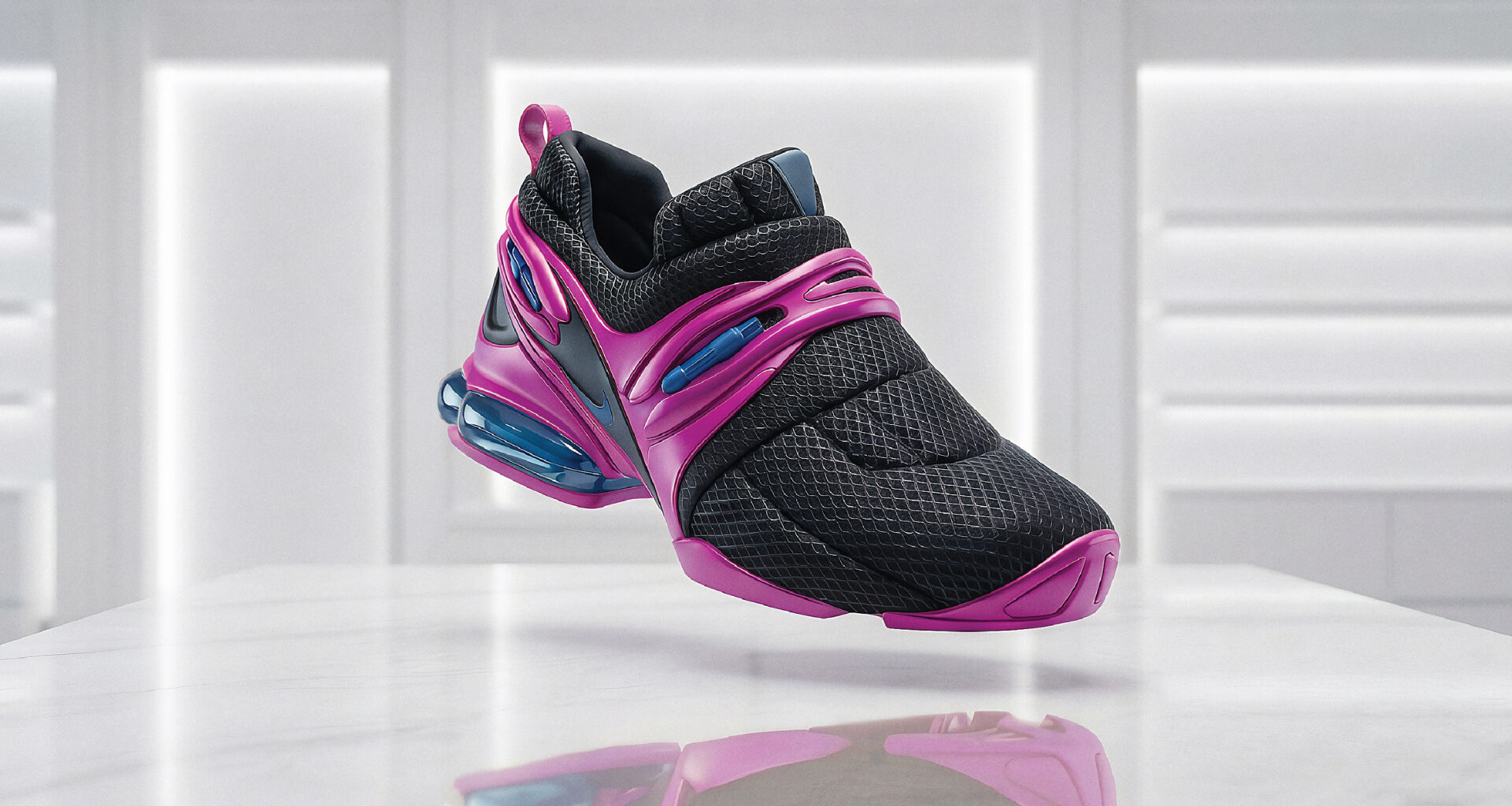
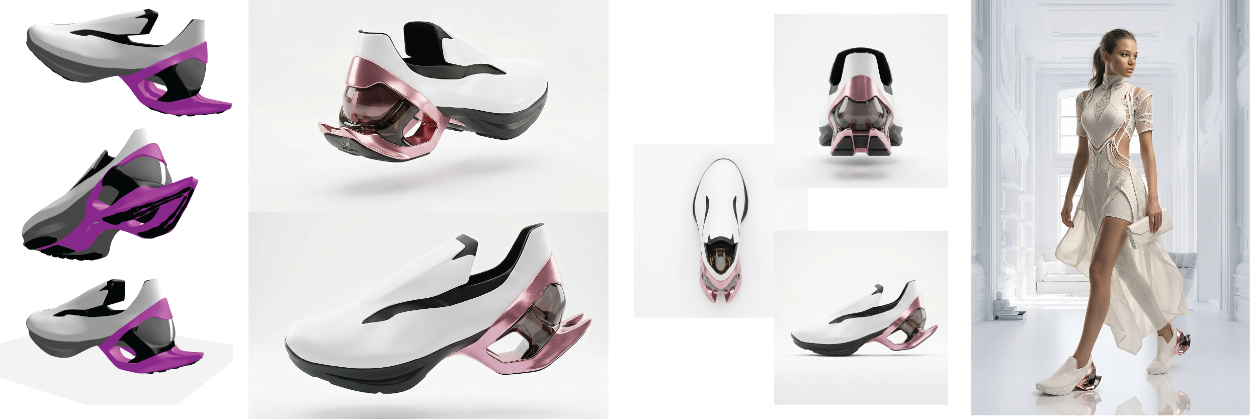
And what I’m alluding to is that whole computational design piece that eventually we started to implement into the process. That came later after that period that I just described to you. And I think when you can show designers the power of a tool where it’s actually helping them explore ideas, right? In computational design, generating structures and geometries that were literally impossible to conceive by hand. And not just difficult, but literally impossible. Designers could see things on a screen they couldn’t have drawn, they couldn’t have sketched, or even imagined without that computer helping them get there.

And so the idea of a computer as a creative collaborator, that was the point where I think started to change that conversation. And not only just exploring new ideas, but at scales in which you couldn’t even comprehend. Hundreds of variations where traditional processes only allowed a few. That changes the nature of that design decision making entirely. So I would say that was at that point where we started to explore the computational point part of 3D.
And one more quick point. And then, you know, because you needed an expertise to do that, but then the rest of the design teams, they knew that if they wanted to play in that space, they had to really engage in the rest of the 3D design part. Like who’s going to craft the form that’s going to be embedded into the computational part of the process? How do you talk to your computational design partner in a way that you can understand each other so the language and the integrations became really important to designers to really understand and grasp this whole 3D digital thing.
Yeah. And I want to ask you a little bit more about computational design later. But it’s interesting to hear that the way you describe the computer as the collaborator, I think is really key to the way the design community’s attitude towards technology in general tends to turn, where those turns tend to happen.
Now, a lot of your work has been in footwear, but you’ve also worked on design innovation projects in, you mentioned apparel. You also, across your portfolio and stuff, you worked in a lot of areas that I would personally, just as my umbrella, I put as engineered products, things like backpacks, tents, and so on.
Do you see yourself and do you think other 3D designers with similar experience and skillsets to you, as a specialist product designer who works in 3D within a narrow lane? You like footwear, you like engineered products, and you use 3D for that purpose. Or do you see yourself and do you think other 3D designers see themselves as 3D / innovation generalists who just happen to have a passion for a particular set of product categories?
I’m always curious with this kind of thing, when you build those skills, do you build them within one lane or do you build them in a way that is able to transcend lanes?
Yeah, I think it’s probably the latter. I mean, I’ve always considered myself a designer. That was where I started. That’s where I found my passion. But I think at the core of being a designer is being a problem solver. There’s other roles obviously where you’re solving problems. But I think for me, describing myself as a problem solver probably makes the most sense. And then the categories and tools and roles have just kind of been the context for that, but not the definition. That makes sense.
That orientation has been consistent from my first design role leading all the way through to leading kind of Nike’s 3D transformation. And good design has always been about identifying the right problem before reaching a solution. So, yeah.
Okay. I think that’s a good answer.
Now we have a lot of footwear listeners and readers. A big chunk of our audience is in apparel. Let’s go straight for it and try and benchmark the relative sort of 3D digital product creation maturity of fashion versus footwear. Fashion, sorry for me, they’re just like a catchall category. We’ll use it to mean apparel and accessories and stuff here.
It’s been my go-to answer for years at this point that more rigid, more engineered products tend to be further ahead in digital adoption than soft goods and apparel. But I’ve not really stress tested that for a while. I don’t really know how true that assumption is any longer. What’s your perspective on what the maturity divide between segments looks like? Is there even a maturity divide to begin with?
Yeah, I think my perspective on this question probably changed throughout my career depending on maybe where I was focusing my attention. Like if I was deep in footwear, I might look over at the apparel team and be like, man, they’ve got it made because they have X, Y, and Z. Or if I was working more in apparel, I’d go back to footwear and be like, you guys, you got it made because of X, and Z.
But I do think there’s some validity to that notion of, those hard goods aspects of footwear, in some cases makes it easier. Anywhere where you’ve got that through line from a 3D standpoint through to a manufacturing piece – the midsoles and outsoles and that hard good aspect – that makes a lot of sense because you’re kind of doing a little bit of both at the same time. You’re providing manufacturing information, but you’re also designing in 3D.
But the apparel side, I think, has a bit of an advantage if I look at it through the lens of today anyway. You know, it’s a digital process. The digital process and tools are kind of much more straightforward and aligned with the physical process. So if you’ve got a pattern you’re using for the physical, you can use that to create the digital and simulated garment. And stitching and draping and all that, it kind of mirrors what you’re doing physically on the apparel side and footwear. It’s much more clunky than that because you do have midsole outsoles, which is a hard good. Then you’ve got flat pattern uppers that are more of a composite of materials that aren’t draped at all, but they’re wrapped around the last. So there’s a lot of complexity there that makes it more like you’re just modeling it to model it to make it look right, as opposed to an apparel, you’re able to leverage some of the existing assets that are available to you in manufacturing to do the digital part itself.
So I think there’s a lot of value and benefit to that, and especially when you get beyond just the static and you want to move into things in motion, I think that the physics-based piece of the apparel process makes it much easier as well.
Okay, that’s a really decent perspective because I’ve only ever really got, I think, as far as thinking the way you think about the hard goods aspects of it and just thinking, well, you don’t need the physics quite so much. You know, things don’t move quite so much. And I think a lot of my mindset on it has been shaped over the years by the fact that a lot of my early exposure to 3D was in bags, handbags and accessories and things which, effectively, you can stage them as rigid products, even if they are not fully rigid (I’m aware that leather bends and moves and what have you). If you don’t have to simulate that part of it, you can get away without it. And I think that’s where my kind of grounding in a lot of this came from.
Now, the reason I’m actually asking all these questions about categories and generalisation, specialisation is, I think these might be questions that multi-category brands and larger companies with different process coverage and stuff are currently asking themselves.
Now, it’s not a secret that some organisations, including some big ones that have been lighthouses for the operationalised adoption of 3D digital product creation, are actually scaling back some or all of their DPC initiatives, in some cases letting departments go. I think maybe the ones who haven’t gone that far might reasonably be saying to themselves, well, I have all this talent, have all these pipelines, I have this software spend. What can I do with it to create more value than it’s creating to date?
So if you put yourself in the shoes of a hypothetical company that maybe has spent a lot of time and effort in building 3D capabilities and they haven’t seen a return in the way that they expected or they haven’t seen a return in a way that makes it just a slam dunk to continue spending and they’re evaluating what to do next. You know, do they reassign people? Do they make redundancies? Do they renew their commitments? What would you advise? Like if you took a really skilled 3D-DPC team of the sort that you work with, that you were a key part of, that you were leading, and you were working within an organisation that was saying, I don’t know what to do with all of these people right now. I don’t know how they create more value or additional value. Where, where should they look? What would you say would be the next step?
Huh, yeah, that’s the money question. I’ll just say this, I think most DPC failures aren’t technology failures, they’re mostly organisational and kind of strategic failures. So, kind of what hasn’t really kept pace is that organisational infrastructure, the leadership understanding and that process integration needed to realise the value.
So the companies that are scaling back are often solving the wrong problem or they have not sufficiently aligned and answering that question of why. And I talked about that a little bit earlier, but I think you can get to a point in your digital journey and a company in an organisation where you kind of lose sight of why you’re trying to do what you’re doing. And everyone’s just trying to push the rock up the hill and create digital stuff to create digital stuff. And so going back to the ‘why’ and understanding why you’re doing what you’re doing and then you can get to the ‘how’.
But I also would say that scaling back is actually legitimate maturity as well. So if you’re in an organisation and you’re at a point where you’re like, hey, maybe we need to kind of rethink our strategy a little bit. I think that’s okay. That could be a really good thing. You know, moving from using 3D everywhere to using it where it creates the most value as a sign of organisational learning. I wouldn’t consider it a failure because I think every organisation goes through that. But the brands that are in real trouble are the ones that are probably discarding the capability entirely rather than recalibrating and deployment.
So, I guess, to answer your question, you’ve got to really go back and understand why and what decisions you were trying to make digitally? Which ones were you actually making? Where was the gap between expectations and reality? I think there’s just some really good fundamental questions an organisation needs to ask themselves to know where to then refocus because I think that’s the important thing is knowing where to refocus, but I think that each individual organisation is at a different spot and they can answer that for themselves depending on where they’re at, the size and complexity of their organisation, and where they see the value.
And then I’ll just add this too, because I think this is important. There’s that talent question. Think, again, if you’re going to discard your kind of DPC work, and you’re going to maybe let entire departments go, that’s particularly damaging and difficult to reverse because it’s the people who understand both the creative process and the digital tools and they’re the rare ones and it takes years to develop that. And so disbanding those teams in a downturn means rebuilding from scratch in the upturn and that’s a significant cost and significant delay on top of that. It’s kind of a little bit of that self-reflection, right?
Yeah. Yeah. It is. And I think the upturn is an interesting way to frame it because you can look at that from a pure economics point of view. And you can say, hard times lead to ruthless decision-making when it comes to which talent pools and which kind software spend and so on is creating value. And then easier times to make that an easier decision to make. But the upswing is also, okay, we want to do new stuff now, there’s an upswing in terms of ambition. We want to do X, we want to do Y. We want to go after more in the way of configurable products. We want to go after more in the way of scaling and differentiating the way we can communicate with consumers. We want to go after product excellence at the materials level or R&D level and working with our suppliers and so on.
I think, before you know it, a lot of that upswing stuff ends up having hooks in digital product creation. And if you have completely dismantled that reservoir of talent, then all of a sudden you find yourself wanting to do things and you haven’t got the prerequisites to do them.
Yeah, and I’d also say that that kind of pause and reassessment might not be based on an economic situation. It could be based on technology because it moves so fast. So, you know, when you start to layer AI into that conversation, sometimes you need to just pause, reflect on where we’re at technologically and re-strategise based off of those situations as well.
Yeah, yeah. Okay.
Now I want to float another term by you to get your reaction to it. ‘Cause I think this is maybe one that’s been behind some of the paring back of DPC initiatives and that term is ‘digital twin’. So irrespective of the category we’re talking about, I think it’s fair to say that we haven’t got to a full end-to-end digital twin. If we define it as meaning a digital representation of a product that can stand in for its physical counterpart anywhere that you need to make creative, commercial, structural, operational decisions. Any decision that you would take based on a physical representation of product you can make on a digital one.
I’ve spoken to apparel and footwear companies a few times over the last couple of years, and I’ve had people ask me, are we missing something? You know, why can’t we have a digital twin? Or is it that the software ecosystem just isn’t as plugged together end-to-end as those companies have been led to believe? And I didn’t really have an answer for them at the time, aside from saying, yeah, I think that’s a vision that’s just fundamentally incomplete right now, but I think it’s still the right vision. What do you reckon? Digital twin is one of those terms that’s kind of dogged this conversation a lot. And I’m keen to see how you feel about it.
Yeah, the digital twin, it’s kind of a unicorn. I’ve been in a lot of meetings where that term has come up by different people. And I don’t think that everybody in the meeting at the time had the same idea of what was meant by the term digital twin. So, if you ask 10 people in a room, you’ll get 10 different answers of what that is. For a vendor, it means high fidelity render; for a designer, it might mean sampling replacement; manufacturing director means a build specification, so on and so forth. So number one, I think that just being clear in an organisation of what you mean by that when you say it.
There are other terms that are used as well. Digital sample, digital prototype, but yeah, that digital twin, I think is meant to represent that ultimate synchronised digital representation of a physical product that carries its full specification, right? So everything is in there, geometry, material behavior, fit data, manufacturing tolerances, component relationships, lifecycle. That’s the ultimate goal is can you achieve that in a product, in a digital product. So I think just being clear as an organisation what you mean by that, because in some cases, some people just think that you’re talking about a rendering which of course is just maybe a piece of what a digital twin is.
The other thing I think it might be interesting to kind of just think about is, does that ultimate goal of that digital twin for footwear, because they have them in other industries, aerospace will have a digital twin, automotive maybe even, but in the lifecycle of those types of products and what they’re really concerned about, it makes sense maybe to have a digital twin that has all that information. But in a piece of footwear or apparel where the lifecycle is short, there’s thousands of SKUs, styles, colourways, whatever, you have it. Does it make sense, whether it’s financially or logistically or whatever, to have all of that data embodied in a digital version of your physical product? So those are just a couple of things. How do we define it? And then does it make sense to pursue it if or if it is that ultimate goal of having that digital twin. I don’t think in footwear and apparel we’re there yet, but maybe don’t need it either.
No, I think that’s fair. Because I think in your aerospace and so on, 3D CAD is such an obvious uplift over manual drafting because you’re trying to make a fixed position, multi-component, rigid thing over the course of months and years. As soon as you have a 3D CAD model of it, that is your manufacturable specification by default, the gap between 3D CAD and making is pretty small in those kinds of fully hard industry sort of products. It’s certainly not the case in apparel and I don’t think it is the case in footwear – footwear is a little bit closer, maybe.
I think it’s an interesting framing just to say that we’re not there, fine, is it actually something we should be aiming after or is there still a decent amount of value to be unlocked without having to go all that way where the 3D representation stands in for absolutely every conceivable use case.
Yeah, I think the vision is right and the direction of travel is probably correct, but do you need to go all the way there or where? It may be an interesting conversation to have with people in the industry for apparel and footwear. What makes a good digital twin for those types of products? In reality, right? It’s just a lot in there.
Yeah, there is now and it’s kind of actually related a little bit to my next question, which was in our most recent DPC reports, there’s an opinion piece in there that makes a renewed argument for virtual reality in 3D design on the basis that flat screen 3D has essentially kind of compressed the space that was available for pure creative design by bringing engineering further forward and loading both of those burdens onto the same teams. Now that was a piece that was focused on apparel, where creative and technical design as disciplines are more divergent maybe than they are in footwear. But I think the principle is the same in that by giving designers 3D skills, you are to some extent also making them garment engineers, product engineers, and product developers, pattern makers, and so on.
I’m interested to see whether you’ve seen similar concerns being aired around this concept that 3D is tilting the work towards engineering and away from creativity. And I know VR has higher adoption in footwear, so maybe it’s different there than it is in apparel. Have you seen anything similar?
Yeah, the short answer is yes. It’s actually a real one for me. I think I kind of experienced it myself in my travels and in my career. But I think that compression argument is real and it’s worth taking seriously. 3D does bring engineering considerations earlier in the design process. That earlier exposure creates a different kind of creative pressure and it’s understandable that designers experience it as constraining. I think, again, going back to maybe that earlier point I was making around what does a designer really feel like they need, where do they feel they need the help? Where do they get excited about the potential and possibilities within this technology or these tools, right?
But, you know, I think there’s a difference between engineering constraints becoming visible earlier, because that’s inevitable and ultimately useful, and engineering concerns dominating the creative conversation before exploration is done. So I think a workflow and leadership problem is at hand and not really a technology problem. I think introducing these tools into the design process, you have to be aware as a design leader what’s that asking of your design team? Because your downstream partners, your engineers and developers are going to be like, great. My designer is going to hand me a perfectly engineered 3D file that we can feed right into the system, and it’s going to automatically work. And I think that’s where the issue really starts to pop up. I think if the goal is creativity, the user experience should reflect that. So whether it’s, you know, VR, computer screen, a mouse or stylus, if I’m asking the designer to use it, they should want to because it’s benefiting their design process in some way that makes them feel like they can be a better designer. Ultimately, those outputs allow for more upfront conversations around engineering and how the data can feed downstream with other teams.
But I really believe that there’s this opportunity for what I like to call this creative sandbox that happens upfront in the design process where designers can use whatever tools they want digitally, VR, doesn’t matter, right? And there’s no expectation that that is going to be something that is an engineered anything.
Okay, that’s an interesting way to think about it. And I think it leads us into the next one.
We talked about design and operations, or you did earlier, and I want to pick up on that now. So I’ve seen you talk before, and we’ve certainly talked before about the importance of borrowing tools, pipelines, best practices from industries where 3D uptake is further ahead. We’ve seen that a lot. We did a partner report with Epic Games last year focused on Twinmotion, Unreal Engine, software that’s pitched at fashion based on time and stress tested workflows that have been refined with partners in other industries like automotive and architectural visualisation. But I think with those more mature industries, the tools and the integrations and the standards is only part of it. I think what they have is the kind of operationalisation, that grounds, the creative sandboxy innovation stuff you’ve just talked about in the then engineering workflows that lead to tangible outcomes and feed into production calendars.
You’ve done a lot of work in design operations. Tell me what the objective is for that kind of systematisation operationalisation piece. And tell me how much of that you think is transferable industry to industry as DPC progresses. Is it the case that we should be saying apparel and footwear borrow tools from other industries but also borrow their design operations principles? Or is it more a case of saying you are unique industries, borrow the tools, but build operations around them that are different?
So design operations, for me, some people think of it as just kind of project management and kind of resource scheduling, but I think at its most powerful, it’s kind of this discipline of designing the conditions under which creative and technical work happens. And that’s inclusive of people, process and tools. So the workflows, calendars, gates, tools, team structures, cultural norms that determine whether an organisation can consistently convert creative ideas into market ready products at speed and scale. So that can kind of traverse over any industry, I think, if you look at it that way.
But I’d also say that for the first principle from a more mature industry standpoint, although those things are transferable, not everything can be kind of copy and paste.
So I think if we take a look at that automotive and architecture example, the lifecycle example of those types of products in those industries, the three critical variables are timeline, volume, and complexity – of a variety, I’d say. And on all three, footwear and fashion are kind of at the opposite extreme. So you can’t really copy and paste operationally from automotive to fashion, let’s say. And when we look at comparing the gaming or VFX operations, their digital work is their final output. So there’s nothing physical that they have to worry about.
So for footwear and fashion design, operations should be adapted and customised to that industry, the size of the organisation and the scale in which they work and operate, and looking at maybe what those business objectives are as well to kind of fine tune things. So I do think that there is some general crossover, it’s because of the different types of products and lifecycles of those products and the complexity in those, you definitely need to consider all those things differently in footwear and apparel.
Do you find that, and again, I don’t want to point to any particular brand here, just kind of aggregate industry-wide, do you find there’s sufficient understanding of the importance of design operations?
No, I don’t. I think, especially now because of the way things are, integrating between traditional design processes and business environments and that technology layer that now we find ourselves also dealing with. Right. So, yeah. And the struggles, think, there’s still this cross-functional alignment issue, like design ops that works within design, but things break down at the handoff to development or sourcing. There’s data governance that needs to come into play with design operations. There’s change management. The industry runs so fast, finding time for teams to upscale and embed new ways of working. There’s a lot more complexity to take into consideration for design operations today than there ever was.
So I think there’s a lot there to unpack, but optimistically, I think the operationalisation of digital creation in footwear and fashion is progressing, right? And the brands investing in operations and infrastructure, not just the tools, are the ones pulling ahead. AI is creating new opportunities in these spaces, the disciplines becoming more important, not less important.
Yeah. And I want to actually just drill into AI a little bit.
There’s obviously a lot of attention focused on where AI can replace 3D depending on what slice of 3D you’ve gone after. It’s my sort of charitable way I can put it. There’s the visible applications, you know, the companies that are leaning into generative image models for early stage creative exploration in place of sketching, for instance. And then at the opposite end of the funnel, when you have companies that are taking their 3D renders and they’re taking those into image generation models to create vital pixels for e-commerce at speed and scale. What about in the middle? So I know there’s a lot of ground being gained in computational design, which you’ve already talked about, but that’s rules-based and parametric. I’m thinking more in the generative space. And I guess it might also be useful if you feel up to it, spending a minute distinguishing between computational design and generative design.
Yeah, I mean, I think that the middle of the funnel, like you described it, is probably the most interesting and least resolved where AI is considered at this point anyway. I mean, that middle is where decisions carry probably the most downstream consequence and the technical demands are the highest.
So I think for, you know, in the conversation when we have it, honesty about where we are is probably more valuable than the kind of optimistic view about how it’s all gonna be magically, you know, through at the end. But I think generative AI is a really good representation, you know, as we think about how we frame this up, producing images, forms, visual outputs, they look convincing, but they’re not yet doing simulation and understanding physical behaviours and materials and that structural integrity and that manufacturing feasibility, that middle of funnel is exactly where representation needs to start becoming more in that simulation space, I think. But that’s where AI tools reach their limit as well. And conversely, that’s where 3D and DPC kind of retain the irreplaceable value. But not because AI won’t get there, but eventually, it’ll get there. It’s not there yet.
Yeah, I would agree with that. That’s the way we framed it as well, I think is what makes 3D stand out, what makes AI stand out. And I think under the current kind of generative architecture, you maybe get there by just getting progressively better at approximating the visual output of simulation to the point where the distinction doesn’t matter. Or you get to the point where there is actual simulation baked into there, which is definitely not where we are now.
Are there any other applications of AI across these kinds of DPC workflows that you think maybe are going under, under discussed, underrepresented, under talked about? I’m always keen to talk to people who are actively working in design or in design operations in this case, who don’t necessarily see AI as something to fear.
Yeah, I think there’s two just, you know, there’s probably more, but there’s two that I could think of right now that I know they’re happening. I just don’t know if they’re being talked about enough. And one of them, and it’s a simple application of translation. So we talked about that creative sandbox scenario where, you know, designers can create any artifact they want, whatever feels good to them, whatever gives them what they need. And then, how can that be used downstream and in more manufacturing-based scenarios? So, AI can be used in the translation of design artifacts into maybe more engineered artifacts as an example. There’s lots of translations, there’s lots of transformations of digital assets that need to happen throughout a pipeline. Some of them are really difficult. And it’s a place where maybe AI can play a role.
And the other one, which I’m finding fascinating these days is, I call it the rise of the Claude coders. And it’s that traditional computational design requires scripting that we know and knowledge that’s kind of a barrier for most designers. But now designers are using AI to write code to influence whether it’s a computational design or to influence or to create 3D tools for themselves. And so if they have a little bit of understanding of the 3D tools they’re using, and they’d like to get something a little bit more out of it or something specific or automated, and they don’t have any engineering or software development background, they simply ask AI now, hey, create me a tool that does X, Y, and Z. And so the integration of AI into their process of tool building, I think is really interesting.
Absolutely. And I hadn’t really considered that from a computational design point of view. That is fascinating.
Bo Lupo, thank you so much for your time. I’ve really enjoyed this one. Thanks for joining.
Yeah, absolutely. Thank you very much for having me.
All right, perfect.
And that’s the end of mine and Bo’s conversation. That final angle on the bridge between vibe coding of creative tools and computational design, it’s one I hadn’t really thought about before, but one I instantly want to go and investigate further. I suspect it’s also something we’ll come back to in our deep dive reports this year, both AI and DPC.
For now though, thanks as always for listening. We’ve got plenty more lined up over the next few weeks in a bunch of different fashion and beauty technology areas so I’ll speak to you again soon.