Key Takeaways:
- The butt of many memes: Allbirds announced the sale of its footwear business at a significant loss since its initial IPO, followed by a hard, heavily-leveraged pivot to become NewBird AI, a GPU-as-a-Service and AI cloud provider. For a DTC darling built on natural inputs and low-carbon credentials, a pivot into fossil-fuelled compute infrastructure is both a striking reversal and a klaxon sounding around speculative investment in AI.
- Rent The Runway, part of the same late-2021 DTC IPO cohort as Allbirds, is showing a different path: a swing from loss to profit, and an AI strategy focused on fundamentals.
- In an irrational market, the pressure for every brand or retailer – especially ones who were the flagbearers for the digital-native movement – to reposition as an AI company is significant. But the applications likely to deliver a sustainable return are those that align with strategic priorities, not the ones that treat AI as a way to make a quick fortune on the way out of the door.
Summarise and debate with AI:
Take the content and context of this article into a new, private debate with your AI chatbot of choice, as a prompt for your own thinking. (Requires an active account for ChatGPT or Claude. The Interline has no visibility into your conversations. AI can make mistakes.)

This week’s analysis is AI-coloured because, as we’ve all noticed, so is basically every conversation about technology at the moment. Many of those conversations are also incredibly noisy.
At the moment, trying to have any sort of reasoned conversation about the technical capabilities, the cultural backlash, the real use cases, and the long-term outlook for generative AI means bringing in cross-industry sources. While the excellent State of Fashion 2026 contains some industry-specific analysis of AI adoption and sentiment, it’s a small part of a much larger picture. The most-referenced benchmarks for AI uptake, usage, and impact are studies like the annual indexes put out by Stanford – the 2026 edition of which released this week – and all take a very wide, industry-agnostic lens.
As part of our upcoming AI Report 2026, The Interline wants to close that data gap, and to capture deeper and more comprehensive fashion and beauty perspectives on how executives, end users, and technology implementers feel about what’s clearly becoming the hottest and most contentious transformation of our time.
From today until the end of May, readers can share their opinions and perspectives, anonymously, through our AI Survey 2026. The survey should take 5-7 minutes to complete, and the results will be analysed, in detail, in our third, free-to-download, AI Report this summer.
Two digital-native companies set out down very different paths to extract value from AI
This week’s analysis is brought to you, unusually, by a clip from a film. Specifically, it’s brought to you by that scene in The Big Short, where Steve Carrell – playing Mark Baum – goes to visit a bunch of unscrupulous mortgage brokers and bankers, discovers just how deep the opportunism is running in both high-risk housing lending and a vast slate of securities built on top of it, then jumps straight on the phone and declares “it’s a bubble”.
That scene came to The Interline’s mind this week, apropos of nothing.
Separately, guess who’s now in the business of buying GPUs with massive leverage and renting out their capacity for AI workloads?! If your guess was Allbirds, the troubled early-days-DTC darling that made its name selling wool sneakers and, later, apparel then… you’ve either already read the news, or you’re weirdly prescient enough that you should start playing the lottery.

All glibness aside, the news this week that Allbirds would sell off its entire footwear business for $39 million, represented not just a sad footnote for a company that was once worth $4 billion, but also a bizarre bit of marginalia in an AI story that’s becoming more cartoonish with each passing week. (The company had previously all but abandoned its apparel business between 2022 and today.)
As a bit of clarity to a set of headlines that are short on specifics, it sounds as though the sale of those assets and the subsequent raising of a new $50 million convertible financing facility are separate from one another. Net output of the $39 million sale will likely be “distributed to stockholders in the third quarter of 2026,” according to the LA Times, while the Financial Times is snappier: “Investors who went into the stock expecting eco-friendly creps will be offered a special dividend.”
It also appears as though American Exchange Group, the new owners of the footwear IP and operations, are free to continue selling shoes.
This means the entire $50 million in new leverage will be spent on a pivot that will see the original, publicly-listed Allbirds company renamed to NewBird AI, with a long-term vision to “become a fully integrated GPU-as-a-Service (GPUaaS) and AI-native cloud solutions provider”.
Before you read on...
Our weekly news analysis will always be available to read here at The Interline, but you can get it (along with notifications for new podcast episodes, events, and more) in your inbox by signing up to our mailing list.
Blink and squint.
Now, as fun as it is to dunk on the idea that the only viable way forward for a beleaguered-but-once-beloved brand is to shift its stock in trade in a firesale, and then raise a bunch of money to get while the getting’s good in the GPU market, this story has a few very real stings in the tail.
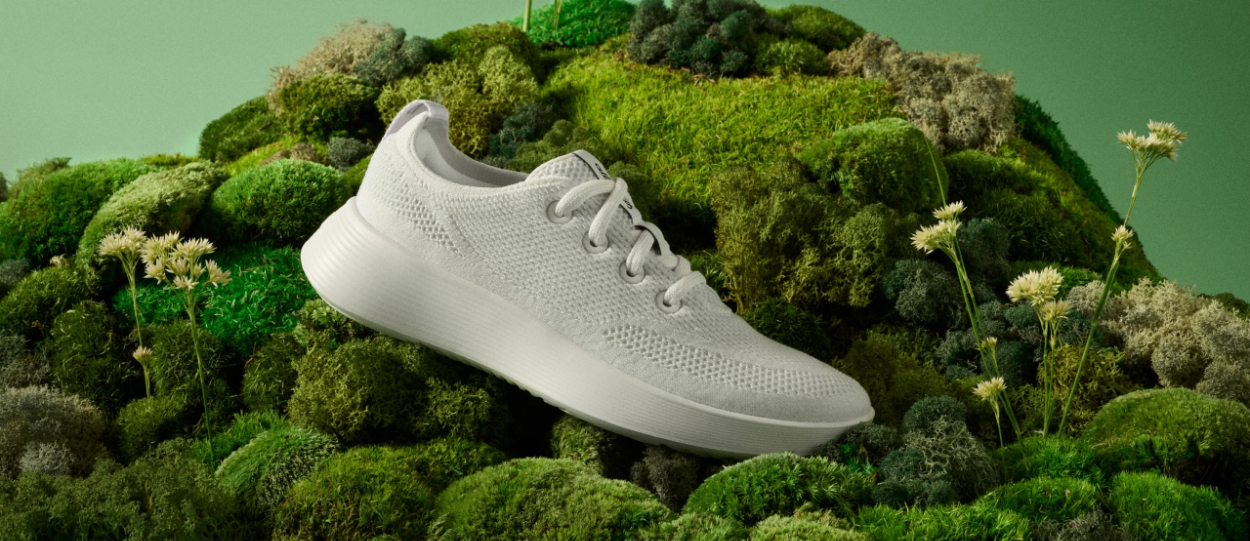
The first of those is going to be felt by fans of the product. The FT made a neat joke of this, but Allbirds traded for a long time (especially around the point of its IPO and in the year afterwards) on its environmental credentials. Their products made use of natural inputs – eucalyptus and sugarcane – as well as recycled plastics, and the company partnered with Adidas a few years ago to produce a limited collection of what the companies called their “lowest carbon performance shoe”.
As comfortable as the shoes were (The Interline team has owned many pairs between us) this sustainability marketing was arguably their biggest anchor in the cultural consciousness, and seeing the company now shift to offering AI infrastructure that’s more than likely fuelled by, well, fossil fuels, is going to feel like being kicked by the ghost of an old friend.
The second sting is going to hit documentarians and devotees of the direct-to-consumer, digital-native business model. In January, we included Allbirds in a cohort analysis of brands that “[could not] have pre-dated their era of web technology any more than the upcoming wave of genuinely AI-native brands would have been able to exist without theirs.” And from that vantage point, this week’s news represents a very ignominious end for a company that was part of (or at least present for) the birth of a different type of business that could only have been built on the combined stack of eCommerce, social media, and low-interest capital.
(Fortunately, for that crowd, Allbirds’ fate is not a universal one, as we’ll see in a moment.)
Finally, this news is likely to elicit a fresh sigh from people who like rational markets. With AI and AI-adjacent tech stocks making up around 80% of the total stock market growth in the US last year, and investment in AI startups in Q1 of this year already doubling the equivalent for the whole of 2025, moves like the one Allbirds (sorry, NewBird AI) is making will feel like institutional money is taking even more leave of its senses – especially because they seem to work, with the confusingly-branded company’s stock up nearly 600% in a single day.
Luckily this week also brings us a more grounded and optimistic take on where fashion sees the money flowing into, and back out of, AI – and that perspective comes from a stablemate and contemporary of the DTC era: Rent The Runway.
(Now, savvy readers of The Interline might be replicating another film-scene-meme at this point, and preparing to correct us: Leonardo DiCaprio pointing at the TV, from Once Upon A Time In America. Yes, Rent The Runway (hereafter RTR, to save our typing fingers) launched much earlier, in 2009, but the company only began offering its everyday fashion subscription service in 2016, which was the same year that Allbirds launched. And the similarities continue…)
This week, RTR posted a set of results that outmatched market expectations: its revenue for the final quarter of 2025 was up 20% compared to the same period in 2024, and revenue for the full year increased close to 8% versus the previous year – enough to swing the company from loss-making to profit-making.
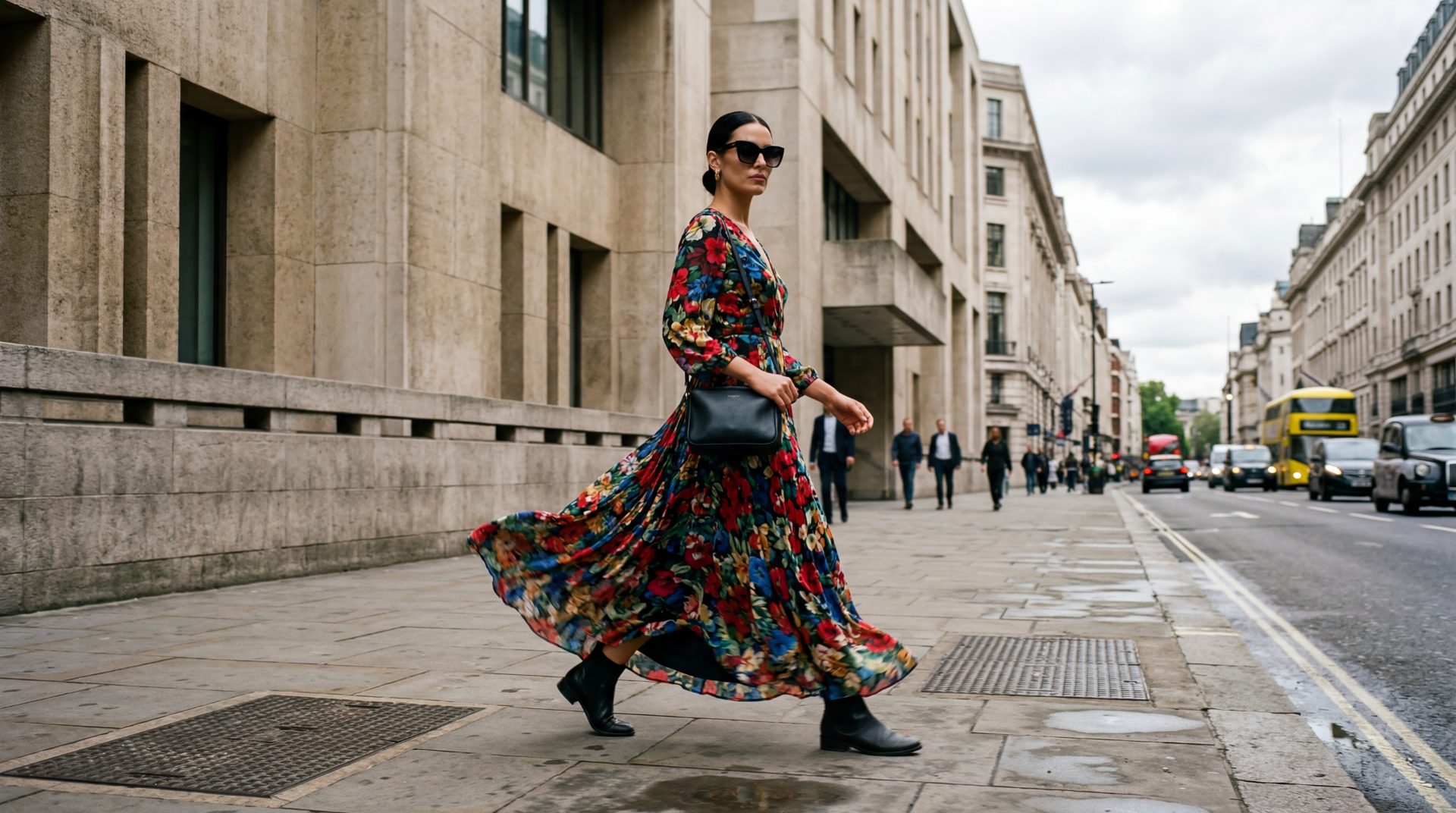
While the company’s share price still represents a massive shortfall from the salad days of its IPO – down more than 98% over their trading lifetime – this turnaround is notable not just because it represents a very different fate from Allbirds, but because it demonstrates a comparatively grounded and product-centric investment in AI.
As RTR puts it in their own earnings: “We are working to transform the customer experience in 2026 from a traditional e-commerce grid to an AI-powered discovery model.” A model that, it seems, includes all the major beats of semantic search, answer engine optimisation, and personalisation.
Nothing radical here, but all in all a sensible set of ways to spend money on AI. And this is particularly true when we take account of a survey dataset released this week, focused on American shoppers, which shows that three quarters of them would trust AI shopping agents less if they knew that advertisers had the opportunity to influence the outcome.
(We should note that RTR doesn’t have quite the laser focus on the future that its communications make out, since the company is also scrabbling to find income from “side quests” such as renting out its dry-cleaning infrastructure to hotels and other parties.)
In a rational world, a company investing ahead of a technology shift in a way that’s driven by product and customer demand wouldn’t be remarkable. But as much as generative AI has the potential to transform enterprise software (something we’ll be analysing in detail in The AI Report 2026, coming this June) it also, clearly, is becoming a refuge for companies that have exhausted the more on-model avenues and now see a boom-time opportunity to speculate. A bubble, in other words.
Critically, though, that bubble is not, The Interline believes, a general one that’s swallowing up the entire scope of AI. The sound applications – those that align with the direction a business was already moving in, or that create a fundamentally differentiated experience for end users or consumers – are likely to deliver a return, while the wilder ones (a footwear company pivoting to cloud infrastructure) will be definitionally short-lived since they are pegged to speculation.

When we frame this week’s stories in this way, a lot of the humour drops out of the bottom of the whole thing. As optimistic as we remain that genuinely new, AI-native brands will emerge over the next couple of years, the templates laid down by the DTC-native companies paint a very mixed picture today.
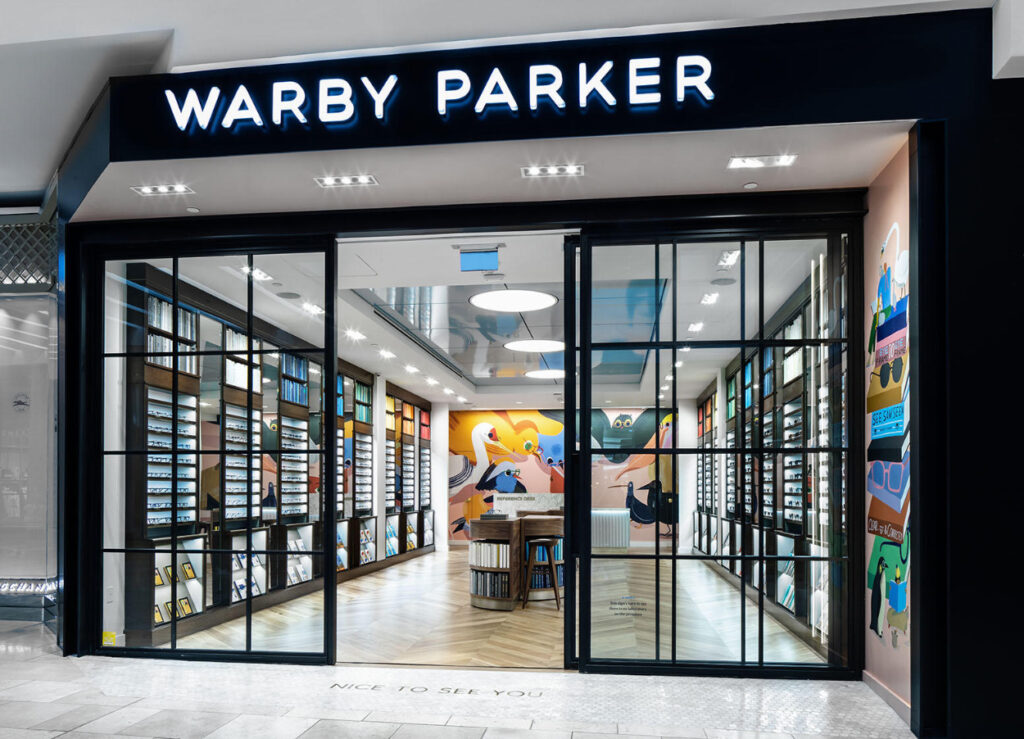
Between September and November of 2021, three mainstays in that category all went public: Warby Parker in September, Rent The Runway in October, and Allbirds in November.
Of the three, Warby Parker is faring the best today, trading at around 58% below its IPO peak. Around this time last year the glassesmaker announced it was partnering with Google on “intelligent eyewear,” and that partnership still seems to be on track.
Of the other two, one is on a trajectory that feels correct, familiar, and sound. The other is throwing someone else’s money at the clouds. One of these is the face of AI adoption as it really exists: driven by strategic objectives, and deployed in external and internal-facing applications that have a good chance of delivering a return. The other is a funny front on a deeply unfunny story about a business model that once felt new, and a grift that’s as old as time.