Hey, and welcome back to The Interline Podcast.
Today, we’re talking about sustainability, but we’re doing it along different trajectories than a typical industry chat would probably follow. Industry-wide, we tend to start with the environment and then walk backwards into humanitarian impact. But today, we’re starting with a social contract and we’re moving into climate over time.
For a lot of companies, impact assessment is also like a retrospective exercise. You make all the deterministic choices, and then you unravel the footprint of the finished thing. Today, we’re talking about a different model, bringing impact into the decision-making process for brands that are customer-driven rather than design or trend-driven.
And we also tend to talk about regulations as an axiom, something that’s in the background getting forever closer, rather than framing them as something still to be influenced and as triggers for progressive change, even if the form of the legislation itself is amorphous and evolving and hard to understand and judge.
Finally, we also look at circularity a lot from the top down. Instead of thinking about what it would look like to do it in a very tightly geofenced way and to layer what we’ve learned on top afterwards. To do all of this, to look at things in this kind of reverse-wise fashion, I’ve brought along Joe Mountain.
Joe is the Sustainability Manager for the multi-brand N Brown Group. Joe is also a Drapers ‘30 Under 30’ honoree. He’s a fellow Manchester native and he heads up the Future Fashion Fair, which happens here in the city and which aims to help build out regionalised infrastructure for a circular economy.
Joe’s got a lot on his plate, as you can tell, so let’s hear what he has to say.
Never miss an episode
Get notifications for new podcast episodes, plus our weekly news analysis, events, and more, delivered straight to your inbox.
NB. The transcript below has been lightly edited.
Okay, Joe Mountain, welcome to The Interline Podcast.
Thanks Ben for having me. Cheers.
Not at all. Glad to be welcoming you on. A fellow kind of Manchester area worker, native. It’s always good to have conversations that kind of hit a little closer to home, although we’re going to be talking about some pretty global stuff today. To wit, we’re talking today about both of your roles.
So day to day, you are running sustainability at N Brown Group, which is facing all the same kind of major compliance and transparency and sustainability obligations and commercial pressures as other brands and retailers. Outside of that, you’ve also been spearheading the growth of Future Fashion Fair, which you started off small, but is now kind of scaling and collaborating with local government and education here in Manchester.
So rather than ask you what a typical day looks like for you, which is how I’d usually do these things,mMaybe we should extend our timeline a bit and say, what is a typical month like for you so that we can take in both of your hats that you wear?
Yeah, you know my role at N Brown is my full-time work. As you can imagine, that occupies most of my days. And then, Future Fashion Fair we started – myself and my business partner – four years ago. It’s a non-profit, so we don’t take any money out of it. But as you can imagine, it sort of fills in the rest of the gaps of which I have free time. But that depends very much on the specific projects that we’re working on.
At the moment, yes, we’re kind of collaborating with education and local government ⁓ and that is taking up quite a lot of my time. So yeah, very busy at the moment, especially the last few months have been quite hectic, you know, going over the weekends. But I think when you work in this space and you’re quite passionate about it, it doesn’t feel so much like work, but actually something you enjoy doing, enjoy thinking about on a day-to-day basis.
Good. Well, you’re talking to a fellow evening and weekend worker, although I try and minimise the amount of that that goes on. A more accurate description from my side is a guy-with-three-kids-worker, which is you do the work when the time presents itself.
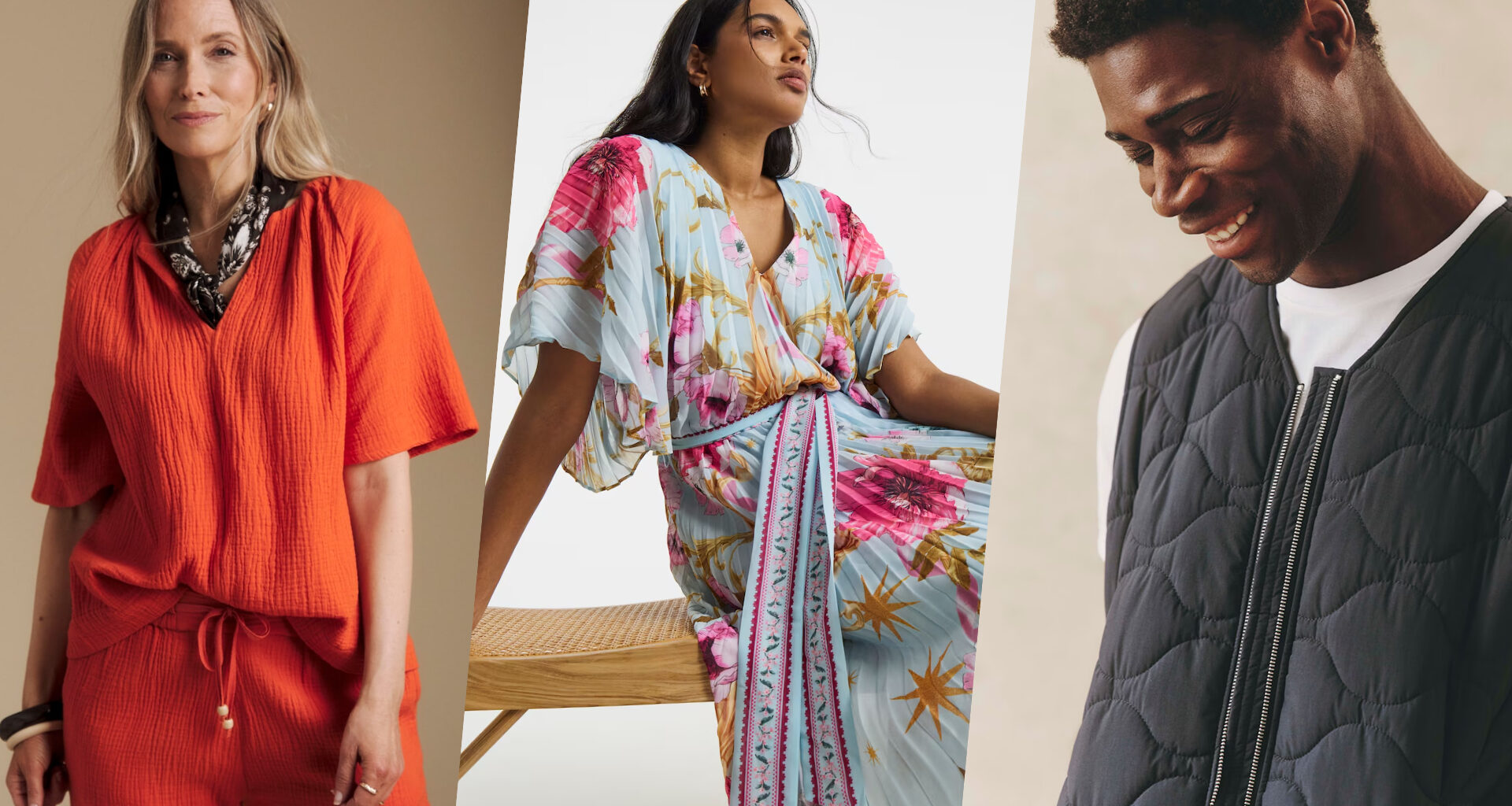
So we’ve got a lot of international listeners to the show and readers at the Interline who might not necessarily be familiar with N Brown. So let’s run down the brands you own and talk a bit about the common principle that I think unites them. So across JD Williams, Simply Be, and Jacamo, I think I’m right in saying that size inclusivity is the kind of unifying thread between all of those. So before we get into regulations and stuff like that, I want to start with a bit of an understanding of how that common thread, as well as the unique elements of each brand, affect the way you frame sustainability.
Yeah, exactly right. So, N Brown Group, the business is over a hundred years old. And it was always typically a catalogue business. So, you would order from the catalogue, and then as part of that, you could always pay the sum of the purchases over a period of time, whether that be months or weeks. So that inclusive offer from not only a sort of size and fit, which I think is a bit more of a modern take we’ve taken on inclusivity, but that financial services element has always been quite a big part of our business as well.
But to focus purely on the retail side of the business, JD, Simply Be and Jacamo all appeal to different audiences. So Jacamo being sort of our over 35 customer for men, Simply Be almost sort of an exact replica for women, and then JD Williams is over 45. So we’re trying to appeal to lots of different customers in different age demographics and we kind of identify as serving the underserved, so customers who can’t always access the sizes that most people can access. So for the menswear I think we do anything from a small up to a nine-XL but then we also do your tall sizes within that and then when it comes to shoes we also offer wider options on wider feet so we really are trying to tailor to those different audiences that are underserved whilst also offering that FS proposition and then making it more accessible from a price point of view as well.
I’d be interested to see how that translates into the group’s ethos on sustainability then. Because, honestly, I was aware of the size inclusivity thing but I think the financial services and the catalogue history had passed me by. There aren’t a lot of catalogue-era companies and catalogue-era models still remaining in the UK. I believe Next still operates that same pay over time principle. But that side of it’s really interesting.
I’m keen to see how that manifests at a sustainability level in terms of how you think about it, but also how that customer base thinks about it. Because it’s a very different customer base to a younger-facing brand, for instance, or something that’s more in the fast fashion space.
Yeah, 100%. And we went digital, purely digital …oh, I can’t put a number on it, it was probably within the last 10 years. And then as part of that, as sustainability became more responsibility for businesses, we always had CSR, then it kind of emerged into ESG. We started to wonder and sort of challenge how we take that on. That social element of sustainability or ESG has always been there with the business, that sort of inclusivity, making sure we’re there for the customer and likewise that sort of always been inherent internally in the organisation.
When it came to the environment, it was kind of a whole new field for the business. When I joined four years ago, I was offered a blank canvas. I think we took a typical approach with product, which was assessing the materials that we’re using to start off with, as that was sort of the most accessible approach, or you could call the low hanging fruits. And I think since then we’ve done some work with our customers, we did a materiality assessment, not just our customers, but all our stakeholders, understanding how people perceive sustainability, what they expected from us as an organisation. But then understanding some of the risks underneath that, you know, from a financial point of view for us, but also what are the impacts we’re having on the environment.
The resounding answer from all of it was that actually people just wanted to be able to trust us. So whether that be us working with our suppliers to make sure they’re paid on time, whether it’s making sure that we’re getting the correct products from our suppliers and they’ve been delivered on time and delivered to a certain standard. But then also from our customers’ point of view it was making sure when we say next day delivery, we mean next day delivery, and when we say it’s made from these materials that we can verify it and back it up.
And I think all those elements become really important to making sure that when people think about our brands, they know they can trust us. And in turn, that offers real value for your business. So we were trying to spin the lens of sustainability as not only is it a quintessential vital component of how our organisation survives in the long term, but also how we can really drive value and create a great experience for our customers.
Yeah, that’s super interesting because you’re kind of starting from the social promise and moving into the environmental thing over time. As you said, that was new. A lot of companies do the other way. A lot of companies will pick the environmental issues to tackle first because they feel like the most pressing or the most regulated, which we’ll get to. And the social side of it gets short shrift.
Yes.
We’ve published articles about this, either ones that we’ve written ourselves or from external contributors to our partners. They’ve always kind of said people take a distant second to the planet when it comes to sustainability. It’s interesting to see this frame the other way around.
Yeah, yeah, and I think if you were to ask me, I would have also been similar – without a planet, you don’t have people. And I’ve always been under that impression to focus that way. I think to come into a business that thinks very differently was actually really refreshing. And to see that real focus on customer and size and fit, the real detail from a product development point of view was really eye opening. So I’ve never come at it from that perspective.
Today, intertwined sustainability where you’re thinking about, well, how can we make products fit better so that the customer cares for it better and uses it more and really loves that product? I think that’s a really interesting aspect of what we’re trying to deliver at the moment.
Yeah, okay, amazing. We’re gonna get into some of this as we go.
Now, the other side of sustainability framing that’s kind of common is that sustainability strategies get architected product backwards. So companies will set out and say, I need a framework to retroactively understand the impact of a product that I’ve already made or I’m in the process of making, at the very least where I’ve made all of the creative and commercial choices that are gonna determine the outcome. It’s a fixed thing that you want to unpick and figure out what its impact was across the bill of materials, labour, logistics, and so on.
Now, if I understand correctly, your background is in material development. That’s kind of where you started out. So I’m curious to see if you approach things the way we just described or whether you’re thinking more of the impact assessment, like a material first, component first, and choice first kind of exercise, starting from let’s bring sustainability into the decisions rather than trying to unpack them afterwards.
It’s a really good question because my background is in materials development, textile development, and my previous roles were in the material department. So we typically work very closely with the textile mills, weaving mills, and develop fabrics based on the design aspirations. N Brown doesn’t work like that. It’s a very different type of organisation, we’re customer led, not necessarily design led. So design isn’t as sort of essential to the product development process, which means then you kind of have to think differently about this stuff because you have less control within the supply chain of how your products are being developed because you’re working directly with factories. But that’s not to say that you can’t still operate in this way. This means you have less control.
We did try and do a lot of work around starting from the very beginning of design. We ran our circular design workshop to identify the principles of circular design and then how we can embed those into our product development process. It actually just proved it was far too challenging for our teams to work that way because actually when we go to the suppliers with all these requests and requirements they were like, well, we don’t have any of these materials in stock, it’s going to cost you this much. And then all of sudden, when you start to work it all out, you’re going, this is actually a lot trickier.
So you can do it on a case by case level. Denim and jeans is a department that has just thrived because it is such a specific product area – you know your product is going to be 90% cotton, you know how it’s going to be dyed, you know it’s going to get the laundry process involved with it. And it’s got certain trims, so you know you could always develop products in a certain way and it’s had a lot more focus than say your more generic products. So in that regards we sort of have been working our way backwards to determine what we can do and I think we’re at a point now where with the regulation that’s coming in, it’s actually been a little bit of fresh air because we can now look at different aspects, kind of like what I touched on before with durability and then end of life as well.
And if we take that sort of progress and framing you’ve just described, I’d like to understand a bit about how you put it into practice. Not necessarily talking about any individual and brand specifically, but I think it’s fair to say that industry-wide, there’s a gap sometimes between what brands disclose or commit to publicly and what they’re actually capable of measuring, let alone managing.
So what you just described, the idea of welcoming regulation, probably not common because I think regulation in a lot of cases prompts organisations to realise how much they don’t know as opposed to saying, we do know this and there’s an opportunity to do something with it. You mentioned before about the social promise with the customers, if you’re listing materials that a product is made of, you need to be able to substantiate what those are. You need to be able to back it up and prove it. How much of that sort of full impact scope of a product do you think you’re capable of doing that way? If I was to go and buy something from one of the N Brown brands, and I want to have that trust and I want to know that it is made from these fabrics, this is the impact that it’s going to have across its lifecycle. How much of that can you manage and how do you approach that from a methodology and tools point of view?
Yeah, I think the best place to start is understanding what materials we need to be transitioning towards, right? So what materials are currently existing in our material pool of products and what are the alternatives for them? How can we compete on price with that and are they accessible with the suppliers that we currently work with?
Then it’s making sure that those suppliers are all verified as part of that chain of custody or mass balance process that’s in place. And then it very much depends on us to make sure we have the systems that can capture the data and are making sure the data is accurate. And I think the reality of that is when the green claims came into play we could sort of say 90% we’re sure about this, but actually there’s some missing parts of the chain that we can’t wholeheartedly say we can verify these products. And I think there’s kind of been two elements of that, which has been like, okay, the industry needs to get its house in order, make sure every element of our supply chain is verifiable. But then, secondly, what it’s done is sort of reduce the amount of communication to the customer on whether products can be deemed to have certain materials in them. So we’ve just seen better cotton in the last year sort of transition away from their mass balance system, which they’ve used for a long time.
And now chain of custody needs to be all the way to the retailer. So for example, we’ve just been scope approved. We’ve just got scope certified, which means we can use organic and recycled materials. So in the last year, especially, there’s been a big transition for lots of brands and retailers to doing this. But ultimately the cost has been that you actually aren’t seeing much communication around this, on the market. And I think that’s been the challenge but ultimately it’s been good because actually what it’s helped us do is make sure that we’re collecting this information properly and actually it’s making us realise we need better systems in place to make sure we can then verify it as well.
So you’re in the process of like a systems build by kind of architecting process now then for that.
Yeah, so we’re kind of in a process of looking and reviewing what systems are available to us. And then on the other side of that, it’s going like, well, what data do we need to actually be asking from them? And that’s more aligned to the regulation part of it. But the systems, you know, we’re looking at supplier management tools that are out there, traceability tools that are out there. There’s plenty of different providers. And I think it’s a case now for us looking at which is the right fit for us as a brand, because we’re operating on systems that some might deem to be from the dinosaur era, or glorified spreadsheets. And actually, there’s some really exciting tools, technological tools out there that are helping brands take their data and their decision making to another level.
Yeah, there’s a lot of methodologies and platforms for impact assessment and everything else out there. I certainly don’t think it’s the case that fashion is hurting for solutions here. I think it’s a case that I think where people, where there’s inaction, I think it’s often from strategy and culture and mindset more than it is from a lack of availability of systems.
Mm-hmm.
So we mentioned regulations a bunch of times now. They vary pretty dramatically region by region. I’ve mentioned we have a lot of readers and listeners in Europe and the US as well as here at home in the UK. We’re not going to have time to get into all the different legislations around the world. So instead, let’s try and focus in on the two frameworks that feel like the most consequential here in the UK and the EU. And we can pull out some of the principles they share with other proposals as we go.
Let’s start with Extended Producer Responsibility, EPR. What’s the status of the regulations there? What strictures do they impose on brands and retailers like N Brown? And in your personal opinion, how well prepared is the industry to be able to actually demonstrate the kind of extended multi-tier responsibility that they need?
Yeah, well I think when it comes to EPR, personally I’m a massive advocate for it because I think if done correctly, it can be a really fantastic self-sustaining system to support a circular economy within textiles and fashion. However, there’s lots of moving parts with this and how you actually get it to work effectively with fair play and unforeseen circumstances can make it quite over complicated.
So for us, N Brown, we predominantly operate in the UK, but we also have our Oxendales website, which is based in Republic of Ireland. And then we also sell through partners into the EU. So we’re very much aware that whilst it’s not a huge part of our business, we’re going to have to comply with EU regulations as well. And I think what we want more than anything is to make sure that any EU EPR is very much aligned to what the UK then want to do after.
And I think that if you asked anyone in a similar role to me in any of the major businesses, they would all say the same thing, right? We need that alignment. I think in terms of making sure it’s a fair system so everyone sort of plays along with it is gonna be essential and ultimately that’s what’s gonna make it bulletproof. I think the exciting part of it, though, is if it can be eco modulated so we can collect the data from all the different brands and the products that they’re putting on the market and review how they’re making their products. I think then through the funding that can create, it can then be fed into a funding pot for circularity, right? And this is really what the UK is trying to focus on. Whether that be money put into infrastructure, R&D, or even grassroots community level work on circularity, I think that idea is quite lovely. And there’s some good heads really steering it this way for the UK.
I think my concern is that there can be unforeseen circumstances with this, right, so there could be these ideologies around this that could make it work really well and the idea of it works really well, but actually there can be elements of it that we don’t sort of critique enough or critically analyse enough and then it can sort of make brands operate in a certain way that they shouldn’t be. And I think it’s a little bit of a stereotype, but I think when we’ve seen or looked at how the Netherlands system works, it’s all based on weight. And I think when you start trying to review it based on weight, the natural thing to do is make your products weigh less. So, you know, it’s got to consider ways in which bands and retailers might sort of try and get around some of this rather than sort of enabling better product development and actually making sure the products made from responsible materials, it’s got durability but also there’s that recyclability element at end of life. You can’t really do all three at the same time, so it’s got to be sort of reviewed based on the specific products, what the product’s going to be used for, and then how it can be disposed of responsibly.
Yeah, and I think it is a truism that leaves a loophole in anything and you, the less scrupulous companies will go after it. That’s always, always going to be the case. But you want to try and develop these sorts of frameworks in a way that incentivises the right thinking and the right structures. Which, you know, it sounds like, as you said, there are good heads pointed towards making this a factor.
And the key thing you called out there for listeners is that from a policymaking point of view, the UK is largely following the EU in all of this. That’s a desirable outcome. As somebody like me who tends to forget that we’re not in the EU sometimes, we’re not. That was the thing that happened.
The other piece of legislation I think a lot of our audience will be familiar with, even if they don’t necessarily know the letter of the law in their jurisdiction, will be digital product passports, which are essentially containers for a lot of due diligence, disclosure and transparency.
Despite there being some uncertainty around a bunch of EU regulations and things getting softened before they get adopted and so on, the mandate for products to include digital product passports is fairly on track, it seems, and is expected to be fully enforced by the end of the decade.
I’m curious to get your take on both the industry readiness, which we just talked about with EPR, and whether or not you think the industry seeing this as an opportunity to start capturing data they don’t have or creating better insights from information they do have or more as a compliance exercise in the way that maybe the Modern Slavery Act was. So for a bit of context from non-UK listeners, the Modern Slavery Act is enforced in the UK. There was a fairly lengthy period of people sort of claiming compliance with it without being able to substantiate it. And I’m keen to get your take on whether we think that’s likely to happen with DPPs? Do we think the industry is ready for this kind of stuff? I want to get your sort of finger on the pulse test for this.
I think the industry is probably definitely ready for it by the time it comes in. I think the only concern would be that you can’t always be ready for something when you don’t actually know what you’re being asked to get. You know, that it’s not confirmed exactly what they expect within a DPP, but we get the gist of it so that’s not really an excuse. I think to your point there’s definitely an information benefit from this exercise and reiterating what we were discussing before is that this can really inform decision making and insight and actually help with reducing risk in a business – whether that be reviewing your supply chain or your sourcing territories, but also verification on where your materials are coming from and making sure from an ethical point of view, they’re coming from the suppliers you expect them to be coming from.
I think what’s interesting with DPP is that, from understanding the EU Green Deal, it was all about trying to help consumers make informed decisions when shopping and I think that’s kind of to be determined whether consumers will use this as effectively as they think. I think in the UK, there’s probably a bit of a gap towards EU consumers. We’re quite high volume consumers and disposable consumers. I think in turn, it’s kind of similar to the modern slavery statement because you are bringing in something for one reason, but actually it’s really helping businesses sort of challenge themselves in getting better data to actually inform decision making and make those better choices of business. And also it’s helping us be more efficient. It’s helping us make those sourcing choices that will help us in the long term and then also understand more about our products and the impacts.
And then for me as a sustainability manager, it’s then how can I communicate this to our buying teams to make sure they understand what’s expected of them when we’re trying to source products and the decisions that they can make when choosing to develop products as well.
Yeah, and that’s an interesting perspective that I hadn’t really considered before, which is you can judge the success of each piece of legislation on its own merits. You can also judge it as part of a body of work that’s happening that is encouraging or forcing brands to learn more about how they operate, irrespective of whether that particular piece of legislation is in the long term judged to have been successful by itself.
If it got companies to better understand themselves to be able to make better choices then that’s progress from that point of view and a kind of question about this one really because I think you’ve presented a very good point of view from N Brown’s perspective which is, as a brand that is engaging with all of this voluntarily you’re clearly not being driven by regulation as a box ticking exercise. You’re being proactive about it. I think not every brand is in that mindset.
And I think you mentioned it with DPPs – you can prepare for something, but it’s hard to prepare when you don’t quite know what you’re preparing for. And I think given that regulations kind of get tempered before adoption or softened and so on, it seems like a lot of the most visible effort in the industry is being made up of voluntary commitments. Brands and retailers that see the way customer expectations or investor pressures are changing and they’ve made it their priority to try and meet those.
If we look at how regulations have been tempered or reversed, do you think brands making these kinds of voluntary commitments are going to stand the test of time if regulation doesn’t come into force in a really quantifiable way? Do you expect to see more brands making more voluntary commitments, even if external enforcement doesn’t end up being the primary lever?
It’s hard to say really, Ben. I think if you look at it from two perspectives, the current macro geopolitical landscape is just throwing curve balls into the mix, right? And it feels like something different every month. So whether that’s the sort of issues between India and Bangladesh, it could be the Iran war that’s going on now. Yemen pirates blocking the Red Sea, energy costs related to the Ukrainian war. We’re constantly being hit with costs and also like time impacts with lead times and resources from different regions. And so then it makes the voluntary commitments not really seem to hold as much weight because our priorities shift, or the industry’s priorities shift, I’ll say.
I also think the voluntary commitments have strength when in numbers. If we look at all the major players in the UK, when we all sort of unite and join them together and all agree to them together, they hold a lot more weight. And I think even when we start to see a couple of the big players not believe in it anymore, it does tend to act a bit like that sort of herd mentality in some cases. And I actually think what we’re seeing now is a lot of brands sort of withdraw from a lot of voluntary commitments – could be sort of an NGO initiative that we signed up to, or it could just be an internal target that’s been created and reported on year on year. I think we’re actually seeing a lot of brands sort of withdraw from that. But more as a reflection and review. And I don’t mind saying, you know, we’ve also done that. We had a target that was set five years ago on sustainable product. And I think the term sustainable product means something very different than what it did five years ago. And it was actually something I always wanted for us to go away and review and change because I struggled with that terminology being used on it.
But I think that’s kind of where we’re at at the moment is that brands are seeing what’s going on geopolitically. They’re seeing all the regulation changes. They’re seeing that we really need to think differently as a business and they might go, well, maybe that voluntary commitment isn’t right at the moment. Maybe we do need to sort of come together and reflect on this. And I don’t necessarily think that’s a bad thing. And I think it can come across disheartening, but I suppose being in this space and knowing some of the players, not just in our business but across other businesses, I think is what in turn it should do is then set a new wave of focus for sustainability which is seeing circularity growing and regulation playing a big role and understanding how that can really drive value for their business.
Yeah, and I was going to ask about this towards the end, but I’ll do it now, which was, you know, the question I think you’re getting at is, do we want an industry made up of values driven, purpose driven companies that won’t compromise on their principles, won’t do that reevaluation and end up exposing themselves to huge amounts of business continuity risk in the current macro environment, as you put it, and run the risk of driving themselves out of business? Or do we want companies to take a more pragmatic stance here and now and say, we need to reevaluate because circumstances around it have changed so that they can be around to make a more measurable difference and a bigger difference tomorrow. That to me feels kind of like the framing, I think.
Yeah, and there’s sort of two very different businesses there, right? There’s the value driven and then there’s the sort of transition business. And I think you’re gonna have both within that sort of future environment. And I think both are important because those value-purpose driven businesses are actually influencing and inspiring the sort of existing businesses to think differently about how they operate. And the ecosystems of those existing businesses, the amount of jobs that they create, the global supply chains that they have are humongous and they have a huge impact.
It was really important to me when I joined N Brown – I loved this idea and this challenge of going to an organisation that does need steering in the right direction. That does need this sort of systemic view of an understanding of the environment and the implications we have on it, to turn it around and it’s not easy at all but I think the likelihood is that we have a world of both, and both are going to play a key role.
I think there’s some really amazing people that operate in the industry in the UK in roles like mine. And I think they’re doing a really great job of trying to steer those brands in the right direction, whether it appears that they’re value driven necessarily for the right reasons or not. They know they’re ultimately going to need to change.
Yeah, and I think they also know that change isn’t going to be a straight shot, I think is the key across all of this. It’s going to involve some measure of questioning, some occasional compromise. But as long as you keep the vision in frame, then hopefully you’re oriented around making the right choices on the way.
We also tend to talk about sustainability as a brand initiative. We’re doing it right now because it’s the company directly selling the product that has the relationship and the responsibility with the end customer. But any meaningful progress is going to come from a world-spanning multi-stakeholder ecosystem of people, even if the final accountability sits with somebody like you. There’s effectively no single owner for sustainability as an ecosystem initiative, like you just said. How do you think about that need to pull the whole ecosystem in that common direction?
I think the world is an ecosystem of ecosystems, right? So we can think of it as the sort of entire global textiles and fashion ecosystem, or you can think of it as a local village. And I think it all starts with your own backyard, really.
I want to use this as an example – last year I went to Macedonia and I stayed in this mountain hut, me and my brother went hiking and we met this guy who ran this mountain hut and he was telling us all about the history of this mountain hut, how he’s recovered it, how it’s been through war times and how he now uses it as an ecotourism to teach people about the region and the history of it. The reflection I took away from that was this guy occupies a very small part of the world, but actually he’s doing what he needs to do to protect it, to look after it and bring positivity to that area. And I think that’s kind of how we all need to operate is that we all need to reflect on how we operate in our day-to-day life, whether that be how we recycle in our home or how we treat people on the streets and our family and our friends. And then it can start to broaden. How do I try and impact N Brown? How do I try and impact what I do at Future Fashion Fair?
And then it can sort of get bigger and bigger, you know. We can then think of city planning, how the cities operate to make sure that we can have a responsible textiles and fashion ecosystem. How can then the UK get that perspective and vice versa? So I really feel like it’s about making sure we’re doing what’s right here and then how can that be replicated on a global scale?
I think the problems come with that sort of larger ecosystem thinking, especially thinking of these EU regulations now. You know, they operate at such a large scale. There’s so many different stakeholders. There’s so much red tape. There’s politics. And a lot of the time, a lot of things have to go in your favour to make sure they get well executed. And I think a good example of that is sort of the EUDR regs at the moment. They’ve just been delayed for two years now because they’re too complicated. And I think a really good lesson that I’m trying to sort of implement in the work I do at the moment is that making things simple is complicated, and making things complicated is simple and if we simplify these ideas at all levels then we can start to see this sort of real ecosystem change.
Amazing. Before we finish, let’s spend a little bit of time on Future Fashion Fair. Not just because it happens in the intelligence backyard, but because the kind of regionalised approach that you’re taking with it, you know, building the local infrastructure for a circular fashion ecosystem, is interesting. It’s not one we’ve talked about before.
Walk me through how the fair’s developed and how you wound up partnering with local government and education here. Why take this geography-specific localised approach?
Yeah, it kind of started by accident really. Future Fashion Fair was set up as a market. The idea was to run sustainable fashion markets at a venue in Cheatham Hill. And I was brought in whilst I was doing my masters – which, you know, talk about juggling. I’ve been doing it for the last five, six years. But it was this idea to sort of bring people to understand about sustainable fashion and then we tried to implement an educational element.
So we started running talks and workshops and as I started working full time, I was starting to really understand the realities of the industry and that it’s all nice doing markets, workshops, talks, but we’re very much preaching to the choir. So then we started to think about that critical thinking of how can we make this accessible to everyone? How can everyone interact with this? And in some cases, how can they interact with it without necessarily even knowing they’re interacting with it? And that’s very difficult, but I think once we started to engage more with what the GMCA were doing – it kind of happened by accident that we got chatting with them and they really wanted support with their textile strategy.
I think the GMCA is very unique in how it operates. It has ambitions to work towards its net zero commitments. It’s the only combined authority I believe that has a green summit. And it really leans on the experts in specific spaces to help support it to do that. And I think that’s really great. And I think that’s ultimately what we’re trying to do now is understand on a place-based level how a circular fashion ecosystem can work. And that can be looking at it from different perspectives in terms of infrastructure, in terms of where the funding should be allocated, and how to engage citizens and communities into thinking and operating around circular economy as well.
I’s that micro-ecosystem stacks up to macro-ecosystem thing you talked about before. Cool. And for our listeners’ context, GMCA is Greater Manchester Combined Authority – which I just had to rack my brain to remind myself what that stood for as well.
Final question, what’s something under your remit in sustainability that you see counterparts in the industry, so people in similar roles to yours, either not acknowledging or acknowledging and approaching in maybe the wrong way even though they have the best intentions?
Yeah, yeah. I think it wouldn’t be fair to say they aren’t acknowledging it because I feel very much like I’m an apprentice in this space and I’m taking a lot of inspiration from my counterparts all the time. I think I wanna go back to that point I made before around not making it complicated and I fear that it can be made very complicated. I was in a round table the other week and everyone was complaining because we’re no longer sustainability managers, we’re sort of data analysts or data managers, whether that be reporting for greenhouse gas emissions or collecting verification certificates, and I think it’s sort of taken the love out of it for a lot of people.
I think it’s just the nature of the beast ultimately and I think the data is a huge component whether people find it boring or not. But the one thing I would say is let’s not over complicate it and I think there’s some environments where we are over complicating it and actually that simplification, whilst it is hard to do, is what will enable real change in this space, whether that be training colleagues or engaging your business in this and making it easy for them to understand and make it tangible for them to work on, or whether it be our citizens where we’re making them make informed choices on what they purchase but also that those end of life decisions are so important. So it’s simplified throughout the entire process because I think then you’ll get brands engaging with it more, you’ll get cities engaging with it more and you’ll also get citizens engaging more. I don’t think I did those in the right order but it’s all three of them.
I was going to say they all exist in kind of symbiosis with one another anyway. I that’s a really good place to bring us to an end.
Joe, thank you so much for your perspective. I enjoyed this one. I think maybe something we can revisit a little bit further down the line and get your perspective on how regulations are developed, how readiness is improved, and so on.
For now, this is a really valuable window into both your work at the Future Fabric Fair and N Brown. So thank you for sharing.
Cheers, Ben, thanks.
And that’s the end of my conversation with Joe.
We ran a little long there, so thanks for hanging in with us, but there was a lot to talk about. And it’s refreshing from my side to talk to people who spend their lives on the practical and the pragmatic side of sustainability and who aren’t afraid of being open about where things stand and what it’ll take to keep them moving measurably forwards.
Different topic coming next week, and we now have guests lined up right the way through the summer. So I know we’ve got some interesting conversations coming down the pipe for you over the next few months as well.
For now, thanks for listening, and I’ll talk to you again soon.