
Released in The Interline’s DPC Report 2026, this executive interview is one of an eight-part series that sees The Interline quiz executives from major DPC companies on the evolution of 3D and digital product creation tools and workflows, and ask their opinions on what the future holds for the the extended possibilities of digital assets.
For more on digital product creation in fashion, download the full DPC Report 2026 completely free of charge and ungated.
For a while now the broad shape and scope of 3D and DPC strategies have been generally accepted, but now companies are asking some fundamental questions about how far those initiatives should stretch. Some see a clear opportunity to take them further. Others potentially see arguments for either ringfencing them where they stand, or possibly even scaling them back. Technology footprints will always morph over time, but this feels like a deviation from the standard. What’s your perspective?

Our immediate reaction is one of frustration. Any process transformation involves changes in people, process, and technology. In this case, there is a disproportionate view on the technology, but the reality is that brands continue to deemphasize focus on the people and the process.
3D is just another content type. The big distinction is its ability to serve multiple purposes throughout the supply chain. The ignorance comes from its isolation in the DPC strategies as it pertains to the over-all supply chain. For instance, most of the focus with 3D to date has been confined to ideation, development and prototyping. These stages are just the tip of the spear when it comes to the end-to-end supply chain.
If we shift focus to the downstream consumption of the 3D file, its value and overall prominence becomes magnified. And in turn, a broader set of stakeholders become invested in its creation and its relevance to their functions (eCommerce, merchandising, line-planning, sell-in/sell-out)
Our view is that organizations remain myopic, and their teams operate with an insular, siloed focus that limits broader problem-solving across industry’s challenges. Reorienting around the basics shouldn’t take a back seat to the seductive promise of Artificial Intelligence and advancements in technology.
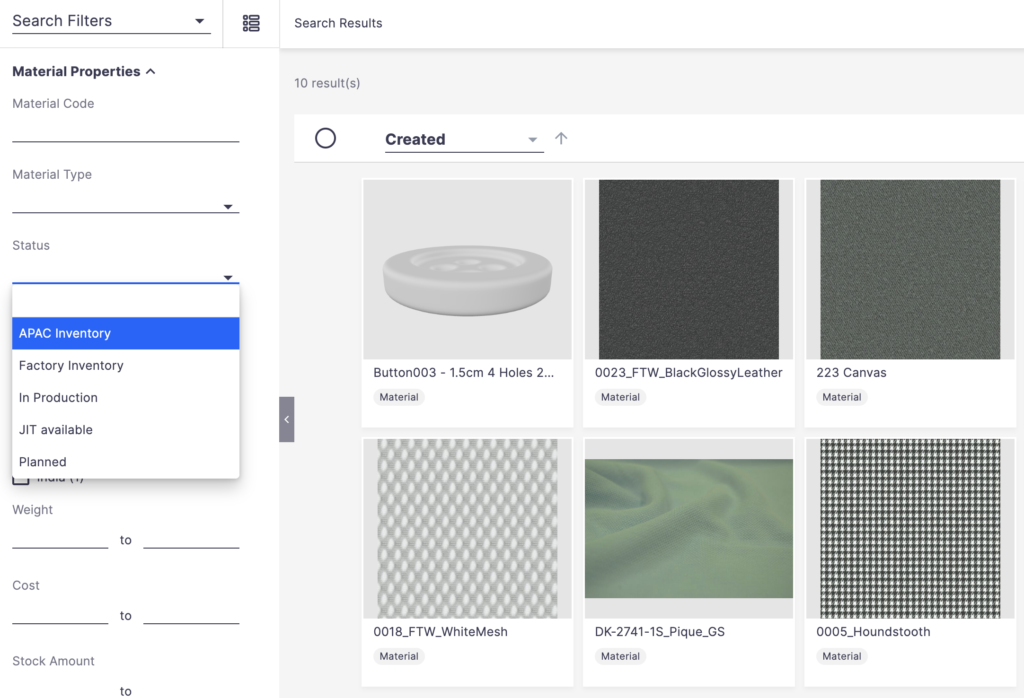
People often talk about digital product creation as though it exists in isolation, as a fundamental piece of design and development workflows, but with limited hooks into other strategic areas. As more companies have started to evaluate what it means to extend the value of DPC initiatives and assets, it’s becoming clear that DPC actually has deep, foundational links into priorities like sustainability, supply chain agility, speed to market, and plenty more. How are you seeing the business cases for 3D and DPC evolving to reflect this wider horizon?
The funny thing about the fashion industry, and most industries for that matter, is that people get caught up with acronyms and using them as catch phrases instead of honing them into meaningful strategies for their business. Take DPC, Digital Product Creation has an inherent meaning that is often overlooked. Product Creation is a staple to business growth and expansion. Your product portfolio is a foundational tenant of the retail business model and so often evaluated mainly through the lens of operational cost savings via digital enablement rather than their potential to increase product output or the acceleration of new products to market.
If we step back and evaluate DPC in the greater context of the supply chain, you begin to realize all of its potential benefits and the key performance indicators (KPIs) it can influence.
The problem we often see is that DPC is often confined to one part of the business, while the largest value opportunities emerge across functions and along the full supply chain – visibility that typically exists only at higher organizational levels. When DPC isn’t led from that vantage point, those cross-functional gains are overlooked.
Our view is that the 3D package remains one of the most important and highest-value corporate assets that an organization can possess. And the reason is its ability to serve multiple derivative purposes across the enterprise and yet its equity remains largely unrealized.
When we think about that much broader utility, it also underlines the ongoing need for digital product creation to be better-integrated into the extended technology ecosystem. We’ve seen some bridges already being built, but in order for 3D to become a real foundation layer for wider enterprise transformation and decision-making, there’s a strong mandate for centralising, consolidating, and connecting data sources to make them available to a wider spectrum of end users. At the philosophical and infrastructure levels, how does Hyland think about this challenge of crossing the gap between the 3D ecosystem and DPC as part of the wider tech estate?
Part of the fragmentation in the DPC ecosystem is driven by vendors trying to claim the largest possible footprint across the supply chain. Hyland’s view is that our role should be democratized and abstracted wherever feasible to ensure that data and content are widely distributed, enabling intelligence and insight across every stage and branch of the assembly line. Too many vendors try to pull the center of gravity into their own applications, creating barriers to adoption across the broader user population. And while all-in-one solutions are attractive for their perceived simplicity, true operational effectiveness comes from an integrated backbone that distributes data and content across an ecosystem of best-of-breed tools, such as design and rendering software, PLM, visual-assortment platforms, merchandising suites, and sales portals, ensuring each stage uses the technology built for it.
Centralization and standardization don’t always mean one unified experience or platform. The objective should continue to be to get the right information into the right people’s hands at the right time of the process flow to ensure expedited decisions and reduced cycle times.
Unlike more standardized enterprise workflows, 3D pipelines and DPC workstreams are far from commoditized; every organization assembles its own mix of tools, processes, and team models. The reality is that 3D management has inherent challenges that have to be contemplated. There is a lack of file standards across the 3D landscape. 3D packages tend to be very heavy and resource intensive when data is transferred and shared. 3D rendering continues to be a struggle for many organizations and when you look at those challenges in concert of a heterogeneous landscape, it is often an overwhelming situation for organizations to take on.
We typically think of digital asset management as a downstream discipline, focused on visuals, but we’re talking here about using 3D objects as foundations for not just content creation but merchandising, eCommerce, and more – all of which is reliant on metadata. Practically speaking, what does it look like to actually connect 3D assets to all those different workflows?
We are so glad you brought up this topic. The reality is that the content management piece is the easier part to solve than the data management piece. Many systems can house files but most systems have poor data management controls. As you look across the various applications that exist across the supply chain, each of them represents a data source but none of them is particularly good at flexibly exchanging their data outside of their applications. Hyland sees its role in providing the connective data layer between these systems, aligning the digital assets with the operational data that drive decision-making. We often serve as the data intermediary between these systems to establish the relationships between the pertinent operational data and the digital content for accelerating the decisions and tasks that were alluded to before.
We increasingly observe organizations turning to AI assuming it will automatically solve the metadata problem for them, but the reality is that AI hasn’t solved the data connectivity equation in its entirety. Critical business relationships are often not something that can be extracted from content itself nor is extracted metadata often valuable without context of other operational data in adjacent enterprise systems. AI doesn’t handle judgement or association very well. In other words, some one needs to tell the AI service how the metadata relates to an object or to make the value association with how the data will inform the process. Fortunately, firms often already have the key information, it’s just orphaned in isolated systems.
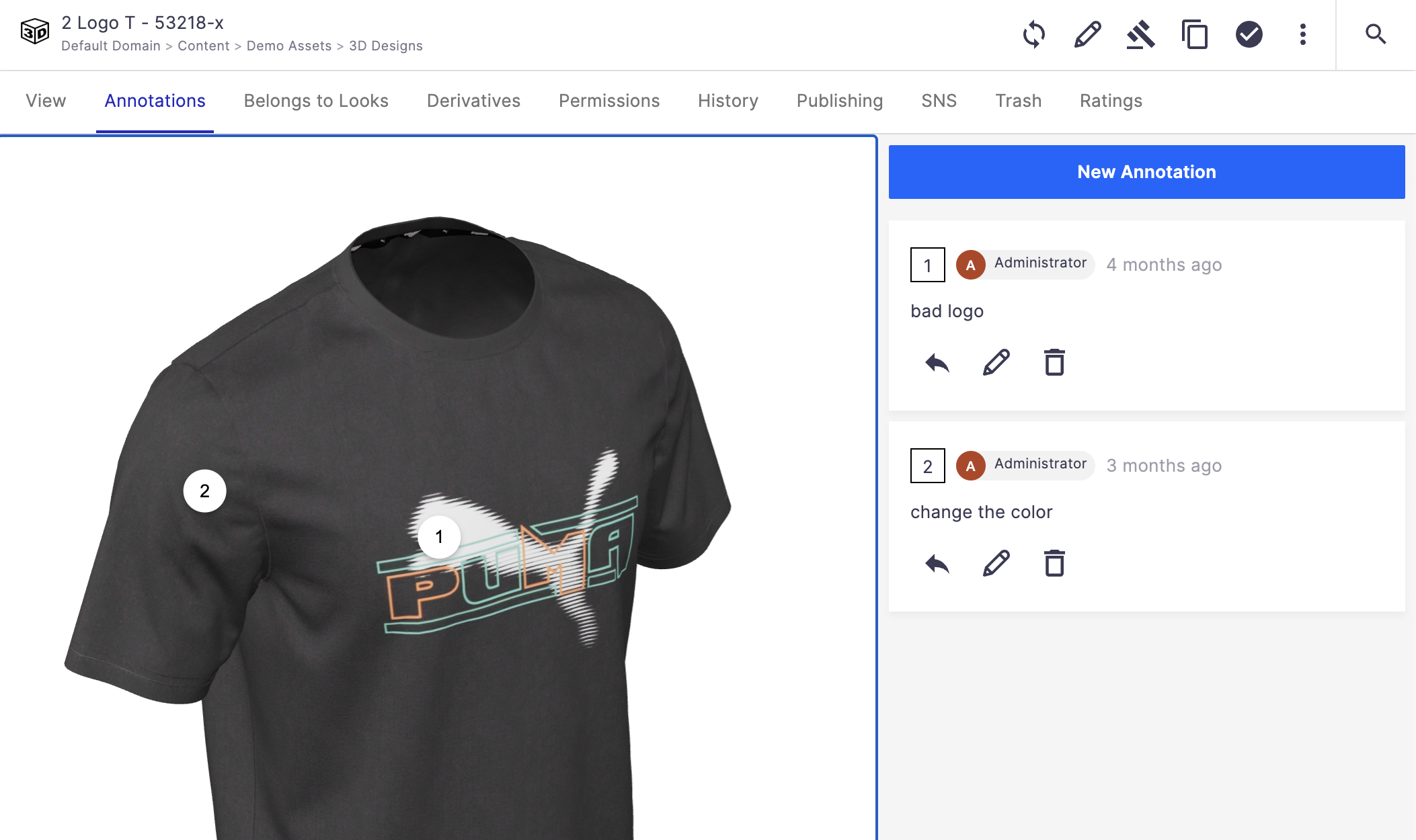
The connectivity of the assets to the different workflows starts with inspecting the prioritized outcomes for the different teams collaborating in the process. The data connectivity should map to the acceleration of those deliverables and how the data can create efficiency in the task completion.
It’s fair to say that the expanded possibility space for 3D also takes us further into the same realms that our readers are evaluating AI against. From your perspective, as a company that’s providing an infrastructure and workflow layer behind the promise of extended value for 3D, what does it look like to start integrating AI with DPC in a way that leans into the current value in generation and decision-making, but avoids the risks?
There is a lot to unpack in the AI topic, but I would direct the attention of the readers to two main considerations when it comes to AI. The first is “value.” This can be distilled into two inspections – is the perceived impact worth the level of effort required to adopt the AI service and is there a viable return on investment for the required budgetary allocation to make it happen?
AI has garnered a ton of attention, but very rarely is cost contemplated up front. I was having a conversation the other day with one of the major hyperscalers in the market. We are fortunate to have them as a customer and a technology partner. For them cost is rarely a concern because they are a purveyor of the AI technology. Few organizations find themselves in that fortunate position. So, when leadership continues to ask your team to do more with less, the question must be asked as to whether the AI investment really supports that objective.
The second inspection is whether the AI service can achieve the level of decision-making you are asking it to perform. AI is not magic despite its tremendous allure. There is only so much that it can take on autonomously and it requires training, monitoring and data quality to ensure it can do what you are asking it to do.
Resourcing is another critical factor that organizations must approach with eyes wide open. Enterprise-grade AI implementations require substantial configuration, tuning, governance, and ongoing “care and feeding”, all of which are additive to the existing workload of managing enterprise applications. Even if the AI tools in use are primarily prompt-driven rather than code-driven, the question remains: who will maintain the expanding network of prompts, workflows, data pipelines, evaluation frameworks, and result-capture mechanisms that emerge over time? AI does not eliminate operational overhead; it shifts it. And while there are undeniably AI use cases capable of transforming specific workflows, organizations must prioritize the highest-value opportunities and invest in disciplined experimentation, rather than opening the floodgates to every conceivable application of AI, a path that would be operationally unsustainable without significant, ongoing investment well beyond the cost of technology licensing. The risks in many cases are obvious but should be mentioned. AI isn’t cheap. AI is like any other enterprise software. It requires change management, oversight, program management, and governance. Risks of overpromising, underdelivering and misestimation of investment are significant, but our advice is to experiment, iterate and fail fast like any other project.

What’s the most useful question that companies can ask themselves, right now, to better understand what they want to accomplish next with 3D – whether that’s driven by their own ambitions, or by changes in the market?
Don’t over complicate the conversation. Think about what bottlenecks and inefficiencies exist in your current processes. Map out those processes and identify where 3D enablement can reduce or replace manual activities and provide extended intelligence that can be used to accelerate tasks and cycle times. Consider the entire content supply chain not just the activities of existing teams leveraging 3D/DPC tools and especially consider engaging with downstream content operations team leaders to surface opportunities.
3D & DPC should be about process optimization and not simply a means to automate. There are no shortage of competing interests in the business and decisions should be made on what can be accomplished internally vs. doing what the market (or vendors) says you should be doing. While AI capabilities attract enormous interest and can enhance potential benefits and operational gains, they are most effective when embedded components of foundational and integrated systems rather than standalone tools or services.
Having said that, 3D & DPC continues to represent significant benefits even in undesirable market conditions. Increased profitability, faster time to market and effortless collaboration should be viewed as operational imperatives regardless of the 2026 forecast.